
HIPPOCRATES Studied at ASCLEPIUS school (Est.1200 years B:C.) in KOS Island.
Konstantin Schönros <phytof@gmail.com> |
Sun, Jul 22, 2007 at 5:15 PM | |
ASCLEPIUS SCHOOL AT KOS ISLAND
“Asklepios” – Ασκληπιός(Aσκελής = haggard + Ηπιος = humble) is the one who”turns the hard & dry illness into healthy mildness stage “ |
||
|
||

Asclepius, god of medicine, son of Apollo and the nymph Coronis, daughter of Phlegyas who lived at the foot of Mount Pelion, brought up by the wise centaur Chiron, is the most famous healer of diseases that plague people in antiquity, and the power arrives by raising the dead … Daughter of course, the Health ..
“Asclepius: God of Medicine, worshiped everywhere in ancient Greece.
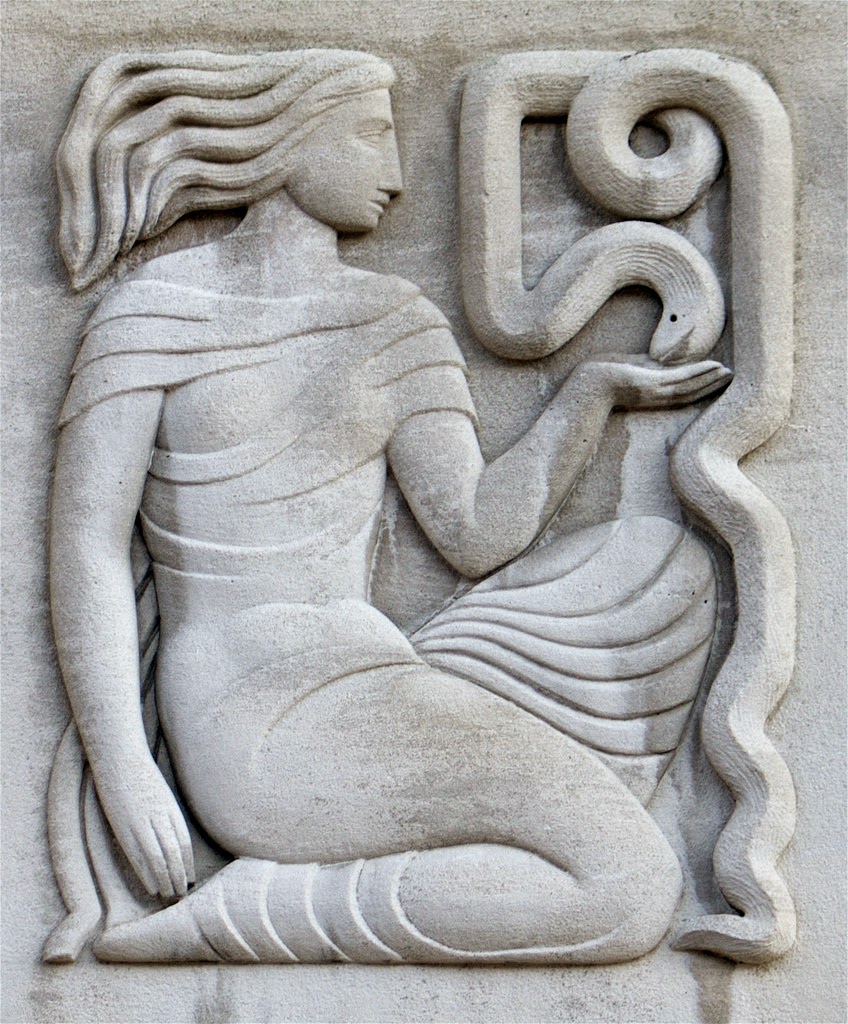
The two snakes – actions that express our nervous system, formed in the Caduceus of Mercury. Legend says that Mercury once saw two snakes fighting and put the rod between them and wrapped them around her and stopped hostile. The name of Hermes etymolocaly means, “one who interprets”, (Eρμηνευτής – Hermeneutis = “performer. The performer is our mind, the logic that processes and knowledge, thus developing the consciousness and the evolutionary level of the divine.
The snake symbol adopted Asclepius and Hippocrates as a symbol, which apart from the body were doctors and doctors of the soul. The rod with which control the snake, is the power of authority and control over this energy, the body electromagnetism, which is disturbed. This can be translated in the sense of koutalini snake control rod to the spine, the energy of the lower instincts, the brute, who is as influential mentioned through the spinal cord like a snake runs along the spine, the and ancient Serpent called.

So, like Hermes, reconciles these forces, and balancing the distribution of energy in the body occurs and healing, the mind admonishes and guides his passions.
Hercules, from infancy he managed to drown two snakes, that put under its control, to tame and dominate the forces that make us vulnerable and vulnerable, and became a demigod hero went to the Champs Elysees (Ηλυσια πεδια). Through this myth of Hercules, let it also leaked and that, as Pais of Zeus, the possession of a power of the heavenly, not only dominate through the mind and intellectual contact with the Divine earthly, bodily instincts, but and implied a mission given to him against the Offit Atlanteans, those we call Satan today.
The cult of Asclepius became very popular and the cult centres (known as an Asclepieion) were used by priests to cure the sick. Invalids also came to the shrines of Asclepius to find cures for their ailments (in the same fashion pilgrims visit Lourdes today.) The process of healing was known as incubation. The patient would spend the night in a dormitory. During the night they would supposedly be visited by the god in a dream. Priests would interpret the dreams and then recommend a remedy or give advice on how they could be cured with perhaps a recommended visit to the baths and gymnasiums. There were many centres and schools of medicine, from Trikkis in Thessaly to the island of Cos. It is believed that Hippocrates, a great doctor of antiquity, plied his trade on the island of Cos. It is also said that Hippocrates was a descendant of Asclepius.
The Romans adopted the cult of Asclepius, but changed his name to Latin; they called him Aesculapius.
THE DOUGHTERS & SONS of ASKLIPIOS

.
HYGEIA -ΥΓΕΙΑ = HEALTH: from: “ygiiros” related to “wet” = hydro. This liquid state, the “ygriis” is healthy. “Healthy esti temperateness of juice in us” … Always health characterized as liquid, juicy, while illness and death have the common characteristic dryness, stiffness.

– IASO (Ιασώ: from: IAOMAI = I HEAL ιάομαι = θεραπεύω).
– AKESO (Ακεσώ: from: AKEOMAI = I HEAL with a sharp instrument) ακέομαι
– PANAKEA (Πανάκεια:Παν+akeia =The Everything Healer)
– AIGLI (Αίγλη) φως ηλίου – phos Heliou -, δόξα ‘ from: Aiso – αϊσσω + λίαν. = the Radiation of the Health.
MAHAON – Μαχάων from: Mahomai=I fight – mahi =battle example: Andromach the doughter of Priamos king of Troja, meaning=the battle against man— mahaira = knife, surgeon (χειρουργός).
PODALEIRIOS (Ποδαλείριος) FROM: pous = foot – πους + leirion – λείριον (field flower). he had permentaly his feetinto withwild field flowers – Botanic Doctor. (ιατρός – iatros=doctor + rootcuter ριζοτόμος)”

The two sons of Asclepius, returning unharmed from the Trojan war, continued to travel and, posthumously deified, like his father. Established places of worship and healing, dedicated to Asclepius, named “Asclepiea”. Ancient Asklepion considered that the Trikke in Thessaly, while the most famous was despite Epidaurus. Equally famous was the Asklepion of Kos, which was famous for Asclepiadae and particularly of course, for the father of medicine Hippocrates.
Even mentioned that:
“Animals temples of Asclepius was the serpent (όφις), who symbolizes the periodic of renewal and is an emblem of wisdom, truth and intelligence (ευφυΐα), the cock, symbol of vigilance, the dog, symbol of faith, intelligence and vigilance and whoever in the Asclepiea healed lambent Tina diseased, the Aix (=Goat) which breastfed Asclepius and calculus because tartar became mythological legend that nourished Asclepius in his childhood.

Hygeia (ΥΓΕΙΑ=HEALTH),one of the four daughters of Asklipios Bellow: Asklipios & Ipioni on Ivory sculpture
.jpg)


AKESO – ΑΚΕΣΩ from the verb akeome (ακαίομαι) = to recover
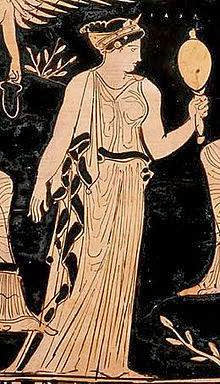
THE SONS of ASKLIPIOS:
MACHAON was the firstGreek military surgeon
HERE: Taking care of an Achaic (west Greece) soldier at the Trojan war..Apollo favorated the Danaees(main land) & Aris (Mars) the Ilion or Troija

Polidarius (Ποδαλείριος) The Father of Pathology – πούς + λείριον (κρίνος, νάρκισσος), Foot+Narcissus)the one with the beautiful feet(!)

The Medical EmblemGreek ASKLEPIOS, Latin AESCULAPIUS (or Asculapius), Greco-Roman god of medicine.The Myth:Asclepius is the god of Healing. He is the son of Apollo and the nymph, Coronis. While pregnant with Asclepius, Coronis secretly took a second, mortal lover. When Apollo found out, he sent Artemis to kill her. While burning on the funeral pyre, Apollo felt pity and rescued the unborn child from the corpse. Asclepius was taught about medicine and healing by the wise centaur, Cheiron, and became so skilled in it that he succeeded in bringing one of his patients back from the dead. Zeus felt that the immortality of the Gods was threatened and killed the healer with a thunderbolt. At Apollo’s request, Asclepius was placed among the stars as Ophiuchus, the serpent-bearer. |

|
|

Spring and shrine of Asklepios at the Acropolis
Athens, Greece
How did the medical emblem of two snakes intertwined around a dagger originate?
The serpentine staff is called a caduceus. It has Greek origins — Hermes, the messenger of the gods, carried it as a symbol of peace. Ancient Greeks created the caduceus as a badge of honour; ambassadors and noblemen carried a long staff entwined with garlands or ribbons to announce their presence. The garlands were later interpreted as snakes, and a pair of wings was added to denote Hermes, the winged messenger. Here’s where it gets tricky. The U.S. Army medical corps adopted the caduceus as their insignia because of its similarity to the staff carried by Asclepius, the god of medicine. The staff of Asclepius is considered the “true symbol of medicine” — it features only one snake, and no wings. It’s the emblem of the American Medical Association. The two symbols are quite similar in appearance, and both are derived from Greek mythology. The caduceus generally stands for peace, although it may also serve as a symbol of trade and communication, while the staff of Asclepius stands for healing.

Nathan W. Williams
University of Colorado Health Sciences Centre
JAMA. 1999;281:475
The Aphorisms of Hippocrates – Most Important

BEFORE SOMEONE IS BELIEVING THAT (HE OR SHE) KNOWS about HIPPOCRATES ….
AT FIRST HAS TO STUDY About ASCLEPIOS , HIPPOCRATES & THIS Aphorisms, his philosophy, the four elementsetc etc!..(Just read more about in this site)
START NOW!!
The Aphorisms are the most important works of the Hippocratic Corpus. It was the subject of admiration of doctors of all time and distributedo widely over the centuries, was copied more than all the other works of ancient Greek medical literature. It is elementary epitome semiotics, dietary, therapeutic and prognostic of Koan medical school.

The designer readily understands that these thoughts wise and experienced physician and teacher, but not recorded by the same, thereby contain repetitions and be unclassified.
It is likely to be a pattern used by Hippocrates for teaching. Later students found it and included it in his works. So this is the authentic father of medicine project:
In the first part, contained in a summary matters regarding general medical and dietary-therapeutic and general on automatic and evoked stools and nutrition. “The life is short and the art long, and the weather sharp, and the experience erroneous and the judgment tough”. Famous aphorism that has been forefront in medical schools, medical emblem on many projects and has been the subject of comments large sages of antiquity, such as Galen, Lucian, Seneca and younger physicians and philosophers such as Goethe, etc.

In the second section, included aphorisms relevant to prognosis of disease in general. First mentioned predictive symptoms for sleep, worthy great clinician, for example high risk of diseases aggravated by sleep. Wise also observation is that both excessive insomnia and excessive sleepiness are unpleasant symptoms. Also sudden fatigue heralds iastheneia, obese are more at risk of sudden death from the weak, those who often feel too tired for no reason, dying. These are all wise physician experienced observations.
The third section refers to the influence that the appearance and character of the disease the natural environment and age.

In the fourth section, on treatment with emetics and Laxatives and diagnostic information particularly febrile illnesses, including bans relevant to the purges, intentional or not, in connection with pregnancy, seasons, the makeup of the individual, and nature of the disease. Very interesting are the aphorisms mentioned in fevers: sixths, laborious, fevers twist neck, intermittent, non-intermittent, with shivering, kafsodeis etc.
In the fifth section includes aphorisms on the effects of heat and cold especially in surgical diseases and gynecological diseases. Some refer and convulsions, the tetanic convulsions and epilepsy, others to breast diseases. Others relate milk sterilization, disease of the uterus, menstruation. In this section are the famous aphorisms, under which the occurrence of seizures in trauma is fatal prognosis, the tabes affects people aged 18-35 years, hemoptysis Blood foamed from lung, diarrhea is deadly symptom in consumptive, sudden slimming breast pregnant heralds shedding etc.
Section six refer aphorisms related to the symptoms of surgical diseases. Precious are those who said the diseases of the kidneys and bladder in the elderly difficult to treat, that the injuries to the brain, bladder, intestines, heart, diaphragm, abdomen and liver are fatal.
Finally in the seventh section are many repetitions aphorisms from previous parts. Among the most important is the one that states that the ends of freezing is deadly prognostic in severe febrile illnesses, as well as deadly predictor is the appearance of vomiting, hiccup, spasm or delirium in the ileum.
Finally, the following aphorism is usually mounted in operating rooms:
« ‘Ὀκόσα φάρμακα οὐκ ἰηται, σίδηρος ἴηται, ὅσα σίδηρος οὐκ ἰηται, πῦρ ἴηται ὅσα δέ πῦρ οὐκ ἴηται, ταῦτα χρή νομίζειν ἀνίατα». –


Aphorisms section first
1. Life is short but the medical long, opportunity fleeting, experience fallacious, correct difficult crisis. The physician must therefore not only to offer the sick than appropriate, but has its own help, the help of people around him and appropriate for the occasion conditions.
2. digestive disorders and vomiting that occur on their own if the patient expels what should be expelled, the stools and vomiting are useful and easily tolerated “different is the opposite. The same applies to artificial stools vascular and organ [bleeding, induced vomiting, laxatives active]. If done the right way, they are useful and easily tolerated “different is the opposite. So to judge whether these stools are beneficial or harmful, we must be kept in mind the place, time, age and types of diseases.
3. Excessive welfare of athletes is dangerous if even reaches the utmost limits “stay in the same place is impossible” so, since no one standing still and nor is there room for improvement, the only question left is epideinoisi ‘for these reasons ,
4. The austere and strict diet is always risky and lengthy illnesses and heavy, which is not accepted. Moreover, the diet that leads the utmost slimming limits is harmful, because the damage is corrected when it has reached rock bottom, is very difficult.
5. When following a strict diet, patients make mistakes and therefore suffer more “every mistake, whatever it is, becomes even more serious than what if it were in a less strict diet. For this reason, and even healthy people, the very austere and strict diets that are governed by rules are doubtful result, because every deviation from them becomes more difficult tolerated by the patient. So the simple and strict diets are more harmful than the less stringent.
6. In severe disease, the absolute precision and refinement in the treatment is the best method.
7. When the disease is too heavy, manifested immediately morbid symptoms in the peak and the need to immediately implement the most strict diet “if it does not, permitted a less strict” severity relaxes, as the disease is milder.
8. When the disease is the most critical point, then it must be applied very strict diet.
9. We must examine the patient and determine whether it is able to tolerate the diet until the most critical point of the disease and which of the two possibilities will happen: it will run out first and the patient will not be able to tolerate or first subsides disease and will diminish.
10. So when the illness reaches from the start in the most critical point, we recommend amesois unassuming manner Nutritional if this come later, should the crisis period or shortly before that to remove some of the food ‘the previous period but have the diet should be abundant, to enable the patient to effectively deal with the illness.
11. During exacerbations of the disease, should be reduced food, because the increase of the supply of food harms generally during exacerbations of all diseases which periodically recur, should cut the food.
12. exacerbations and remissions depend on the type of disease, the season of the year, the relationships of the various periods between them, whether they occur every day or every other day or over a longer distance, as well as from such symptoms, if the pleural elimination of sputum begin immediately, shortening the duration of illness “if it starts later, the illness also parateinetai-, urine, faeces and sweats are, depending on the way they are presented, an indication of whether a disease It will go hard or easy, though it will last more or less.
13. The elderly, more easily tolerate fasting, hardest mature men, and few young children tolerate with difficulty, especially vivid.
14. Organizations that have deployed inherently more heat and therefore need more food “otherwise their bodies wither” older people need small amount of fuel, because they have less heat: higher amount will extinguish. For the same reason fevers are not as high in the elderly because their bodies are cold.
15. In winter and spring the belly is by nature very warm and sleep takes too long “and should therefore food is more abundant, because if we consider that the innate heat is too great, needs more food. Proof young people and athletes.
16. The liquid diet benefits those who develop fever, especially children, and those accustomed to similar diets.
17. we must also be careful when to are fed once a day and when both, when more and when less, or in small doseis- all this must be adjusted according to the habits of the patient, time, place and age.
18. In the summer and autumn, the food is hardly tolerable “very easily done in winter and secondly in the spring.
19. During exacerbations presented at certain times should not give anything Utena recommend anything, but is removable portion of the food that we gave before the crises.
20. Diseases marching smoothly to the crisis or have conclusively determined not to be hindered in their course of innovative methods nor with laxatives or other irritants in, but n ‘left in their natural development.
21. The liquid to be clean, there should drive them where mainly inclined by appropriate roads.
22. Clean and put in motion the mature liquid, not the immature, nor the beginning of the disease, unless there is irritation, which for the most part does not exist.
23. The discharged liquid should not be judged by quantity, but by the natural or unnatural manner discharged, as well as from the ease with which tolerated “and when the need arises to promote abortion to faint, you should not hesitate, where the patient may be tolerated in this test.
24. In severe disease administer laxatives little at the beginning, and this only after careful consideration.
25. If the vacancy is as it should be, then it is beneficial and the patient accepts with relief “otherwise, is in predicament.
Aphorisms second part
1. If the disease causes discomfort sleep, the disease is fatal. If sleep relieves, not fatal.
2. It’s a good sign, when sleep stops delirium.
3. When sleep or insomnia exceed moderate symptoms are bad.
4. Neither hyperalimentation neither starvation nor anything else is fine if exceed the normal range.
5. Fatigue manifested suddenly heralds disease.
6. Those who ache somewhere in the body, but do not feel pain, suffer psychologically.
7. The strengthening of the body is weakened in a long time should be done slowly “in contrast, fast should be the stimulation of bodies weaken in the short term.
8. If a person eats during recovery, but stronger, it means that the body needs more food • if not stronger because it has no appetite to eat, then we must have in mind that you need a laxative.
9. When we want to clean the body, we must facilitate the elimination of urine and stool.
10. The more we feed the body without parallel clearance, the more harm.
11. It is easier to stimulate the body in liquid rather than solid food.
12. When after the crisis remain morbidly data, the disease recurs.
13. The crisis is causing distress the night before the final frenzy if the crisis occurred the next day, the situation is usually more bearable.
14. On diarrhea variations of stools ofe amusement, though of course these changes do not get malignant form.
15. When the neck hurts or rashes occur in the body, we must examine the stools • if cholodeis, the whole body is sick • if normal, then we can grant fearlessly food.
16. When food is little, work should not be painful.
17. If you eat more than you allow the Agency will get sick • it will look and from treatment.
18. Those who eat very quickly and have faster bowel movements.
19. It is not possible to predict death or salvation of a person suffering from serious illness, without the risk of making a mistake.
20. Those effected easily when they are young, they become constipated as their age proceeds • conversely, those who are constipated young, are efkoilioi, as the years pass.
21. Drinking cutting hunger.
22. Diseases caused by gastric emptying load treated by the intestinal tract, those caused by inadequate diet overfed ‘in general the treatment is to the opposite of the root causes of disease.
23. Severe illnesses appear within fourteen days.
24. Of the first seven days of illness indicative of the course of the fourth day. Indicator is also the eighth, that the principle of the second week. During the second week, you should beware of the eleventh day, it is the fourth of the second week; we should also consider if the disease continues its seventeenth day, it is the fourth of the third and seventh week after the eleventh day.
25. tetartaioi fevers are usually short summer, autumn tetartaioi are long-term, especially those that occur in the winter.
26. Fever after seizures are better than spasms after fever.
27. we should not trust improve not progressing well or too afraid abnormal deterioration because usually these morbid conditions are uncertain and have no stability and durability.
28. In the not too slight febrile ugly stays body in the same state without loss or excessive wear • the former case is indicative of the duration of the disease and the second attenuation of the patient.
29. If at the beginning of the disease it is appropriate to challenge movement of juice, we can do it • but when the disease is at its peak, it is preferable to leave the sick in peace.
30. The morbid symptoms are asthenestata at the beginning and end • all are powerful acne disease.
31. If the patient eats during convalescence and his body stronger, is unpleasant symptom.
32. As always, all the patients, when eating the top of appetite and do not strengthen all eventually lose their appetite. But those who in principle make strong diet and then start and eat, heal better.
33. In any disease, mental clarity and retention of appetite is a good sign “the opposite is bad.
34. On various diseases, those who express condition that suits the nature, habits, age and season of the year, are at lower risk than those who do not show this similarity.
35. In all diseases are useable area of the navel and the lower abdomen to maintain their thickness, and is uncomfortable these regions too slimmer and dry • This also is not conducive at all and administering laxatives.
36. Healthy people taking laxatives effected quickly and fade during the period of stools, as well as people-eating harmful foods.
37. Those who have healthy body, hardly tolerate laxatives.
38. Preference should be given food or drinks which, although not as good quality, but it is pleasant to the taste of drinks or food of better quality but with not so pleasant taste.
39. The elderly usually do not get sick as much as the young, but chronic diseases that occur in this age, are usually followed until their death.
40. Bronchial catarrh and coryza are not cured in very elderly.
41. Those who suffer frequent and severe fainting without apparent cause, suddenly die.
42. It is impossible to cure severe stroke difficult but cured and lightly.
43. If apanchonismenos who download from the gallows has not yet died, not saved from death if foaming around the mouth.
Medical Aphorisms of Hippocrates ~ (medical advice) section 3 & 4
The Aphorisms are the most important works of the Hippocratic Corpus. It was the subject of admiration of doctors of all time and kykloforoumeno widely over the centuries, was copied more than all the other works of ancient Greek medical literature. It is elementary epitome semiotics, dietary, therapeutic and prognostic of Koan medical school.
The designer readily understands that these thoughts wise and experienced physician and teacher, but not recorded by the same, thereby contain repetitions and be unclassified.
It is likely to be a pattern used by Hippocrates for teaching. Later students found it and included it in his works. So this is the authentic work of the Father of Medicine:
In the first part, contained in a summary matters regarding general medical and dietary-therapeutic and general on automatic and evoked stools and nutrition. “The life is short and the art Makri, and the weather sharp, and the experience erroneous and the judgment: Aleppo”. Famous aphorism that has been forefront in medical schools, medical emblem on many projects and has been the subject of comments large sages of antiquity, such as Galen, Lucian, Seneca and younger physicians and philosophers such as Goethe, etc.
In the second section, included aphorisms relevant to prognosis of disease in general. First mentioned predictive symptoms for sleep, worthy great clinician, for example high risk of diseases aggravated by sleep. Wise also observation is that both excessive insomnia and excessive sleepiness are unpleasant symptoms. Also sudden fatigue heralds iastheneia, obese are more at risk of sudden death from the weak, those who often feel too tired for no reason, dying. These are all wise physician experienced observations.
The third section refers to the influence that the appearance and character of the disease the natural environment and age.
In the fourth section, on treatment with emetics and Laxatives and diagnostic information particularly febrile illnesses, including bans relevant to the purges, intentional or not, in connection with pregnancy, seasons, the makeup of the individual, and nature of the disease. Very interesting are the aphorisms mentioned in fevers: sixths, laborious, fevers twist neck, intermittent, non-intermittent, with shivering, kafsodeis etc.
In the fifth section includes aphorisms on the effects of heat and cold especially in surgical diseases and gynecological diseases. Some refer and convulsions, the tetanic convulsions and epilepsy, others to breast diseases. Others relate milk sterilization, disease of the uterus, menstruation. In this section are the famous aphorisms, under which the occurrence of seizures in trauma is fatal prognosis, the tabes affects people aged 18-35 years, hemoptysis Blood foamed from lung, diarrhea is deadly symptom in consumptive, sudden slimming breast pregnant heralds shedding etc.
Section six refer aphorisms related to the symptoms of surgical diseases. Precious are those who said the diseases of the kidneys and bladder in the elderly difficult to treat, that the injuries to the brain, bladder, intestines, heart, diaphragm, abdomen and liver are fatal.
Finally in the seventh section are many repetitions aphorisms from previous parts. Among the most important is the one that states that the ends of freezing is deadly prognostic in severe febrile illnesses, as well as deadly predictor is the appearance of vomiting, hiccup, spasm or delirium in the ileum.
The following aphorism is usually mounted in operating rooms:
” Okosa drugs CDR iitai, iron iitai, what iron CDR iitai py iitai Find NOT FIRE CDR iitai, NO money nomizein boredom. “
Aphorisms third section
1. The diseases mainly caused by the changes of the seasons and the seasons, thanks to extremes of cold and heat. In other cases also caused similarly.
2. The temperaments of people are by nature sometimes good, sometimes in poor condition in the summer, with still other happens in the winter the same.
3. Some diseases and some groups is inherently good or bad situation one way or the other time, in one or another place, according to one or the other lifestyle.
4. When the various seasons of the year we have the same day when hot, when cold, must wait illnesses fall.
5. southerly winds cause hearing loss, blackouts, weight in the head, drowsiness and exhaustion of the body. Such morbid phenomena occur when these winds prevail. Oivoriades cause cough, sore throat, constipation, dysuria with chills, pain in the side and chest • prevail these winds should expect such morbid phenomena.
6. When summer is the same as in the spring, we should expect copious sweats in febrile illnesses.
7. drought seasons manifested high fever • if the drought covering much of the year, these will be the effects on the human body and such diseases mostly have to wait.
8. When the seasons rotate smoothly and steadily manifested minor illnesses and their treatment is easy “but when the switch becomes abnormally, diseases caused uneven and refractory.
9. Autumn diseases manifested by acute and usually fatal form • Spring is very healthy age and mortality during very limited.
10. Autumn is bad season for consumptive.
11. About seasons, although in winter it does not rain and the winds are northerly, while spring is rainy and southerly winds, the summer will occur necessarily high fevers, ophthalmia and dysentery, especially among women and men with liquid makeup.
12. If the winter has southerly winds and rainy and mild, and come next spring without rain and northerly winds, women to give birth in the spring, eliminate the slightest reason • as many again lay normally give birth to weak and sickly children , dying immediately or live stunted and with weak constitution • the rest of the population affected by dysentery and Dry eyes and elderly from catarrhal diseases resulting in death within a short time.
13. If the summer drought to north winds prevail, and autumn rains to south, winter occurring headaches, cough, hoarse and coryza, and some people are infected with tuberculosis.
14. But if the autumn winds blow and there rain, benefiting liquid diatheses and women s other people will be infected with dry eye, high fevers, coryza and sometimes even by paroxysms of melancholy.
15. Since the weather year generally dry weather healthier by liquid and mortality under these conditions are more limited.
16. The diseases manifest themselves in rainy weather are for the very long-term fevers, gastric catarrh, sepsis, seizures, strokes, and diseases of the throat • drought causes tubercular conditions, eye, arthritis, stranguria and dysentery.
17. From daily weather conditions, winds make the body taut, give strength, agility, good color, improve hearing, dry belly, irritate eyes and, if existed a chest pain is becoming fiercer • The southern wet and dissolve the body, weakens the hearing, cause burden on the head and dizziness, difficult eye movements and body and cause constipation.
18. About the seasons, spring and early summer, children and people who are closer to childhood, feel wonderful and have great health ‘summer and part of autumn, so feel the elderly • rest of autumn and winter feel good middle aged.
19. All diseases occur all but -Some seasons manifest themselves and reach their paroxysm in some seasons.
20. In the spring prevailing mania situations, melancholy and epilepsy • bleeding, sore throat, runny nose, hoarseness, cough, leprosy, lichens, alfoi, many rashes wounds, swelling and arthritic diseases.
21. The prevailing summer some of the previous conditions, persistent fevers, burning, many Tritaia fevers, vomiting, diarrhea, eye, pain in the ears, mouth sores, rotting genitals and sweat.
22. Autumn prevailing summer many diseases tetartaioi fevers, intermittent fevers, swollen spleen, gouts, tabes, stranguria, leienteries, dysentery, sciatica, angina, asthma, ileus, epilepsy, mania and melancholy situations.
23. In winter prevailing pleurisy, pneumonia, coryza, hoarse coughs, chest pains, ribs and waist, headaches, dizziness, seizures.
24. Depending on the age, the following symptoms appear: children, young and infants, thrush, vomiting, cough, insomnia, tremors, inflammation navel, suppuration in the ears.
25. When approaching the time of teething, the gums appear irritations, fevers, convulsions, diarrhea, especially when canines grow, especially in very obese children and in constipated.
26. In somewhat more advanced age appear tonsillitis, displacement forward of the cervical vertebra, asthmas, stones, round intestinal parasites, roundworms, moles, bumps near the ears, swelling of the glands of the neck and other swellings, but mostly everything explained previously.
27. In the more advanced age, and the approaching puberty, appear many previous illnesses, and even mainly long-term fevers and epistaxis.
28. Most childhood diseases are considered other forty days, others in seven months, others in seven years and the other as approaching puberty • But many insist and do not disappear in boys during puberty in girls and age of onset of menstruation, usually become chronic.
29. Young people appear hemoptysis, phthisis, high fevers, seizures and other diseases, but mostly past.
30. In people who have passed this age, manifested asthma, pleurisy, pneumonia, lethargy, frenzy, heartburn, chronic diarrhea, cholodeis diarrhea, dysentery, leienteries, hemorrhoids.
31. In older people manifested dyspnea, cough with catarrh, stranguria, dysuria, pain in joints, nephritis, dizziness, seizures, depression, itching all over the body, insomnia, wetness abdomen, eyes and nose, amblyopia, waterfalls, Aids.
Aphorisms Fourth Chamber
1. If there is orgasm, pregnant women can take medication [emetics and laxatives] from the fourth until the seventh month, but less this latter • in infants and children should be careful about giving medicines.
2. Granting of laxatives should be discarded materials that are useful and when discharged from them; alone must stop many have diaforetikocharaktira.
3. If the stools become so normal, the patient feels better and easily tolerates • otherwise feel bad.
4. Summer administered emetics and laxatives winter.
5. At the time of Kinos before, laxatives impact difficult.
6. In lean people do vomit easily be administered emetics • but the clearance should be done with caution in winter.
7. The more obese people who make difficult vomiting should not take laxatives and clearance must be done with caution in summer.
8. Individuals predisposed to tuberculosis should use very carefully emetic drugs.
9. Those who suffer from melancholy should be granted effective laxatives for the lower part of the intestine and in the same paragraph to follow a different path for the opposite cases.
10. In very severe illnesses clearance must be on the same day, if there is orgasm, because it is very dangerous to procrastinate in these cases.
11. colic, pain around the navel and lumbago that does not go with either laxative or otherwise, all of them end up in dry dropsy (obviously meant swelling viscera, but there peritoneal fluid).
12. In winter the administration emetic drugs harms individuals suffering from leienterikes bluetongue.
13. When administering the ellevorou (plant used as a purgative, causing vomiting) must, before granting the medicine to wet the body of people who find it difficult to clean the mouth, suggesting abundant food and rest.
14. We recommend to those who have drunk ellevoro move more, sleep and n ‘rested less • the boat trip that reveals the movement agitates the various organs of the body.
15. When we want to act more the ellevoros recommend the patient to move • when we want to halt its activities, recommend sleep and rest.
16. ellevoros is dangerous for those who have strong own brand, because it causes spasms.
17. w person is afebrile, anorexia, heartburn, the blackouts, the bitterness in the mouth indicate that administration emetic necessary.
18. pains above the diaphragm indicate the need cleansing the body with emetic • pains while below it, the need for cleansing with a laxative.
19. Those who do not feel thirst after administration laxative should continue the stools until thirst.
20. If there is no fever, the colic, weight knee and back pain show that should be given a laxative for the lower part of the intestine.
21. stools dark as blood, shown without causes disease with or without fever, is very unpleasant and • an indication as much worse are the colors, the more uncomfortable the symptom is “if it occurs after taking cathartic, then situation is better and colourfulness in this case does not indicate bad.
22. The elimination of black bile from above or below the top of the disease is fatal indication.
23. If the person exhausted from a serious or chronic illness, trauma or any other reason, eliminate black bile or black bile as blood, dying the next day.
24. dysentery starting with black bile, is lethal prognosis.
25. The expulsion of blood from the mouth, from opoiadi ever reason, is unpleasant sign • elimination from below, it’s good, like black stools.
26. The expulsion of feces, like flesh from sick suffering from dysentery is deadly symptom.
27. When situations occur in febrile copious bleeding from anywhere, during convalescence patients affected by gastric catarrh.
28. cholodeis stools stop if manifest deafness, and deafness subside, if they occur cholodeis stools.
29. If a febrile illness occur chills the sixth day, the critical phase of the disease will be. bad.
30. On illnesses manifesting convulsions, if the frenzy stops a certain time and come back the next day at the same time, the crisis is difficult.
31. When in febrile conditions there feeling tired, abscesses are formed mainly in joints and near the jaw.
32. If the patient starts recovering and feel pain at some point of the body at that point will be formed an abscess.
33. However, if some point ached before the disease, there is the focus of evil.
34. If during fever occurs suddenly choking throat without swelling, the symptom are deadly.
35. If during fever occurs suddenly twist in the neck, without swelling and the patient finds it difficult to swallow, the symptom are deadly.
36. On feverish situations sweats benefit the third day, fifth, seventh, ninth, eleventh, fourteenth, seventeenth, twenty-first, the twenty-seventh, the thirty-first, thirty-fourth “of the sweats those judged diseases • but sweats, not appearing these days, herald pain, prolonged suffering and relapses.
37. The cold sweat with a high fever heralds death • during milder disease, the prolonged suffering.
38. In point of the body that is manifested perspiration, is also the goal of disease.
39. The disease is in the body that is hot or cold.
40. If changes occur throughout the body, that is if it freezes and then thaws, or changes color, it means that will extend the duration of the disease.
41. If after sleeping displayed abundant sweat without apparent cause, it means that the body consumes more food [than what] • if this happens to a person who does not eat, it means that needs emptying.
42. The abundant sweating, cold or hot, flowing incessantly mean heavier or lighter disease respectively “
43. The continuous fevers exhibit seizures every third day are dangerous • fading of fever, in whatever form, suggesting that the fevers such is harmless.
44. Those who suffer from long-term fevers, exhibit swelling or pain in the joints.
45. If the person after fever edema or joint pains, receives excessive amount of food.
46. If rigors occur in a patient already exhausted by fever, not magazine, this symptom is deadly.
47. expectorations non periodic fevers, as tan, bloody, and smelly cholodeis, bad simadi- however, if sputum discharged smoothly, indications are favorable as ventricular stools and urine • if not eliminated but something to be expelled from these points, this is bad.
48. If the constant fevers external parts of the body is cold and the internal burning, yet the patient is thirsty, symptom are deadly.
49. If a non-periodic fever bent lip or eyebrow, the eye or the nose, or if disturbed vision or hearing, while the patient is exhausted, death is near, whichever it may be the symptom will manifest.
50. When a non-periodic fever manifested wheezing and delusion, this is deadly sign.
51. febrile abscesses are not dissolved in the first judgment, indicating extension of the disease.
52. It is worrying if someone has fever or other illness, weeping intentionally • but more worrying if weeping unintentionally.
53. When the teeth feverish conditions become greasy, fever rises further.
54. Those who have fevers caustic and persistent hawk, causing short irritation, not too hungry.
55. fevers manifested by swelling in the groins are all bad, unless last one day.
56. When in febrile diseases manifested sweating without concomitant decline of fever, the symptom is unpleasant illness • prolonged and this is a sign of excessive moisture.
57. Fever occurs in sick afflicted with convulsions or tetanic contractions, cures the disease.
58. If patient is suffering from heartburn experienced chills, cured.
59. The smooth tertian is the most in seven years.
60. If during febrile illness weaken the hearing and presented epistaxis or diarrhea, illness cured.
61. If the fever does not leave the sick in an odd number of days, usually recurs.
62. jaundice occurring in fevers before the seventh day is a bad sign, unless a miscarriage fluid from the abdomen.
63. who develop fevers chills every day also fall every day.
64. jaundice occurring in fevers seventh, ninth, eleventh or fourteenth day is a good sign, as long as the right hypochondriac not be different hardness, is not good.
65. Unpleasant symptoms of the disease is the excessive heat around the abdomen and heartburn.
66. Seizures and strong pains in the bowels are bad symptoms in high fevers.
67. In fevers unpleasant symptoms are tremors or convulsions after sleeping.
68. The dashed breathing during fevers are bad sign because it heralds spasms.
69. When the patient expels urine thick with clots and scarce, without fever, although follow large amount of dilute urine, relieved • This is especially true for those who have the authority, or shortly sediment in urine.
70. Those fevers to eliminate cloudy urine, similar to the pack-animals, or will develop headaches.
71. In many people the disease is to be judged tinevdomi day, have the fourth urine cloud, red and other similar symptoms.
72. The transparent, colorless urine is bad • mainly occur in cases of frenzy.
73. When a hypochondriac swell, appear cooing and follow pain, occurs efkoiliatita unless observed gases abundant urinary excretion of these symptoms occur in febrile states.
74. Those exhibiting the likelihood of abscess formation in the joints, are exempt from the abscess after expelling abundant and very dense and white urine as starting feature in some cases painful tetartaion fevers if further blood run from the nose, the abscess subsides quickly.
75. The expulsion of blood or pus in the urine means sore kidney or bladder.
76. When along with thick urine excreted finely flesh pieces like hair, elimination from the kidneys.
77. When urine together with dense sediment discharged like bran, the cyst is infected with scabies.
78. Sudden blood urination indicates rupture small vein in the kidney.
79. If the urine sediment exhibit of sand, suffering from bladder stones.
80. If the person urinates blood clots, has stranguria and feels pain in abdomen and perineum, there is disease in the bladder area.
81. When the urine is mixed with blood, pus, scales and smell bad, suggest that there is wound in the bladder.
82. In those manifested bumps urethra if formed pus and open, the disease is cured.
83. The abundant nocturia heralds few abdominal stools.
Aphorisms fifth section
1. If the download ellevorou (= laxative herb) cause convulsions, the symptom is deadly.
2. The appearance of convulsions after injury means death.
3. The appearance of convulsions or hiccup after profuse bleeding, bad sign.
4. If simultaneously with excessive diarrhea occur spasms or hiccups, the prognosis is poor.
5. If a drunk suddenly lost his voice, dies in convulsions, unless follow fever or if the time usually leaves drunkenness regain his voice.
6. Those infected with tetanus die in four days • if you exceed the time limit, treated.
7. Epilepsy manifested before teens can be cured • However, this occurs in the age of twenty five years usually accompanies the sick until his death.
8. If the pleural chest not clean with expectoration within fourteen days, formed empyema.
9. tabes occurs mainly from the eighteenth to the thirty-fifth birthday.
10. Those who treat the angina and the disease turns to the lung, they die within seven days • if you pass this time, manifested empyema.
11. If we take the sputum, eliminating anyone who suffers from tuberculosis, over coals and found to have a heavy odor, while fall and his hair, the prognosis is fatal.
12. consumptive posing affected by hair loss and diarrhea, they die.
13. The elimination of blood foamed orally means that the cause is the lung.
14. If present tubercular diarrhea, is a sign of death.
15. Those after pleurisy show empyema, treated if their breasts clean forty days after the rupture of empyema • or, illness varies in tuberculosis.
16. Frequent use of heat causes the following damage: relaxation of the flesh, weakening of nerve, clouding the mind, bleeding, fainting • all lethal.
17. The cold causes spasms, tetanic contractions, bruising, fever, chills.
18. The cold is hostile to bones, teeth, nerves, brain, spinal cord • contrary heat is beneficial.
19. we must be heat frosted parts, except those who are bleeding or will bleed.
20. In trauma cold causes pain like bites, skin hardens around, brings pains that do not cause suppuration, bruising the flesh and causes fever chills, convulsions, and tetanic contractions.
21. burly neo tetanic contractions occur without trauma during the summer, so abundant cold shower • resets the temperature and heat cure such diseases.
22. The heat causes suppuration, but not all wounds • When this happens, it seems a major treatment indication • softens the skin weakens, relieves pain, soothes chills, convulsions, and tetanic contractions • The same effect has and head and eliminates the weight of “is extremely useful in bone fractures, particularly in the stripped and especially to wounds of the head • benefit to everything that causes death or ulcers of the cold, the expansive herpes, anus, germ organs, uterus, bladder “all that favors the heat and contributes to the crisis and illness, while cold is hostile and deadly.
23. The cold should be treated in the following cases: where there is or will be manifested bleeding, not on the same points but round spots, from where there is overlapping • in all inflammations and surface inflammation that tend to and almost bloody red color due to recent still blood, because the cold bruising of old infections • to anemopyroma without trauma because the cold certainly hurt the anemopyroma trauma.
24. Generally cold, as snow and ice, damaging the chest and cause coughing, runny nose and bleeding.
25. The swelling and joint pain without trauma, and gout. the strains of muscles, usually relieved by copious chilling, which reduce swelling and alleviate pain • moderate sedation is able to turn away the pain.
26. The water heats and cools quickly, is very slight.
27. If those who are thirsty too during the night feel the need to drink, and then return to sleep, is good.
28. Aromatic Fumigations are emmenagogue and would be very useful in other diseases, although not causing headache.
29. If there is orgasm, pregnant women should take emetics and laxatives from the fourth until the seventh month, but less in the last • infants and children should be careful about giving medicines.
30. If a pregnant woman suffering from a serious illness, the condition is fatal.
31. If it bleed a pregnant, the woman expels • the chances of miscarriage is more, the larger the fetus.
32. a woman doing hemoptysis blood stops when the period display.
33. In a woman who has no menses, the emergence of nose bleeding are good indication.
34. If a pregnant woman suffered intense diarrhea, could be eliminated.
35. If sneezing occurs in woman suffering from diseases of the uterus or dystocia, a good sign.
36. Menstrual flow indeterminate color, which does not always occur at regular intervals, indicating that the woman in need of laxative.
37. If, udders pregnant weaken sharply, the woman expels.
38. If a pregnant with twins weaken each breast, will eliminate one of the two embryos • though weakened the right breast, the male expels • if the left, the female.
39. If a woman who is either pregnant or has given birth has milk, means that menstruation has stopped.
40. In women, blood congestion mastousproanangellei insanity.
41. If you want to determine if a woman is pregnant, the time you go to sleep without dining, give her to drink neromelo • If you feel pain in the abdomen, are pregnant, if not, not.
42. If a pregnant woman is pregnant with a boy, has good color • color is ugly, if a pregnant girl.
43. If a pregnant anemopyroma present in the uterus, the prognosis is fatal.
44. In case of pregnancy very thin women expel if not fatten.
45. Those women with normal physique excrete the second or third month without apparent cause, the cotyledons are filled mucus, they can not hold the weight of the fetus and break.
46. In obese women who are unable to conceive, omentum presses the orifice of the die and do not pose only where weaken.
47. If the matrix, based on hip, diapyithei, we must use gauze.
48. The male fetuses are probably right while females left the die.
49. For the expulsion of the placenta administer medication sneezing and pressing shut the nostrils and mouth of maternity.
50. If we are to stop a woman’s period, place the breasts of a maximum possible suction cup.
51. During pregnancy the orifice of the die is closed.
52. If the breasts pregnant run milk in bulk, this means that the embryo is weak • if the breasts are tough, mean that the fetus is in good condition.
53. The breasts of women, which are to eliminate, soften but if xanasklirynoun, will manifest pain in the breasts or hips, eyes or knees, and then it will not eliminate.
54. Women who have hard orifice die necessarily Disable this orifice.
55. In pregnant women who develop fevers and slimmer too without apparent cause, childbirth is difficult and dangerous epikindynos- also and ejections.
56. If during the menstrual flow occur convulsions and blackouts, this is a bad sign.
57. If the menstrual flow become abundant, occurring illnesses • if there is no menstruation, then women’s diseases from matrix.
58. When inflammation of the colon and uterus stranguria occurs, as in the perfusion of the kidneys to liver inflammation manifested hiccup.
59. If a woman conceives and we want to see if you can capture, the wrap with blankets and burn beneath fragrances • if odor gives the impression that penetrates the body and reaches the nose and mouth, we know that is not sterile by own fault.
60. If a pregnant display period, it is impossible that the embryo is healthy.
61. If a woman stopped period without suffer chills or fever, though it also has nausea, then keep in mind that she is pregnant.
62. Women with cold and tight matrix do not capture the same happens to women who have a lot of fluid in the womb because the sperm is lost there • Nor capture those with matrix rather dry and very warm, because then the seed is destroyed from lack of • fertile food are those that have balanced constitution between the two situations.
63. Similar applies to men or • due to looseness of the body the air exits to the outside and does not direct the sperm to the destination or the body is tight and seminal fluid can be pushed out or the body is cold and Semen is not heated enough to concentrate on the appropriate place • the same happens if the body is warm.
64. Milk hurting those suffering from headache “also hurts those who have fever, swollen and full of hypochondriac cooing, and those who feel thirst • hurts even patients with high fever exhibiting cholodi feces and those who earn a lot of blood underneath • milk benefits the tuberculous not have high fever “is also used in patients with slight fevers and long term when there is none of the above symptoms, but also when they are overly exhausted.
65. The wounds accompanied by edema, do not expose the patient to the risk of convulsions or delirium • but when these fall sharply, if that were in the back parts of the body, manifested convulsions and tetanic contractions • If you were in front, manifested delusions, strong flank pain, suppuration or dysentery, although swelling was rather kokkinochroma.
66. If after strong and serious injury not appear edema, is a very bad sign.
67. The soft lesions are benign, malignant hard.
68. The pain in the back of the head is relieved by opening the front vertical vein.
69. In females chills starting waist rather arrive at the head from the back • in men, rather than the rear than the front parts of the body, as well as from the forearms and mirous- skin of men is loose, as seen from the bristles.
70. Those affected by tetartaious fevers, usually there are overcome by convulsions • if previously infected, exempt if they occur later quartan.
71. Patients with skin taut, dry and hard, die without sweat if the skin is soft and loose, die with perspiration.
72. jaundiced not usually suffer from gas.
Aphorisms part sixth
1. When chronic leienteries manifested sour not existed, the symptom is favorable.
2. Persons who are by nature wet nose and dilute semen does not have as good health • otherwise, the wine is healthier.
3. long dysentery anorexia symptom is unpleasant and even worse, when there is fever.
4. The wounds around which hairs fall, are malignant.
5. When manifest pain in the ribs, chest, and elsewhere, we must ascertain whether the patients show large shifts [in hours].
6. The diseases of the kidneys and the bladder difficult to treat the elderly.
7. superficial pains belly is lighter, more serious internal.
8. Wounds are presented in the body of those who suffer from dropsy, difficult to treat.
9. Wide rashes do not cause a lot of itching.
10. Even the strongest headaches subside, if run pus, water or blood from nose, mouth or ears.
11. melancholic situations or kidney diseases, the occurrence of hemorrhoids has favorable implications.
12. If someone heal from chronic hemorrhoids and the doctor did not leave a there is a risk to manifest dropsy or phthisis.
13. hiccup disappears with sneezing.
14. dropsy cured if run fluid from the veins into the intestines.
15. Vomiting that suddenly appears in a patient with prolonged diarrhea cure the disease.
16. If a patient with pleurisy or pneumonia diarrhea present, the prognosis is poor.
17. In a patient suffering from an eye, the occurrence of diarrhea has favorable results.
18. The wounds of the bladder, brain, heart, diaphragm, one of the small intestine, stomach or liver is fatal.
19. If cut bone, cartilage, nerve, thin section of the jaw or the foreskin, or regeneration is not anneal.
20. If the intestines spilled unexpectedly blood, will necessarily cause suppuration.
21. The appearance of varicose veins or hemorrhoids cure those suffering from insanity.
22. backaches transported elbows, treated with phlebotomy.
23. If the feelings of fear or sadness extended for a long time, then treat melancholy.
24. If cut a portion of the small intestine, no longer joined.
25. If anemopyroma that has spread outside, turned inwards, the prognosis is poor • if turned inside out, the prognosis is good.
26. Delirium stops the tremors manifested in sensation.
27. empyimatikoi or dropsy which operated on or cauterize certainly die if the pus or fluid expelled all together.
28. The eunuchs are not affected by gout or are bald.
29. The woman is not affected by gout, unless menstruation to cease.
30. The child suffers gout before copulate.
31. Pain in the eye treated with unbridled wine bath, steam room, phlebotomy or taking laxative.
32. stutterer often affected by long-term diarrhea.
33. People who have sour, not usually attacked by pleurisy.
34. The bald does not usually form large varices • If this happens, being re shaggy.
35. If those suffering from dropsy develop cough, the symptom is bad.
36. The bleed cure dysuria • should however be opened veins to the inner surface of the arm.
37. If anyone who suffers from angina, form external swellings in the neck, the consequences are favorable.
38. It is preferable not to apply any treatment to people suffering from hidden cancers • you undergo treatment, they will die quickly • if left untreated, their lives extended.
39. Seizures caused or overload the stomach or emptiness • itself and hiccups.
40. When the area of subchondral hurts without inflammation, pain passes if fever occurred.
41. If at any point of the body is not disclosed pus., This is due to the thickness of the sign.
42. The hardening of the liver in patients with jaundice is a bad sign.
43. If suffering from swelling of the spleen express dysentery, and when extended, shown dropsy or leienteria and patients die.
44. Patients after stranguria susceptible ileum die within seven days unless manifest fever and follow abundant diuresis.
45. When the wounds last a year or longer necessarily the bone cut and scars sag.
46. If someone suffered kyphosis before adolescence after asthma or cough, dying.
47. Individuals who benefit from phlebotomy or laxative must. apply these treatments spring,
48. The display dysentery favors those who suffer from swelling of the spleen.
49. In patients with gouty disorders inflammation subsides within forty days and treated.
50. The wounds of the brain necessarily accompanied by fever and vomiting cholodi.
51. If healthy person suddenly feel headache, suddenly lost his voice and dropped to rattle, died within a week, unless manifested fever.
52. It should also examine the status of the eyes at the time of ypnou- if, as the eyelids are lowered, it seems, among them a share of the whites of the eye, and there existed diarrhea or has been cathartic, the prognosis is devastating and deadly.
53. insanities accompanied by laughter is not as dangerous as those that occur with gloom.
54. In severe febrile disease intermittent breathing is a bad sign.
55. gouty diseases usually occur in spring and autumn.
56- On melancholic situations movements juice hazard for stroke event or convulsions or insanity or blindness.
57. Stroke occurs mainly at the age of forty to sixty.
58. If unstuck omentum necessarily will rot.
59. People who suffer from sciatica, they shift the hip and go back into position later formed slime.
60. The shifting of the hip in humans with chronic sciatica, causes atrophy of limb, thereby start limp unless be cauterized.
61. If a woman stopped period without suffer chills or fever, though it also has nausea, then keep in mind that she is pregnant.
62. Women with cold and tight matrix do not capture the same happens to women who have a lot of fluid in the womb because the sperm is lost there • Nor capture those with matrix rather dry and very warm, because then the seed is destroyed from lack of • fertile food are those that have balanced constitution between the two situations.
63. Similar applies to men or • due to looseness of the body the air exits to the outside and does not direct the sperm to the destination or the body is tight and seminal fluid can be pushed out or the body is cold and Semen is not heated enough to concentrate on the appropriate place • the same happens if the body is warm.
64. Milk hurting those suffering from headache “also hurts those who have fever, swollen and full of hypochondriac cooing, and those who feel thirst • hurts even patients with high fever exhibiting cholodi feces and those who earn a lot of blood underneath • milk benefits the tuberculous not have high fever “is also used in patients with slight fevers and long term when there is none of the above symptoms, but also when they are overly exhausted.
65. The wounds accompanied by edema, do not expose the patient to the risk of convulsions or delirium • but when these fall sharply, if that were in the back parts of the body, manifested convulsions and tetanic contractions • If you were in front, manifested delusions, strong flank pain, suppuration or dysentery, although swelling was rather kokkinochroma.
66. If after strong and serious injury not appear edema, is a very bad sign.
67. The soft lesions are benign, malignant hard.
68. The pain in the back of the head is relieved by opening the front vertical vein.
69. In females chills starting waist rather arrive at the head from the back • in men, rather than the rear than the front parts of the body, as well as from the forearms and mirous- skin of men is loose, as seen from the bristles.
70. Those affected by tetartaious fevers, usually there are overcome by convulsions • if previously infected, exempt if they occur later quartan.
71. Patients with skin taut, dry and hard, die without sweat if the skin is soft and loose, die with perspiration.
72. jaundiced not usually suffer from gas.
Aphorisms part sixth
1. When chronic leienteries manifested sour not existed, the symptom is favorable.
2. Persons who are by nature wet nose and dilute semen does not have as good health • otherwise, the wine is healthier.
3. long dysentery anorexia symptom is unpleasant and even worse, when there is fever.
4. The wounds around which hairs fall, are malignant.
5. When manifest pain in the ribs, chest, and elsewhere, we must ascertain whether the patients show large shifts [in hours].
6. The diseases of the kidneys and the bladder difficult to treat the elderly.
7. superficial pains belly is lighter, more serious internal.
8. Wounds are presented in the body of those who suffer from dropsy, difficult to treat.
9. Wide rashes do not cause a lot of itching.
10. Even the strongest headaches subside, if run pus, water or blood from nose, mouth or ears.
11. melancholic situations or kidney diseases, the occurrence of hemorrhoids has favorable implications.
12. If someone heal from chronic hemorrhoids and the doctor did not leave a there is a risk to manifest dropsy or phthisis.
13. hiccup disappears with sneezing.
14. dropsy cured if run fluid from the veins into the intestines.
15. Vomiting that suddenly appears in a patient with prolonged diarrhea cure the disease.
16. If a patient with pleurisy or pneumonia diarrhea present, the prognosis is poor.
17. In a patient suffering from an eye, the occurrence of diarrhea has favorable results.
18. The wounds of the bladder, brain, heart, diaphragm, one of the small intestine, stomach or liver is fatal.
19. If cut bone, cartilage, nerve, thin section of the jaw or the foreskin, or regeneration is not anneal.
20. If the intestines spilled unexpectedly blood, will necessarily cause suppuration.
21. The appearance of varicose veins or hemorrhoids cure those suffering from insanity.
22. backaches transported elbows, treated with phlebotomy.
23. If the feelings of fear or sadness extended for a long time, then treat melancholy.
24. If cut a portion of the small intestine, no longer joined.
25. If anemopyroma that has spread outside, turned inwards, the prognosis is poor • if turned inside out, the prognosis is good.
26. Delirium stops the tremors manifested in sensation.
27. empyimatikoi or dropsy which operated on or cauterize certainly die if the pus or fluid expelled all together.
28. The eunuchs are not affected by gout or are bald.
29. The woman is not affected by gout, unless menstruation to cease.
30. The child suffers gout before copulate.
31. Pain in the eye treated with unbridled wine bath, steam room, phlebotomy or taking laxative.
32. stutterer often affected by long-term diarrhea.
33. People who have sour, not usually attacked by pleurisy.
34. The bald does not usually form large varices • If this happens, being re shaggy.
35. If those suffering from dropsy develop cough, the symptom is bad.
36. The bleed cure dysuria • should however be opened veins to the inner surface of the arm.
37. If anyone who suffers from angina, form external swellings in the neck, the consequences are favorable.
38. It is preferable not to apply any treatment to people suffering from hidden cancers • you undergo treatment, they will die quickly • if left untreated, their lives extended.
39. Seizures caused or overload the stomach or emptiness • itself and hiccups.
40. When the area of subchondral hurts without inflammation, pain passes if fever occurred.
41. If at any point of the body is not disclosed pus., This is due to the thickness of the sign.
42. The hardening of the liver in patients with jaundice is a bad sign.
43. If suffering from swelling of the spleen express dysentery, and when extended, shown dropsy or leienteria and patients die.
44. Patients after stranguria susceptible ileum die within seven days unless manifest fever and follow abundant diuresis.
45. When the wounds last a year or longer necessarily the bone cut and scars sag.
46. If someone suffered kyphosis before adolescence after asthma or cough, dying.
47. Individuals who benefit from phlebotomy or laxative must. apply these treatments spring,
48. The display dysentery favors those who suffer from swelling of the spleen.
49. In patients with gouty disorders inflammation subsides within forty days and treated.
50. The wounds of the brain necessarily accompanied by fever and vomiting cholodi.
51. If healthy person suddenly feel headache, suddenly lost his voice and dropped to rattle, died within a week, unless manifested fever.
52. It should also examine the status of the eyes at the time of ypnou- if, as the eyelids are lowered, it seems, among them a share of the whites of the eye, and there existed diarrhea or has been cathartic, the prognosis is devastating and deadly.
53. insanities accompanied by laughter is not as dangerous as those that occur with gloom.
54. In severe febrile disease intermittent breathing is a bad sign.
55. gouty diseases usually occur in spring and autumn.
56- On melancholic situations movements juice hazard for stroke event or convulsions or insanity or blindness.
57. Stroke occurs mainly at the age of forty to sixty.
58. If unstuck omentum necessarily will rot.
59. People who suffer from sciatica, they shift the hip and go back into position later formed slime.
60. The shifting of the hip in humans with chronic sciatica, causes atrophy of limb, thereby start limp unless be cauterized.
Nicander of Colophon
Nikander, Theriaca, Constantinople
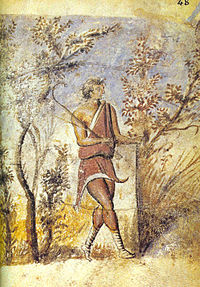 (Greek: Νίκανδρος ὁ Κολοφώνιος Níkandros ho Kolophṓnios; fl. 2nd century BC), Greek poet, physician and grammarian, was born at Claros (Ahmetbeyli in modern Turkey), near Colophon, where his family held the hereditary priesthood of Apollo. He flourished under Attalus III of Pergamum.
He wrote a number of works both in prose and verse, of which two survive complete. The longest, Theriaca, is a hexameter poem (958 lines) on the nature of venomous animals and the wounds which they inflict. The other, Alexipharmaca, consists of 630 hexameters treating of poisons and their antidotes. Nicander’s main source for medical information was the physicianApollodorus. Among his lost works, Heteroeumena was a mythological epic, used by Ovid in the Metamorphoses and epitomized by Antoninus Liberalis; Georgica, of which considerable fragments survive, was perhaps imitated by Virgil.[1]
The works of Nicander were praised by Cicero (De oratore, i. 16), imitated by Ovid and Lucan, and frequently quoted by Pliny and other writers (e. g. Tertullian in De Scorpiace,
http://en.wikipedia.org/wiki/Category:Ancient_Greeks_by_occupation
DEUCALION’S CATACLYSM
According to mythology, because the descendants of Titans were impious to gods and sinful, Zeus decided to eliminate them and Poseidon helped him. As soon as Prometheus heard about that he advised Deucalion and his wife Pyra -both were devout and fair- how to escape the disaster. So, Deucalion built a boat in which he and his wife embarked and remained there until Zeus’ and Poseidon’s wrath had calmed down. In the meantime, Zeus had sent such a pelting rain upon humans that he flooded most of the places in Hellas and only those people who sought refuge in the high mountains were able to escape that catastrophe.
Deucalion and Pyrrha after floating and drifting for nine days in the boat they came to Parnassus where, after the rain had stopped, they sacrificed to Zeus to thank him. Then Zeus seeing their gratitude sent Hermes to ask them what they wanted and they said, “People”. Zeus ordered them to throw stones behind them and the stones which Deucalion threw over his head became men while the stones that Pyrrha threw became women. Hence people were called metaphorically “laos” (=people) from laas (=stone). Deucalion and Pyrrha had two sons Hellen and Amphictyon and two daughters Protogenia and Melantho. Hellen was the founder of a town in Thessaly which was called Hellas after him and the inhabitants, who were called Graeci ( Greeks ) after Graecus the son of Thessalus, changed their name into Hellenes after him. Hellen wedded Orseis and had three sons: Dorus, Xuthus and Aeolus, the first leaders of Hellenes. Xuthus ruled over Peloponnese and had two sons, Achaeus and Ion from whom Achaeans and Ionians derived their names. Aeolus reigned over Thessaly and the inhabitants were named Aeolians after him. Dorus and his people, who were called Dorians, dwelt the regions to the east of Parnassus.
Could it be possible to determine approximately the date of Deucalion’s Cataclysm? The prehistoric Hellenic Tradition says that it was during Deucalion’s Cataclysm that the mountains in Thessaly, Olympus and Ossa, parted, the river bed in the valley of Tempi was formed and the lake of Thessaly (Herodotus Z, 129) discharged in the Aegean, thus converting itself into a large plain. On the other hand, the name itself “Thessaly” (=thesis alos ==> position of the sea) reveals the geological state of this area, as it was thousands of years ago. But how many thousands of years ago? Scientists of Geology confirm that 12.000 – 15.000 years ago Thessaly was a lake and only around 10.000 B.C. at the end of the Pleistocene Epoch -when the recession of glaciers started- Thessaly took its current geological form. (History of the Greek Nation Vol. A. Page 12, Ekdotiki-Athens). Therefore, we could relate Deucalion’s Cataclysm, on the one hand, to the recession of the Northern Glaciation during the Würm Period, and on the other hand, to the information in “Timaeus” about the sinking of Atlantis around 10.000 B.C. which could have been caused by the melting of glaciers. Mention should be made here that in Hellas as well, traces of glaciers have been identified in Olympus, Pieria and Athamania mountains. In conclusion, we could say that it seems sensible to assume that Deucalion’s Cataclysm really took place and prehistoric Hellenes having experienced and recorded that big natural catastrophe in their memory bequeathed it to the memories of the coming generations.
HEBREW is GREEK
THE WORK OF JOSEPH YAHUDA
A book that “mysteriously disappeared” soon after its publication*
In 1982, a suppressed, ages-old, historical truth, was resurrected through the publication of a
book by Becket Publications of Oxford, England (ISBN O 7289 0013 O). The book,
published in English, and titled Hebrew is Greek, was written by lawyer, linguist and
researcher, Joseph Yahuda, the son of Isaac Benjamin Ezekiel Yahuda, an ethnic Jew and
longtime researcher and linguist. Though Jewish both by nationality and religion, J. Yahuda
could be considered a Greek– according to Isocrates’ definition of a Hellene [see definition
below. ed.], since his decades-long, unbiased, and meticulously thorough search reveals the
linguistic relationship of numerous groups of words in Hebrew, Greek and Arabic. Work that
was published without fear or hesitation by a scholar whose only concern was for the
discovery of the truth.
Following the book’s publication, and while only a limited number of copies circulated for a
few fortunate individuals, the book disappeared from the face of the earth. It was as if an
invisible hand intervened and blocked its circulation. It cannot be found at any public library,
it is not sold at any bookstore on earth, not even in a curiosity or antique shop. [Rare book
dealers, in the U.S. and the U.K., have told TGR that there have been inquiries after the book,
but that they have been unable to locate a copy anywhere. ed.] The only information available
about the book throughout the world is its title. No book reviews on this book were ever
published, neither positive nor negative, moderate or offensive. Nor, it seems, has there been
any other evaluation of the work. One must eventually come to the inescapable conclusion
that every one of the copies originally published was somehow withdrawn through some sort
of a secret operation with a global reach.
Concerns posed by another Jewish intellectual who wrote the preface of the book.
The research published in the book covers 718 pages. The introduction was written by Jewish
professor Saul Levin, though no enthusiasm on his part was evident in his introduction. He
admits that following the 1977 publication of his book entitled, The Indo-European and
Semitic Languages, J. Yahuda got in touch with him, and they maintained a fruitful
relationship through correspondence, though they never actually met in person. The reason for
the interest in J. Yahuda expressed by S. Levin, as he himself confessed, was the publication
of several writings by J. Yahuda, such as the La Palestine Revisite, written in 1928, Law and
Life According to Hebrew Thought (1932) and This Democracy (n.d.), published by Pitman.
Professor Levin learned of the contents of the book [from the proofs which were sent to him
from time to time] for which he wrote the introduction gradually, as it had already been sent
to the printer. As Professor Levin disclosed: “It was J. Yahuda’s congeniality and my inherent
curiosity that did not allow me to refuse the writing of the introduction.” [For a better
understanding as to why Professor Levin was not enthusiastic about writing the introduction,
consider the fact that] the black Jew, Martin Bernal, has stated: “Saul Levin was among the
many Jewish individuals who worked on the publication of [my] book, Black Athena.” A
book which has been deemed to be a disgrace and a discredit to serious scholarship by the
vast majority of specialists who have read it.
Joseph Yahuda speaks about his work
In the preface of his book, J. Yahuda notes:
This ecumenical research will be reviewed by three separate specialists, one for each language
researched, although each specialist does have knowledge of the other two languages. This is
not an error committed only by me. I attempted repeatedly, yet unsuccessfully, to find more
scholars who would be willing to assist me in my quests. As an example of what I was up
against, at the very beginning of an hours-long meeting, one potential colleague exclaimed:
“All of this is garbage and we are all wasting our time.” My answer was: “Both you, and I,
will be judged for the words we say, whenever we discuss my work.” I hold no hostility or
bitterness because of such small-minded opposition to my belief. In fact, during the progress
of my research, I twice attempted to arouse [this man’s] interest, but in vain. A little while
after the meeting referred to above, I mentioned his degrading comment to Christodoulos
Hourmouzios, a graduate of the University of Athens, and an acknowledged specialist on
Homer, and he said: ‘ I think you are one of the greatest linguists I know’; he promised
complete cooperation with me. Unfortunately, before we could begin our work, he passed
“There were others who admitted that they had been convinced; that something did really
exist in my theory. However, they did think that my belief in the correspondence of Hebrew
with Greek was rather exaggerated. They said I was too ambitious, and suggested, for
my own good, that I expect less and adopt a ‘less controversial view.’ One of
them, Sir Leon Simon (A British Lord of Jewish descent), a known classicist
who knew Hebrew, attended my first lecture on the issue on the evening of Jan.
14th, 1959.He did this even though he was old and had to travel a long distance
in bad weather and heavy fog. He introduced me, briefly and carefully, not
wanting to commit himself to any decision until the end of my speech. Then,
before the audience was asked to pose questions, he said the following, which I
noted: ‘I don’t believe that everyone will agree with everything J. Yahuda has
told us, as he may have thought that everyone understood what he was saying.
Despite any doubts that may exist, I am sure of one thing. He has resolved a mystery that had
created confusion for scholars for the past 2.000 years. For, if he is correct in stating that
many Greek words that begin with sk were transformed in Hebrew as if sk was a digraph [a
combination of two letters to make one simple sound. ed.], or one of the two letters lost, then
Homer was not wrong when he left the vrachi [ abbreviated ] vowel at the beginning of the
word Skamandros, as in his famous line: ‘Ον Ξανθόν καλεουσι θεοί, άνδρες δε Σκάμανδρον’.
[The Gods called Xanthos, mortal men Skamandros. ed.] I also had a fruitful interview with a
scholar of international fame, which was then followed by a series of exchanges of
correspondence. This correspondence ceased after he sent me a note, wherein he wrote: ‘It
could also be possible that you would say that the English word ball comes from the Greek
βάλλω, or that you discover a connection between chow and show since chows are exhibited
at shows.
“The result was that I was obliged to fall back on my own sources, and to depend only on my
own efforts, thus devoting my free time to this research for the past 30 years or more. Two
things kept me going: the unfailing support of my wife, Cecile, and the unprecedented
emotions we felt with every new discovery. When my wife was asked by a friend how she
was sure of my work, since she knew neither Greek nor Hebrew, she answered: ‘But, I know
my husband. He hates speculating, he always insists on finding proof. As a lawyer, he is able
to evaluate this proof. He tells me that he has plenty of proof that is convincing, and I believe
him.’ There is truly a plethora of ‘proof that is convincing’ which I have attempted to make
available, not only to those technically specialized, but also to interested, non-specialist
researchers.”
Yahuda realizes the significance of Greek Civilization
“I was somewhat familiar with the Bible, as stated above. My brother, Solomon, and I learned
the New Testament in Hebrew translation from a copy that my father had, as part of his
personal library. For years, the distant Biblical past was alive in my mind: I lived with the
vision of the pyramids to such an extent, and my passion for the Bible was so great, that I
developed hostile feelings for the Greeks and Romans. Strangely, this hostility did not involve
the Egyptians, who were our enemies, had been the enemies of our forefathers and had so
deeply influenced post-Biblical Hebrew. Neither had I been able to learn more than the
necessary Latin needed for my law education and practice. However, my feelings for the
Greeks and Romans have changed radically since then. Now I realize that our differences
were similar to those of a civil war, as fratricidal as the taking of Troy had been, for I became
convinced that the Jews are of Greek descent. This revolutionary transformation took place
around the time I was thirty years old, following the publishing of my book Law and Life
according to Hebrew Thought. That year (1932), I became interested in biology as a ‘hobby’.
During my haphazard study of the issue, I came across various Greek words that were
strikingly similar to the Hebrew words of the Bible, and I drew the conclusion that the Greeks
had borrowed them from us. I began debating the idea of whether or not I should one day
begin a systematic comparison of the two languages. At that time, I was still fascinated with
the more traditional studies, and, like everyone else, I believed without a doubt that the
Semitic languages were Semitic and the Aryan languages were Aryan. These two could not be
mixed. At the same time, though, I was thinking that it would be interesting to collect and
deconstruct a complete list of groups of similar words so as to demonstrate the degree of
influence of Hebrew on Greek at the time before Alexander the Great (considering that the
reverse influence became stronger following his conquests). I knew very little of where this
research would lead me and what the results would show.
“I had such little knowledge of Greek that all I knew were the first letters of the alphabet,
knowledge that I had acquired by chance during my studies of mathematics and geometry. I
remember asking my friend Gerald Emanuel, in a teashop in 1932, to write the whole Greek
alphabet on the bottom of a half-written page. The years passed, but when I published my
book Biology and New Medicine in 1951, I then had the opportunity to spend all of my free
time on researching those possible links that I suspected existed between Biblical Hebrew and
Greek. Following the acquisition of some rudimentary knowledge of Greek grammar, I
submerged into the translation of the Septuagint, solely based on my memory of the meaning
of the numerous pages that I had chosen to read. Then I read Homer, comparing him to the
Bible. One page from the translation of the Iliad, one page from the Old Testament, line for
line, page by page; I started with Genesis and the first book of the Iliad, along with the last
book of the Odyssey and the 2nd book of ‘Chronicles.’ Day after day, the list of similar words
grew longer, until it reached 600 words — including words related to different views and
activities of life — which could not be attributed only to the borrowing factor. In any case,
history has not witnessed circumstances where such elaborate borrowing would be possible
on such a large scale. I was convinced that this phenomenon went past the limits of
borrowing, reaching the limits of a genetic relationship. The door of genealogical descent
stood before me and I could not attempt to pass through it or climb above it. It should open
freely and widely and the key to this was the grammar. The only grammatical characteristics
that I knew of that were common to both Greek and Hebrew, concerned the definite article
and the dual number nouns [count nouns. ed.]. I stopped reading and began thinking and re-
thinking the results of my non-processed research. I used the materials I had: analyzing,
classifying, comparing these with the Biblical variations and the dialectic interchanges of the
Greek letters, selecting specific words to be compared. Thus, my theory began to develop.
Some of the Greek dialectic letters could be used interchangeably, such as the letters ‘k’ and ‘t’,
‘o’ and ‘a’, ‘s’ and ‘d.’ I also noted a curious transformation with Hebrew words: a suffix to a
Greek word changed to a prefix in a Hebrew word. Early on during my research, I tested the
exactness of the words and verified their meanings. As the number of tests increased, the
more effective my research became, and the confidence in my theory rose.
“From the beginning, I based a lot of my work on Arabic. With my theory, it became possible
for me to correct the translation of the Septuagint, using the Septuagint and the translation of
the Bible, using the Bible. These discoveries cured me of my dyslexia in relationship to Greek
and Hebrew and made me capable of reading a Hebrew word as if it had been a variation of
the word. I formed a series of phonetic and morphology rules. I gradually gathered a number
of valuable facts. Some examples are that the declension dotiki [dative] exists in Hebrew, that
the masculine plural is the same in Hebrew and Greek, and that, in general, a compound
Greek verb is equivalent to a Hebrew compound verb. I estimate that 9 out of each 10
words of the [Jewish] Bible can be proved to have a purely Greek equivalent. Many
issues were resolved which prove that the Greeks and Jews hold some customs and religious
convictions in common, whereas the Hebrew language is proven to be richer and more
beautiful than believed until today because of the existence of these groups of words. This
whole matter is, in practice, consistent with the following two proposals: Biblical Hebrew is
Greek; and, the Jews are Asian Greeks. In reality, the conclusion of this massive, extended
and complicated research can be summarized in the following brief sentence: Hebrew is
‘Greek wearing a mask.'”
An example for the rest of his co-religionists
As already stated, the research of J. Yahuda restores part of a universal truth that has fallen
into oblivion for millennia. Not only is the Hebrew language “Greek wearing a mask” (in
other words, a distorted version of Greek), but, as we have announced at international
conventions, there is no other language on the face of the earth except Greek. A few years
ago, we made this statement at a convention of the Literary Society Parnassos, titled: “The
Ecumenical Character of the Greek Language,” where we used texts and images to prove this
statement. All other languages are just descendants or distorted dialects of Greek,
adopted by the peoples.
Finally, we present one of the tables compiled by the undaunted scholar, J. Yahuda, where
Hebrew letters, along with their pronunciation in Hebrew appear on the left, the equivalent
Greek letters and their pronunciation in the middle, and the Arabic letters and pronunciation
on the right. In the preface, just above the table shown below, Yahuda’s first theorem is
written, to wit: “The Greek and Hebrew alphabets demonstrate striking similarity insofar as
the order of the letters is concerned, their names, their shapes and their pronunciation.”
We cannot omit to express our admiration for this great man, who, defying the forces of
darkness and medieval ignorance, proved to be an unbiased scholar, unburdened by
preconceived dogma and purposeful deception. A man who broke the bonds of mischievous
misinformation so prevalent in [the past] century, and dared to defy traditional nationalistic
and racist fanaticism while declaring a revolution against the international forces of power.
He has achieved the level of a true Hellene. After discovering the truth, he struggled to
make it known, he revealed it and he published it without fear. His acts were acts of
patriotism, since he has raised his compatriots to a level approaching the Greeks. He
called them “Asian Greeks.” His life and work truly pronounce him to be of equal value to a
Greek, in contrast with those of his compatriots who have denounced him and his book. Is it
because they are afraid or is it because they are unable to follow in his footsteps?
In Conclusion
Yahuda has scientifically proven that both Hebrew and Arabic are Greek in their origin, as is
true with the other languages of the world. It is to be regretted that the speakers of this
distorted Greek dialect do not take advantage of this, so as to elevate themselves to free and
Christ-loving Greeks, as their compatriot Yahuda has done. Many of them prefer to live in
the dark; It is a fact to be pitied that some are fanatics who hate everything Greek, especially
her history and her language. In the past, many such men appeared in the Roman State as
politicians, academics or administrators in the public sector, and fought against everything
that was Greek. Nowadays, such men cooperate with the global powers that are propelling the
world toward destruction. A destruction that can only be avoided by a rebirth of the only
salvation for humanity: Greek Civilization!
This article was written by Attorney, linguist, and researcher, Konstantinos G. Georganas, for
Davlos. Feb. 1999 issue, pp.12931-12937. (Translation by staff. Emphasis not in original text
was added.)
Note: The great rhetorician, Isocrates (436-338 B.C.), gave the following definition of a
Hellene in his Panagyricus:
Athens has so far outrun the rest of mankind in thought
and speech that her disciples are the masters of the rest,
and it is due to her that the word “Greek” is not so
much a term of birth as it is of mentality, and is applied
to a common culture rather than a common descent (50).