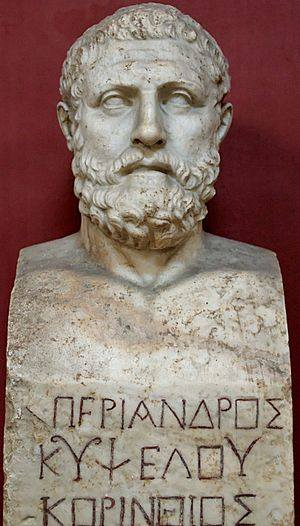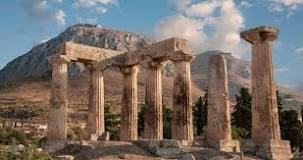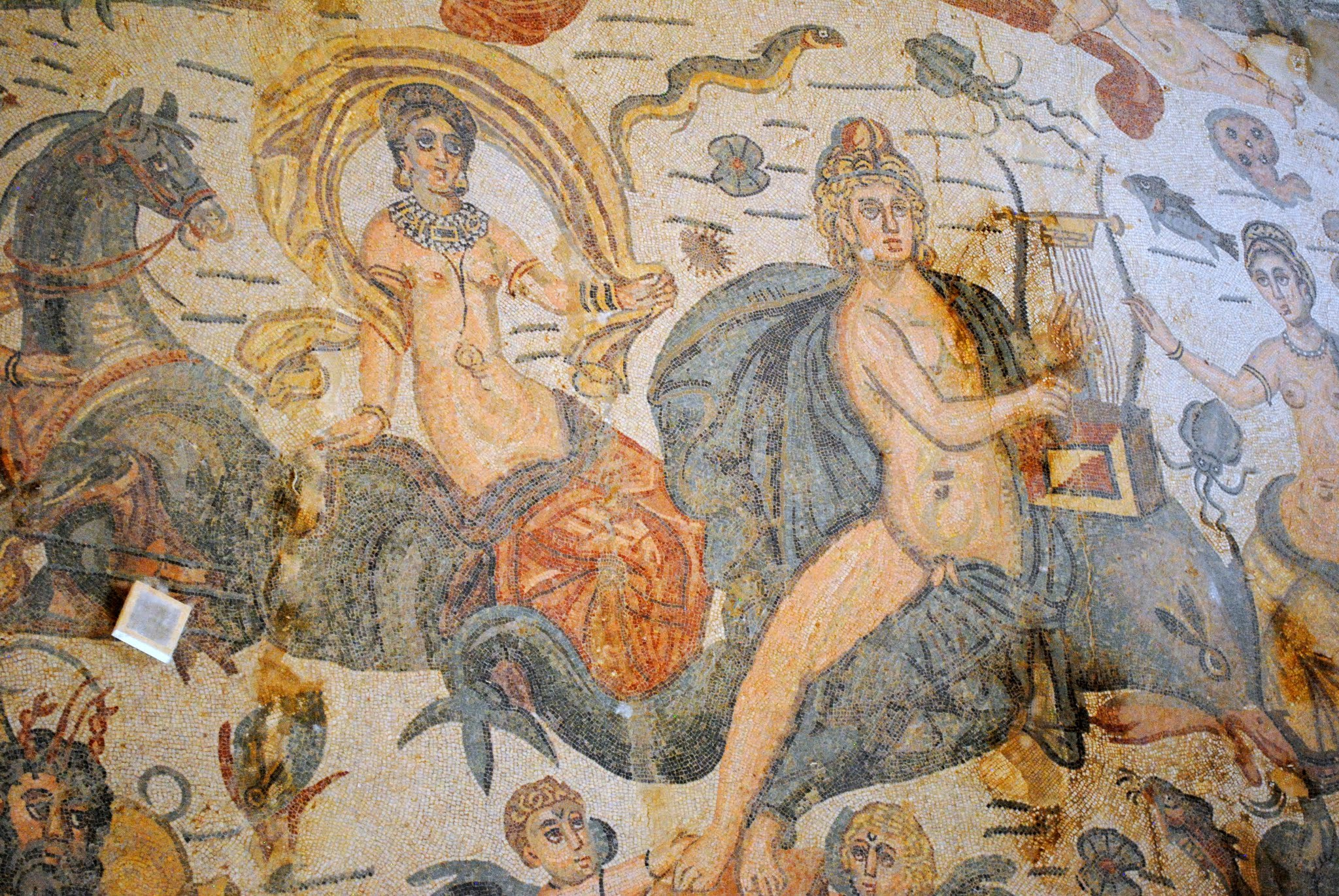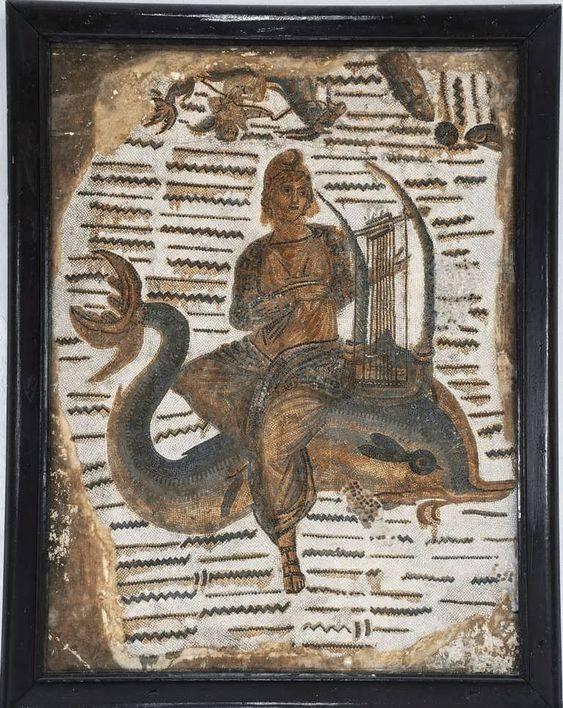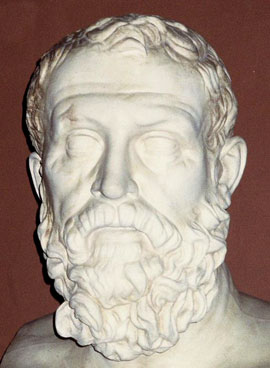
A S C L E P I O S, H I P P O C R A T E S D I O S C U R I D E S, A G N O D I K E, F A N O S T R A T E

Hippocrates (d. 460 BC-360 BC) was a curious Greek physician, the first to systematically classify medicine and attempt a methodical treatment of diseases. He was Koos, Asclepiades by birth and son of Heraklides and Phainaretis or Praxithea daughter of Phainaretis according to others. He was the 20th descendant of Herakles from his mother and the 18th descendant of Asclepius from his father. Initially he was a student of his own father, then of Herodikos, Gorgias, the orator Leontinus and Democritus of Abderitis, although several researchers claim that his relationship with Gorgias and Democritus was a spiritual communication and not a discipleship relationship.

*******Facts and assumptions v2500 YEARS AGO HIPPOCRATES PERFORMED BRAIN AND HEART SURGERY…

DESPITE THE ALMOST NON-EXISTENT MEANS OF HIS TIME, HIPPOCRATES PERFORMED DIFFICULT SURGERIES. HE AND HIS STUDENTS SUCCESSFULLY TREAT ED ORTHOPEDIC, CARDIAC AND BASIC SURGERY CASES. HIPPOCRATES EVEN PERFORMED OPERATIONS ON THE HUMAN SKULL, AS WE READ IN SEVERAL OF HIS WORKS … IN ADDITIO TO THE OPERATION ITSELF, HIPPOCRATES ATTACHED GREAT IMPORTANCE TO THE REPARATION OF THE PATIENT AND THE OPERATING ROOM.

IN THE WORK KAT’IATREION, HE DESCRIBES IN DETAIL HOW THE PATIENT SHOULD BE PREPARED BEFORE THE OPERATION, HOW THE TOOLS ARE STERILIZED, HOW THE SPACE IS SHAPED , BUT ALSO HOW ARTIFICIAL AND NATURAL LIGHT IS USED DURING THE OPERATION …

AMERICAN ARCHAEO BOTANISTS WERE ABLE FOR THE FIRST TIME TO STUDY AND ANALYZE THE CONTENTS OF PILLS MADE BY DOCTORS IN ANCIENT GREECE AND WHICH WERE DISCOVERED 20 YEARS AGO, IN A GREEK SHIPWRECK OFF THE COAST OF TUSCANY...

DNA ANALYZES SHOWED, THAT EACH PILL WAS A MIXTURE OF AT LEAST TEN DIFFERENT PLANT EXTRACTS, INCLUDING HIBISKUS AND CELERY. “FOR THE FIRST TIME, WE NOW HAVE PHYSICAL EVIDENCE OF WHAT IS CONTAINED IN THE WRITINGS OF THE ‘ANCIENT GREEK PHYSICIANS DIOSCORIDIS AND GALENOS, CARRIED OUT.

“BALANCING ELECTROMAGNETIC CONVECTION FLUIDS OF THE BODY” TREATMENTS BY REGULATING THE ALKALINITY AND ACIDITY OF THE ORGANS,THAT THEY WERE MAKING CURSE USING “LEFT-HANDED AMINO ACIDS” (ANTIBIOTICS) OBTAINED FROM PLANTS, FULLY KNOWING, THAT ONLY RECENTLY DID MOLEKYLAR BIOLOGY DISCOVER THE ACTION-REACTION OF LEFT-HANDED AMINO ACIDS (ANTIBIOTICS) AMINO ACIDS (ORGANISM PROTEINS).

EVERY SICKNESS START FROM THE PSYCHE(= ΨΥΧΗ=SOUL) AND AFTER FINISH IN THE BODY.
HIPPOCRATES.
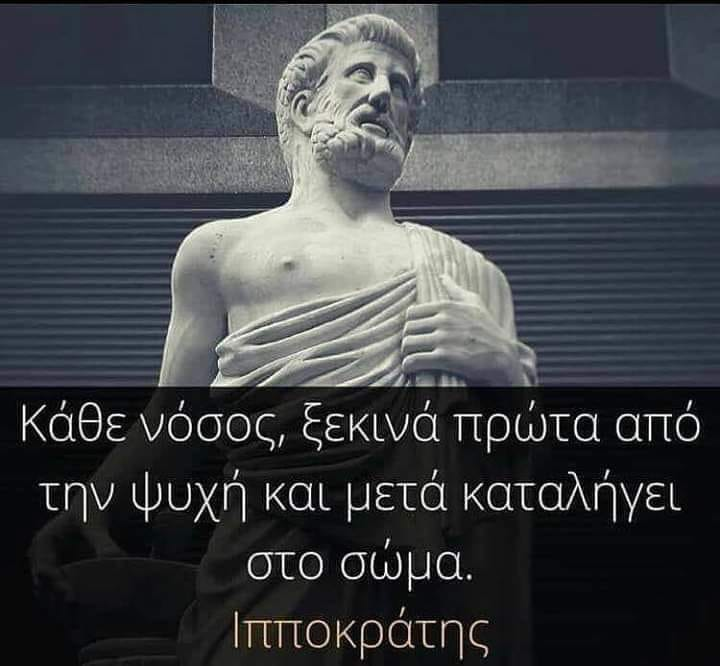
The most serious disease is the one in which the patient’s face looks nothing like his normal one. The human brain contains the causes of many diseases.. The doctor treats, nature heals .. A wet diet benefits everyone who manifests fever, especially children, and those who are used to similar diets .. Hippocrates..
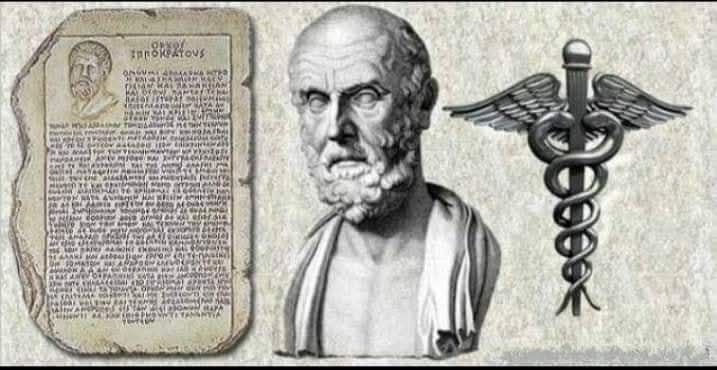
The two snakes – actions that express our nervous system, formed in the Caduceus of Mercury. Legend says that Mercury once saw two snakes fighting and put the rod between them and wrapped them around her and stopped hostile. The name of Hermes  etymolocaly means, “one who interprets”, (Eρμηνευτής – Hermeneutis = “performer. The performer is our mind, the logic that processes and knowledge, thus developing the consciousness and the evolutionary level of the divine.
The snake symbol adopted Asclepius and Hippocrates as a symbol, which apart from the body were doctors and doctors of the soul. The rod with which control the snake, is the power of authority and control over this energy, the body electromagnetism, which is disturbed. This can be translated in the sense of koutalini snake control rod to the spine, the energy of the lower instincts, the brute, who is as influential mentioned through the spinal cord like a snake runs along the spine, the and ancient Serpent called.

The two snakes – actions that express our nervous system, formed in
KHPYKEIO /KIRYKIO (=Messangers rod) The SYMBOL of HERMES κῆρυξ
ΚΗΡΎΚΕΙΟ from the verb: κηρύσσω=I inform, I announce.
KIRYKIO SYMBOL or
(“CADUCEUS” Later in Latin & West later) of HERMES or “MERCURY”LATER in LATIN)>>>>>>>>>>
HERMES once saw two snakes fighting and put the rod between them and wrapped them around it and stopped hostile. The name of Hermes etymolocaly means, “one who interprets”, (Eρμηνευτής – HERMENEUTIS = “performer. The performer is our mind, the logic that processes and knowledge, thus developing the consciousness and the evolutionary level of the divine.
The snake symbol adopted ASCLEPIUS and Hippocrates as a symbol, which apart from the body were doctors and doctors of the soul. The rod with which control the snake, is the power of authority and control over this energy, the body electromagnetism, which is disturbed. This can be translated as DNA in the sense of controling the rod to the spine, the genetic energy and of the lower instincts, the brute, who is as influential mentioned through the spinal cord like a snake runs along the spine, the and ancient Serpent called.
So, like HERMES, reconciles these forces, and balancing the distribution of energy in the body occurs and healing, the mind admonishes and guides his passions.
HERCULES, from INFANT he managed to DROWN two snakes, that put under its control, to tame and dominate the forces that make us vulnerable and vulnerable, and became a demigod hero went to the CHAMPS ELYSEES ( “Ylisia pedia”Ηλυσια πεδια). Through this myth of HERCULES let it also leaked and that, as Pais of ZEUS, the possession of a power of the heavenly, not only dominate through the mind and intellectual contact with the Divine earthly, bodily instincts, but and implied a mission given.
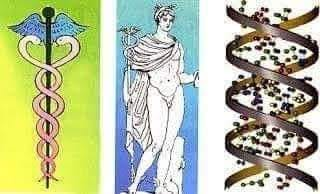

So, like Hermes, reconciles these forces, and balancing the distribution of energy in the body occurs and healing, the mind admonishes and guides his passions.
Hercules, from infancy he managed to drown two snakes, that put under its control, to tame and dominate the forces that make us vulnerable and vulnerable, and became a demigod hero went to the Champs Elysees (Ηλυσια πεδια). Through this myth of Hercules, let it also leaked and that, as Pais of Zeus, the possession of a power of the heavenly, not only dominate through the mind and intellectual contact with the Divine earthly, bodily instincts, but and implied a mission given to him against the Offit Atlanteans, those we call Satan today.

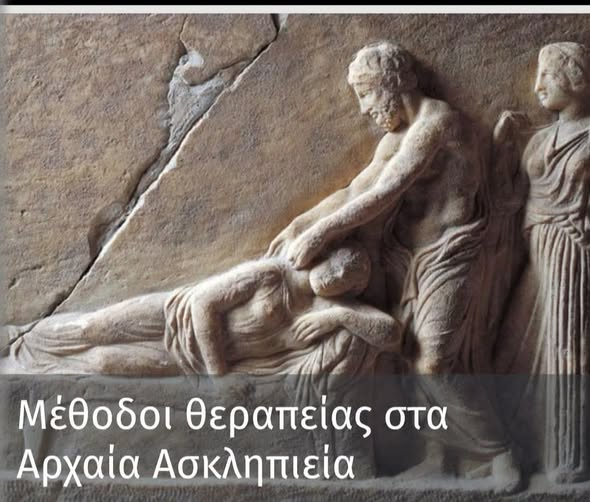
THE CULT OF ASCLEPIUS BECAME VERY POPULAR AND THE CULT CENTRES (KNOWN AS AN ASCLEPIEION) WERE USED BY PRIESTS TO CURE THE SICK. INVALIDS ALSO CAME TO THE SHRINES OF ASCLEPIUS TO FIND CURES FOR THEIR AILMENTS (IN THE SAME FASHION PILGRIMS VISIT LOURDES TODAY.) THE PROCESS OF HEALING WAS KNOWN AS INCUBATION. THE PATIENT WOULD SPEND THE NIGHT IN A DORMITORY. DURING THE NIGHT THEY WOULD SUPPOSEDLY BE VISITED BY THE GOD IN A DREAM. PRIESTS WOULD INTERPRET THE DREAMS AND THEN RECOMMEND A REMEDY OR GIVE ADVICE ON HOW THEY COULD BE CURED WITH PERHAPS A RECOMMENDED VISIT TO THE BATHS AND GYMNASIUMS. THERE WERE MANY CENTRES AND SCHOOLS OF MEDICINE, FROM TRIKKIS IN THESSALY TO THE ISLAND OF COS. IT IS BELIEVED THAT HIPPOCRATES, A GREAT DOCTOR OF ANTIQUITY, PLIED HIS TRADE ON THE ISLAND OF COS. IT IS ALSO SAID THAT HIPPOCRATES WAS A DESCENDANT OF ASCLEPIUS.

THE ROMANS ADOPTED THE CULT OF ASCLEPIUS, BUT CHANGED HIS NAME TO LATIN; THEY CALLED HIM AESCULAPIUS.
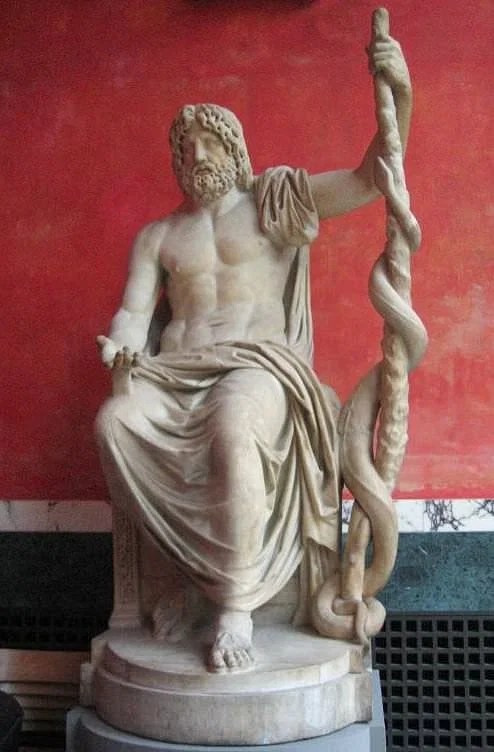
*Asklepieia*(=Ασκληπιεία) were the sanctuaries where Asclepius—the preeminent healing god of antiquity—was worshipped, either alone or, more commonly, alongside deities closely associated with him, most frequently Hygieia (the personification of health). Asclepius is the quintessential hero-god, occupying an intermediate status between mortal man and immortal deity; he is a hero who dies, yet, by virtue of his divine nature, continues to exert influence—attaining a chthonic form of immortality by drawing power from the depths of the earth. His influence reaches the mortal realm, where his presence signifies rebirth, making him the ideal ally against decay.

In the *Iliad*, Homer locates the homeland of Asclepius in Trikke (modern-day Trikala) in Thessaly, on the banks of the river Lethaios. According to Strabo, this site housed the “most ancient of all” *Asklepieia*, which featured an underground *adyton* (a restricted, inner sanctum). The Homeric text attributes a heroic character both to Asclepius and to his sons, Podaleirios and Machaon—all of whom possess the medical knowledge that their father had learned from the centaur Chiron.

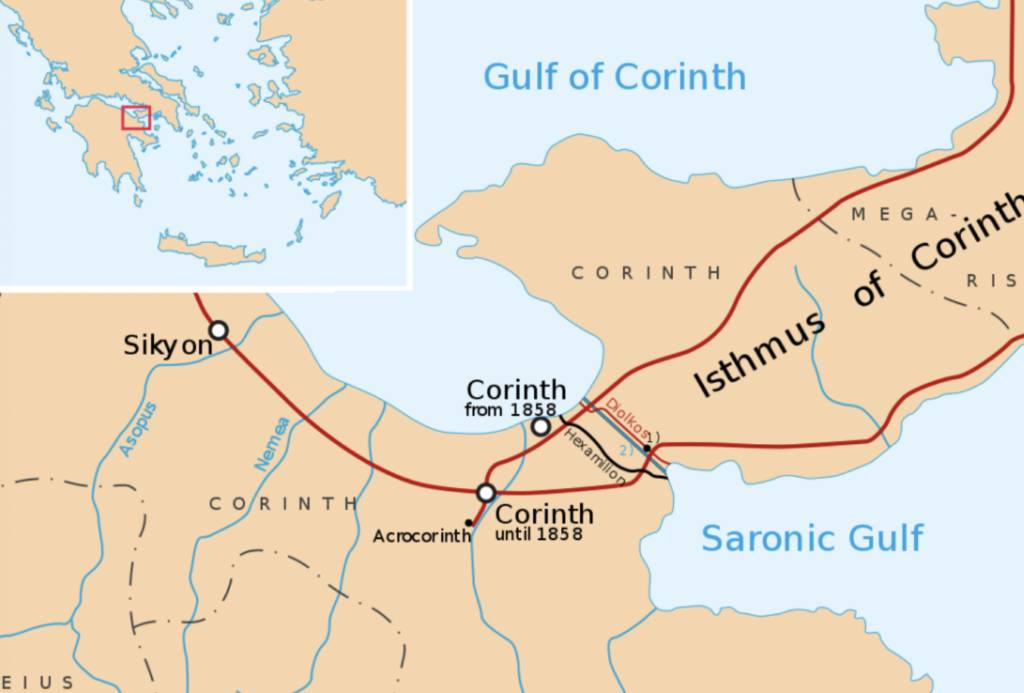
There are approximately 300 Asklepieia (sanctuaries of Asclepius) throughout the Greek world. According to Strabo, the most renowned among them were: the one in Trikke, where the cult of the god of medicine first emerged; the one in Titane (Sicyonia), founded by Alexanor, the son of Machaon; the one in Tithorea (Phocis), dedicated to Asclepius as the Archegetes (founding deity); and the one in Epidaurus—from which the Asklepieia in Athens, Kos, Knidos, Megalopolis, Delos, Kyllene, and Kechreae (which also featured a spring for therapeutic baths) are considered to have branched off. Also notable was the Asklepieion at Pergamon in Asia Minor, which became famous during the Roman period. Furthermore, there were temple-based healing centers—such as those at the sanctuaries of Amphiaraus and Trophonius—where the practice of enkoimesis (incubation/temple sleep) was primarily employed. Sacred healing centers were constructed near springs—locations that typically coincided with nodes of “L-lines” (telluric currents). The Greeks of that era were aware of these phenomena, as evidenced by the spatial arrangement of significant sanctuaries and cities—such as Athens–Eleusis–Delphi, Thebes–Tanagra–Amphiareion, and Chalcis–Amphiareion–Delos, among others. The ground plan of the buildings at the Asclepieion in Epidaurus reveals that the presence of pathogenic zones—areas of harmful geo-radiation—was taken into account; the site also featured a sacred well dedicated to Asclepius, which remained constantly filled with water. Furthermore, there was the Tholos—a place for sacrifices and an adyton (inner sanctum) featuring an underground descent—a design also found at the sanctuary of Palaemon at the Isthmus. Beautiful groves with expansive vistas; springs with clear mineral waters—as confirmed by modern chemical analysis—suitable for both drinking and therapeutic bathing; temples, infirmaries, private residences, areas for resting, theaters, and gymnasia—all these elements created an environment that was, in itself, inherently therapeutic. When combined with the rigorous hygiene protocols, ritual purifications, and the sacred, healing ministrations of the physicians, this environment yielded the most profound therapeutic outcomes.
Within the temple, there existed a formal hierarchy among the healers. At the top was the high priest, who performed sacred rites, examined patients, and prescribed treatments. He was assisted by the pyrophoros (“fire-bearer”), who served as his deputy in his absence. There were also numerous hieromnemones—essentially hydrotherapists and physiotherapists—along with other healers possessing medical expertise who cared for the patients, as well as the temple priestesses. The order of physicians—known as therapontes (“healers” or “attendants”) and “sons of a god”—consisted of individuals with long-standing service. Having inherited this vocation from childhood, they gained vast experience through their interactions with a multitude of patients, a process that continuously advanced their medical knowledge. Silence and a collective sense of awe—bordering on dread—prevailed among the patients awaiting the divine physician to heal them. In this solemn, reverential atmosphere, the high priest—personifying the god—would appear, accompanied by other priests who took on the roles of Panakeia, Iaso, and Hygeia. Moving in a ritualistic manner, they would examine the suppliants and perform therapeutic interventions—including actual surgical procedures, as evidenced by the discovery of surgical instruments.
This theurgic (divine-based) medicine was preserved and practiced by priest-physicians, largely due to the prevailing belief that illness served as a form of punishment for transgression—specifically against unwritten laws—and was thus a manifestation of divine intervention. Since healing depended upon the gods, their earthly representatives—the priests—undertook this task. A significant component of the therapeutic approach employed by these priests was their capacity for divination; they utilized this skill for diagnosis, the interpretation of dreams, and the selection of appropriate treatments, whether pharmaceutical or otherwise. The atmosphere of mystery served to generate a neuropsychic vibration—accompanied by corresponding neurovegetative and neurochemical reactions—thereby facilitating hetero-suggestion and auto-suggestion with greater intensity and effectiveness. The descent into the inner sanctum—into the bosom of Mother Earth—corresponds to the impulse to return to the maternal womb; in this manner, the miracle of the patient’s rebirth and healing was both sought and induced.
BIBLIOGRAPHY
The Mysteries & the Practice of Divination in Ancient Greece, Ch. K. Mavroudis
The Sacred Geography of Greece, N. K. Litsas
Science and Life Encyclopedia
Papyros Larousse Britannica Encyclopedia
Great Greek Encyclopedia
Health Encyclopedia
THE  DOUGHTERS & SONS of ASKLIPIOS

HYGEIA -ΥΓΕΙΑ =  HEALTH: from: “ygiiros” related to “wet” = hydro. This liquid state, the “ygriis” is healthy. “Healthy esti temperateness of juice in us” … Always health characterized as liquid, juicy, while illness and death have the common characteristic dryness, stiffness.

–  IASO (Ιασώ: from: IAOMAI = I HEAL ιάομαι = θεραπεύω).

–  AKESO (Ακεσώ: from: AKEOMAI = I HEAL with a sharp instrument) ακέομαι

–  PANAKEA (Πανάκεια:Παν+akeia =The Everything Healer)

– AIGLI (Αίγλη) φως ηλίου – phos Heliou -, δόξα ‘ from: Aiso – αϊσσω + λίαν. = the Radiation of the Health.

MAHAON – Μαχάων from: Mahomai=I fight – mahi =battle example: Andromach the doughter of Priamos king of Troja, meaning=the battle against man— mahaira = knife, surgeon (χειρουργός).

PODALEIRIOS  (Ποδαλείριος) FROM: pous = foot – πους + leirion – λείριον (field flower). he had permentaly his feetinto  withwild field flowers – Botanic Doctor. (ιατρός – iatros=doctor + rootcuter ριζοτόμος)”

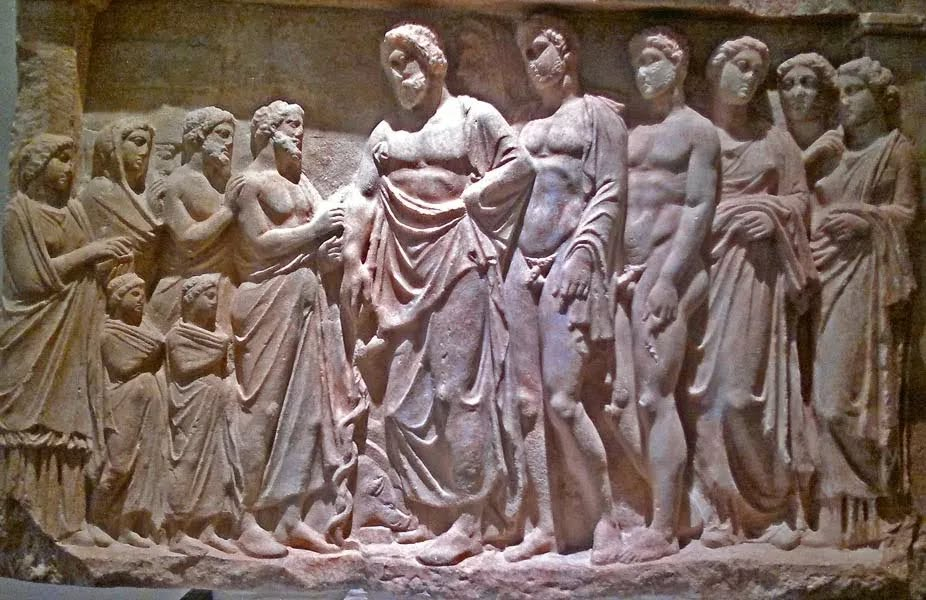
The two sons of Asclepius, returning unharmed from the Trojan war, continued to travel and, posthumously deified, like his father. Established places of worship and healing, dedicated to Asclepius, named “Asclepiea”. Ancient Asklepion considered that the Trikke in Thessaly, while the most famous was despite Epidaurus. Equally famous was the Asklepion of Kos, which was famous for Asclepiadae and particularly of course, for the father of medicine Hippocrates.
Even mentioned that:

“Animals temples of Asclepius was the serpent (όφις), who symbolizes the periodic of renewal and is an emblem of wisdom, truth and intelligence (ευφυΐα), the cock, symbol of vigilance, the dog, symbol of faith, intelligence and vigilance and whoever in the Asclepiea healed lambent Tina diseased, the Aix (=Goat) which breastfed Asclepius and calculus because tartar became mythological legend that nourished Asclepius in his childhood.

MEDICAL IN ANCIENT GREECE – ASKLIPIOS – HIPPOCRATES – GALENOS – Dioscouridis & More

Asclepius, god of medicine, son of Apollo and the nymph Coronis, daughter of Phlegyas who lived at the foot of Mount Pelion, brought up by the wise centaur Chiron, is the most famous healer of diseases that plague people in antiquity, and the power arrives by raising the dead … Daughter of course, the Health ..

“Asclepius: God of Medicine, worshiped everywhere in ancient Greece.
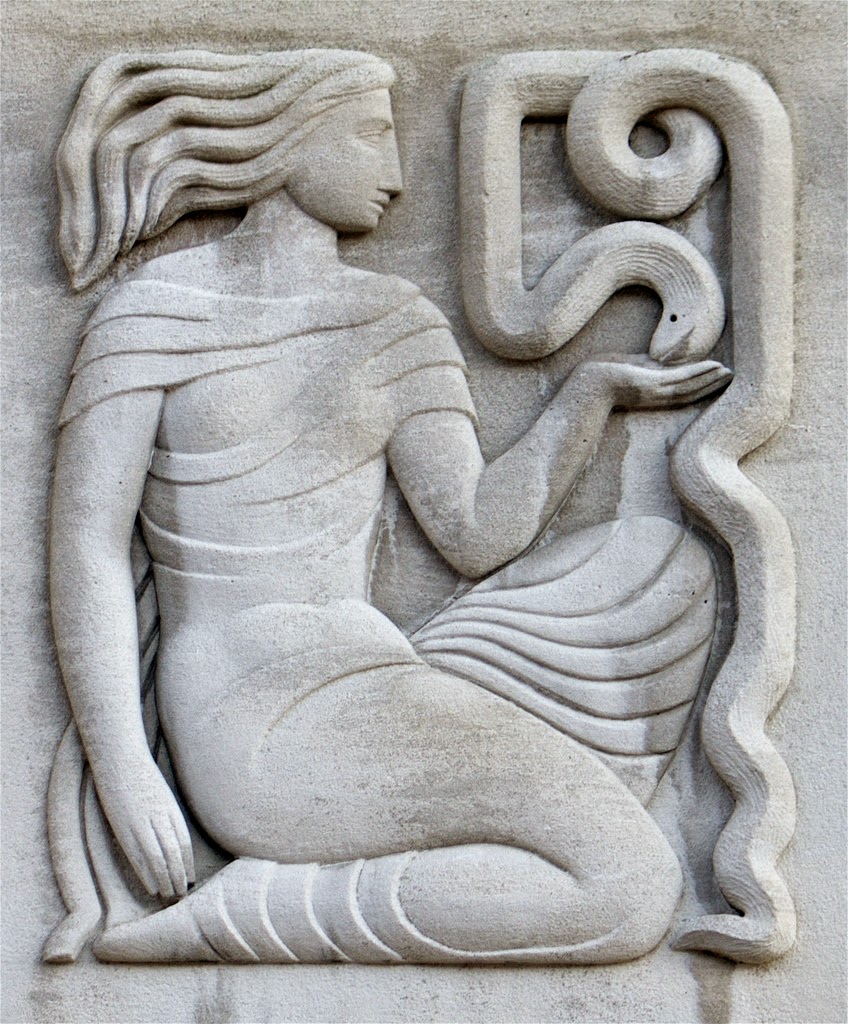
The two snakes – actions that express our nervous system, formed in the Caduceus of Mercury. Legend says that Mercury once saw two snakes fighting and put the rod between them and wrapped them around her and stopped hostile. The name of Hermes  etymolocaly means, “one who interprets”, (Eρμηνευτής – Hermeneutis = “performer. The performer is our mind, the logic that processes and knowledge, thus developing the consciousness and the evolutionary level of the divine.
The snake symbol adopted Asclepius and Hippocrates as a symbol, which apart from the body were doctors and doctors of the soul. The rod with which control the snake, is the power of authority and control over this energy, the body electromagnetism, which is disturbed. This can be translated in the sense of koutalini snake control rod to the spine, the energy of the lower instincts, the brute, who is as influential mentioned through the spinal cord like a snake runs along the spine, the and ancient Serpent called.


So, like Hermes, reconciles these forces, and balancing the distribution of energy in the body occurs and healing, the mind admonishes and guides his passions.
Hercules, from infancy he managed to drown two snakes, that put under its control, to tame and dominate the forces that make us vulnerable and vulnerable, and became a demigod hero went to the Champs Elysees (Ηλυσια πεδια). Through this myth of Hercules, let it also leaked and that, as Pais of Zeus, the possession of a power of the heavenly, not only dominate through the mind and intellectual contact with the Divine earthly, bodily instincts, but and implied a mission given to him against the Offit Atlanteans, those we call Satan today.

THE CULT OF ASCLEPIUS BECAME VERY POPULAR AND THE CULT CENTRES (KNOWN AS AN ASCLEPIEION) WERE USED BY PRIESTS TO CURE THE SICK. INVALIDS ALSO CAME TO THE SHRINES OF ASCLEPIUS TO FIND CURES FOR THEIR AILMENTS (IN THE SAME FASHION PILGRIMS VISIT LOURDES TODAY.) THE PROCESS OF HEALING WAS KNOWN AS INCUBATION. THE PATIENT WOULD SPEND THE NIGHT IN A DORMITORY. DURING THE NIGHT THEY WOULD SUPPOSEDLY BE VISITED BY THE GOD IN A DREAM. PRIESTS WOULD INTERPRET THE DREAMS AND THEN RECOMMEND A REMEDY OR GIVE ADVICE ON HOW THEY COULD BE CURED WITH PERHAPS A RECOMMENDED VISIT TO THE BATHS AND GYMNASIUMS. THERE WERE MANY CENTRES AND SCHOOLS OF MEDICINE, FROM TRIKKIS IN THESSALY TO THE ISLAND OF COS. IT IS BELIEVED THAT HIPPOCRATES, A GREAT DOCTOR OF ANTIQUITY, PLIED HIS TRADE ON THE ISLAND OF COS. IT IS ALSO SAID THAT HIPPOCRATES WAS A DESCENDANT OF ASCLEPIUS.

THE ROMANS ADOPTED THE CULT OF ASCLEPIUS, BUT CHANGED HIS NAME TO LATIN; THEY CALLED HIM AESCULAPIUS.

THE  DOUGHTERS & SONS of ASKLIPIOS

.

HYGEIA -ΥΓΕΙΑ =  HEALTH: from: “ygiiros” related to “wet” = hydro. This liquid state, the “ygriis” is healthy. “Healthy esti temperateness of juice in us” … Always health characterized as liquid, juicy, while illness and death have the common characteristic dryness, stiffness.

–  IASO (Ιασώ: from: IAOMAI = I HEAL ιάομαι = θεραπεύω).

–  AKESO (Ακεσώ: from: AKEOMAI = I HEAL with a sharp instrument) ακέομαι

–  PANAKEA (Πανάκεια:Παν+akeia =The Everything Healer)

– AIGLI (Αίγλη) φως ηλίου – phos Heliou -, δόξα ‘ from: Aiso – αϊσσω + λίαν. = the Radiation of the Health.

For you, healer of diseases, Asclepius, I begin to sing.
In the Dotian plain, the beautiful Coronida, the daughter of King Phlegyas, gave birth to him, great joy for people, reliever of the pains of the hard. (l. 5)
Rejoice, then, unconquered: with my song I pray to you! (ll. 1-4)
In the Hymn to Asclepius, as well as in Pindar, Callimachus, and Apollodorus, Phlegyas is the father of Coronida, who is associated with the Dotian Plain, Lakereia, the Amyros River, and Lake Boebe.
Apollo and Coronis met and mingled at the foot of Pelion, in Lakereia, the city in Thessaly, where the Phlegyas lived, or the Dotian plain, as Pliny calls it.
It is said of Phlegyas that he was the father of Ixion and Coronis, who gave birth to Asclepius from Apollo. Angered by this, Phlegyas set fire to the temple of the god at Delphi.
The Phlegyas were associated with the Dryopes. Dicaearchus gave the name Dryopeia to the areas around Ambracia, which indicates that they also extended to the Ambracian Gulf, Oite and Spercheios in Achaean Phthiotis. Dryopes lived in Achaia, Phthiotis, New Evia, Argolis, Messinia, Kythnos, Rhodes, Cyprus.
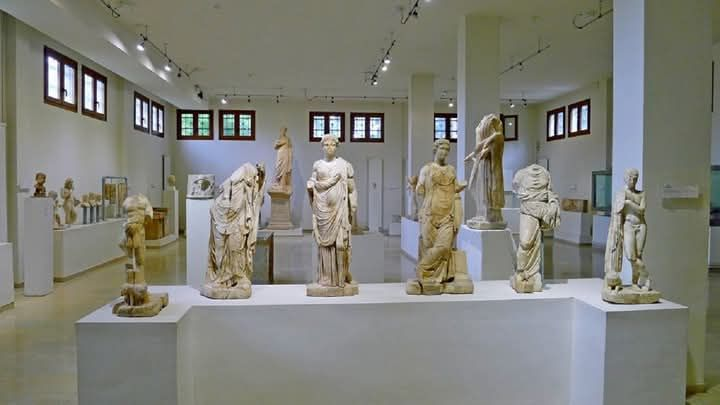
HYGIEIA and ASCLEPIUS

The worship of Hygieia was closely associated with the cult of Asclepius. While Asclepius was more directly associated with healing, Hygieia was associated with the prevention of sickness and the continuation of good health. In the second century CE, the famous traveler Pausanias provided an account based on what he witnessed within the state of Greece. 

In his encyclopedic text Description of Greece, written circa 160 CE to 174 CE, Pausanias described encountering statues of Asclepius and Hygieia, located at Tegea.

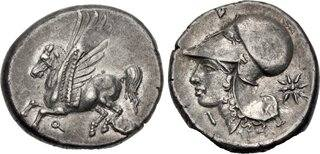
In addition to statues which represent the two figures, the incorporation of Hygieia within the cult of Asclepius can also be seen in medical iconography on numerous ancient Graeco-Roman coins. The close association between Hygieia and Asclepius indicates the important place she held in the cult of Asclepius.

Hygieia’s primary temples were in Epidaurus, Corinth, Cos and Pergamon. At the Asclepeion of Titane in Sicyon (founded by Alexanor, Asclepius’ grandson), the Greek historian Pausanias remarked that a statue of Hygieia was covered by women’s hair and pieces of Corinthisnclothes. According to inscriptions, similar sacrifices such as this were offered at Paros.

Hygieia was also associated with the Greek goddess Athena. In the 2nd century AD, Pausanias noted statues both of Hygieia and of Athena Hygieia near the entrance to the Acropolis of Athens.

Hygieia is related to the Greek god of medicine, Asclepius, who is the son of the Olympian god Apollo. Hygieia was one of the dauthers of Asclepius and his wife Epione. 

Hygieia and her four sisters each performed a facet of Apollo’s art:

AECLE/ΑΙΓΛΗ (radiant good health);

PANACEA/ΠΑΝΑΚΕΙΑ (universal remedy);  

IASO/ΙΑΣΩ (recuperation from illness);

ACESO/ΑΚΕΣΩ (the healing process); and Aegle (radiant good health).

HYGIEIA was usually worshipped in the same temples with her father, as at Argos, where the two divinities had a celebrated sanctuary..

The role of Hygieia in antiquity

One notable reference regarding Hygieia’s role as a goddess of health can be found within the Hippocratic oath. This oath is used by physicians in order to swear before various healing gods, one of which being Hygieia, that they would follow a code of established ethical standards of practice.

I swear by Apollo Healer, by Asclepius, by Hygieia, by Panacea, and by all the gods and goddesses, making them my witnesses, that I will carry out, according to my ability and judgment, this oath and this indenture.

Hygieia and Asclepius

The worship of Hygieia was closely associated with the cult of Asclepius. While Asclepius was more directly associated with healing, Hygieia was associated with the prevention of sickness and the continuation of good health. In the second century CE, the famous traveler Pausanias provided an account based on what he witnessed within the state of Greece. 

In his encyclopedic text Description of Greece, written circa 160 CE to 174 CE, Pausanias described encountering statues of Asclepius and Hygieia, located at Tegea.

Asklepios and Hygeia, 5th century BC Archaeological Museum of Constantinople.
MAHAON – Μαχάων from: Mahomai=I fight – mahi =battle example: Andromach the doughter of Priamos king of Troja, meaning=the battle against man— mahaira = knife, surgeon (χειρουργός).

PODALEIRIOS  (Ποδαλείριος) FROM: pous = foot – πους + leirion – λείριον (field flower). he had permentaly his feetinto  withwild field flowers – Botanic Doctor. (ιατρός – iatros=doctor + rootcuter ριζοτόμος)”

Podaleirios was the son of Asclepius and Ipion. The word “Podaleirios” is a compound consisting of the synthetic words “ποῦς” (=foot) and “leirio” (=lily, narcissus). Therefore, the first name means one who has fine or delicate feet (see also: .

Podaleirius participated in the Trojan War. Together with his brother, Mahaona, during the siege of Troy, they rendered great services to the Achaeans, thanks to their medical knowledge. According to the myth, it was these two brothers who healed Menelaus, when he was wounded by the arrows of Pandarus. It is said that Podaleirius, returning from Troy, was shipwrecked in Caria, where Damethus was king. His daughter, Sirna, was seriously injured falling from the roof of the house. Podaleirius managed to cure her and Damiethos to show his gratitude, gave Podaleirius his daughter as his wife. The couple settled in Kos, where Podalirios founded two cities, one of which he named Sirna, in honor of his wife. Podaleirius and Cyrna had a son, Hippolochus, who was taught the medical art by his father.

Podaleirius and his brother, Mahaon, were worshiped as the patron gods of medicine in various parts of the Greek world.

sources

The two sons of Asclepius, returning unharmed from the Trojan war, continued to travel and, posthumously deified, like his father. Established places of worship and healing, dedicated to Asclepius, named “Asclepiea”. Ancient Asklepion considered that the Trikke in Thessaly, while the most famous was despite Epidaurus. Equally famous was the Asklepion of Kos, which was famous for Asclepiadae and particularly of course, for the father of medicine Hippocrates.

Even mentioned that:

“Animals temples of Asclepius was the serpent (όφις), who symbolizes the periodic of renewal and is an emblem of wisdom, truth and intelligence (ευφυΐα), the cock, symbol of vigilance, the dog, symbol of faith, intelligence and vigilance and whoever in the Asclepiea healed lambent Tina diseased, the Aix (=Goat) which breastfed Asclepius and calculus because tartar became mythological legend that nourished Asclepius in his childhood.

In ancient Greece the god of medicine and health was  Asclepius. (Check up page: Hippocrates – Asclepius school)
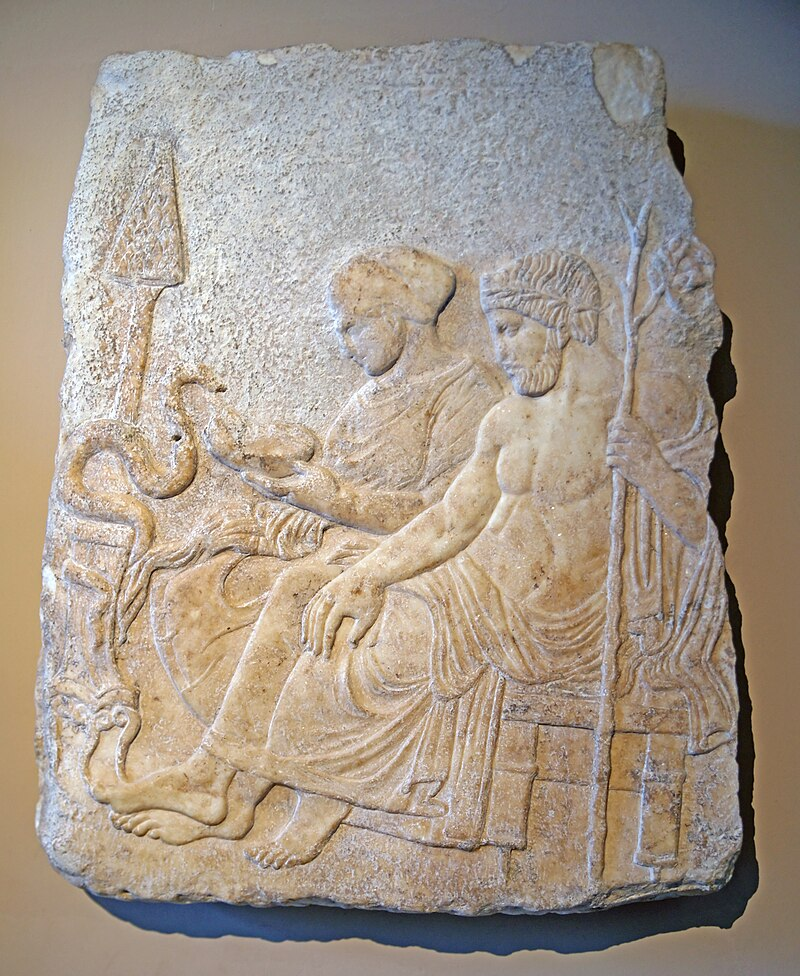
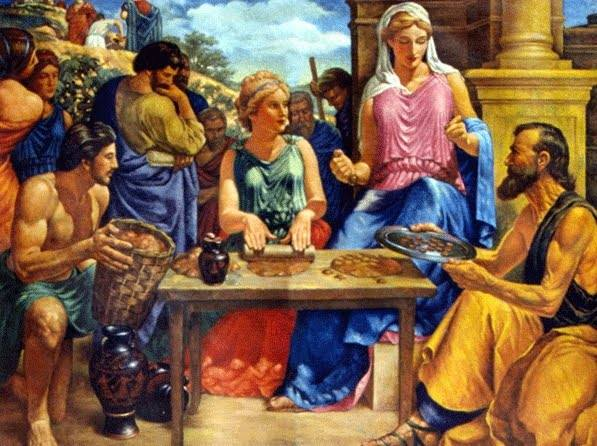
MERCURY (HERMES) & MERCHANT APPROACH DISAPPROVING ASCLEPIUS (PHYSICIAN) AND THE NAKED GRACES ( MEDITRINE , HYGEIA AND PANACEA )

According to mythology, Asclepius was the son of Apollo and Coronis, daughter of the king of Thessaly, phlegyas. When the Koronis was pregnant, expecting the child of Apollo, he fell in love and married a mortal, the power load. Apollo enraged by this and ordered his sister, the goddess Artemis, to kill Koronis, did. While the dead body of Coronis burning Apollo took the baby from her womb and gave it to the centaur Chiron to grow.

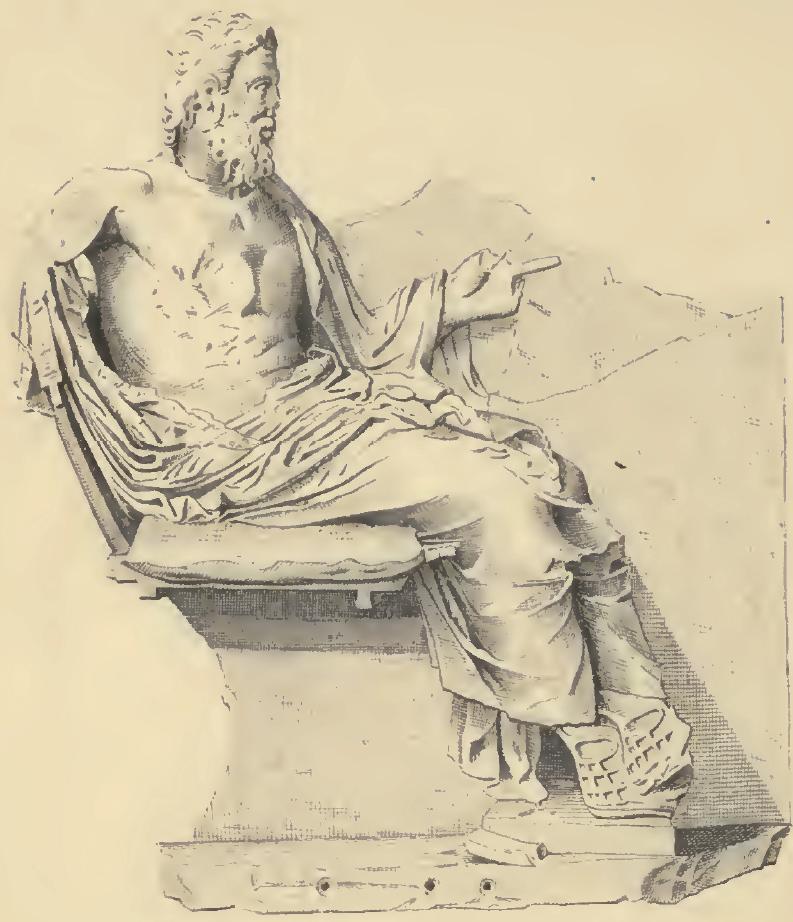
Chiron taught Asclepius medicine and hunting. Asclepius participated later in the Argonauts with Jason and his sons fought in the Trojan war. The ancient Greeks imagined Asclepius as a strong man with beard sitting on a throne. The sacred animal was the snake and the symbol was a stick.

ASKLIPIOS – Ασκληπιός from: ΑΣΚΕΛΗΣ + ΠΙΟΣ (= haggard +  Humble) is the one who”turns the hard & dry illness into healthy mildness stage “.

In Greek mythology there was the face of Machaon. He was the son of the god Asklepios and Epionis and patron of doctors. Today, no doctor in Greece does not know! The Machaon participated, in Homer, the civil between the Greeks Trojan war and took care of the wounded and sick of the  Achaean Greeks.

EPIONE was the goddess of the soothing of pain. She was the wife of the medicine-god Asklepios (Aslcepius) and the mother of the five Asklepiades (Asclepiades)–Hygeia (Good Health), Panakeia (Cure-All), Iaso (Healing), Aigle (Radiance), and Akeso (Curing).

Asklipios Bellow: Asklipios & Epioni on Ivory sculpture

The Greeks had the great temple of Asclepius in Epidaurus and many other churches across the country were called “Asclepieia” (in fact hospitals were) the most important of which was the island Kos. These spaces attending patients. There the god priests gave various herbal medicines and recommend the appropriate diet. Patients purified and having offered their gifts to the temples. After undoing in rooms in which the night was coming, supposedly, the god transformed – usually in snake – and healed them. In fact the treatment was done by the priests who were using natural medicines and often did surgeries !!!

At Epidaurus Asklepios was worshiped from the 16th century BC Originally the god worshiped in the temple of Epidaurus. The Asklepieion of Epidaurus had more religious character, unlike the Asklepieion of Kos had more scientific nature. The Temple of Asclepius in Epidaurus had inside the gold and ivory statue of the god was seated on his throne holding a stick. In Asklepion came sick from all over Greece and after the entire known world. Patients initially made a sacrifice to Asclepius father, Apollo, who also was a doctor. Indeed, Apollo and he was considered god of medicine and a skillful surgeon. In the sanctuary of Asclepius were medical instruments such as scalpels, and there were also medical procedures!

In Asklepion of Epidaurus was a place, the “Abaton”, where the patient is asleep. During sleep the insight given to the way in which they should act so as to cure and heal and others. In the 4th century BC the Asklepieion created spa and patients about the benefits to their health spas, as they do today in spas. At the same time in storey building Asklepios at Epidaurus were built two other floors, to accommodate the dozens of patients who flocked from across the country.

The first established medicine was the philosopher (disciple of Pythagoras) Alkmaion (late 6th – early 5th century BC) of Croton, a Greek colony in southern Italy. First he argued that the brain is the center of consciousness and physiological functions. The Alkmaion wrote the first medical book: the “On Nature” (common titles for older philosophers).

The Alkmaion, among others, described the optic nerve and the Eustachian tube in the ear. Also invented surgical instruments and did brain surgery. The Chalkidios featuring Alkmaiona as the father of anatomy, while others describe him as the father of medicine. The writer describes the grandfather of medicine! The Alkmaion established medicine and later Hippocrates of made them a science.

Equally important is the contribution of Empedocles in medicine. Empedocles (494-434 BC) was from Agrigento (Greek colony in Sicily). He dealt with physics, music and medicine. In medicine was the first to speak about the development of the human organism. He said the bodies of man from birth, undergo a process in which progressively developed and refined – as generally all tissues of the human body.

Also important was the contribution of the Diogenis Apoloniates (Apollonia Crete) was a philosopher of the 5th century BC Diogenes lived in Athens as a doctor. Probably went to dissections in corpses, since anatomically describe the circulatory system of man.

In Asklepion Kos before Hippocrates, the great physician, was Aineios (6th-5th century BC).
Hippocrates (460-377 BC) is the father of medicine. He lived on the island Kos. His father was a priest at the Asklepieion of Kos, where patients flocked from all regions of the country. His medical liked so he decided to deal with it. His studies debunking the disease that until then considered as a punishment from God and made a unique issue of Asclepius priests, doctors in training field – scientists.

*************A S C L E P I O S TEMPLE IN ROME*****************************”””

It was first built between 293 and 290 BC and was dedicated in 289 BC. According to legend, a plague hit Rome in 293 BC, leading the senate to build a temple to Asclepius, Latinised to ‘Esculapius’. After having consulted the Sibylline Books and gained a favourable response, a delegation of Roman elders was sent to Epidaurus in Greece, famous for its sanctuary to Asclepius, to obtain a statue of him to bring back to Rome.

The legend also relates that during the propitiatory rites a large serpent (one of the god’s attributes) slithered from the sanctuary and hid in the Roman ship. Certain that this was a sign of the god’s favour, the Roman delegation quickly returned home, where the plague was still raging. As they were on the river Tiber and about to reach Rome, the snake crawled out of the ship and disappeared from sight on the island, marking the site where the temple was to be built. Work on the temple began immediately and it was dedicated in 289 BC – soon afterwards, the plague ended.

In memory of the event, the front of the island was also remodelled to imitate a trireme. An obelisk marked the island’s centre, in front of the temple, to resemble a mast, while blocks of travertine were placed along the edges to look like a bow and stern. Several other structures arose on the island to shelter the sick, as evidenced by several surviving votives and inscriptions.
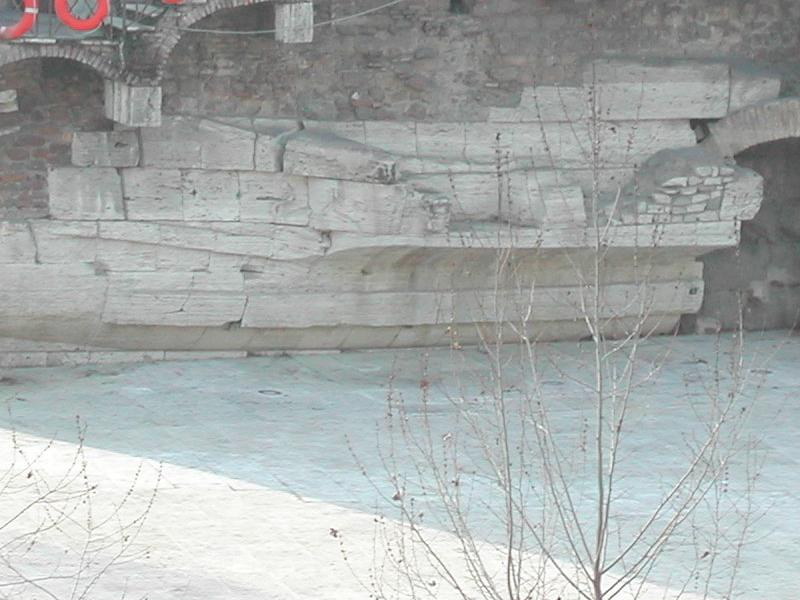
Remains….The temple was destroyed in the medieval period and as early as 1000 the basilica of San Bartolomeo all’Isola was built on its remains by Otto III. The medieval well near the altar of the church seems to be the same as that used to draw water for the sick in the classical period as mentioned by Sextus Pompeius Festus, a 2nd-century Latin grammarian. There is also the Fatebenefratelli Hospital in front of the basilica.

Little remains of the temple – some fragments of the obelisk are now held in Naples and Munich and some travertine blocks were re-used in modern buildings on the island, including a relief of the staff of Asclepius.

The island with the hospital, showing its similarity to a trireme. In the background is the basilica of San Bartolomeo.

Athenian Year gods worship patria piety

· At the Asclepia a daily ritual was performed, around sunrise, consisting of an ode of hymns and paeans in honor of the Savior Asclepius and the gods around

Mind, language and thinking have triangular relationship. It raises an issue whether language is necessary in the process of thinking. It is very debatable issue whether language and thinking are interdependent or independent elements. Role of the mind must be significant in the process of thinking. Language is a tool for thinking. This triangular is the issue of mind, language and thinking.

The Asclepiades were the last of the Greek Home Cults to fight to survive until the +5th century.

― The early Christians, in order to stop the spread of the Cult of Asclepius and to convert the Asclepiades, copied the morning service of the Asclepiades in their own synagogues with morning chanting services singing the “savior” Jewish Chris, as well, as applying many of the cult tactics of the Asclepiades until the final dominance of Christianity by force. [Kavadias Asclepius – Pliny .10, 96]

Ingen fotobeskrivning tillgänglig.

By Hippocrates the cause of the disease is the very sick and the doctor needs to consider carefully to find it. Hippocrates founded a clinical examination of the patient (overview, percussion, palpation, listening – with ear then) and went on innovative methods of treatment with herbs, herbal teas etc. It was reported elsewhere that this was the first to discover the healing powers of Willow containing acetylsalicylic acid in late 19th century, the German company BAYER manufactured in synthetic form: the known to us all, aspirin! Aspirin is a painkiller, antipyretic, anti-inflammatory and protects against heart disease and Alzheimer’s disease (dementia).
Hippocrates dealt with anatomy. Also invented special surgical instruments and proceeded in difficult surgeries. Such were the opening of the chest (thoracotomy), the trepanation of the skull (for cerebral edema or volume) n. A. The surgical instruments used were scalpels, forceps, endoscopes Exclamation mark, cranial tools for cranial surgery, forceps for childbirth and many other tools. Surgical instruments used by the disinfected before surgery, in fire or old wine (rich in alcohol).

The reputation of Hippocrates was huge and influenced all subsequent philosophers and doctors (medical). Hippocrates wrote his famous oath in which even today swear graduates all of the world’s medical schools. Among other oath says:

“… I recommend to my patients diet that science and the crisis I consider more appropriate and will chase away from them any harm and damaging food. I will never give them poison (see. Today euthanasia), nor give them incorrect advice (vl.simera medical errors and medical malpractice). Nor would prevent women from conceiving (in ancient Greece the family and children was something sacred) and will help them to have an abortion (see. Today unwanted pregnancies and abortions). Above all I would keep my life pure and undefiled my art. In that house will go only offer assistance to the sick and will depart every wrongful act and profane contact. And that listen from now on in the exercise of my medical duties on the common life of the people, if I am not allowed, I clam up and keep it secret, closely guarded … “.

With his last words Hippocrates and introduces the concept of medical confidentiality.

Hippocrates had school in Kos, wrote 59 books. First he talked about acute diseases like saying, kill most patients. He spoke about chronic diseases. Also described many diseases and symptoms such as pleurisy, pneumonia, the “frenitin” (fever with delirium), the lethargy, the “heat” (high fever) etc. Hippocrates gave great importance to the prevention of diseases and know the phrase: “Kallion (better) prevention is despite the cure.”

This was the general belief of the ancient Greeks who followed healthier life: the right diet (standard diet, the ancient Greek) and continuous exercise (from childhood). Moreover, few know that Hippocrates even founded homeopathy, centuries before its founder. This was the German physician Samuel Hahnemann started his experiments in 1813, 183 patients with typhus that had success 99. 95% !!!

Hippocrates founded homeopathy with the famous phrase: “like the like eisin remedies’, the same can be treated with the same. It is not unlikely Hippocrates and other doctors of ancient Greece to using homeopathic medicines, ie potent drugs diluted to such an extent that is not toxic but can cause symptoms similar to the disease and the mechanism to heal.

Generally, the ancient Greeks had developed the medicine that has experienced particular growth in the time of Hippocrates. First, first discovered the immunity acquired by the body after the attack from certain infections. This describes Thucydides saying that the plague in Athens in 430 BC, who got sick and survived any disease.

Also, the ancient Greeks used various therapeutic agents, such as bleeding (it might help to pulmonary edema and in some other diseases such as heart disease and kidney disease), medication herbal, administration of infusions, cauterization wounds, proper diet ( which today usually neglected) any illness, surgery – where necessary, as well as baths. In other words, first the ancient Greeks created the holistic medicine and seeing each patient as an individual, as a unique personality. Not see him as a figure, commodity and customer as modern medicine has enslaved to pharmaceutical companies and physicians are professionals …

The ancient Greeks usually die in old age, if we exclude deaths from wars and epidemics. This can determine the reader with the periods that were born the ancient Greeks died listed in this book. Most listed here, died after 70 !!! Unacceptable ‘surveys’ some (non-Greek) “scholars” of envy have supposedly low average life of the ancient Greeks.

The low average age in Greece applicable since the early to mid 20th century AD (Hunger, constant wars). Generally, the Greeks are characterized by their longevity. The current exceptions are due to the adoption of western lifestyle and especially the western diet causes heart disease and cancer. Besides, toxic and carcinogenic substances are everywhere: in the air, in food, in the water we drink, even in breast milk !!! The natural medicines of ancient Greek containing the substances pharmacology later isolated and proceeded to synthetic production.

 Asklepeion

In ancient Greece there were many medical schools such as Kos (Hippocrates) and Knidos (Greek colony in Asia Minor. – Opposite Kos). In Knidos was known physician Eudoxus lived in the 4th century BC There were also many Asclepieia was – as discussed above – temples in honor of the god Asklepios. In essence it was infirmaries and were called as the first hospital !!! We mentioned before the Asklepieion of Epidaurus. Other big Asclepieia was Athens, Kos and Pergamon.

Pergamos was a city in the Middle. Asia during the Hellenistic period became the capital of the kingdom of Pergamon. Medical schools in ancient Greece were in Kos by Hippocrates in Cyrene (Greek colony in Libya) and Croton (Greek colony in southern Italy) – from Alkmaiona. However, it is noted that all the ancient Greeks had medical knowledge and even in Athens and in many other cities and young people were taught the lesson of medicine, as part of their schooling! This unfortunately is not the current school …

THE FIRST AND ANCIENT MEDICINES IN TABLETS WITH A SEAL, MADE IN GREECE, ON THE PORT !!!

“… He is left with me in Limno the Filoketin … he is not the one who is under the arm of Limnia, even if he is called to fall. “

[Why (it is said) that they left the Host there .. and that he was healed immediately by the clay of Limnia, in which it is said that Hephaestus fell].

Excerpt from the work of “Heroic” by Flavi Filostratos (170/172 – 247/250), who was the main spokesman of the Second Sophistication. He was born in Limnos, although he calls himself Atheneus.

According to mythology, when Hera threw her newborn son Hephaestus from Olympus, because she thought he was ugly, into the inactive volcano of Mosychlos of Lemnos, Hephaestes managed to heal the injuries of his fall with the healing soil of Lake Earth. Since then he stayed there and installed his workshop on Mosykhlon Hill, where he built his most famous works for gods and men. Also, with the yoke of Limnia land, the famous king of Thessaly Philoktis was also healed, when he was bitten by a snake and his companions the Acheeans abandoned him alone in Limnos and continued their journey to Troy.

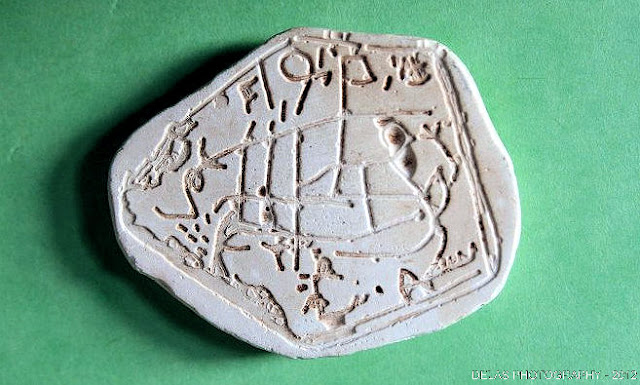
The “Lake Land”, the treated mud from the soils of Lemnos, was the first standardized pharmaceutical formulation in the history of Medicine. The first standard pharmaceutical product we encounter from antiquity to the 19th century holds an important position not only in the Greek sphere, but also throughout Europe.

After his mining ceremony, the soil, after being sanctified by a priest who arrived in Mosykhlo from the capital of Lemnos, Ifaistia, was transported to the city and with water, along with goose blood and onon’s milk, which was ritualized, was made into a form of liquid clay, which was dried until it was he became like a soft candle and they carved him into a plate. They put the seal of the goddess Artemis on them.

In Christian years, the “Lake Land” was called “holy land” and its mining ceremony took place on August 6, celebrated by the Feast of the Savior, near there was also the Savior’s Chapel. They sealed the formations in the form of Christ. During the Turkish rule, the clay plates were sealed with the crescent or other official Ottoman stamps. The sultan made the decisions for trade in the land of Limniaki. In fact, from the constant mining, the spot there looked like a well. It is reported that a small amount of clay was given to potters, to make cups and vessels, from where they drank. Many Turks used them, because they believed that it neutralizes every poison that comes in contact with clay. A small historical-folkographic study published in 1934 by Pope Angelis Michelis writes:

“In Agion Hypation of Hodza, gave this soil to the touts and they sealed vessels with his seal, containing “Kul Mectoum”, that is, “ex-neutral poison.” “

It is the “Lake land”, a clay coarse liquid red soil, a clay with a characteristic peculiar brown color. Its hue is called “medium reddish brown” and has been designated as number 43 in the global atlanta of colors that gave it the name “Terra Lemnia”.

According to modern chemical analyses of the composition of the soil, scientists have observed that, among others, it contained myrite clay, aluminum, iron oxide, water, calcium, magnesium, sodium carbon, and sulfuric acid. All these ingredients make it beneficial for the body and make it a kind of panakea. Reports from ancient years present the composition of the earth’s Lamnia as a miraculous worker with unique healing properties. Its use was carried out by ingesting, with a reduction in wounds or dissolved in water. According to several studies, it appears to have antiseptic, hemostatic and painkiller action, while believed to treat typhoon fever and fever, skin and eye inflammation, dysentery, stomach disorders, anemia, and neutralizing snake venom. Mixed with vinegar helped in cases of vomiting and bleeding.

It is first mentioned by Herodotus (484 BC. Χ. -425 π. Χ.

/410 π. Χ. ). But then, many scholars and physicians of antiquity studied, used and wrote about it, with the great Greek physician Claudius Galinos leading (129-199 BC. Χ. ), which at 167 m. Χ. he visited Limnos to investigate the properties of “Land Lake”, attended its mining ceremony and bought 20,000 tablets. Following and in the works of great Byzantine, Syrian and Arab physicians, as well as Renaissance tourists, the properties of the “Lake land” are mentioned. So it gained an important position not only in the Greek area, but also throughout Europe and quickly filled “the pharmacies in East and West”. They refer to it by its Latin names, as “terra Lemnia” (land Lemnia) and “terra Sigillata” (sealed land). Until slowly because with the advancement of medicine various drugs were being manufactured, the last mining report was in August 1916. It is reported that at the ceremony, which once gathered 3000 people, then only 12 attended.

My post and comments photos are from: ellinondiktyo. blogspot. Click on each you will see the relevant information.

Venetia Georgiou

June 20, 2023 ·  ·  · 
Venetia Georgiou

20 Ιουνίου 2023  ·

Philolaus of Croton

Besides Hippocrates, in the middle of the 5th Philolaos century lived in Croton in southern Italy (Greek colony). Philolaos was Pythagorean philosopher and physician. After the destruction of the School of Pythagoreans in Croton, Filolaos fled to Thebes where he taught. When Filolaou diseases should seek the juices of man, ie blood, bile and phlegm. This accepts modern medicine with blood tests, biochemical tests and sputum (infection or macroscopic cancer or tuberculosis). Philolaos said also that excessive hot or cold, and too much food can cause diseases. As regards overeating known scourge of the western world, obesity. About extreme cold causes frostbite and vulnerability to infection, while excessive hot causes heat stroke.

asklipio_tis_ko.jpg

Even Aristotle had medical knowledge. His parents were Asclepiadae and even his father Nicomachus( =Battle winner) was physician to the court of King of Macedonia Amyntas B. From his father, Aristotle taught medicine which broadcast and Alexander the Great student. Alexander seemed particularly useful medicine in his campaign in Asia and even special diets recommended in patients soldiers.

Herophilus the Chalkidonios

Another great physician, was Herophilus of Chalcedon in Bithynia who lived in the 3rd century BC The Herophilus brought the medicine in Alexandria and was the first anatomist. He cuts rather animal and not human. But perhaps eventually made it to the man, as accused for that. Moreover, it is said that the Ptolemies in Egypt allowed the anatomy to criminals bodies. In general, the anatomy in the human body was prohibited until shortly after the years of the Renaissance. The Herophilus distinguished tendons of the vessels, described the nervous system, stood out the motor from the sensory nerves and said that the seat of the mind is the brain. Also studied the liver, duodenum (that gave the name of the related length), prostate, lung, brain (brain correlated to the nervous system), the lymphatic vessels and liver.

The Herophilus distinguished the optic nerve and studied the eye, naming the retina and cornea. Great importance is given to the proper diet and exercise, which accepts the modern cardiology. The Herophilus and invented an instrument for the study of beats, because he realized the diagnostic and clinical worthy !!!

Erasistratus Ceos

At the same time as Herophilus, ie the 3rd century BC, lived and Erasistratus from Kea (island of Cyclades) made in Alexandria anatomy and research on the heart. Erasistratus considered one of the founders of the anatomy. Note that Bithynia (area in northwestern Asia Minor.) Born Herophilus and generally southwestern Asia and Egypt were then Hellenistic kingdoms founded by Alexander the Great ruled that his successors and many Greeks lived there.

Galenos

After Hippocrates, the greatest physician of antiquity was Claudius Galenos was the founder of experimental physiology and descriptive anatomy. Galenos was a Greek. He was born in 129 or 131 AD Pergamon in Asia Minor. (formerly Hellenistic kingdom passed to the Romans). He was son of Nicias architect. From child Galen frequented the Asklepieion city that the Greeks founded as in other cities in the territory of southwestern Asia. There, patients flocked from around the world. Galenos was attending medical school doctors to practice the medical profession. At age 14 he began philosophy and medicine courses. Note that in ancient medicine was an integral part of philosophy. Teacher was the Satyr, a student of the great anatomist Quintus.

Later, at age 16, Galenos began his medical studies in Pergamum and continued in Smyrna (Greek Ionian colony), Corinth and Alexandria. In Alexandria did anatomy animal. In 161 AD Galenos went to Rome, where he healed the Aristotelian philosopher Eudemus, the moment that no doctor could not cure him. This satisfied both Evdimos set up by Galenos in aristocratic circles and made him famous.

The reputation of Galen came as the Roman emperor Marcus Aurelius and Lucius-Regent Oniro made Galenos official doctor of the court! Galenos gave many lectures and wrote several books. He died in 199 or 201 AD Unfortunately, his books – which were kept in the Temple of Peace – destroyed by fire. So they will stay hidden forever many of the innovative drugs and surgeries Galenos.

Galenos believed that good health was the result of a balance of four juices of the body: blood, bile, black bile and phlegm. Any disturbance in this balance or poor mixing juice leads to disease. Anatomy first, centuries before Darwin, discovered the similarity between man and ape !!! So used monkeys from northern Africa to anatomical studies (anatomy in humans above that forbidden). He also did anatomy in pigs.

Galenos studied the anatomy of the uterus, eye diseases and the movement of the chest and lungs during breathing. He described the liver and heart valves! Singled arteries from veins and said that the first releases his pure blood. Until then believed that the arteries circulating air. However, this is not a completely wrong and blood gases – oxygen and carbon dioxide – are transported in the blood dissolved. Mostly, however, found in red blood cells which are bound by and are released into the bloodstream.

Galenos reported that more blood is in the aorta. He said that the blood pumped into the aorta from the left ventricle after being passed through the right. Galenos spoke about muscle movement, breathing, semen, lung cancer, tumors, liver cirrhosis, convulsions and epilepsy (the sacred disease of the ancient Greeks), shivering, the delirium tremens, tuberculosis, stones in the bile and spleen ailments. Also dealt with the diet, he built many surgeries and medications.

Specifically manufactured teas, extracts and preparations, for example, drug plants such as opium, henbane and the bulbs squill. The last used them as cordial, diuretic and expectorant drug! Therapeutically used the poison of vipers! Today various poisons such as beeswax, of snakes and other natural substances (trunk fir, sharks and other substance) scientists searching drugs for cancer therapy. Some of them, in laboratory studies, stabilize or reduce tumor size or prevent irrigation with blood.

Dioscorides
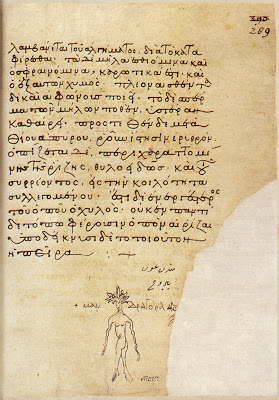
IT SHOULD ALSO MENTION THE NAME OF THE PEDANIOU DIOSCORIDES WHO WAS A GREEK PHYSICIAN, BOTANIST AND PHARMACIST OF THE 1ST CENTURY AD BY ANAZARGO OF CILICIA. HE WROTE THE BOOK “ON MEDICAL MATTER” 77 AD.

The Pedanius Dioscorides (40-90 AD) was an important physician, pharmacologist and botanist from Anazarbus of Cilicia, known for his five-volume work “On medical matter”, the most influential in pharmacology until 1600 AD . There are many copies of his work, even in the 5th century. Considered the leading pharmacologist of antiquity, the scientific contribution of which is considered equivalent to that of botany Theophrastus . Manuscripts by Dioscorides treatise, especially the oldest, as the code of the monastery of Great Lavra of Mount Athos, Konstantinoupoulis located in Vienna’s library, Naples and Michigan are of particular interest. In miniature of the 15th century is represented by Sofia shows a plant and a painter to portray who writes it.

Contents [hide]
1 Life
2 Archival material
3 Other works
4 References
4.1 Greek literature
5 References
6 Sources
7 External links
Life [edit | edit source]

Portrait of Dioscorides, Lefnten 1603
He was born around 40 AD the city Anazarbus Cilicia (pt. Northern Turkey) and little information delivered on his youth. Dioscorides was particularly inclined to study plants and herbs from an early age. After finishing medical studies at Tarsus near Supreme Court of Asklipieiadas School served to research the pharmacological properties of many plants, following the Roman army in several Mediterranean countries [5], serving as a doctor and having the responsibility of care for the injured.

His name Pedanius acquirer when it was adopted by the Roman family of Pedanion to acquire Roman citizenship rights.  It was named Pedanius more to be distinguished from the:  poet Dioscorides, and the historian Dioscorides.

He knew the properties of mandrake(μανδραγόρα), the therapeutic value and utility for premedication and sedation [8]. He had also noticed and described the phenomenon of allergic shock from taking drugs [9].

Dioscorides recorded more than 1,000 drugs, the majority of which came from plants. He also described substances that are now known as antiseptic, anti-inflammatory or contraceptives. Copies of the multi-volume work “On medical matter” were in constant circulation and used in practice by the heyday of the Roman Empire.

The first Latin version dates from 1478, a few decades after the invention of printing. The influence of his work spans at least until the Renaissance period and generally estimated tell Dioskourides methods of observation offered a solid foundation for the development of pharmacological science. Apart from its value as a medical textbook, high value is considered the wealth of information that gives the plants and herbs of southeastern Europe.

From Antiquity to the Renaissance, and later with the typography, the “On Ylis Medicine” was writen to all then known languages ​​in the West and in the East, and to the 19th century. He was a model for all medicinal books.

The Arabs called it even Dioscorides “Envoy of God Botanikis” .The most famous and valuable copy that is kept today in the Vienna National Library (Cod med.gr. 1). Copied by “commandment of residents and guilds of Pera in 512 AD and donated to Julian on amic. Other precious copies are the Code of Naples in 512 AD, several Arab codes, and the famous Turkish codes Topkapı Istanbul.

Certainly, Dioscorides not found himself the properties of all these plants. As pointed out by E. Mpaouman in his book “The Greek Flora ‘knowledge about the healing properties of nature are lost in the mists of time, and the first recording of treatment with herbs owe to Theophrastus. But the feat is that Dioscorides had recognized as therapeutic approximately 500 plants from 6000 found in Greece (8%), while today only 5% of the 600,000 plants that grow worldwide has erefnithei.To “Great Safflower”, one of 70 Centaur growing in Greece and still holds the name “Chiron” or “Blood of Hercules”, reminds us that the Centaur Chiron had affixed this herb on the wound that caused him Hercules. O Dioscorides considers herb valuable drug for the treatment of open wounds.

The “Elenion” is rather the “chiffons Cheironion” Theophrastus, the current Inola heleniom. Its roots contain substances Alantolaktoni, Inulin, etc. and used stimulant, a stimulant, such as for the treatment of respiratory diseases or angina. And today is used in chronic cough or chronic duodenal ulcer. In trade we find the name Hanopect or within the elixir Mellissengeist.I Mandrake root of the plant is already used by Homer as hypnotic and / or as a painkiller. The son of Asclepius Machaon had used on the wound of Philoctetes. In other cases they chewed piece for hypnotic. Dioscorides was getting juice from the root of mandrake was making and diluted mixture for controlled dosage, because high doses could be dangerous. The root of the mandrake contains alkaloids like Hyoscyamine, scopolamine and atropine. Still, there are homeopathic medicines prepared from the root of like Anhaloniom, Claoparest etc. But they have been replaced by purely chemical preparations. Being the first known hypnotic, the Mandrake has been chosen as the emblem of Greek Society of Anesthesiologists.

The atropos, the current Atropa belladonna, is a tall shrub toxic properties of which had described Dioscorides. The weight of an ancient drachma could cause fantasies in a double dose fantasies kept four days, and a quadruple dose cause death. Ten or twelve fruits are fatal. Name Belladona (Bella Donna) mean good woman because few drops of the fruit in the eyes causing dilated pupil, which is considered to embellish old women. Atropine is also used in ophthalmology, and against bradycardia and / or as an antidote to poisoning by insecticides or nerve gas.

Pro Dioskourides, otherwise “soul balm” today neat “balm”, used mainly for the treatment of wounds. As tea is considered today the best antidepressant after inhibitors Serotonin. In Europe and in America is known by the name St. John’s Wort or Johanneskraot, not the sales exceed 1 billion. Dollars a year. In Greece grows outside our door and our grandmothers used it as a pain reliever in babies. The antidepressant activity has xechastei.To juice of kafkalithres, the “Iordylion” gave him, mixed with wine, for certain kidney diseases, not the mallow, the “Malachi,” for bites from poisonous snakes, or used the flowers as Tea as today.

But medicinal plants that have survived until today are infinite, and those numerous history and mythology have connected with some treatment, so it is impossible to fit the brief reference to the contribution of Dioscorides. The influence of his work spans at least until the Renaissance period and generally estimated tell Dioskourides methods of observation offered a solid foundation for the development of pharmacological science. Apart from its value as a medical textbook, high value is considered the wealth of information that gives the plants and herbs of southeastern Europe.

Archive material 

Arabic book for simple medications: On medical matter Dioskourides. Cumin and Dill c. 1334. British Museum
 The homepage of the Vienna Dioscorides, Blackberry Artemisia.
 Dioscorides De Materia Medica Spain 12th 13th century.jpg
 Dioscorides writes seated
 Rare copy (515 AD) from the bird collection from Dioscorides, Vienna, Austrian National Gallery
 On medical matter in Byzantine version of the 15th century
 

Manuscript (Wiener Dioskurides)
 

Dioscuri; honor was given the name of a family of monocotyledonous plants (Dioscoreacae)
Other projects [Edit | Code edit]
About poisoning – De Venero
About iovolon- De Venetaris Anibalibus
About peony and what poiein may, Fragmenta 11.2.164 – 11.2.167, Berlin Pyr. 1914
References:
Gunther, R.T., ed. (1933). The Greek Herbal of Dioscorides. Oxford University Press.
Isely, Duane (1994). One hundred and one botanists. Iowa State University Press.
Krebs, Robert E. & Carolyn A. Krebs (2003). Groundbreaking Scientific Experiments, Inventions, and Discoveries of the Ancient World. Greenwood Publishing Group.
Murray, J. (1884). The Academy. Alexander and Shephrard.
Nutton, Vivian (2004). Ancient Medicine. Routledge.
Greek literature [Edit | Code edit]
On medical matter, pub, Georgiadis ISBN 960-316-155-1
About medical material (with translation), ed. Miletus ISBN 960-8033-01-02
On medical matter, five volumes, Cactus versions
On simple medicines (two volumes) ed. Cactus
About poisons and drugs such outpost and treatment etc. ed. Cactus
On medical matter, pub, Zitros, 2006 ISBN 960-8437-61-X
References [change | edit source]
Jump over ↑ TRGunther, The Greek herbal of Dioscorides (1934)
Jump over Dioscorides ↑
Jump over ↑ Encyclopedia Structure, vol. 8os.s 144
Jump over ↑ Introduction, On medical matter, ed. Cactus.
Jump over ↑ J. Mond, Pharm., 2.117 (1958)
Jump over ↑ Dioscorides, the founder of Pharmacology
↑ Jump over Lucian, Timaeus the Athenian 2.9 “under mandrake kathefdeis nor of epiorkounton hears nor adikountas bishop”
Jump over ↑ «on alert and periodynonton (ypervolikos pain) and efon on which House anesthesia intersecting or incinerated poiisai kathefdei agar man ‘
Jump over ↑ «kataferesthai and skotousthai and pnigesthai .. foregone conclusions on the drug.” Dioscorides, On poisons and drugs such outpost and para therapy. 152
Jump over ↑ Huxley (2007), pp. 34
Sources :
E.W. Stieb, Drug Adulterration and its Derectio in the Writings of Theophrastus, Dioscorides and Pliny, 1958
R. Huxley (ed.), The Great Naturalists, Thames & Hudson, London, 2007
Article ef.Kathimerinis
External links [edit | edit source]
Commons logo
The Wikimedia Commons has multimedia on the topic
Dioscorides Pedanius
Translation into German of Materia Medica, 1902

HIPPOCRATES AND MEDICINE OF THE ANCIENT GREEKS

Hippocrates was born in Kos. He came from the family of Asclepius (the primary meaning of the term “Asclepiadae” are those originating from Asclepius, whether doctors or engage in any other activity, according to I.. Tzetzes). Asclepius was lord of Triki in Thessaly, who was famous for his medical knowledge. Homer became a imitheo- therapist. In the end, he exalted into a god doctor.

In the “Symposium” of Plato implied two sons of Aesculapius, the Podalirius and Machaon. Hippocrates is said to belong to Asclepiadae originating from Podalirius. His father was Heraclides and his mother Fainareti. Descendants of Podaleirios were the ones who founded the medical school of Knidos, which might be the oldest medical school of Kos but the latter has gained in reputation because of the birth of Hippocrates.

The first teacher of Hippocrates was his father, after the tradition of Aesculapius wanted transmission of medical knowledge from father to son. Later his teacher was the gymnastis- doctor Irodikos. Also taught philosophy from Democritus and rhetoric of Gorgias the Leontino. After his education he began to practice medicine in his hometown of Kos, where he married and had three children, two sons (Thessalos and Dragon) and a daughter.

After the death of his parents left Kos, wandering across Greece, moreover, were not rare the fact that time someone who practiced the profession of a doctor to leave his place of origin or the place where he trained to continue his career and elsewhere. However there is no precise indication as to when he left the island, maybe that was the beginning of the Peloponnesian war, it seems to coincide and the phase of the edge of his activity. Leaving, then, the island first went to Thessaly and later in Macedonia. He’s also the coast of Asia Minor., Thrace, Athens.

On his departure from Kos, biographers cite various explanations. One of them wants Hippocrates leave the island because they burned the library of Knidos. Another explanation says that Hippocrates burned because he left the Temple of Aesculapius at Kos, after having received the medical content of inscriptions. However, it seems that the most plausible explanation now is that Hippocrates wanted to leave the island to enrich their knowledge and experience with the examination and other regions. Furthermore one of the important ideas of Hippocratic medicine argues that the physical space affects significantly to the health and human disease.

In Thessaly period of his career there were two notable events. A story on King Perdiccas of Macedon in the 2nd, who had been diagnosed with a sexual disease from which cured him. The second event is the help that denied the barbarians and which offered only to the Greeks during an epidemic. More specifically, Artaxerxes the First said he sent envoys to seek the help of Hippocrates to tackle the epidemic which had spread to the army.

Hippocrates was not only refused, despite extremely tempting offers, but asking their envoys on climate conditions and status of the winds in their place, from their replies failed to anticipate the course of the disease in Greece and suggest the appropriate treatment treatment. After a long career that began in Kos, he died in Larissa at an advanced age. It is said that for a long time over his grave there was a swarm of bees honey had healing properties.

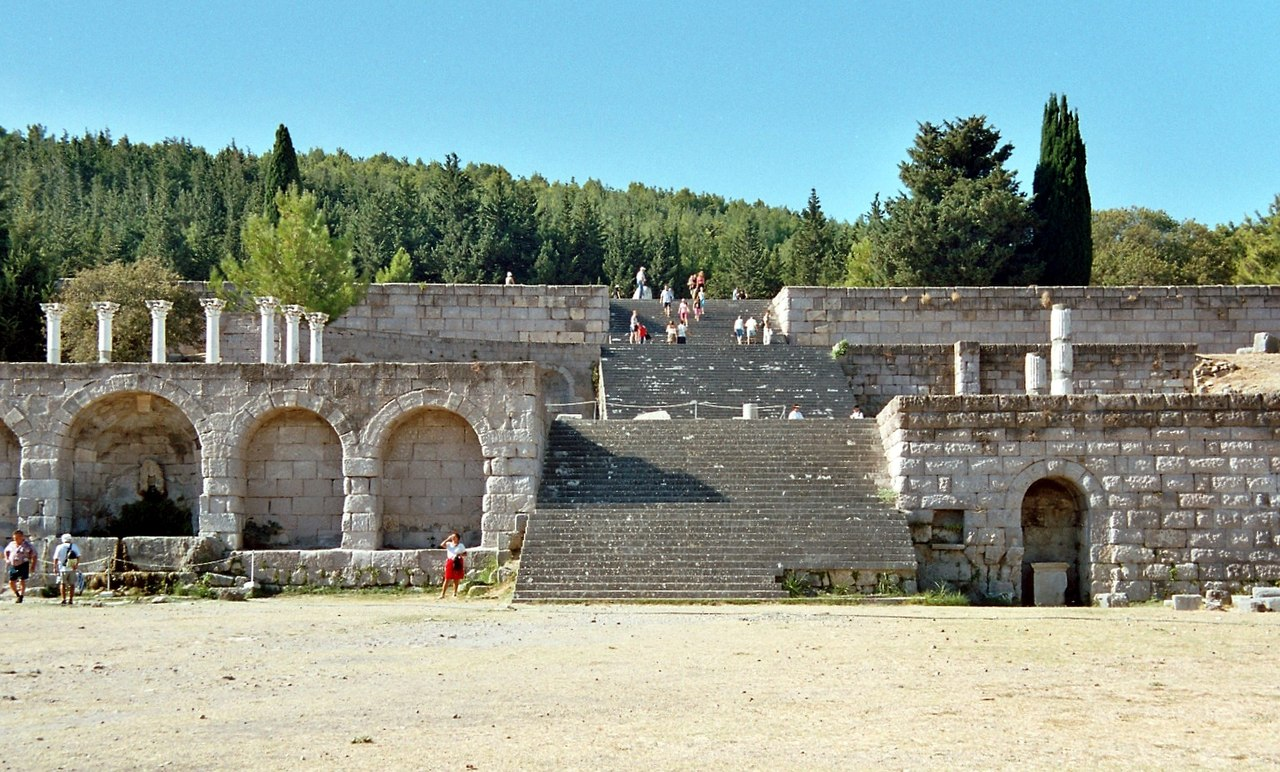
The Asklepieion, built on the slopes of a low hill, overgrown with trees and wonderful views of the sea and the coast of Asia Minor, was already in antiquity the most famous monument of Kos.

Hippocrates and the School of Kos

After returning to his homeland, he founded the famous school of Kos. Of course the term “school” at the time, namely the 5th century. We should be understood that a teacher, who was integrated into the broader context of a family tradition centuries, perpetuate this teaching to his sons and to his students.

Hippocrates would come to apotheopoiisei medical and strictly separate the limits of philosophy. When Hippocrates and called Hippocratic doctor ought to reject any kind of superstition, be clean in body and inseparable morality.

Diseases him have reasonable cause and not stem from divine intervention. Thus, the treatment should also be done with reasonable means from direct observation. The disease is considered as a general condition and not localized to any organ. He was the first to speak about the importance and necessity of asepsis and antisepsis. He stressed the need for daily cleaning and hygiene.

He argued that even in the human body are substances which he named blood and mucus, yellow and black bile. On the balance of these substances depends or human health. When there is a balance between these substances then man is healthy, and when the opposite occurs sick physically and psychologically. He believed that even the body resides an animal force, “nature” from which depends the maintenance, development and treatment of the body as resetting the abnormal to normal. Medicines for Hippocratic are aids “nature.”

Hippocrates was not limited to the practical side of medicine, but taught her already. First as stated the family tradition, he reported to his sons. But then, he was the first to broadcast the knowledge of medicine and in people who are not descended from the family of Asclepius. This opening to the season gave him widespread fame in medicine in Kos. With the opening of teaching was the reason be drawn from the large doctor the famous Oath of Medicine.

The oath was only from students who did not belong to the family of Asclepius, before the time that was to start training from the teacher. The decision of the Hippocrates to make affordable medical knowledge and to people outside the narrow bay of the family, due to the very small number of family members who were willing to continue the medical tradition in Kos. For this reason it must be drafted and the Oath. The oath was saved because he has all the attributes of a standard. It is today as in antiquity a type Contract for the ethical practice of medicine.

Ο ΌΡΚΟΣ ΤΟΥ ΙΠΠΟΚΡΆΤΗ (THE OATH OF HIPPOCRATES), IN ANCIENT GREEK (IONIAN)

Ὄμνυμι Ἀπόλλωνα ἰητρόν καί Ἀσκληπιόν καί Ὑγείαν και Πανάκειαν καί θεούς πάντας τε και πάσας, ἵστορας ποιεύμενος, ἐπιτελέα ποιήσειν κατά δύναμιν καί κρίσιν ἐμήν ὅρκον τόνδε καί ξυγγραφήν τήνδε.Ἡγήσεσθαι μέν τόν διδάξαντά με την τέχνην ταύτην ἴσα γενέτῃσιν ἐμοῖσι, καί βίου κοινώσεσθαι, καί χρεῶν χρηίζοντι μετάδοσιν ποιήσεσθαι, καί γένος τό ἐξ αὐτοῦ ἀδελφεοῖς ἴσον ἐπικρινέειν ἄρρεσι, καί διδάξειν τήν τέχνην ταύτην, ἥν χρηίζωσι μανθάνειν, ἄνευ μισθοῦ καί ξυγγραφῆς, παραγγελίης τε καί ἀκροήσιος καί τῆς λοιπῆς ἁπάσης μαθήσιος μετάδοσιν ποιήσασθαι υἱοῖσι καί τοῖσι τοῦ ἐμέ διδάξαντος καί μαθηταῖσι συγγεγραμμένοις τε καί ὡρκισμένοις νόμῳ ἰητρικώ, ἄλλῳ δέ οὐδενί.Διαιτήμασί τε χρήσομαι ἐπ᾿ ὠφελείῃ καμνόντων κατά δύναμιν καί κρίσιν ἐμήν, ἐπί δηλήσει δέ καί ἀδικίῃ εἴρξειν.Οὐ δώσω δέ οὐδέ φάρμακον οὐδενί αἰτηθείς θανάσιμον, οὐδέ ὑφηγήσομαι ξυμβουλίην τοιήνδε˙ ὁμοίως δέ οὐδέ γυναικί πεσσόν φθόριον δώσω.Ἁγνῶς δε καί ὁσίως διατηρήσω βίον τόν ἐμόν καί τέχνην τήν εμήν.Οὐ τεμέω δε οὐδέν μην λιθιῶντας, ἐκχωρήσω δε ἐργάτῃσιν ἀνδράσιν πρήξιος τῆσδε.Ἐς οἰκίας δε ὁκόσας ἄν ἐσίω, ἐσελεύσομαι ἐπ᾿ ὠφελείῃ καμνόντων, ἐκτός ἐών πάσης ἀδικίης ἑκουσίης καί φθορίης τῆς τε ἄλλης καί ἀφροδισίων ἔργων ἐπί τε γυναικείων σωμάτων καί ἀνδρείων, ἐλευθέρων τε καί δούλων.Ἅ δ᾿ ἄν ἐν θεραπείῃ ἤ ίδω ἤ ακούσω, ἤ καί ἄνευ θεραπείης κατά βίον ἀνθρώπων, ἅ μή χρή ποτε ἐκλαλέεσθαι ἔξω, σιγήσομαι, ἄρρητα ἡγεύμενος εἶναι τά τοιαῦτα.Ὅρκον μέν οὖν μοι τόνδε ἐπιτελέα ποιέοντι καί μή ξυγχέοντι εἴη ἐπαύρασθαι καί βίου καί τέχνης, δοξαζομένῳ παρά πᾶσιν ἀνθρώποις ἐς τόν αἰεί χρόνον˙ παραβαίνοντι δέ καί ἐπιορκέοντι, τἀναντία τουτέων.

TRANSLATION form ancient Greek: Hippocratic Oath: 

” i swear by Apollo Physician and Asclepius and Hygieia and Panaceia and all the gods and goddesses, making them my witnesses, that I will fulfil according to my ability and judgment this oath and this covenant:

To hold him who has taught me this art as equal to my parents and to live my life in partnership with him, and if he is in need of money to give him a share of mine, and to regard his offspring as equal to my brothers in male lineage and to teach them this art – if they desire to learn it – without fee and covenant; to give a share of precepts and oral instruction and all the other learning to my sons and to the sons of him who has instructed me and to pupils who have signed the covenant and have taken an oath according to the medical law, but no one else.

I will apply dietetic measures for the benefit of the sick according to my ability and judgment; I will keep them from harm and injustice.

I will neither give a deadly drug to anybody who asked for it, nor will I make a suggestion to this effect. Similarly I will not give to a woman an abortive remedy. In purity and holiness I will guard my life and my art.

I will not use the knife, not even on sufferers from stone, but will withdraw in favor of such men as are engaged in this work.

Whatever houses I may visit, I will come for the benefit of the sick, remaining free of all intentional injustice, of all mischief and in particular of sexual relations with both female and male persons, be they free or slaves.

What I may see or hear in the course of the treatment or even outside of the treatment in regard to the life of men, which on no account one must spread abroad, I will keep to myself, holding such things shameful to be spoken about.

If I fulfil this oath and do not violate it, may it be granted to me to enjoy life and art, being honored with fame among all men for all time to come; if I transgress it and swear falsely, may the opposite of all this be my lot.

The oath essentially divided into two parts. The first part identifies the obligations newly entered student and offered moral and financial guarantees to the teacher of the medical art. He promises to honor his teacher as parent as will the problems of the teacher and his. He also accepts the commitment to teach himself if need medical art to his sons and to the sons of his teaching.

The second part of the oath is considered the most important as it refers to the moral principles on which to base to practice his profession as a doctor tomorrow. Its primary goal is to bring the art “agnos and purely.” The obligations of this desire is only to seek the good of the patients and never to use lethal medication even if requested. He’ll never help woman to lose her child that carries her. Respects the house in which each patient will come in and will avoid any aphrodisiac contact with the patient and with the members of his family. Finally, he will be trusted and will not reveal the secrets that become known during the course of his work.

Hippocrates and the Hippocratic Collection

Tradition has preserved us in the name of Hippocrates about 60 treatises in Ionic dialect. But already from the Hellenistic and Roman times until today was intense debate about whether the authorship of this project belongs to Hippocrates. It would be unrealistic to believe that all written by Hippocrates himself. These are medical treatises can be guided by the same spirit of a rational medicine free of any magical effect, but the work is not homogeneous. There are differences in vocabulary, in style and content. Some seem to not written by the same teacher, some are of various origins and different date. The truth is that many of the collection works written by students and fans of the great doctor who inspired him.

According to Professor A. Kuzu the Hippocratic Collection in terms of content divided into 12 categories (Maniatis, 2002). These and their respective books are:

§ General (Oath, Law, On ancient medicine About iitrou, On Art, On efschimosynis, Parangeliai, Aphorisms.)

§ Anatomy-Physiology (About Anatomy, On cardio, On flesh, About glands, On bones physio, physio About Human About gonad, On physio children.)

§ Arbitration (On feed, On diet, healthy diet About.)

§ Pathology (About aeron, water, sites, About juice About Crisis, On critical days, On week On whiffer.)
§ Predictive (prognostic, Proritikon, Koakai forecasts.)
§ Special nosology (On Epidemics, On passions, On Noosa, On the inside passions, On Sacred Disease, On the sites of flat man.)
§ Therapeutic (About Diet acids About liquids useful.)
§ Surgery (In practice, On ulcers, hemorrhoids On, On syringes, On of heads eat, On agmon, About Articles embolism, Mochlikos.)
§ Ophthalmology (About sight.)
§ Midwifery (About Virgo, On female physio, On women’s A, B, On touching About epikyiseos, About seven months and eight months, On egkatatomis fetus.)
§ Pediatrics (About odontofyiis.)
§ Various (letters, which, Reasons, The doctrine of the Athenians, Epivomios, Ambassadorial.)

One of the major works of the Collection, which deserves mention and characterized many times as a milestone in the history of European science is “On the sacred disease.”

It is the first expression in the spiritual history of mankind’s ongoing struggle conducted by scientific thinking people against superstition. The theme of the project is the “sacred disease” as used to characterize epilepsy.

The project essentially is fighting with all the “witch-purists” who proclaim that illness is supernatural character. The work of the author himself believes the illness was due to natural causes, like all illnesses, and treatment will be made by physical means. In the opinion of epilepsy begins in the brain.

The Reputation of Hippocrates

Hippocrates was the most important representative not only of the medical school of Kos and medicine in general in antiquity. He had become a mythical person in antiquity. Already from the first phase of his career in Kos had gained great reputation. Biographers report that called by the inhabitants of Abdera to cure Democritus because they believed that he had gone mad. Doctor while he was alive, he took the form of a therapist hero posthumously. The people of Kos on the day of his birth worshiped by sacrifices each year.

This ceremony must have existed in the 1st century p. X when circulating coins depicting the form. It is also said that the Athenians erected a statue of him and proclaimed savior of the city, because he saved the town from plague. His gold crown was given while he was initiated and the Eleusinian mysteries. (J. Jouanna, 199Cool. Information given both in Plato and Aristotle shows that though both lived Hippocrates was reputed great doctor and not only within the boundaries of his homeland. Downstream of great doctors or philosophers (Plato, Aristotle , Galen, Pliny and others) mentioned him as “great” or “divine.”

Hippocrates lived in Greece during the Golden Age of Pericles. A century of intense intellectual reflection that made great men, as it was Sophocles, Socrates and Thucydides. In the 5th century. So was born the rationalism and humanism, provided to give the term the broad meaning of “thinking man for himself.”

Hippocrates founded the school of the time across the country flourished Asclepieia where the main treatment constituted the purification of body and soul, where the disease was considered providential. It was he who revolutionized teaching rational thinking in dealing with diseases. The causes are reasonably require and reasonably therapeutics argued, there is the element of divine intervention. Apotheopoiise medicine and separated from philosophy.

He was first creepy close to humans. Crumbling everything, philosophical theories and ideas. (Www.pneuma.gr). He was the first to systematically classify medicine and ran a methodical treatment of diseases. He made affordable medical knowledge and to students beyond the family of Asklepios, something innovative for its time, since then the tradition prevailed which wanted to broadcast only within the bosom of the family of Asclepius, from father to son (J. Jouanna, 199Cool. He was the creator of the famous Oath of Medicine, an excellent text that introduces and deontologikes- ethical principles of medicine and is spoken today by future doctors.

With this new perspective of medicine introduced by Hippocrates superstition recede slowly pace. The magoi- therapists, who until then had a field day, will be the toughest opponents of Hippocrates. Despite the slander that occasionally made for him, they failed to reduce his reputation as a great doctor. The theories are so accurate that even today some of the medical procedures proposed are still used.

This, then, is the father of medicine. After that follow the doctors of Alexandria. There, in the late 4th century. BC moved the focus of medical science. Separate the medical specialties and the new generation of medicine, based on the theories of the past, build new theoretical structures on the foundations of old.

The MILITARY MEDICINE IN ANCIENT TIMES – Problems of Military Medicine

Man, the basic “cell” of acts of war, the more stable unit that can be used in the analysis of a military operation remains through the centuries largely identical in physiology and needs. The warriors who campaigned in ancient times, since the copper as that of Rome, died of the same causes of decimated and downstream armies, until the “medical revolution” of the 20th century and their weapons can still kill today or cause serious injury to any modern soldier.

Taken purely as mechanical tools for human destruction, weapons of ancient armies, were fatal. Even in the hands of a well trained warrior could become even more deadly. Nowadays it is common for two armies to whom the killing ability of one will be dramatically greater than that of his opponent. In the ancient world but this balance of power between two fighting armies were rare and it meant huge risk involved men.

The armies of Hyksos decimating of clover unfortunate Egyptians, the superiority which gave them the composite bow and agility of the chariots, and the Macedonians of Alexander defeats the Persians at a time despite their numerical inferiority. Unlike the Roman legions were almost equivalent to the army of Hannibal, but whenever the fighting suffered defeats and very heavy.

In the 1st century BC, however, the technological and tactical advantage was passed to the Romans to such an extent that there is no opponent in the Western world that can clash with them. Whenever the superior Roman army was fighting lower organizational strengths, as was common in the 1st century BC, the result was terrible slaughter dimensions. The victory over the Teutonic Marios in Aix-en-Provence (Aix-en-Provence) in 100 BC, resulted in killing more than 90,000 men in a single day.

Death, injuries and infections in Ancient Army

The level of risk faced by the ancient warrior in battle, depended heavily on the army to which they belong and the historical period that happened to live. For example, the Egyptian soldier who was fighting the Hyksos had few chances to avoid the inevitable, while the Roman soldier who faced the Belgians or the Saxons naughty could expect guaranteed survival.

Unlike modern battles, leaving relatively balanced number of deaths and injuries between the two sides, in ancient times losers expect horrific slaughter, while the winners suffered negligible losses. In the battle of Marathon, victorious Athenians had only 192 dead from a force of 10,000 men and at Issus Alexander lost 200 men, causing 50,000 casualties to the Persians! On Kynoskephalai Roman legions caused 8,000 deaths and essentially tore the Macedonian army, with losses of 700 men.

When and how but threatened to kill an ancient warrior? For as long as the columns kept consistent, it was very difficult to occur killing widely. Even the forces of the cavalry were unable to cause significant damage to disciplined formation infantry who held firmly to their positions. Nevertheless in every army of History is a great mass of men who feel a strong urge to escape from danger and motivation is always fear.

The real “killer” in the ancient battlefield was none other than fear. Men who have been involved in combat tend to keep under control the escapism that springs from the instinct of self-preservation, with the help of logic. Increased and prolonged psychological pressure though, dramatically increases the likelihood of finding someone Average rows of warriors who will lose their nerve and run. Sometimes the actions of a single soldier is sufficient to entrain as avalanche entire unit, causing panic explosion. When the homogeneity and consistency of the casting solution, the ancient warrior risked longer be killed or seriously injured.

Usually one phalanx will “break” suddenly and disintegrant rapidly as the original compact war machine transformed in seconds into a disorderly crowd frightened fugitives who struggled alone to escape, running with all their might. Soldiers disperse in every direction, often throwing weapons and their armor in a futile attempt to escape from their persecutors. For quite a long period fleeing save many of the losers, as the armies had few means to carry deadly pursuit.

The appearance but the chariot, edge and horseback archers Assyrian, forever changed this situation, making them easy prey retreating soldiers. In many cases the chariots and cavalry of the winners were driven between and around the disorderly crowd taking such positions to the force to be directed back to the battlefield. There they spent an entire day to the massacre. If the commander triumphs did not stop the carnage to take captives to be sold into slavery, a whole army will be killed without mercy – not a soldier I would not stay alive.

Historical studies show that, on average, the proportion of deaths a defeated army was about 37.7%, more than 1/3 of the total power. Death rates but for the victorious armies were considerably lower, ranging in 5.5% of all involved. Even if an army enjoyed full technological superiority, it was necessary at some point to start killing small distances.

The apparent disproportion between losses and defeated the winners reveals that the greatest slaughter took place during phase one of the two rivals broke their formations under physical or psychological pressure, prompting soldiers to be prosecuted and slaughter with relative ease . However they should be required many hours ceaseless slaughter to destroy a defeated enemy.

There is no evidence on the impact they had these “personal” (from nearby) murders the psyche of the soldier. But it is likely that the practice of the Romans, to expose all classes of citizens from a young age before the hideous face of death in the arena, to later give some advantages on the battlefield, reducing cases of psychological shock.

Typical losses of a Roman Legion at Battle Victorious

Forces involved 6,000 men

Fonefthentes 330 men
Injured 360 men
Deaths from hemorrhagic shock 50 men () 13.8%)
Deaths from tetanus 22 men (5%)
Deaths from gas gangrene 15 men (4%)
Deaths from sepsis five men (1.2%)
Other causes 15 men (4%)
Percentage recovery from injuries 70%

Knowing the total number of men of a defeated army of antiquity and subtracting the number of the dead and those who were taken prisoner to be sold later as slaves, we come in a good approximation of the number of injuries as a finding in such serious condition that it is useless to ‘ commodity “. Approximately 35.4% of the defeated had to wait an injury so severe that involve the abandonment of the battlefield.

When this figure is added to the 37.7% of the dead, it seems that in a typical battle of the ancient world a 73% an army of warriors who have been unsuccessful would end up dead or seriously wounded until dusk. No analog sure way to calculate the wounded winners. Using the statistics give the dead ratios between losers and winners, it seems that a percentage of 5.8% of the army imposed his opponent should have been some form of injury.

An analysis of professor Engels for the army of Alexander concludes that the Macedonians were about five wounded for every dead. So the average percentage of dead (in battle) 0.5% recorded the Macedonians in Granicus, the Issus and Gaugamela, leading probably to a rate of 2.5% wounded. The military medical system of the Romans went into the design of providing a percentage wounded in the battle between 2 and 10%.

The field hospital legion was organized in 64 chambers, each could serve 4-5 men, revealing so that the maximum number of casualties expected by the unit in a jam was 320 people, or 5% of its power.

The nature of the battle from the close quarters in ancient times and the operational characteristics of the weapons were then indicate that the chances of injury to a soldier was much greater than the risk of death. Of the 147 injuries mentioned in the Iliad, 114 (77.7% share) proved fatal. This ratio in Archaic Greece sounds strange when compared to that of the Crimean War (20%) or the American Civil War (13.3%).

The Frolich also notes that of the 31 head injuries mentioned by Homer, everything was deadly. A study of skeletons Egyptian soldiers were killed during a siege in 2000 BC, confirms the high mortality due to cranial trauma. Fifty-nine of the skeletons bore head wounds, of which 49 were found to be caused by stones that were thrown from the walls and the remaining 10 by arrows achieved the victim in the face. A weight 13,6 Kg stone thrown from a height of 12 meters, has kinetic energy 1.588 Joule, able to crush any kind of armor Iron Age.

Arrows are responsible for 10% of the wounds, with a mortality rate of 42%. The ability of ancient armor to withstand blows of arrows seemed characteristically Cunaxa where, says Xenophon, the Greek army was toxefmaton barrage by the Persians for several hours without any significant losses. The arrows of the compound bows were able to pierce the armor, but generally not to such a depth as to cause death.

Typical example is the shield of the Assyrian warriors. It is estimated that the average man had total exposed area of ​​6.832 cm2, ie 0,68 m2. An Assyrian armed for battle expose only 542 square centimeters in the neck and face, 1,103 square centimeters hands, 413 square centimeters in the abdomen and 1,265 square centimeters in the legs. The total surface area was therefore vulnerable 3,323 square centimeters i.e. 49% of the original.

An extensive study of modern scientists anaparestisan ancient tactics, concluded that if a force of 1,000 archers dispute either a broadside of 250 meters, 220 of the arrows would find the target on a solid mass infantry will protected by shields. Of these about 120 will hurt unshielded or other vulnerabilities, namely 18 neck, something that would bring instant death, 13 the abdomen (80% would follow death from infection within three days), 36 arms and 53 legs and thighs.

Less than 2% of the wounds on the ends would prove fatal only if it had hit an artery. Assuming that all wounds would cause the soldier to withdraw from the battle and taken into account that an archer can put five times a minute, five minutes (they needed to reach the two armies) a force of 1,000 archers will defeat 110 soldiers in each of the broadside. Contesting five volleys minute for five minutes, the archers would cause the fantastic number of 2,750 casualties to the enemy before Ms. crossed spears opponents!

The shield acquitted ancient infantry excellent protection as long as the formations kept their coherence. The average surface was 0, 74 m2, enough to cover the entire body of the warrior. The arrow but remained an insidious weapon because, although the wounds brought about finally focusing on the ends, even in cases not find artery often cause deadly infection, which required amputation in 62% of cases – a practice unknown to the ancient physicians up and classical times.

The spears evolved from simple models of 1.8 meters of archaic in terrible Macedonian sarissas 5.5 meters.

The sharp spikes spear allow the spears to pierce or cut the human body and was particularly deadly when damage the trachea or cervical vein. Although it was not easy to challenge directly an armored opponent, could be hurt or throw him to the ground where it would present much easier target, exposing vital body points for the final blow.

The sword was not main battle weapon no army until the advent of Rome. The ancient Greeks faced as an aid and was slightly familiar with its use, without being particularly unfair, since a well-trained fighter in spear advantage in the confrontation with a swordsman. In the hands of Roman legionaries but the legendary gladius cause terror opponents.

The advantage of this sword in a battle from the close quarters was that could cause deep wounds in almost every part of the body. It could also be used to Awesome way in hand, as they used to operate the Romans. If a soldier accept bang, sword easily cripple the State and left the stunned victim defenseless against a second fatal hint in abdomen, neck or face.

Probably the most common injury to the ancient warriors were the fracture. The fact that the Egyptian and Sumerian medical texts deal extensively with broken bone cases reveals that the military doctors of the time were quite familiar with this type of wound. Excluding the skull, there is very little difference in the amount of force required to crush any bone in the human body. Even adult bones of the thigh require little more load to break compared to the thin bones of the arm.

An estimated 91,8 Joule impact energy is enough to blow off any bone in the human body, except for the skull. So blow railed at the sides of an armored warrior from ancient bat (137 Joule), javelin (91 Joule), ax (95,6 Joule), simple sword (105 Joule), piercing ax (105 Joule), gladius (137 Joule ), or a spear (96 Joule), could easily cause fractures. Without doubt the ancient soldier seriously impaired by breakage of bones, trauma would leave him exposed to the next deathblow. It is worth noting that by the disappearance of the horse from the battlefield, in the 20th century, fractures were the main cause of injury, and the horsemen, who often during the battle fell from their horses.

It is considered certain that the frequency and type of wounds in the battles of ancient times varied considerably, depending on the weapons, shields and tactics used in each period. The risk of death varied widely depending on the army in which he served someone. So the Egyptian soldier who fought the Hyksos were completely defenseless against their weapons, while the soldier of the same nationality who was fighting the Hittites after 200 years had many chances to get out of a battle unscathed. Of course analyzes do not apply to armies whose discipline was collapsing and allows a stampede after their men would be vulnerable against any kind of attack from pursuing a strength.

It really is interesting to note that an ancient soldier, from the Bronze Age to the 1st century BC, was in danger of dying from various wound infections are just as with a colleague any other time until the start of World War. Death sneaking victim of the battle in the form of three terrible microbial threats: tetanus, a gas gangrene and septicemia.

TETANUS 

Tetanus was the most common infection. It comes from the anaerobic bacterium Clostridium tetani, enters the body through deep cuts in the skin and viscera, and usually accompanies wounds presenting severe tissue damage and necrosis. The tetanus bacterium produces a toxin “travel” as the spinal cord and causing terrible spasms of the skeletal muscles. Seizures they may kill the patient suffocated, as excessive inflate the diaphragm and can be so strong as to destroy the backbone at some point, causing unbearable pain.

An exact description of these symptoms is present in “Aphorisms” of Hippocrates, an indication that the ancient Greeks knew well the consequences of tetanus. The tetanus bacterium is endemic to the soil surface and is mainly found in areas rich in manure, typical of rural societies of the ancient world. Populations are growing where hygiene is low and where there are human or animal feces. Thus each soldier of which the wound would be in contact with the soil, in danger of contamination.

If the wound is not cleaned thoroughly with water or wine and doctors rushed to meet immediately with makeshift bandages without completely clean, contamination from tetanus was sure. The average of such infections was approximately 5.6% and mortality was 80%. Once a soldier defiled, his survival depended on the strength of the immune system of the body.

The gasifiers gangrene caused by six species of bacteria known under the general term Clostridium perfigens, which is also endemic in the anaerobic and cultivated soil. They produce a toxin that kills the muscle tissue by hydrogen bubbles. The area of ​​the wound dies, the infection extends accompanied by terrible stench produced by decaying tissues. The incidence of this kind of infection should be ran at 5%, but we can say with certainty that the mortality among ancient armies did not know the technique of amputation would reach 100%.

Sepsis or blood poisoning, caused when the common bacterium body Staphilococcus bacteri enter the bloodstream. If a main blood vessel and the punctured wound infected secondary infection, can be extended to normal sterile bloodstream. The incidence of such an infection is 1.7% and this occurs mainly in cases of arterial lesions. The mortality in the mid-20th century remained extremely high, until the appearance and diffusion of antibiotics.

One of the four wounded ancient battle was dying from his wounds within 7-10 days of the above three main causes or hemorrhagic shock. It must be emphasized that these four factors remained as basic sick and wounded causes of death until the end of World War II.

Diseases and Implications

The armies of ancient times, as in all armies until-Japanese war of 1905, most soldiers found the death from diseases than from enemy weapons. The diseases in ancient armies appeared much easier whenever a large number of men crowded together for some time in places where there were no elementary conditions of hygiene. With the exception of the armies of Egypt and Rome meticulously observing basic hygiene, checking the suitability of drinking water and food, other armies were not taking absolutely no preventive measures.

THE war considerably reduces resistance to disease soldier, as the diet that was provided was most often insufficient to maintain a high level of defense capability of the organization. The armies were on the move at less risk from the effects of poor hygiene. The most possible points for epidemics there was organized sieges, with huge numbers of warriors gather in little space, often suffering from food shortages.

Most common illness for the ancient was dysentery. Called “expeditionary fever,” is probably the most common illness among soldiers of all time. The first clear description of the symptoms of dysentery noted in Egyptian papyri of 1550 BC, but it must have been known from much earlier periods. Hippocrates mentions in detail in writings. The Roman medical texts have extensively preventive methods.

Dysentery caused by an aquatic bacillus transmitted to the body by contaminated food or water. It happened often in marches, paid an entire army when quenched the thirst of improper source. Although the standard mortality ranged 5%, the occurrence of dysentery akinitopoiouse huge numbers of men for periods of two to three weeks – men who could not at this time be used as a combatant elements in any way.

Typhoid fever, which is derived from the bacterium Salmonella typhi, was another “wound” for the ancient warrior disseminated rapidly flies that infected human food. The Egyptians and Assyrians were quite familiar with the deal, but the Romans were the first to systematically took hygienic measures to limit the disease.

Constructing latrines with a depth of three meters, rinse with water and covered with wooden planks or stones to keep them dark and free from flies. He knew that an army which was at the center an epidemic of typhoid fever, essentially defeat as militant force. Mortality was as high as 10-13%, but the most important was that four weeks were required terrible pain and delirious fever to carry the disease cycle.

The supply of drinking water during a campaign seems pretty occupied ancient armies. The Greek soldier he used to take with him a quantity of wine to help your stomach become familiar with hard water should be drunk in the war. The Roman soldier rarely brought water in his canteen, preferring to consume a type possible, red, sour wine (acetum) suffered prolonged fermentation.

When the Romans conquered the Jews of Palestine, who were accustomed to the local sweet wines, they looked strange conquerors them to drink what they thought vinegar. What is certain is that the consumption of soured wine by the Romans had many medical benefits. Extremely rich in polyphenols, can simultaneously be used by military physicians as an antiseptic and cleansing of wounds, acting as bacteriostatic and bactericidal agent.

The typhus is also one of the deadliest diseases, who have linked their names to the military operations in all the centuries. Due to a microorganism that is something between bacterium and virus and grows in the blood of various animals, including mice, is a disease transmitted to humans by lice (Pediculus humanus), living in the clothes and hair, and manifested very often where large numbers of people are forced to coexist in very small spaces, such as prisons, ships etc. The symptoms of typhoid are high fever, chills, feeling of weakness and pain in the joints accompanied by terrible headaches. Mortality of typhus between 10 and 40% and it is known that at times the disease is wiped armies:

The typhus is a disease of the temperate zone and is likely the armies of ancient Greece and Rome have good knowledge of the consequences of … The armies of Babylon and Egypt faced considerably less incidents because of the warm climate and the tendency to wear less heavy clothing. But when we moved in temperate regions as Lebanon and Armenia, they risked serious infection. Although historians authors do not completely agree, the prevailing view is that the great plague that decimated the Athenian army during the Peloponnesian War was probably a typhus.

Similar risk with typhus were the appearances of smallpox, which was quite common in the ancient world, with a mortality rate which mostly ranged from 20-40%, but could reach 90%. From such epidemic died in 1160 BC and Pharaoh Ramses E, while the great plague that decimated the Antonine Rome in the 2nd century AD probably due to smallpox brought from the eastern provinces recurrent legions.

Retired files the Roman army allow clear knowledge of the severity of the impact of disease on the life of an ancient warrior. In a Roman legion of the 1st century AD, 50% of soldiers who qualify at age 18 were still alive at 42 them to enjoy their retirement. Since 5.8% of soldiers would die in battle and another 8-10% will succumb to war trauma, this means that the remaining 35% of the legionnaires would die from some form of disease, including epidemics. However, despite his involvement in dozens of battles, the legionnaire medium was generally longest in via Roman citizen, and had five times less stomatological problems from him, thus demonstrating the best diet camps.

Factor Injuries and Biological Threat

An army endangered largely accidental. Even a simple movement of a force of 10,000 men is no easy task and the course costs several health and safety of the soldier. The ancient armies used to march in columns, as there were no roads and it was the only way to maintain a minimum check by management. The army of Alexander, with 65,000 pedestrians and 6,000 cavalry, stoichizomenous in column width of 10 men would stretch like a snake along 25 km, without considering transport animals in convoys.

Armies had to move as much as possible like a compact maza- otherwise could not move at all. The air we inhale a soldier at the center of a formation is smelly, dust blocks the nostrils, eyes and irritated lungs strained. As once said Napoleon, “the world of the soldier on the path composed entirely out of sight of the bag in the back of the front.” In a single day the road nosebleeds, eye irritations and respiratory problems caused harm such a level that several soldiers were beginning to fall fainting outside their lines and left behind. In hot climates, the number of casualties increased greatly.

The diet in ancient armies was another major problem. Modern armies calculate that a 73 kg weight soldier carrying a moderate load walking for eight hours, you need 3,402 calories and 70 grams of protein a day. The pressure and overexertion during the battle increase the amount of food required to maintain a healthy and Warrior fighting condition. In deserts and generally in climates with high temperatures and low humidity, the soldier needs at least 8.5 liters of water daily.

The diet was followed in ancient armies were totally inadequate for prolonged operations. It comprised mainly wheat, barley and millet, which milled to prepare bread, biscuits and porridge. The standard portion by each man of between 1 and 1,4 kg of cereal daily, in bread form only provided 2500 calories and 100 grams protein. This is the number of calories was clearly inadequate, even for the best possible campaign conditions that could meet a soldier. A course of three or four days too weakened the army and further aggravate the smaller health problems.

Many times commanders were, after an arduous journey, they regret to have a force that could not fight. On top of the fatigue from the same course, the ancient warrior had to carry and its stores, which in the case of the Macedonians weighed 27 pounds, whereas in the case of the Romans about 25. The weight of the load to make the turn soldier, in hot climates, vulnerability and brought him too close to heat exhaustion and heat stroke. The men then wore during the demonstrations across the harnesses and could imagine the torment that existed when the shield and helmet, exposed as it was in the sun, burned and simple touch.

The soldiers could not protect themselves from sunburn and coat the skin with oil of palm or olive, but there was no indication for this measure before the days of Imperial Rome. A Roman time gives us a graphic example of what can happen to an army that did not care to take measures for the protection from the heat. 24 BC the Aellius Gallus, the Roman governor of Egypt led an army in Arabia, which lost whole without giving a single battle, as the legionnaires have died by the hundreds of thirst and heat stroke. Many survivors suffered permanent damage to their health, to the extent that had to be demobilized.

The heat was not the only “enemy” for an army of antiquity. The warriors of Egypt, Assyria, Babylon, Persia, Greece and Rome, suffered equally from accidents and haunting contemporary colleagues (falls, bruises, cuts, damage, blisters, sprains and fractures), which may turn a soldier into injured. Most of these occur in the legs, which were generally unprotected.
The soldiers then fighting in cold climates, such as the Assyrians during their invasions in Armenia and Kurdistan. The Romans repeatedly campaigned in Germany, the Alps, eastern Europe and the mountains of Spain, regions where the climatic conditions are a challenge even for modern armies. Xenophon mentions the “Cyrus Ascent” that she almost lost the whole army in the mountain ranges of today’s Turkey when men slept unprotected countryside and awoke alafiasmenoi a snowstorm.

Alexander crossed the Hindu Kush inhospitable starting with 100,000 men and 64,000 ending with the 13th days later! The Hannibal was able to cross the Alps, but with frightening cost in human lives. From the army, which numbered 38,000 pedestrians and 8,000 horsemen, lost 20,000 men until they reach the north Italian plain.
The disadvantages of the ancient soldier compared to the modern descendants extend to different levels. It was an average age of 35 years, significantly longer than the men of today’s armed forces. The average age of American soldiers in World War II was 26 years and the Vietnam War the 22. The same physiology make the ancient warrior more susceptible to frostbite and fatigue.
Generally an ancient army exestratefe was literally a “moving medicine debacle,” he expect to lose 3-4% of its power from exhaustion or sunstroke, 17% from various accidents in rough road and several more men from chronic problems caused stress and poor hygiene. Those who could not follow the mass, leaving their fate in the street or at best the care of the first villagers who would meet the army.

This practice is applicable even where campaigns in hostile territory where the armies abandoned their patients, the wounded and the dying. The Roman army, with mobile ambulances and professional staff that work for medical services, was able to keep with him the lighter wounded all the way, in most armies but patients should be abandoned.

In the ancient battlefield dominated and a wide variety of biological weapons. The “fraudulent” arrows aimed at andranopoiisoun or bring certain death to the victim, was more feared than that of close-quarters fight with spears, swords and clubs. Ancient warriors used to immerse the tips of arrows in natural poisons such as the rhododendron juice and sea urchin emulsion, but the poison of snakes were the most prevalent toxin.

Especially the Scythian archers were famous for their poisonous arrows, which were soaking in a smelly mixture of viper venom (viper) and human blood (also was terribly relevant of distances reached even 550 meters – many skeletons of their victims discovered by archaeologists, they were found with arrows stuck right between the eyes). In 326 BC Macedonians of Alexander the Great encountered in northern India mounted archers fired arrows tremendous efficiency and extremely deadly.

Eventually the Greeks realized that their opponents had infused the dead viper venom, which was left to decompose in the sun until the skin melted and the liquid was coming only from the tissues. The historian Diodorus states that “men were injured by such missiles numb instantly, in a torment from unbearable pains and convulsions that came in waves, and the skin was cold and bruised and xernousan bile.” The Hannibal launched a similarly ‘dirty’ plan, when in a battle against the Pergamum (191 BC) threw on the decks of enemy ships live poisonous snakes!

The Roman historian Appian describes vividly how the besieged residents of Themiskyra, in Bithynia, diverted to flee the Roman army unleashing against swarms of bees, bears and other wild beasts 72 BC Almost three centuries later, citizens’s paper (in today’s Iraq) clay pots filled with poisonous insects and thrown from the battlements of the walls on the fearful legions of Septimius Severus.

In contrast all these “instruments of death” and their effects was the Military Medicine, which at all times was perceived as an attempt to reduce casualties from hostile action. As such included the institution of “reservists” doctor, since most armies until 2000 BC They were set up to enlist. The recruiting men from different walks of presupposed well informed doctors, who knew the level of health of the general population, the diet, mortality and lifespan.

Perhaps the most important role of such a precious special was to ensure sufficient quantities of good quality food and drinking water, both critical factors for the effectiveness of an army in battle. Until the 20th century all armies, with few exceptions, were much more losses from diseases and infections, rather than the ultimate test on the battlefield.

ASKLEPIOS is one of the MOST important HEALING figures in GREEK MYTHAGOGY-MEDICIN and was one of the MOST BELOVED GODS of our ANCIENT ANCESTORS, to whom they resorted to relieve them from PAIN and ILLNESS.
The worship of ASCLEPIUS, either as a GOD or as a DEIFIED HERO, is ANCIENT. The WHOLE of GREEK WORLD HONORED him, while MYTHOGRAPHERS, vase PAINTERS and POETS INCLUDED him AMONG the PIONEERS of ANY GREAT work. 

Proudly powered by WordPress

HIPPOCRATES: “What keeps health is equitable distribution and precise mixing within body forces 😊 egalitarianism) of dry, liquid, cold, sweet, bitter, sour and salty. The disease causes the predominance of one 😊 monarchy). Treatment is accomplished by restoring the disturbed balance, the method of the opposite of excess power. “

These concepts we find intact to Hippocrates. The exact mix, equality before the law, symmetry, harmony, are the basis of the doctrines of the Pythagoreans and Ippokrati.Grafei features Hippocrates: “In man there is the bitter and salty, sweet, sour, astringent and the the bland … and these components when mixed and combined together, neither shown nor affect humans. But when some of all separated and left alone it seems to cause harm “.

After training in medicine he left Kos and successively visited Thessaly, Thassos and Thrace. His fame quickly spread throughout Greece and beyond its borders to mighty Persia. Artaxerxes invited him to his court by sending ambassadors with valuable gifts but he refused to leave his homeland. It is said that he healed the Macedonian king Perdiccas and saved Abdira from plague. Some claim that it was there that he cured the “maniac”, as he was called, Democritus, although later writers have recorded Hippocrates’ admiration for the wise man. As it turns out, this claim is unfounded. He greatly helped the Argives and Athenians, taking preventive measures against the spread of infectious diseases. The latter, as a sign of gratitude, initiated him into the Eleusinian mysteries and proclaimed him a citizen of Athens. They also granted free feeding in the Rectory for him and his descendants, although modern researchers dispute his involvement in the events of the Attic land. He died at about the age of ninety in Larissa and was buried somewhere between Gyrtonos, Tirnavos and Larissa. According to Anthimos Gazis, his tomb was preserved until the second AD. century.

Hippocrates lived in Greece during the Golden Age, which produced great men such as Sophocles, Euripides and Thucydides. He toured, it is said, in Thessaly, Thrace, Thassos, Scythia, and probably also in Middle Egypt. He is the first to establish scientific medicine, as Galen also affirms (he was the first to examine the perfection of Greek medicine. xiv, 676). His works are products of exquisite observation, experience and rare rationality. In fact, they are the biggest milestone in the course of Greek medicine.

The Hippocrates Collection

The works that make up the Hippocratic Collection are 59 in number, written in the Ionic dialect between 440-340 BC. and are the oldest monuments of precise scientific medicine. They are divided into sectors. Of a general nature are: the Oath, the Law, About Ancient Medicine, About the Physician, About Art, About Goodness, Orders and Aphorisms. Anatomical and physiological are: On Anatomy, On Heart, On Muscles, On Glands, On Bone Nature, On Birth, On Child Nature, Dietetics, On Food, On Diet, On Diet Hygiene. Of general pathology are: On Airs, Waters and Lands, On Juices, On Crisis, On Crisis, On Weeks, On Nature. Prognostic medicine includes: Prognostikon, Prorretikon and Koakai Prognosis. In special nosology: On Epidemics, On Diseases, On Diseases, On Internal Diseases, On Sacred Disease and On Types of Humans. In Therapeutics belong: About Diet Acids and About Liquids Chrisios. Surgery includes: Per Doctor, About Ulcers, About Hemorrhoids, About Syringes, About Head Wounds, About Moles, About Joints. Molchico. Ophthalmology includes On Appearance, while obstetrics and gynecology include: On Virgins, On Female Nature, On Women A’, B’, On Aphors, On Pregnancy, On Seven and Eight Months, On Embryo Ecstasy. Finally, Pediatrics includes About Dentistry.

In addition to the above works, 24 Epistles and the Peri Manias Logos are also included, in which Hippocrates’ invitation from the Abderites for the supposed cure of Democritus is described. However, the many adaptations of his works, the addition of pseudo-inscriptions from ancient times led later scholars to the inability to distinguish fake works from genuine ones. After all, the collection in its current form was made around 300 BC, in the Alexandrian times, when Ptolemy ordered the collection of his writings. Thus, it was deemed necessary to include all writings bearing his name, even if there were reasonable suspicions that they were forgeries, as long as they belonged to pre-Aristotelian times.

Of course, the question of authenticity preoccupied researchers for a long time, as a result of which many paradoxical opinions were recorded. Erotianos, for example, admits only 31 writings, while Galen reduces their number to about 13. Among the younger French medical historian Emile Littre, relying on the Ionic dialect filled with the “donations” of Hippocrates, due to his Doric origin of, admits as genuine, besides the Oath and the Law, eleven other works. Dills admits only three et cetera. More important than the editions of his work remains the ten-volume edition by Émile Littre (1829-1861), in Paris, with a Greek text and a French translation. The latest edition of the works belongs to Kulwein (Leipzig 1894 and 1902), but it remained unfinished. Among the Greeks, Adamantios Korais made excellent criticism of his works in On Gaseous Waters and Lands and On Acid Diet and Ancient Medicine.

The Miracle of Medicine

In general, Hippocrates considers that everything comes from the 4 elements, each of which corresponds to the property of cold, dry, hot, liquid. In the solid components of the body the earthy prevails and in the liquids the watery. Cohesive essence of everything is the spirit, innate and warm in man, residing in the heart. Basic body fluids are blood, phlegm, yellow and black bile. Health or disease depends on their balance and imbalance.

In the body there is a special animal power, nature. On this power depended the maintenance, development, but also the healing of the body and its restoration from the pathological state to the normal. This is also the most brilliant conception of the mind of Hippocrates, which is justified today by the modern views on health and balance of the bio-energetic potential of the organism. After all, Hippocrates does not locate the disease in the organs. He considers that the organism is sick or cured as a whole and thus the patient is treated with a completely different eye and perspective.

According to Hippocrates and the so-called Hippocratics, the doctor must reject all kinds of superstition, be clean in body and inseparable from morality. His life should be modest and full of silence and he himself should be a philosopher. Rightly, then, Andral saw in the Hippocratics, men deprived of the modern technology of observation, acting by their intellectual power alone, and being led to the same truths or ideas, to which scientists are led today by the slow and laborious work of analysis and observation. For Galen, Hippocrates is “Uncle”, greatest of physicians and first of philosophers. He did not limit himself to simple empiricism, but united it with the intellect in order to know nature.

The figure of Hippocrates as the “Father of Medicine” remains strong not only in the historical circles of antiquity and in modern times, although we are used to seeing him through the eyes of Galen. Galen describes Hippocrates as he would rather describe himself, so he emphasized only the texts that excited him. However, he remains at the same time the connecting link for the dissemination of his teaching, as he transferred his interest to later doctors.

Thus, by copying his texts, the ideas of Hippocrates survived during the Byzantine Empire and were inherited by Renaissance physicians. The collection became the foundation around which the experience of medicine was recorded in order to build the modern edifice of medicine. Except that modern medicine has become so specialized that it has lost the overall structure, the fundamental idea of Hippocrates. Based on the fact that the Hippocratics, apart from being philosophers, were also interested in other fields in order to arrive at their apt and revealing observations, such as ethnography. The breadth of their knowledge led to interpretations that were not only related to the mechanistic view of the human organism, something that should be taken seriously by medical science today, in order to lead to the modern, universal miracle of healing.

****************THE O A T H OF HIPPOCRATES

The Hippocratic Oath is the oath taken by doctors and refers to the ethical practice of medicine. It is believed that the oath was written by Hippocrates in the 4th century BC. or by one of his students, and thus included in the Hippocratic collection.

The oldest partial fragments of the oath date to circa AD 275. The oldest extant version dates to roughly the 10th–11th century, held in the Vatican Library.[2] A commonly cited version, dated to 1595, appears in Koine Greek with a Latin translation. In this translation, the author translates “πεσσὸν” to the Latin “fœtum.”

Below is the Hippocratic Oath, in Ancient Greek, from the 1923 Loeb edition, followed by the English translation:

ὄμνυμι Ἀπόλλωνα ἰητρὸν καὶ Ἀσκληπιὸν καὶ Ὑγείαν καὶ Πανάκειαν καὶ θεοὺς πάντας τε καὶ πάσας, ἵστορας ποιεύμενος, ἐπιτελέα ποιήσειν κατὰ δύναμιν καὶ κρίσιν ἐμὴν ὅρκον τόνδε καὶ συγγραφὴν τήνδε:

ἡγήσεσθαι μὲν τὸν διδάξαντά με τὴν τέχνην ταύτην ἴσα γενέτῃσιν ἐμοῖς, καὶ βίου κοινώσεσθαι, καὶ χρεῶν χρηΐζοντι μετάδοσιν ποιήσεσθαι, καὶ γένος τὸ ἐξ αὐτοῦ ἀδελφοῖς ἴσον ἐπικρινεῖν ἄρρεσι, καὶ διδάξειν τὴν τέχνην ταύτην, ἢν χρηΐζωσι μανθάνειν, ἄνευ μισθοῦ καὶ συγγραφῆς, παραγγελίης τε καὶ ἀκροήσιος καὶ τῆς λοίπης ἁπάσης μαθήσιος μετάδοσιν ποιήσεσθαι υἱοῖς τε ἐμοῖς καὶ τοῖς τοῦ ἐμὲ διδάξαντος, καὶ μαθητῇσι συγγεγραμμένοις τε καὶ ὡρκισμένοις νόμῳ ἰητρικῷ, ἄλλῳ δὲ οὐδενί.

διαιτήμασί τε χρήσομαι ἐπ᾽ ὠφελείῃ καμνόντων κατὰ δύναμιν καὶ κρίσιν ἐμήν, ἐπὶ δηλήσει δὲ καὶ ἀδικίῃ εἴρξειν.

οὐ δώσω δὲ οὐδὲ φάρμακον οὐδενὶ αἰτηθεὶς θανάσιμον, οὐδὲ ὑφηγήσομαι συμβουλίην τοιήνδε: ὁμοίως δὲ οὐδὲ γυναικὶ πεσσὸν φθόριον δώσω.

ἁγνῶς δὲ καὶ ὁσίως διατηρήσω βίον τὸν ἐμὸν καὶ τέχνην τὴν ἐμήν.

οὐ τεμέω δὲ οὐδὲ μὴν λιθιῶντας, ἐκχωρήσω δὲ ἐργάτῃσιν ἀνδράσι πρήξιος τῆσδε.

ἐς οἰκίας δὲ ὁκόσας ἂν ἐσίω, ἐσελεύσομαι ἐπ᾽ ὠφελείῃ καμνόντων, ἐκτὸς ἐὼν πάσης ἀδικίης ἑκουσίης καὶ φθορίης, τῆς τε ἄλλης καὶ ἀφροδισίων ἔργων ἐπί τε γυναικείων σωμάτων καὶ ἀνδρῴων, ἐλευθέρων τε καὶ δούλων.

ἃ δ᾽ ἂν ἐνθεραπείῃ ἴδω ἢ ἀκούσω, ἢ καὶ ἄνευ θεραπείης κατὰ βίον ἀνθρώπων, ἃ μὴ χρή ποτε ἐκλαλεῖσθαι ἔξω, σιγήσομαι, ἄρρητα ἡγεύμενος εἶναι τὰ τοιαῦτα.

ὅρκον μὲν οὖν μοι τόνδε ἐπιτελέα ποιέοντι, καὶ μὴ συγχέοντι, εἴη ἐπαύρασθαι καὶ βίου καὶ τέχνης δοξαζομένῳ παρὰ πᾶσιν ἀνθρώποις ἐς τὸν αἰεὶ χρόνον: παραβαίνοντι δὲ καὶ ἐπιορκέοντι, τἀναντία τούτων.

**** THE OATH IN E N G L IS H

I swear by Apollo Healer, by Asclepius, by Hygieia, by Panacea, and by all the gods and goddesses, making them my witnesses, that I will carry out, according to my ability and judgment, this oath and this indenture.

To hold my teacher in this art equal to my own parents; to make him partner in my livelihood; when he is in need of money to share mine with him; to consider his family as my own brothers, and to teach them this art, if they want to learn it, without fee or indenture; to impart precept, oral instruction, and all other instruction to my own sons, the sons of my teacher, and to indentured pupils who have taken the Healer’s oath, but to nobody else.

I will use those dietary regimens which will benefit my patients according to my greatest ability and judgment, and I will do no harm or injustice to them. Neither will I administer a poison to anybody when asked to do so, nor will I suggest such a course. Similarly I will not give to a woman a pessary to cause abortion. But I will keep pure and holy both my life and my art. I will not use the knife, not even, verily, on sufferers from stone, but I will give place to such as are craftsmen therein.

Into whatsoever houses I enter, I will enter to help the sick, and I will abstain from all intentional wrong-doing and harm, especially from abusing the bodies of man or woman, bond or free. And whatsoever I shall see or hear in the course of my profession, as well as outside my profession in my intercourse with men, if it be what should not be published abroad, I will never divulge, holding such things to be holy secrets.

Now if I carry out this oath, and break it not, may I gain for ever reputation among all men for my life and for my art; but if I break it and forswear myself, may the opposite befall me.– Translation by W.H.S. Jones.

FIRST DO NO HARM

*****************MAIN ARTICLE: PRIMUM NON NOCERE**************

It is often said that the exact phrase “First do no harm” (Latin: Primum non nocere) is a part of the original Hippocratic oath. Although the phrase does not appear in the AD 245 version of the oath, similar intentions are vowed by, “I will abstain from all intentional wrong-doing and harm”. The phrase primum non nocere is believed to date from the 17th century.

Another equivalent phrase is found in Epidemics, Book I, of the Hippocratic school: “Practice two things in your dealings with disease: either help or do not harm the patient”. The exact phrase is believed to have originated with the 19th-century English surgeon Thomas Inman.

Context and interpretation

A 12th-century Greek manuscript of the oath

The oath is arguably the best known text of the Hippocratic Corpus, although most modern scholars do not attribute it to Hippocrates himself, estimating it to have been written in the fourth or fifth century BC. Alternatively, classical scholar Ludwig Edelstein proposed that the oath was written by the Pythagoreans, an idea that others questioned for lack of evidence for a school of Pythagorean medicine. While Pythagorean philosophy displays a correlation to the Oath’s values, the proposal of a direct relationship has been mostly discredited in more recent studies.

Its general ethical principles are also found in other works of the Corpus: the Physician mentions the obligation to keep the ‘holy things’ of medicine within the medical community (i.e. not to divulge secrets); it also mentions the special position of the doctor with regard to his patients, especially women and girls.[12] However, several aspects of the oath contradict patterns of practice established elsewhere in the Corpus. Most notable is its ban on the use of the knife, even for small procedures such as lithotomy, even though other works in the Corpus provide guidance on performing surgical procedures.

Providing poisonous drugs would certainly have been viewed as immoral by contemporary physicians if it resulted in murder. However, the absolute ban described in the oath also forbids euthanasia. Several accounts of ancient physicians willingly assisting suicides have survived. Multiple explanations for the prohibition of euthanasia in the oath have been proposed: it is possible that not all physicians swore the oath, or that the oath was seeking to prevent widely held concerns that physicians could be employed as political assassins.

The interpreted AD 275 fragment of the oath contains a prohibition of abortion that is in contradiction to original Hippocratic text On the Nature of the Child, which contains a description of an abortion, without any implication that it was morally wrong,[16] and descriptions of abortifacient medications are numerous in the ancient medical literature.[ The oath’s stance on abortion was unclear even in the ancient world where physicians debated whether the specification of pessaries was a ban on simply pessaries, or a blanket ban on all abortion methods. Scribonius Largus was adamant in AD 43 (the earliest surviving reference to the oath) that it precluded abortion. In the 1st or 2nd century AD work Gynaecology, Soranus of Ephesus wrote that one party of medical practitioners followed the Oath and banished all abortifacients, while the other party—to which he belonged—was willing to prescribe abortions, but only for the sake of the mother’s health. William Henry Samuel Jones states that “abortion… though doctors are forbidden to cause it, was possibly not condemned in all cases”. He believed that the oath prohibited abortions, though not under all circumstances.[18] John M. Riddle argues that because Hippocrates specified pessaries, he only meant pessaries and therefore it was acceptable for a Hippocratic doctor to perform abortions using oral drugs, violent means, a disruption of daily routine or eating habits, and more. Other scholars, most notably Ludwig Edelstein, believe that the author intended to prohibit any and all abortions. Olivia De Brabandere writes that regardless of the author’s original intention, the vague and polyvalent nature of the relevant line has allowed both professionals and non-professionals to interpret and use the oath in several ways. While many Christian versions of the Hippocratic Oath, particularly from the Middle Ages, explicitly prohibited abortion, the prohibition is often omitted from many oaths taken in US medical schools today, though it remains controversial.

The oath stands out among comparable ancient texts on medical ethics and professionalism through its heavily religious tone, a factor which makes attributing its authorship to Hippocrates particularly difficult. Phrases such as ‘but I will keep pure and holy both my life and my art’ suggest a deep, almost monastic devotion to the art of medicine. He who keeps to the oath is promised ‘reputation among all men for my life and for my art’. This contrasts heavily with Galenic writings on professional ethics, which employ a far more pragmatic approach, where good practice is defined as effective practice, without reference to deities.

The oath’s importance among the medical community is nonetheless attested by its appearance on the tombstones of physicians, and by the fourth century AD it had come to stand for the medical profession.

The oath continued to be in use in the Byzantine Christian world with its references to pagan deities replaced by a Christian preamble, as in the 12th-century manuscript pictured in the shape of a cross.

“MODERN” VERSIONS AND RELEVANCE

An engraving of Hippocrates by Peter Paul Rubens, 1638

The Hippocratic Oath has been ECLIPSED, as a document of professional ethics by more extensive, regularly updated ethical codes issued by national medical associations, such as the AMA Code of Medical Ethics (first adopted in 1847), and the British General Medical Council’s Good Medical Practice. These documents provide a comprehensive overview of the obligations and professional behaviour of a doctor to their patients and wider society. Doctors who violate these codes may be subjected to disciplinary proceedings, including the loss of their license to practice medicine. Nonetheless, the length of these documents has made their distillations into shorter oaths an attractive proposition. In light of this fact, several updates to the oath have been offered in modern times, some facetious.

THE OATH HAS BEEN MODIFIED NUMEROUS TIMES (..BIG PHARMA – NWO..)

In the United States, the majority of osteopathic medical schools use the Osteopathic Oath in place of or in addition to the Hippocratic Oath. The Osteopathic Oath was first used in 1938, and the current version has been in use since 1954.

One of the most significant revisions was first drafted in 1948 by the World Medical Association (WMA), called the Declaration of Geneva. “During the post World War II and immediately after its foundation, the WMA showed concern over the state of medical ethics in general and over the world. The WMA took up the responsibility for setting ethical guidelines for the world’s physicians. It noted that in those years the custom of medical schools to administer an oath to its doctors upon graduation or receiving a license to practice medicine had fallen into disuse or become a mere formality”.[29] In Nazi Germany, medical students did not take the Hippocratic Oath, although they knew the ethic of “nil nocere”—do no harm.[30][failed verification]

In the 1960s, the Hippocratic Oath was changed to require “utmost respect for human life from its beginning”, making it a more secular obligation, not to be taken in the presence of any gods, but before only other people. When the oath was rewritten in 1964 by Louis Lasagna, Academic Dean of the School of Medicine at Tufts University, the prayer was omitted, and that version has been widely accepted and is still in use today by many US medical schools:

I swear to fulfill, to the best of my ability and judgment, this covenant:

I will respect the hard-won scientific gains of those physicians in whose steps I walk, and gladly share such knowledge as is mine with those who are to follow.

I will apply, for the benefit of the sick, all measures [that] are required, avoiding those twin traps of overtreatment and therapeutic nihilism.

I will remember that there is art to medicine as well as science, and that warmth, sympathy, and understanding may outweigh the surgeon’s knife or the chemist’s drug.

I will not be ashamed to say “I know not”, nor will I fail to call in my colleagues when the skills of another are needed for a patient’s recovery.

I will respect the privacy of my patients, for their problems are not disclosed to me that the world may know. Most especially must I tread with care in matters of life and death. If it is given me to save a life, all thanks. But it may also be within my power to take a life; this awesome responsibility must be faced with great humbleness and awareness of my own frailty. Above all, I must not play at God.

I will remember that I do not treat a fever chart, a cancerous growth, but a sick human being, whose illness may affect the person’s family and economic stability. My responsibility includes these related problems, if I am to care adequately for the sick.

I will prevent disease whenever I can, for prevention is preferable to cure.

I will remember that I remain a member of society, with special obligations to all my fellow human beings, those sound of mind and body as well as the infirm.

If I do not violate this oath, may I enjoy life and art, respected while I live and remembered with affection thereafter. May I always act so as to preserve the finest traditions of my calling and may I long experience the joy of healing those who seek my help.

In a 1989 survey of 126 US medical schools, only three of them reported use of the original oath, while thirty-three used the Declaration of Geneva, sixty-seven used a modified Hippocratic Oath, four used the Oath of Maimonides, one used a covenant, eight used another oath, one used an unknown oath, and two did not use any kind of oath. Seven medical schools did not reply to the survey.

As of 1993, only 14% of medical oaths prohibited euthanasia, and only 8% prohibited abortion.

In a 2000 survey of US medical schools, all of the then extant medical schools administered some type of profession oath. Among schools of modern medicine, sixty-two of 122 used the Hippocratic Oath, or a modified version of it. The other sixty schools used the original or modified Declaration of Geneva, Oath of Maimonides, or an oath authored by students and or faculty. All nineteen osteopathic schools used the Osteopathic Oath.

In France, it is common for new medical graduates to sign a written oath.

In 1995, Sir Joseph Rotblat, in his acceptance speech for the Nobel Peace Prize, suggested a Hippocratic Oath for Scientists.

In November 2005, Saparmurat Niyazov, then leader of Turkmenistan, declared that doctors should swear an oath to him instead of the Hippocratic Oath.[citation needed]

In 2007, US citizen Rafiq Abdus Sabir was convicted for making a pledge to al-Qaeda, thus agreeing to provide medical aid to wounded terrorists.

As of 2018, all US medical school graduates made some form of public oath but none used the original Hippocratic Oath. A modified form or an oath unique to that school is often used. A review of 18 of these oaths was criticized for their wide variability: “Consistency would help society see that physicians are members of a profession that’s committed to a shared set of essential ethical values.”

VIOLATION

There is no direct punishment for breaking the Hippocratic Oath, although an arguable equivalent in modern times is medical malpractice, which carries a wide range of punishments, from legal action to civil penalties.[40] In the United States, several major judicial decisions have made reference to the classical Hippocratic Oath, either upholding or dismissing its bounds for medical ethics: Roe v. Wade, Washington v. Harper, Compassion in Dying v. State of Washington (1996), and Thorburn v. Department of Corrections (1998).[41] In antiquity, the punishment for breaking the Hippocratic oath could range from a penalty to losing the right to practice medicine.

In 2022, a college in the Indian state of Tamil Nadu saw a batch of medical students undertaking the Charaka shapath, a Sanskrit Oath by the name of ancient sage physician Maharishi Charak instead of the Hippocratic oath. The state government subsequently dismissed the Dean of the Madurai medical college for this act.

Asklipios his Daughters, meaning etc
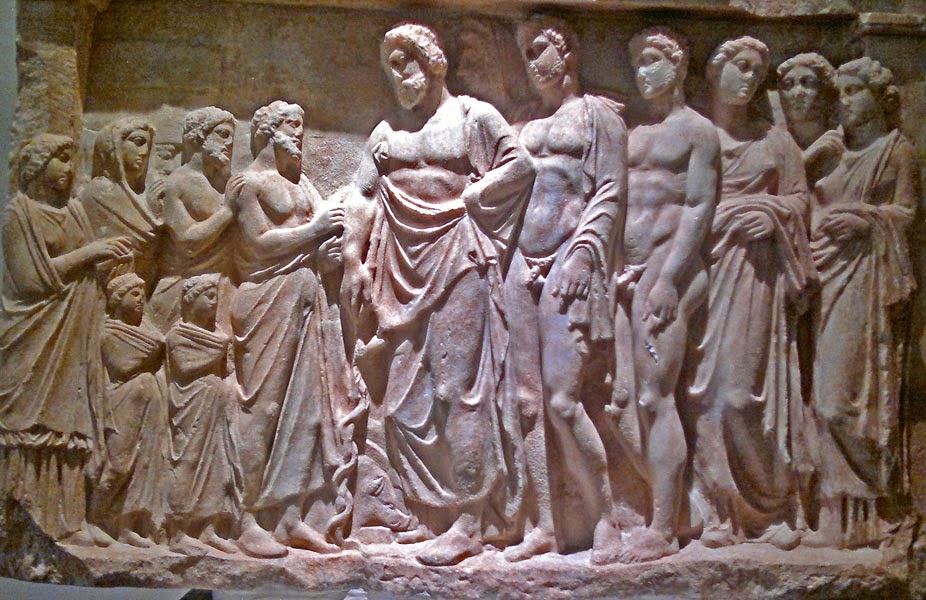
Posted on 

The daughters of Asclepius
 Ipioni: the Wife of  Asclepius. And this daughters:  HYGEIA(=Health), EGLI(=Glamour),
IASO, AKES, Panacea. (Dictionary Suidas)


 Ipioni was secondary deity Asclepius wife, daughter Merope personification of gentleness. It was deity with healing properties, mainly dealing with obstetrics. Its name recalls the “ipion Pharmacy” was simultaneously comrade and wife of Asclepius, the ancient god of medicine.

His name is not suspected of Asklepios from July the Epidafrio that produced the name “glory” (Aogla) and in our opinion it is consistent and lexicographer Hesychius.
The etymology of the name from “Asklin”, the Corinthian King, whom he healed, or the “Asgelatan” epithet of Apollo, or “Aglaopin” seems rather popular origin. The second component of the name is “mild” that adds to the “glory” shine and gentleness ….
The earliest scholars produced the name from “Ashkelon”. Asclepius is the ideal conception of healing power of nature as now perceived by people, who acts in “soft” seasons in the hills and in the fresh air under the soft glow and heat of the sun, the points gush cool springs and tall trees surrounding clean atmosphere.
Such was exactly the environment of places of worship and this conception strengthened the various legends of his birth and origin.
Along with Ipioni acquired these daughters:
The first two probably represent different stages of treatment, while the third medication.
The IASO or Iiso (in the Ionian dialect) is an ancient Greek ideal, anthropomorphic, secondary attached deity Asclepius intertwined with the “sacred” concept of Healing (treatment).
Reportedly daughter of Asclepius and Ipionis, sister goddesses healthy Akesos, Panacea and Aegle or daughter Amphiaraos.
 As a derivative of the verb iaomai (= heal) Place names: Iasis (Healing) – Jason – Iassos – Iatir – JATO – Doctor – Iator and the Cure as a means of therapy
 Pausanias reports that the Amphiaraeion Oropos altar, one of the five parts of which was dedicated to Aphrodite, the Panacea, the IASO, Health and Peony Athena.
 Also worshiped in Epidaurus and Athens.
  

The fund has worshiped at Epidaurus, as sisters, as a deity.
Her name is rooted in the ancient A and verb, meaning treat.
It was considered as the goddess of the healing process.

The Panacea was anthropomorphic secondary deity of Greek mythology intertwined with the concept of treatment (or herbal medicine) for Pasha disease. Reportedly daughter of Asclepius and Ipionis sister goddess Health, Iassos of Machaona and Podaleirios, Doctors of the Trojan War in Homer.
Worshiped mainly in Oropos, Attica, Kalymnos, Kos, etc .. The form of the present and the Asklepieion of Athens.
As goddess seen as able to cure every disease, its name quickly spread to all the Greek cities, particularly drugs capable of curing if not all diseases at least most of them.

The Egli.
It is said to have derived its name “Glow,” radiators, brilliant fame, grandeur, or “Splendour,” or by the beauty of the human body when it is in good health, or the price paid in the medical profession.

Health was the ancient Greek goddess, personification of Health of body and soul.
As the oldest center of worship of Titane refers to Sicyon, where were the sanctuary of Asclepius and Hygeia. According to ancient Greek tradition Arifron Sikyonios wrote the hymn to the goddess, whose cult was spread in Athens about 420 BC ..
In Greek mythology holds a prominent place in worship of her father. However, while Asclepius directly related to the treatment of diseases, the goddess associated with preventing disease and maintaining health status.
Apart from Athens, worshiped in other cities, such as Thespies in Elatia, Megara, Corinth and Argos.
The Orphic hymn health shows the importance attached by the ancient Greeks on health: “Imeroesa, Erato, polythalmie, pamvasileia, klythi marlin healthy ferolvie, mother collected works …”

The artists portrayed him from 5th century. BC as a young woman, later adopted as a symbol of the serpent.
Health others want her husband and other daughter of Asclepius.
It was probably a very ancient divinity, who is identified when the Asclepius, sometimes with Amphiaraos and when with Athena. Bronze statue of Athena Health stood on the Acropolis near ancient altar, immediately after entering the Propylaea.
Carved figures of Asclepius and Hygeia save many.
Here’s Hymn to Health, the Arifrona from Sikyon:

“Health most venerable among the blessed,
let us dwell with you the rest of my life,
let’s you my willing chug rather than wealth or grace parents.
Whether the royal power, which is equal to the gods to humans,
or cravings with hidden Venus nets.
Hunting, or other pleasure or the pain relief Gods show to people,
in with you, blissfully Health, all thallium and Graces shining spring without you no one was prosperous “

This entry was posted in schönros by Konstantin. Bookmark the permalink.

AGNODIKE.

The first female doctor of Ancient Greece (and the world).

Ancient Athens, 4th century BC.

Agnodike had observed a high mortality rate among women who were about to give birth because they were ashamed to be examined by men. It was then that she decided to take action and study Medicine, even though she knew that doing so could bring her face to face with the death penalty.

Agnodike, disguised as a man, studied alongside the famous doctor Herophilus, in Alexandria. Herophilus, in the famous school he had founded, taught Agnodike everything about gynecology and obstetrics, while she herself observed every practice that the famous doctor applied. When she graduated from Herophilos’ school, she was already a complete doctor – gynecologist – obstetrician who returned to Athens and began practicing her profession.

Agnodiki, always disguised as a man, quickly gained attention and everyone was talking about the young man with the thin fingers and the strange sweetness of his face. Wanting to reassure the women she examined, she revealed her real identity, asking them not to reveal it anywhere. Not only did her secret not leak out, but she herself had so much work that the preference for her face had now become noticeable.

The male doctors, not knowing her real identity, were looking for a way to eliminate the young doctor who stole their clientele. And they began to slander him for having ‘extramarital’ relationships with the ladies he examined.

The accusations were so massive – although false – that in the end she was arrested and brought to trial. Then Agnodiki found herself at an impasse and so decided to reveal her true identity. The spectators of the court, hearing her revelation, erupted and immediately demanded her death sentence.

Now Agnodiki was faced with the accusation of violating the law on the practice of the medical profession, since she was a woman. Somehow a second trial followed, more controversial than the first, but this time she was not alone.

On her side she had excellent defense lawyers, the wives of nobles as well as all the women she had cured. The judges, without having to accuse her of any other serious accusation, were forced to acquit her because the crowd had become enraged by this unjust accusation.

In addition to her acquittal, Agnodiki also achieved something that until then seemed unreal: namely, changing the existing legislation, thus allowing, from then on, women in ancient Athens to study Hippocrates (d. 460 BC-360 BC) was a curious Greek physician, the first to systematically classify medicine and attempt a methodical treatment of diseases. He was Koos, Asclepiades by birth and son of Heraklides and Phainaretis or Praxithea daughter of Phainaretis according to others. He was the 20th descendant of Herakles from his mother and the 18th descendant of Asclepius from his father. Initially he was a student of his own father, then of Herodikos, Gorgias, the orator Leontinus and Democritus of Abderitis, although several researchers claim that his relationship with Gorgias and Democritus was a spiritual communication and not a discipleship relationship.

FANOSTRATE

The Doctor Who Broke The Chains of Women in Ancient Athens

✏️By AIK.G.Daskalopoulou

Phanostrate: The Compassionate Healer of Ancient Athens

In the bustling streets of 4th-century BCE Athens, one name stood out for its kindness and medical skill: Phanostrate. A pioneering woman who balanced the art of midwifery with the science of medicine, she was a figure of trust and relief for her community. Her story, beautifully preserved on a marble monument, reveals a life dedicated to healing—a woman so beloved that her epitaph claims she was “longed for by all.” To discover Phanostrate is to catch a rare and touching glimpse of the real people who shaped the history of ancient Greek healthcare].

In the heart of classical 4th-century BC Athens, a time when public life was an almost exclusive privilege for men and women remained confined to the privacy of the house, emerges the form of a woman who managed to conquer social merit through science and giving to the fellow man.

Fanostrati, daughter of Heraclides of the municipality of Meliti, was not just an anonymous wife or mother, but a distinguished professional who practiced medicine and midwifery with such finesse, so that her memory would be preserved for centuries through marble.

The only but valuable source of information about her life and work is her achievement column, which was discovered in Attica (Acharnai) and is currently kept at the National Archaeological Museum.

The embossed column depicts Fanostrati surrounded by children, an image that highlights her dual role as a midwife and doctor. The program that accompanies the performance is revealing to her personality and knowledge, as she explicitly mentions that there was a “midwife and a doctor”, a combination of titles rare for women of that period.

Fanostrati lived in a transition period for the practice of medicine by women.
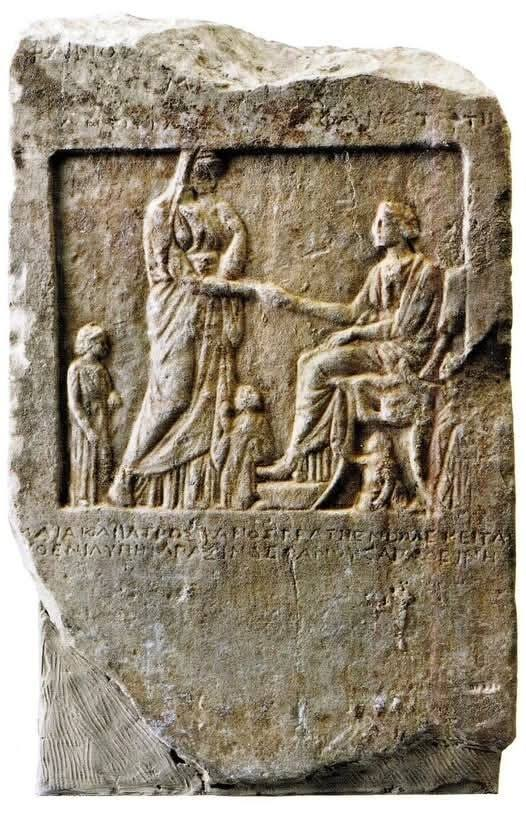
CORINTH & “PERIANDER”= ΠΕΡΙΑΝΔΡΟΣ/PERIANDROS: From περι- (peri-) +‎ ἀνήρ (anḗr, “man”) +‎ -ος (-os). … a male given name, equivalent to English PERIANDER .

PERIANDER enhanced Corinth’s natural advantages by constructing an artificial harbor and a passageway across the ISTHMUS (the DIOLKOS) that allowed ships to be DRAGGED over land from one gulf to the other. He also LEVIED taxes on the USE of CORINTHIAN harbors, markets, and the DIOLKOS.
PERIANDER, (died c. 587 BCE), SECOND tyrant of CORINTH (c. 627–587 BCE), a firm and effective ruler who exploited his city’s commercial and cultural potential. Much of the ANCIENT GREEK representation of PERIANDER as a cruel despot probably derives from the CORINTHIAN NOBILITY with whom he dealt harshly.
PERIANDER was the son of CYPSELUS, the FOUNDER of the CYPSELID DYNASTY of CORINTH. To promote and protect CORINTHIAN trade, PERIANDER established colonies at POTIDAEA in CHALCIDICE and at APOLLONIA in ILLYRIA. He conquered Epidaurus and annexed CORCYRA. The DIOLKOS (=“portage way”) across the ISTHMUS of CORINTH was perhaps built during his reign. It appears that the commercial prosperity of PERIANDER’SCorinth became so great that the tolls on goods entering its ports accounted for almost all government revenues. PERIANDER cultivated friendly relations with THRASYBULUS, tyrant of MILETUS, and maintained ties with the kings of LYDIA and EGYPT. In the cultural sphere he was a patron of art and of literature; by his invitation the poet ARION came to the city from LESBOS. Sometimes reckoned as one of the Seven Wise Men of Greece, Periander was the supposed author of a collection of maxims in 2,000 verses.
CORINTH, Greek KÓRINTHOS, an ancient and a modern city of the PELOPONNESE, in SOUTH-CENTRAL GREECE. The remains of the ancient city lie about 50 miles (80 km) west of ATHENS, at the EASTERN end of the Gulf of CORINTH, on a terrace some 300 feet (90 metres) above sea level. The ancient city grew up at the base of the citadel of the ACROCORINTHUS—a GIBRALTAR-like eminence rising 1,886 feet (575 metres) above sea level. The ACROCORINTHUS lies about 1.5 miles (2.5 km) south of the ISTHMUS of CORINTH, which connects the PELOPONNESE with CENTRAL GREECE and which also separates the SARONIC and CORINTHIAN gulfs from each other. The citadel of the ACROCORINTHUS rises precipitously above the old city and commands the land route into the PELOPONNESE, a circumstance that gave CORINTH great strategic and commercial importance in ancient times.
The site was occupied from before 3000 BCE, but its HISTORY is obscure until the early 8th century BCE, when the city-state of CORINTH began to develop as a commercial centre. CORINTH’s political influence was increased through territorial expansion in the vicinity, and by the late 8th century it had secured control of the ISTHMUS. The CORINTHIANS established colonies at CORCYRA and SYRACUSE , which would later assure them a dominant position in trade with the #1western Mediterranean.
Britannica Quiz History Buff Quiz
During the 8th and 7th centuries CORINTH was ruled by the BACCHIANS family of nobles, but they were eventually overthrown by CYPSELUS, who, followed by his son PERIANDER , ruled the city as tyrants from about 657 to 550. These tyrants founded further colonies, but the chief source of CORINTH’s wealth remained its possession of the isthmus, which controlled not only the land traffic between Attica and the PELOPONNESE but also the traffic between the Aegean and Ionian seas by way of the CORINTHIAN and SARONIC gulfs. PERIANDER facilitated the transit of ships and cargoes, which were hauled overland from gulf to gulf, by building a stone roadway between them, thus sparing SEAFARERS the ARDUOUS voyage around the southern tip of the Peloponnese. By this time Corinth had harbours on both gulfs that flanked it, LECHAEUM on the Gulf of CORINTH and Cenchreae on the Saronic Gulf. Under the tyrants, CORINTH’S COLONIAL expansion was extended along the ADRIATIC
and into MACEDONIA.
The tyranny of the CYPSELIDS was followed in about 550 BCE by an OLIGARCHICAL government that embarked on a major building program for the city. In the second half of the 6th century, however, CORINTH was OUTSTRIPPED by ATHENS in both seamanship and commerce, and it was often the bitter commercial rivalry between CORINTH and ATHENS that was to generate crises in GREEK politics over the next 200 years. After the GRECO-PERSIAN Wars (c. 546–c. 448 BCE), CORINTH joined SPARTA against ATHENS during the PELOPONNESIAN War (431–404 BCE), but, though that conflict brought about the military defeat of ATHENS, it did little to revive the power of CORINTH, which joined with some of its former allies to defeat SPARTA in the CORINTHIAN War (395–387 BCE).
CORINTH was subsequently involved in most of the political conflicts of GREECE, but chiefly as a pawn in the struggles of more powerful city-states because of the strategic value of its citadel. CORINTH’S independence finally ended in 338 BCE when PHILIP of MACEDONIA GARRISONED the ACROCORINTHUS and made the city the centre of the LEAGUE of CORINTH. The city remained the puppet of MACEDONIA and SUBSEQUENTLY of the ACHAEAN LEAGUE until the LATTER involved it in a FATAL conflict with ROME, and in 146 BCE CORINTH was destroyed by the ROMAN general LUCIUS Mummius .
In 44 BCE JULIUS Caesar reestablished CORINTH as a ROMAN colony. The new6 Corinth flourished and became the administrative capital of the ROMAN province of ACHAEA. The city is known to readers of the New Testament for the letters addressed to its Christian community by the apostle PAUL. It enjoyed some prosperity under BYZANTINE rule but declined in the later European Middle Ages. After the Turkish conquest in 1458, it was reduced to a country town.
Get a Britannica Premium subscription and gain access to exclusive content.
Subscribe Now
The remains of the ancient city of CORINTH lie just north of the ACROCORINTHUS, with which it was joined by a circuit wall about 6 miles (10 km) in circumference. The city was connected with its principal port, LECHAEUM, by two parallel walls and a paved highway that led to the PROPYLAEA, the entrance to the agora (the city’s main marketplace). Most of the substantial remains in the agora are works from the ROMAN period, but it acquired its present extent much earlier, in the 4th century BCE, with the construction of an enormous stoa (portico), 525 feet (160 metres) in length, that enclosed its southern side. IMMEDIATELY behind the SOUTH stoa began the road leading to the city’s other port of CENCHREAE, on the SARONIC Gulf. On a small rise northwest of the agora stand seven DORIC columns, which are the remains of the TEMPLE of APOLLO (c. 550 BCE). The remains of other temples, villas, a theatre, shops, public baths, pottery factories, a gymnasium, a large TRIUMPHAN arch, and other buildings dot the site, which since 1896 has been extensively excavated.
MODERN CORINTH , three miles northeast of the site of ancient Corinth, was founded in 1858 after an earthquake leveled the latter. It is primarily a hub of communications between NORTHERN and SOUTHERN GREECE and is the PRIMARY point of export for local fruit, raisins, 0 (municipality) of CORINTH in the PELOPONNESE (MODERN GREEK : PELOPÓNNISOS) PERIFÉREIA (region), as well as the seat of an archbishop. Pop. (2001) 30,434; (2011) 30,176. 

Temple of Apollo, in Ancient Corinth, was built about 540 B.C. in the Doric style on the ruins of much earlier temple. It is one of the earliest Doric temples in the Peloponnese constructed of local limestone on top of an imposing, rocky hill.

The mosaics of the Hall of Arion based around the Greek myth of the poet Arion. In the UNESCO listed Ancient Roman mosaics in the Villa Romana del Cas

IDENTICAL-CLASSICAL MOTIVES, FROM the HELLENIC MYTHAGOGY-COSMOLOGY: ARION/ΑΡΙΩΝ ο ΚΙΘΑΡΩΔΟΣ(=ARION the CITHAR PLAYER) rides his DOLPHIN to safety in a third-century mosaic from baths in Henchir Thyna, Tunisia (DEA Picture Library)

ANCIENT CORINTH

Corinthian columns in Jerash, Jordan

Corinthian capital from the Colosseum with gorgoneia, made by Syraciusian sculptors

CORINTHIAN columns of the ARCH of SEPTIMIUS SEVERUS in LEPTIS MAGNA

Corinthinan peripteros of the Temple of Bacchus in Baalbek, Lebanon

CORINTHIA, CORINTH. Circa 350/45-285 BC. AR Stater (21.5mm, 8.53 g, 10h). PEGASOS flying left; koppa below / Head of Athena right, wearing Corinthian helmet with neck guard and laurel wreath on the bowl; I before neck, star to right. Pegasi 425; BCD Corinth.

CORINTHIA, Corinth. Circa 400-350/45 BC. AR Stater (21.5mm, 8.60 g, 1h). PEGASOS, wings raised and trailing rein, alighting left; koppa below / Head of ATHENA right, wearing Corinthian Store helmet with neck guard.

PEGASOS STATUE IN MODERN CORINTH

Bellerophon, Pegasus and Chimera, Laconian black-figure kylix C6th B.C., The J. Paul Getty Museum

BELLEROPHONTES: ETYM: ΒΕΛΟΣ+ΦΟΡΩΝ = ARROW CARRIER was one of the MOST celebrated heroes of myth. He was a son of the god Poseidon and Eurynome, wife of King Glaukos (Glaucus) of Korinthos (Corinth). In his youth Bellerophontes captured the winged horse Pegasos as it came to drink from the town’s fountain.

He was later exiled for the murder of a family member and journeyed to the court of King Proitos (Proetus) in Argos for purification. The queen, however, developed a lust for the hero and when he spurned her, she told her husband he had tried to violate her.

Proitos then sent him off to King Iobates in Lykia (Lycia) with a closed letter requesting the youth be put to death. Iobates was reluctant to do this himself and so commanded Bellerophontes to slay the fire-breathing Khimaira (Chimera) which was ravaging the land. He rode into battle against the beast on the back of Pegasos and slew it by driving a lead-tipped spear into its fiery gullet.

The king then ordered him to subdue the barbarous Solymoi tribe, and later the Amazones, but again he proved victorious. Finally, Iobates commanded his guards to ambush and kill the youth, but he slew them all. The king was forced to acknowledge that Bellerophontes must be the son of a god and welcomed him into his house as his son-in-law and heir.

Despite all of his successes, Bellerophontes was still not satisfied and sought to ascend to heaven on the back of Pegasos. Zeus was angered by his presumption and sent a gadfly to sting the horse, causing it to buck and cast the hero back down to earth. After this he wandered the world alone, despised by both gods and men.

The mythological etymology of Bellerophontes name was “Slayer of Belleros” from the Greek Belleros and phonos. However, it is likely that the name originally meant “Wielder of Missiles” from the Greek words belos and phoreô.

Bellerophon, Pegasus and Chimera, Laconian black-figure kylix C6th B.C., The J. Paul Getty Museum 

An exquisite bronze CORINTHIAN helmet of c.510BC. Found at PUGLIA in Italy, it was acquired(!!) by… the British Museum in 1865, in whose collection it remains. 

ISTHMUS 

Humans Have A Funny Habit Of “Creating” Their Own Route 

The STATUE of LIBERTY, whose OFFICIAL NAME IS: (ENGLISH: “LIBERTY ENLIGHTENING THE WORLD” GALLIC: “LA LIBERTE ECLAIRANT LE MONDE”),IS A COLOSSAL statue on the islet of the same name and in the upper part of New York Bay.
This statue was erected to commemorate the friendship between the peoples of the USA and FRANCE.
Its total height is 93 meters (302 ft) including the plinth, and in the Encyclopaedia Britannica version it shows a woman preaching freedom.

This woman holds a torch in her raised right hand and an inscribed tablet in her left bearing the date July 4, 1776.
An elevator goes up to the height of the balcony and a spiral staircase leads to an observation deck on the crown worn by LIBERTY. The torch she holds is 93 meters above the surface of the sea. At the base of the statue is the American Museum of Immigration.
The proposal for the construction of the statue was formulated by a FRENCH HISTORIAN, ÉDUATD DE LABOULAIS, AFTER the AMERICAN CIVIL WAR . A sufficient amount of money was collected by contributions from the FRENCH PEOPLE and the work BEGAN in
FRANCE in 1875, under the direction of the SCULPTOR FREDERIC-AUGUSTE BARTHOLDI.
APOLLO’s ΦΩΤΟΦΟΡΟΣ/PHOTOPHOROS=LIGHT BEARER is depicted in exactly this form.
And fortunately for us, the IMMORTAL GREEK LAND of CORINTH, saved us this image, so that today we can know the truth.
The figure of APOLLO ΦΩΤΟΦΟΡΟΣ/PHOTOPHOROS=LIGHT BEARER is today in the MUSEUM of CORINTH, but it goes unnoticed by the unsuspecting visitor.
It is on a three-fold plate together with two other representations.
The one in the left part depicts an angel, a figure similar to that of the Christian faith and according to archaeologists is the figure of the goddess HECATE.
In the right part, a rosette is depicted.
And in the midst of the miracle! The form of the Light-bearer APOLLO, the same as that of the Statue of LIBERTY! Intellectual property is not clear to whom it belongs.
It is said by people of CORINTH who know that the director of the American Archaeological Mission, a sober and honest man, has declared that AMERICANS should come and worship in the Museum area where the image of the light-bearer APOLLO is located, because it is the source of their national symbol .
(In the photo, we see the sculpture with the representation of ZOODOTIS ΑΠΟΛΛΩΝ ΗΛΙΟΣ=APOLLO HELIOS with his fiery chariot).

Το Άγαλμα της Ελευθερίας , του οποίου η επίσημη ονομασία είναι “Η Ελευθερία φωτίζοντας τον κόσμο” (αγγλιστί “Liberty enlightening the World” γαλλιστί “la Liberte eclairant le monde”) ,
είναι ένα κολοσσιαίο άγαλμα πάνω στην ομώνυμη νησίδα και μέσα στο άνω τμήμα του Κόλπου της Νέας Υόρκης.
Το άγαλμα αυτό στήθηκε σε ανάμνηση της φιλίας των λαών των ΗΠΑ και της Γαλλίας
.

Το συνολικό του ύψος είναι 93 μέτρα (302 πόδια) μαζί με το βάθρο , και κατά την εκδοχή της εγκυκλοπαίδειας Μπριτάννικα παρουσιάζει μια γυναίκα να κηρύττει την ελευθερία.
Η γυναίκα αυτή κρατάει έναν πυρσό στο υψωμένο δεξί της χέρι και μια ενεπίγραφη πλάκα στο αριστερό όπου αναγράφεται η ημερομηνία 4 Ιουλίου 1776.

Ένας ανελκυστήρας ανεβάζει έως το ύψος του εξώστη και μια ελικοειδής σκάλα οδηγεί σε μιαν εξέδρα παρατηρήσεως πάνω στο στέμμα που φοράει η Ελευθερία.Ο πυρσός που κρατάει βρίσκεται σε 93 μέτρα ύψος πάνω από την επιφάνεια της θαλάσσης. Στην βάση του αγάλματος βρίσκεται το Αμερικανικό Μουσείο της Μεταναστεύσεως (American Museum of Immigration).

Την πρόταση για την κατασκευή του αγάλματος διατύπωσε ένας Γάλλος ιστορικός, ο Εντουάρ ντε Λαμπουλάϊγ , μετά τον Αμερικανικό Εμφύλιο πόλεμο. Συγκεντρώθηκε ένας ικανός αριθμός χρημάτων με εισφορές του γαλλικού λαού και το έργο άρχισε στη Γαλλία το 1875, υπό την διεύθυνση του γλύπτη Φρεντερίκ-Ωγκύστ Μπαρτολντί.

Ο Φωτοφόρος Απόλλων , απεικονίζεται με αυτήν ακριβώς την μορφή.
Και ευτυχώς για μας , η αθάνατη Ελληνική Γη της Κορινθίας , μας διέσωσε αυτή την εικόνα , για να μπορούμε σήμερα να γνωρίζουμε την αλήθεια.

Η μορφή του Φωτοφόρου Απόλλωνος βρίσκεται σήμερα στο Μουσείο της Κορίνθου , περνά όμως απαρατήρητη για τον επισκέπτη που δεν είναι υποψιασμένος.
Βρίσκεται σε μία τρίπτυχη πλάκα μαζί με άλλες δύο παραστάσεις.
Η μια στο αριστερό τμήμα, απεικονίζει έναν άγγελο , μορφή όμοια και ίδια με αυτήν της χριστιανικής πίστεως και είναι κατά τους αρχαιολόγους η μορφή της θεάς Εκάτης.
Στο δεξιό τμήμα, απεικονίζεται ρόδακας.
Και στην μέση ω του θαύματος! Η μορφή του Φωτοφόρου Απόλλωνος , ίδια με αυτήν του αγάλματος της Ελευθερίας! Η πνευματική ιδιοκτησία είναι πασιφανές σε ποιόν ανήκει.

Λέγεται από ανθρώπους της Κορίνθου που γνωρίζουν ότι ο διευθυντής της Αμερικανικής Αρχαιολογικής αποστολής , σώφρων και έντιμος άνθρωπος , έχει δηλώσει ότι οι Αμερικανοί πρέπει να έρχονται να προσκυνούν στον χώρο του Μουσείου όπου βρίσκεται η μορφή του φωτοφόρου Απόλλωνος , διότι είναι η πηγή του εθνικού τους συμβόλου.
(Στην φωτογραφία, βλέπουμε το γλυπτό με την παράσταση του Ζωοδώτη Απόλλωνα – Ηλίου με το πύρινο άρμα του)
.

THE PHOENICIAN DECEPTION AND THE MATHEMATICAL STRUCTURE OF THE GREEK LANGUAGE

The supposed Phoenician origin of the Greek alphabet is over! https://euphoriatric.com/the-mathematical-structure-of-the-ancient-greek-language-vs-phoenician-deception/

A  sensational speech about the Greek language and its authentic Greek writing (alphabet) which does not come from the Phoenicians and the non-existent “Indo-Europeans” ,  a theory that calls for it to be removed from school books ,  was given at the Academy of Athens by its outgoing President, Akadimaikos Antonios Kounadis on January 14, 2019 AD , closing his annual term there.

The following  text of his speech was first published on the website of the ” Estia” newspaper.

THE ORIGIN OF THE GREEK LANGUAGE: SPOKEN AND WRITTEN https://euphoriatric.com/the-mathematical-structure-of-the-ancient-greek-language-vs-phoenician-deception/

Speech by the former president of the Academy of Athens, Antonio Kounadis

.

THE GREEK LANGUAGE IS THE HIGHEST CULTURAL GOOD

   “The opinion put forward in the 18th century, that the Greek language belongs to the “Indo-European” family of languages, as well  as the opinion that the Greek alphabet is of …..Phoenician-Semitic origin, have been the subject of intense debates and disputes that continue to this day. Two issues, which should not leave any Greek indifferent, since the  most important asset of our cultural heritage, the Greek language ,  spoken and written, inextricably linked to the identity, continuity, survival and perspective of Hellenism , is a matter all of us.

Of course also the speaker, due to my long-term involvement with Education and my related article, with which I formalized the  harmful legislative interventions in our language, with the pseudo-labeled characterization as Educational Reforms .

Given that these two topics are interdisciplinary in nature and in fact the subject of many different sciences, my attempt in this case is  to present authentic opinions of linguists, archaeologists, historians, anthropologists, paleontologists , so that more light can be shed on these two complicated and even dark topics, based on the latest findings and developments in  human archaeogenetics (aDNA) and population genetics . Developments, which overturned or even confirmed previous assumptions.

ARISTOTLE: HELLENICIZES IT IS THE RIGHT NAME OF IT

  In  Plato’s Cratylus  , which is a dialogue about the correctness of names with interlocutors Hermogenes, the philosopher-mathematician Cratylus (founder of a philosophical school in the 5th century BC) and Socrates, the  beginnings of Comparative Linguistics can be found  in what it concerns names of barbarians (i.e. foreigners) and the comparative method (as it concerns the dialects of Greek, e.g. Aeolian, Doric, Ionic, Attic, etc.), as well as  the beginnings of Etymology for how the correct nomenclature is determined (naming) of words (names), nature or law . According to natural definition (according to Cratylos), there is an  agreement between a name (word) and its etymological conceptual content  (i.e. between signifier and signified), while according to the legal definition of names (words) naming is conventional  Greek language is preeminently conceptual or semantic, i.e. there is a causal relationship between nouns-words and their etymological meaning .

According to  Plato  (Kratylus, 435-436) ” he who believes in names, believes in things” . First,  Dionysius of Halicarnassus  (1st century BC) in his work “On the Composition of Names”  considers Plato to be the founder of Etymology,  writing: “The super-etymology discourse was first introduced by Plato in multiple men and allothi, indeed in the Cratylus.” . Regarding the value of the semantic property of names,  Aristotle  points out: “Reason, if it does not state, will not do its own work.” (The Art of Rhetoric C. 2149), then he does not exclude the Greek with the phrase: ” To Hellenizes is the right name .” (Art of rhetoric C. 4.1407).

Reading and learning the most perfect language.
Pay attention to the inscription, only capital letters and of course continuous.
Can anyone tell me why they wrote like that back then?
The native Greek language and historical fraud.
“It had many ways to charm the ear and charm the spirits.” (HOMER)
Since those ancient times, the Greeks, divided into various states, first formed their language.
From the dialects of the various Greek tribes, the National language of the Greeks was born and the community of religion and language created the Greek Nation with its brilliant civilization.
The Greek language was spoken in the middle of the 2nd millennium BC, and was at a high level of perfection. But to get there, it had undergone a diligent cultural process of many millennia, as stated in the past at a Conference of the Society of Greek Journalists, by Academician and Vice President of the Society, General Achilleas Tagaris.
Next, we will try to document the Historical continuity and the autochthonous nature of the Greek Language.

F I R S T: Greek is the only language in the World that has been spoken and written continuously for at least 4,000 consecutive years. Someone may disagree and say that ancient and modern Greek are different languages, this is of course completely untrue today.
Odysseus Elytis said; “I know of no other language than a single one, the unified Greek language. The Greek Poet continues, “Today we say the Sky, the Sea, the Sun, the Moon, the wind, as Sappho (600 BC) and Archilochus (740 BC) used to say.”
The Great Teacher of the Adamantios Korais clan had said:
“Whoever, without the knowledge of the Ancient Greek language, attempts to study and interpret the New, is either deceived or deceives.”
And Georgios Seferis writes:
“From the time Homer spoke until today, we speak, breathe and sing the same language.”
Although thousands of years have passed, all Homeric words have survived to this day.
Most of them were preserved intact, such as: Man, complex, human, many, war, chariot, phalanx, sword, chest, etc., thousands of words we can count here.
And! other Homeric words have remained in our language through their derivatives.
Today we may say “Water” instead of “water”, but the Homeric word has remained through its derivatives, such as aquifer, aqueduct, dehydration, etc.
Today we may not use the verb “derko” (to see), but we use the word, astute.
We may also not use the word “avdi” (voice), but we use the word “anavdos”.
The examples we can use here are certainly countless.
The so-called ancient script, “Linear B”, is purely Greek and is the genuine ancestor of Ancient Greek.
The English architect Michael Ventris deciphered this script based on some findings and proved its Greek origin.
This fact is of enormous importance, because it takes Greek several centuries further back into the depths of history.
This script uses some symbols different from the Greek Alphabet, nevertheless the pronunciation is similar, even to Modern Greek.
For example, the word “TOKOSOTA” means “arch” (calligraphic). It is known that “K” and “S” in Greek make “Ξ”, so we see that this word has not changed at all for so many millennia.
Even closer to Modern Greek are the words of Linear B’, ANEMO, RAPTE, EREMO, TEMENO, which are the corresponding “Anemos”, “Raptis”, “Eremos” and “Temenos”, we can give many examples here.
Calculating even with the conventional chronologies that place Homer around 1,000 BC, I think we have the right to ask:
How many millennia did our language take from the time when the cavemen of the Greek region first articulated it with monosyllabic sounds until it reached the astonishing perfection of the Homeric epic dialect, with words such as “Rhododaktylos” (rosy fingers), “leucolenos” (white arms – an epithet of the goddess Hera), “okymoros” (prematurely dying), etc.?
Plutarch (biographer-philosopher from Boeotia, 46-120 AD) in his “On Socrates the Demon” informs us that Agesilaus (King and General of Sparta 444-369 BC) discovered in Aliartos in Boeotia the tomb of Alcmene, the Mother of Hercules, which tomb had as a dedication “A Tablet of Chalcun having many wonderful letters, very ancient…” Imagine how old the writing is, since the ancient Greeks themselves described it as “ancient”.

A L S O:
It certainly does not stand with logic, “out of nowhere” for a Homer to appear and write two literary masterpieces.
It is obvious that a language with high-level writing must have existed long before.
Indeed, from ancient Greek Literature we know that Homer was not the first, but the last and most famous of a large series of epic poets whose names have been preserved (Creophilus, Prodictus, Arctinus, Antimachus, Cinaethon, Callimachus) as well as the names of many of their works (Phoronis, Phocaeus, Danaus, Aethiopis, Epigoni, Oedipus, Thebes, etc.), but unfortunately, their texts themselves have not been preserved.
Therefore, after the above, the historical continuity of the Greek Language for 7,000 years is demonstrated.
SECOND:
Because someone today, reading on the one hand the Greek encyclopedia “Papyrus Larous”, which I unfortunately consult for many things and on the other hand various propaganda publications, can tell us that the Greek Alphabet is of Phoenician origin.
For this point of view, we can today categorically say that this is a gross historical fraud.
Today, we can say with certainty that such anti-scientific theories are long outdated, because their credibility has now been seriously shaken by the various archaeological findings today.
We will briefly discuss what the historical evidence testifies to below.
Within the Phoenician Linear Script, which consists of 22 characters representing syllables, only four letters resemble Greek letters, namely:
Ζ = Zaxin = weapon,
Δ = Daleth = Door,
Φ = Qoph = Monkey and
Ο = Αyin = eye,
The rest are completely different.
The archaeological excavations that have taken place from time to time in Greece, have given a documented blow to the historical fraud that the Greek script derives from the Phoenician, because it is proven that the Greeks, from ancient times, wrote not only their syllabic Linear A and Linear B scripts, but also a type of writing identical to that of the current Alphabet, as far back as 6,000 BC.
Below I briefly refer to some of the findings of the Research and their significance:
On the islet of “Gioura” in the Northern Sporades, a ceramic fragment was found in the cave of Cyclops by the archaeologist N. Samson, dated to 5,500 – 6,000 BC, which clearly bears the letters “A”, “D”, and “Y”,
In the “Early Cycladic vases” found in excavations on Milos, which date back to the 3rd millennium BC, we can distinguish the identical letters of the Greek Alphabet, namely:
“M”, “N”, “K”, “X”, “X”, “P”, “O”, and “E”.
In Dispilio, Kastoria, Professor Mr. Georgios Hourmouziadis retrieved from the lake, among many others, the “Penakida Inscription”, with letters identical to those of today, which was characterized as the world’s first writing, since it was dated by Democritus, based on the “Carbon 14” method, with absolute precision to 5,250 BC.
In the excavations of Phaistos, Crete, symbols were found that were printed with movable elements (i.e. Seals) and for this reason this find is considered the oldest example of a printing press in the world.
The doubts about the non-priority of the Phoenicians over the Greeks in the discovery of writing, became certain when, in 1989, in no. 16 issue of the archaeological journal “NESTOR”, which is published by the University of Indiana, Professor Paul Faure (an international authority on prehistoric archaeology), and after the excavations carried out in the Cyclopean walls of Pilikata in Ithaca, published an announcement in which he cites decipherments of Ostraca tablets found, in Greek Linear Writing, dated by modern methods to 2,700 BC.

Thus he proves that, there, they spoke Greek and wrote Greek.
In these, one does not read the phrases:
“A nymph saved me” and “here I, Areadis, give to the living goddess Rhea 100 goats,
10 sheep…”.

S E C O N D: The theory that the Alphabet is an invention of the Semitic Phoenicians was maintained, among other things, by the argument that certain symbols of the Phoenician script resembled the letters of the alphabet.
This argument seemed strong until about 100 years ago, when linguists and historians still claimed that the Greeks did not know writing before 800 BC.
This claim was maintained until 1900 AD. Arthur Evans excavated Greek Minoan Crete and discovered the Greek Linear Scripts, whose symbols were, as shapes, identical to at least 17 of the 24 letters of the current Greek Alphabet.
Considering that these oldest examples of Greek writing (Linear A and B) were also found in excavations in Pylos, Mycenae, Menidi, Thebes, and in northern regions of Greece and were dated before 1,500 BC.
The first is EVANS who, in his work Scripta Minoa, revealed this historical fraud, i.e. that the Greeks received writing from the Phoenicians and expressed his scientific opinion that the opposite probably happened.
Since the Phoenicians and their writing appear in History, not before 1300 BC and that it is historically verified that Greeks from Crete moved to the Eastern Mediterranean.
The first paradox that I want to mention for us Greeks is:

That! Even today, the view that is taught in Greek Schools is that in the years of Homer, 100-200 years after the Trojan War (1,100 BC according to Herodotus), there was no writing and therefore the two epics (Iliad and Odyssey) were transmitted from generation to generation orally.
This view is rejected solely on the basis of common sense.
The second thing that I regretfully want to point out is: Unfortunately, the Greek Encyclopedia PAPYRUS LAROUS Vol. 5 p. 603 in Chapter Alphabet writes: “… In antiquity, only the Simians reached this stage of writing through Phoenician.
An alphabet which formed the basis of the Greek alphabet of the Historical times… this, suitably modified and adapted to the needs of Greek, is used to this day; and having spread to European countries, it formed the basis of most of the alphabets in use…”.
And! this is what the Greek Encyclopedia writes, i.e. the Simites created the Greek script through the Phoenician Alphabet.

Source: The native of the Greek language and the historical fraud.
http://namarizathema.blogspot.com/…/04/blog-post_8846.html
DREEK INSCRIPTION WITH DEDICATION PTOLEMY VI. OF EGYPT, 2nd CENTURY BC

HEISENBERG, NOBEL LAUREATE FOR ANCIENT GREEK  But even in recent times, the German philosopher-physicist Wenner Heisenberg  (Nobel Prize 1932) had declared: ” 

The term in the ancient Greek language was my most important intellectual exercise. In this language there is the most complete correspondence between the word and the conceptual content .culture.

.

NO PHOENICIAN INSCRIPTIONS WERE NEVER FOUND

Let it be noted that PHOENIX or AGENOR king of THE AUTHENTIC HELLENIC PHOENICIA(From PHOENIX=ΦΟΙΝΙΞ the BIRD, WHICH IS REBORN OUT OF THE ASHES IN THE ANCIENT GREEK MYTHOLOGY-MYTHAGOGY)…LONG BEFORE PHOENICIA BECAME SEMITIC ONE.., as seen from various historical sources, settled in Phoenicia (today’s Lebanon and partly Syria) mixed with the native Canaanites between 1,200 and 1,100 BC.  Written texts or inscriptions about the Phoenician culture have not been found until today.

THERE WAS GREEK SCRIPTURE DURING THE TRONIC WAR (1,200 BC)  Based on historical data, inscriptions and many references to (known) texts of ancient Greek authors, it has been accepted by the international scientific community that  

the Greek (alphabetic) writing probably existed before the time of the Trojan War . (We do not mean Linear A or B or certainly the most ancient Cretan hieroglyphic writing through ideograms.) However, the Greek (alphabetic) writing seems to have existed before the times of Homer, based on historical sources. E.g. in the Iliad (describing the Trojan War),  

Homer , referring to Bellerephon, writes ” 

signs that you have written on a canvas with a tymophothora many “. (Letter of Proitus to his father-in-law, Iovatis. G 169.) Also, according to the philosopher and  

historian Porphyry  (3rd AD century), Homer wrote the Iliad “not at all, not continuously, because they are contiguous, but” he  

wrote me every rhapsody  and being shown in the midst of the cities of food, he disappeared…” (Dictionary of Souda or Suida).   Mistriotis mentions that  

Apollodorus  (180-110 BC) tells us that Ajax, during the Trojan War, wrote the news of the death of his brother, Palamedes, on a rudder , which the sea waves carried to his father Nafplion. Of interest is the Scientific Communication of the Greek researchers Tavros 

Papamarinopoulos  and his collaborators, which I presented at the Public Session of the Academy (19/10/2017) entitled “Astronomical Dates of the End of the Trojan War and the Return of Odysseus” (Prak tics of the Academy , vol. 92 A, 2017). The Announcement concludes that  

the end of the Trojan War dates back to 1200 BC.  This date indicates the existence of a writing during the time of the Trojan War, in view of what was extrapolated by Homer about Bellerephon and by Mistriotis – Apollodorus for what they mention about Oiacas. 

If there really was writing before 1200 BC, the claims that the Greeks allegedly took the writing system (Syllabary) from the Phoenicians are shaken, lacking in credibility . Of course, this question remains open in the absence of evidence, because the existing evidence is not enough.

EVANS: THE PHOENICIANS TOOK THE LETTERS FROM THE GREEKS

LINE 1left from a vase at Akrotiri Thiras – right from Zakros Palace, Arch. Museum of Sitia

According to  Sir Arthur Evans  “the writing of Crete is the mother of the Phoenician” , while according to  René Dussault  “the Phoenicians had received the alphabet from the Greeks,  who had formed it from the Cretan-Mycenaean script “. (See also Georgiev, Problems of the Minoan Language, Sofia 1953.)

PHOENICIAN WITHOUT VOWELS…

  The Phoenician is not an alphabet, but a “Syllabary”, without vowels, with 22 consonants and without the consonants X, F, P of the Greek alphabet . But also according to the  Irvain University Center TLG (Thesaurus Linguae Graecae), the  Cretan historian Dosiades  (who wrote the local history of Crete) mentions that  the alphabet was found by the Cretans .

WHERE DOES THE LETTER ALPHA COME FROM

   Plutarch   (Problems 737)  considers naive the opinion that the letter “alpha” is Phoenician from “Aleph” which was called the boon  (considered the first of the necessary). According to the Great Etymological Dictionary, the letter “alpha” comes  from the verb alfo  (= to find), because “it was found first of all the other elements.”

IONIC THE PRESENT ALPHABET

Each city-state or region in the archaic Greek world had its own alphabet, (with slight variations from those of other cities.)  The current Greek alphabet is the Ionic, with 24 letters, which prevailed from 403 BC. on Lord Euclid . The Corinthian also has 24 letters, the Cretan 21, the Miletus 24, the Chalcidic 25, from which the current Latin came, after adaptation by the inhabitants of Latin Italy, (who, it seems, received it from Greeks of Kimi.)

From the Greek alphabet also came the Etruscan, the Cyrillic, the ancient Phrygian, the Lycian alphabet, the Lydian, the Armenian, the Coptic, the Gothic,  etc.

ANCIENT GREEK SCRIPTURES

  There are many sources for the  beginnings of Greek writing  , among which:

1) The sign of the Dispelion of Kastoria brought to light in 1993 by professor G. Hourmouziadis, which archaeologists both from the “Democritos” Research Center and the external ones dated to 5250 BC. 

Sign plate signature of Dispilio Kastoria, Macedonia 5,250 BC.(left a copy of the sign – right some of its letters and symbols)


2) “The Ostrakos in the Hermitage of Iura of the Sporades”, which was found by the archaeologist Adam Samson with a Greek inscription of 5500 BC, in which the letters A Y D are clearly visible 
 without any inscriptions, their phonetic value being known.

Writing on a shell of 5,500 BC, Cave of Cyclops, Iura SporadesGreek letters A, Y, D are visible


3) “The Ὄstrakos in the Pilikata area of ​​Ithaca”
 , 

 dating to 2700 BC. , on which there are engraved symbolic figures similar to those of Linear Scriptures A and B.

Writing on a shell of 2,700 BC. in Pelikata, Ithaca – Cross Museum of Ithaca


THE EPICS OF HOMER WERE TRANSFERRED IN WRITING

In this case, it is reasonable to ask  how it is possible for thousands of Homeric verses to be preserved and transmitted over many centuries unchanged with amazing precision . This is why  Mistriotis  in his work “History of the Homeric Epics” (Sakellariu Prints, Athens 1903, edition 2) mentions: ” The polymorphism and instability in the expansion and contraction of vowels cannot be attributed to the lack of writing .” ».

Professor  Gilbert Heigt  states that  a poem like the Iliad could not have been handed down without writing  (The Classical Tradition, MIET ed.), while the famous writer  Horst Blank (Papadima ed., p. 148) affirms that: ” Today a great part of philologists close to the hypothesis that the compilation of the Homeric Epics had already made the written consolidation of the text necessary… the rhapsodists carried with them their written manuscript copy . Also, the  French Hellenist Jacqueline De Romiguy  categorically states: ” Homer and writing coexist .”. (Why Greece, Ed. To “Asty”, p. 28.) The dactylic hexameter in the Homeric Epics is based on prosody (long and short vowels, double consonants, diphthongs, etc.). The opinion that the Phoenicians borrowed some consonants and immediately the Greeks wrote the Epis spelled, has no strong arguments , as the Dictionary Souda or Suida states (see Phoenician city).

WILLIAM DURANT: THE PHOENICIANS TOOK IT FROM THE GREEKS

   The reference of the  American historian/philosopher, editor of the world history of culture ,  William Durant, is also characteristic:  ” The Phoenicians were not the inventors of the alphabet, they only circulated it from place to place. They took it from the Cretans and transported it to Tyre, Sidon, Byblos and other cities of the Mediterranean. There were the “gyrologists” and not the inventors of the alphabet .”

The  archaeologist-epigraphist Apostolos Arvanitopoulos  had declared: ” The alphabet was invented and implemented by the Ancient Greeks … and they gifted it to the lost humanity as its common property.” There are several testimonies with texts of ancient historians and writers (after the time of Homer), which support that  there was a written Greek language (a variety of Grammika B’) around 1200 BC, i.e. before the Phoenician-Semitic Syllabary . However, evidence (eg inscriptions) for the existence of Greek writing dating back to this period does not exist.

GILBERT MURRAY: GREEK IS THE BEST LANGUAGE

For this  language of incomparable perfection that we ourselves have abused, while for foreign Greekists and linguists it is an object of admiration and study , the statement of the  distinguished Greek professor at the University of Oxford, Gilbert Murray, is characteristic : “[…]  a thought can be expressed with ease and grace in Greek, while it becomes difficult and heavy in Latin, English, French, German. Greek is the most perfect language, because it expresses the thoughts of the most perfect people .”

The distinguished  Hellenist and linguist Spanish professor FR Adrados , a foreign partner of the Academy of Athens, has repeatedly stated that  Western European languages ​​are Semi-Hellenic or Crypto-Hellenic .

THE INVENTOR OF TONES AND SPIRITS

It is also worth noting that  Aristophanes of Byzantium  (2nd century BC)  is considered the first to refine and apply tones and spirits .

THE FAISTUS DISC

“On the “disc of Phaistos” dating before 1200 BC.  (which was found in Crete and has not been deciphered until today)  the letters B G L Y are clearly “printed” .

CLAY DOCUMENTS 2,000 BC

Michael  Ventris  and  John Chadwick  argued for the first time that  the “baked clay tablets, from the second millennium BC, found at Pylos, Knossos, Mycenae and other places, contained Greek writings that came from the ancient Mycenaean Kingdoms”” .

The Mycenaeans , as  FR Adrados  recently pointed out (following others),  were Greek, written with the help of an ancient syllabic script that was subsequently forgotten .

OSWALD PANAGL: THE LINEAR VARIATION OF ANCIENT GREEK

Also, in his speech at the Academy of Athens (March 8-10, 2013), the distinguished Austrian linguist and Mycenologist  Osvald Panagl  mentioned that:  The above tablets (of Knossos, Pylos, Mycenae) were written in a primitive variant of ancient Greek, 500 years earlier of the linguistic idiom of the Homeric Epics. Consequently, their date goes back to around 1300 BC.

ICLAIN OF MESSINIA:  LINEAR II   OF 1450 BC.

The Archaeologist M. Kosmopoulos in Iklaina Messinia with Linear B of 1450 BC.

Recently in  Iklaina of Messinia  (14 km from Pylos) the archaeologist  Michael Kosmopoulos , a professor at the University of Missouri in the USA (responsible for excavations since 1998 in this area), found “among rubble and garbage”  the oldest clay tablet to date Linear B dated between 1450 and 1400 BC. , as he informed me in his relevant letter.

OINOCHOES OF DIPYLOS

Winemaker Dipylos Kerameikos of 740 BC. with the letters:”THE CURRENT ORCHESTRA ALWAYS PLAYS TODE KAN MIN…”which according to Babiniotis means “1. Which of the musicians dances more lightly than all 2a. this (the vessel, the wine-cup) belongs to him and if you [see him, wish him every happiness] 2b. let him take it (the vessel)”National Archaeological Museum

However, the  oldest alphabetic inscription , engraved on a clay vessel, in ” Oinochoi of Dipylus ” is from the 8th BC. aἰ.: ” THE CURRENT ORCHESTRA ALWAYS PLAYS THIS FOR TEN MINUTES “. However, in view of the above, this inscription should not be the oldest. Taking into account that to date less than 5% of the Greek Secretariat has been known, it is reasonable to expect that in the future new findings will be brought to light by the archaeological hoe.

INDIVIDUAL LANGUAGE

  According to the linguist professor at Charles Sturt University in Australia  George Kanarakis  (and other researchers), based on historical comparative linguistics,  “the Greek language does not belong to any of the language groups of the Indo-European family and is therefore classified as an isolated language within the context of its homolingualism.”  The term  Indo-Europeans was introduced in 1813 by the British linguist, physician and physicist Thomas Young  (1779-1829).

The top international linguist – Hellenist  FR Adrados  in his announcement at the Academy of Athens said that  the Minoans  “whom we do not know how to define with precision, but they were not Indo-Europeans – the people who wrote the “Phaeisto disc” were not Europeans ”, neither they where they wrote the Mycenaean script.”

aDNA

The prevailing opinion, contrary to that of Sir Arthur Evans (according to which Libyans and Egyptians immigrated to Crete developing the Minoan civilization), is that  the Minoans do not belong to the linguistically Indo-European populations that settled Europe in the Neolithic era . However, the research team of  Georgios Stamatogiannopoulos , Professor of Genetics and Genetic Medicine at G. Washington University , in collaboration with Greek and foreign scientists of various specialties,  isolated αDNA (ancient DNA) from Minoan remains 4,300 years old  and determined the polymorphisms of the mitochondrion, the who  they have the characteristics of European culture . Extremely interesting is a recent publication by him and his collaborators entitled ” Population Genetics and the Theory of the Alleged Extinction of the Greeks of the Peloponnese during the Middle Ages ” that I announced at the Academy of Athens (27/4/2017), which proves that the Population Genetics can clarify important issues of origin and history of the Human population.

SANSKRIT IS BASED ON GREEK

The distinguished German linguist  Franz Bopp  (editor of the Comparative Grammar in 1857) has argued that  Sanskrit is based on Greek, and not the other way around .

CONCLUSIONS  Based on the above, we can reach the following conclusions:1.  

Plato laid the foundations of the Etymology of the Greek language , which is 

 preeminently semantic  (conceptual), that is, there is a causal relationship between words and their etymological meaning.2. Research through  

aDNA  showed that there were expansions of population groups from the Russian steppes both to the West (toward Central and Western Europe) and to the East of Europe, through the Asian steppes. 

A genetic signature of migrations to Greece has not been confirmed until today , however, if such exists, according to the top linguist J. Mallory, it will be very small in relation to the  

indigenous population settled in Greece at the time.3.  

The term Indo-Europeans is purely linguistic and does not imply any racial type of person. The existence of an Indo-European race is strongly disputed  by leading specialist scientists, based on recent genetic data. 

It is time for the old Indo-European case to be removed from the textbooks .4. The inclusion of Proto-Greek in the Indo-European common language is not disputed, however,  

the mother-language of this common language remains unknown . However, as previously discussed,  

Proto-Greek seems to be superior to the other languages  ​​(including Sanskrit), however the question of the time of its appearance in the Greek space remains open (according to Dr. I. Lazaridis).5. In the Greek area, and specifically  

in Crete, the first writing system with ideograms  (hieroglyphs) appears 5,000 years ago,  

followed approximately 4,000 years ago by Linear A’  (which has not yet been deciphered),  

which is succeeded before 3,500 years (15th BC) the Linear B script  (including vowels), which was deciphered as Greek by the British architect M. Ventris. According to the famous linguist – Mycenologist 

 Osvald Panagl, the tablets of Knossos and Mycenae date from around 1300 BC, of ​​Pylos around 1200 BC, while the distinguished archaeologist 

 M. Kosmopoulos discovered in Iklaina (14 km from Pylos) the oldest to date clay tablet of Linear B, dated around 1450-1400 BC .6. In the Middle East and specifically  

in the former Phenicia it appears around 1150 BC. the so-called Phoenician-Semitic writing system, which is not an alphabet but a syllabary without vowels, with 22 consonants,  (which do not include the Greek consonants  

X, F, Ψ .)  

If there was writing during the time of the Trojan War (i.e. before 1200 BC), the hypothesis that the Greeks took the writing system (Syllabary) from the Phoenicians is shaky, lacking credibility .7.  

The first alphabet in the world is the Greek, from the 8th BC. aἰ Originally it had 27 letters, from 403 BC. 24 letters, after removing the digamma, Kopa and sabi . However, there are serious indications based on historical sources (Homeric Epistles, Mistriotis, etc.) and archaeological findings, that  the Greek alphabet is much more ancient, OLDER dating back to the years of the Trojan War  (Mistriotis, Apollodorus, etc.), it is much more  

THE MATHEMATICAL STRUCTURE OF THE ANCIENT GREEK LANGUAGE VS “PHOENICIAN” DECEPTION.

H E R E: AN EXAMPLE OF AN I D E N T I C A L- C L A S S I C A L VARIATION OF A STANZA …, …………….

********************** J U S T………………V O W E L S !!!! ********************

( A N C I E N T G R E E K // ATTICA DIALECT)

A YOUNG MOTHERS WISH TO HER BABY SON :

“ΟΙΑ ΗΩ Ω ΥΙΕ ΑΕΙ ΕΙ” = AS THE DAWN MY SON, BE ALWAYS THE FLAME OF LIFE = ΟΠΩΣ Η ΑΥΓΉ ΝΑ ΕΙΣΑΙ ΠΑΝΤΑ ΥΙΕ ΜΟΥ Η ΦΛΟΓΑ ΤΗΣ ΖΩΗΣ (TRANSLATED INTO “NEW” GREEK).

ANALYTIC TRASLATION IN ORDER FROM; ANCIENT GREEK – NEW GREEK – ENGLISH

ΟΙΑ = ΟΠΩΣ= AS

ΗΩ = Η ΑΥΓΉ = THE DAWN

Ω ΥΙΕ = ΥΙΕ ΜΟΥ = OH MY SON

ΑΕΙ ΕΙ = ΝΑ ΕΙΣΑΙ ΠΑΝΤΑ = BE ALWAYS

(TRANSLATED INTO “NEW” GREEK) :

ΟΠΩΣ Η ΑΥΓΉ ΝΑ ΕΙΣΑΙ ΠΑΝΤΑ ΥΙΕ ΜΟΥ =

= AS THE DAWN MY SON, BE ALWAYS!!

Η ΦΛΟΓΑ ΤΗΣ ΖΩΗΣ=THE FLAME OF LIFE=2135

ΟΙΑ ΗΩ Ω ΥΙΕ ΑΕΙ ΕΙ = 2135

ATTENTION: – GO AFTER THE ANCIENT ALPHABET INDEX

The earliest numerical notation used by the Greeks was the Attic system. It employed the vertical stroke for a one, and symbols for“5”, “10”, “100”, “1000”, and “10,000”. Though there was some steam lining of its use. The (IONIAN)) Greek system of enumeration was a VERY SOPHISTICATED one, Like the ATTICA SYSTEM it was also DECIMAL Its distinguishing feature is that it was alphabetical and required the use of more than 27 different symbols for numbers plus a couple of other symbols for meaning. This made the system somewhat cumbersome to use. However, calculation lends itself to a great deal of skill within almost any system, the Greek system being no exception. ” Greek Enumeration and Basic Number Formation First, we note that the number symbols were the same as the letters of the Greek alphabet. symbol value symbol value symbol value ! 1 ” 10 # 100 $ 2 % 20 & 200 ‘ 3 ( 30 ) 300 * 4 + 40 , 400 – 5 . 50 / 500 6 0 60 1 600 2 7 3 70 4 700 5 8 6 80 7 800 8 9 90 900 where three additional characters, the (digamma), the (koppa), 1°c 2000, G. Donald Allen Greek Numbers and Arithmetic 2 and the (sampi) are used. Hence, &62 = 287 Larger Numbers Larger numbers were also available. The thousands, 1000 to 9000, were represented by placing adiacritical mark ! before a unit. Thus ! ‘&62 = 3287 In other sources we see the diacritical mark placed as a subscript before the unit. Thus ! ‘&62 = 3287 The uses of a M was used to represent numbers from 10,000 on up. Thus 9! = 50: 000 9″#&62 = 120: 287 Alternatively, depending on the history one reads 9 – = 50: 000 9!% ¢ &62 = 120: 287 Archimedes, in his book The Sand Reckoner, calculated the number of grains of sand to fill the universe”. This required him to develop an extention the power of Greek enumeration to include very large numbers. Fractions In the area of fractions, context was crucial for correctly reading a fraction. A diacritical mark was placed after the denominator of the (unit) fraction. So, $ ! = 1 2 ;<= +$ ! = 1 42 but this latter example could also mean 40 ! ” . More complex fractions could be written as well, with context again being important. The numerator was written with an overbar. Thus, .! 6* = 51 84 Numerous, similar, representations also have been used, with increasing sophistication over time. Indeed, Diophantus uses a fractional form identical to ours but with the numerator and denominator in reversed positions. 2The reader may ask, ”What universe?” It was the universe of Aristarchos the so called ‘ancient Copernicus’ because he proposed a sun centered universe with the earth and other planet orbiting it. More on this later. Greek Numbers and Arithmetic 3 # Calculation The arithmetic operations are complex in that so many symbols are used. However, as you can imagine, addition amounts to grouping and then carrying. For example 5+7= – + 2 = %$ = 12, not terribly unlike what we do. Multiplication was carried out using the distributive law. For example: &62 ¢ $ = (& + 6 + 2) £ $ = (200 + 80 + 7) £ 2 = 400 + 160 + 14 = 574 = /3* 

(ALPHA – ΑΛΦΑ = 1 + 30 + 500 + 1 = 532 => 5 + 3 + 2 = 10 => 1 + 0 = 1

EN = 5 + 50 = 55 => 5 + 5 = 10 => 1 + 0 = 1

OMIKRON – ΟΜΙΚΡΟΝ = 70 + 40 + 10 + 20 + 100 + 70 + 50 = 360, as there are degrees of the circle

INDEX:

ΓΡΆΜΜΑ=LETTERΑΞΊΑ=VALUEΓΡΆΜΜΑΑΞΊΑ=VALUEΓΡΆΜΜΑΑΞΊΑ=VALUEΓΡΆΜΜΑΑΞΊΑ=VALUE
Α´1Ι´10Ρ´100͵Α1000
Β´2Κ´20Σ´200͵Β2000
Γ´3Λ´30Τ´300͵Γ3000
Δ´4Μ´40Υ´400͵Δ4000
Ε´5Ν´50Φ´500͵Ε5000
Ϛ´6Ξ´60Χ´600͵Ϛ6000
Ζ´7Ο´70Ψ´700͵Z7000
Η´8Π´80Ω´800͵H8000
Θ´9Ϟ´90Ϡ´900͵Θ9000

A vast knowledge locked-coded into words because of mathematical values ​​they have. One of the pioneers on the matter was maximum Pythagoras.

The numbers, shapes, harmony and the stars have something in common, so respectively mathematics (numbers) geometry (shape), harmony (music) and astro-nomy (one star = a-choris- bracket + natural nomoipou govern ) were sisters sciences by Pythagoras, which in this series we discussed was the ladder to development (= ex -tou- helix, DNA) of mind-soul to the Creator.

A Creator who created based on these four disciplines. 27 symbols-figures in numerical value make up the Greek Alphabet, 3 groups of 9 numbers-symbols each group, totaling each group 45, 450, 4,500.
ALPHA = 1 + 30 + 500 + 1 = 532 => 5 + 3 + 2 = 10 => 1 + 0 = 1
EN = 5 + 50 = 55 => 5 + 5 = 10 => 1 + 0 = 1
OMIKRON = 70 + 40 + 10 + 20 + 100 + 70 + 50 = 360, as there are degrees of the circle

To be able to understand the meanings of the concepts of words of ancient Greek tongue should first know a little about the actual Greek language.

The ancient Greek language is the only one that is not based on the fact that some people just sit and agreed to call an object “x” or “y” as all other sterile world languages. The ancient Greek language is a MATHEMATICAL MASTERPIECE that wè`ll try to approach.

The beginning of everything is the same as the Ancient Greek alphabet (which of course we did not get it from someone else as we shall see, because factually not possible). The letters of the Greek alphabet as a whole was 33 and as many vertebrae, the last five vertebrae (playing the role of the antenna) directly related to the brain and corresponding to the last 5 ineffable letters which only the priests knew * one of them It was the right (or Gammadion) which in Latin became swstika and the Nazis stole and name Swastika. This symbol is the life-giving Sun (Apollo), the Nazis reversed it to symbolize the opposite of life-giving Sun, ie dark death.

There were also some letters which over time abolished as Digamma (F, Qoppa (Q), stigma (S ‘), Saba (ϡ)
Pythagoras inform us about the 3 levels of Greek language which are:

1. Talking
2. Signifier (a. Signal b. Signified)
3. caches (a. Time b. Vibration c. Lexarithmos d. Tonarithmos)
-The First is the speech
-The Second is the relationship between the mark and the signified that we will analyze below.
-The Third is the interval (distance & time), vibration (which awakens the brain through resonance frequencies of the created pulses  – Pallas Athena) the lexarithmos (relation of letters and words with numbers) and tonarithmos (relation of letters and words of tunes )

Each letter corresponding to a number, and a musical tone so letter = number = tone (musician), which shows that in our language behind letters-words are numbers (lexarithmoi) and musical sounds (tonarithmoi).

The four sisters sciences by Pythagoras were:
1. Numbers (mathematics)
2. Shapes (Geometry – γεωμετρια); from: geo+metria=earth measure, meter.
3. Music (Harmony)(nine muses..)
4. Astronomy (Astro+nomia from nomos=law)

The above sciences are interrelated with the Ancient Hellenic Language and are into each another like Russian bampouskes. Combine alphabet enclosing numbers and musical tones with these 4 disciplines.

1.Astronomia = + astir law, a-Justice = is not supported, so astronomy = the universal laws that govern what is not based somewhere, who have to do with music (harmony),shapes (geometry) numbers (mathematics ) and all the ether that surrounds the heavenly realms.

2. Pythagoras heard the harmony (music) of the celestial Spheres thus speak a language that has to do with the flow of the universe.

PHOENICIAN “ALPHABET”:  AN HISTORICAL DECEPTION 

This theory:

1. Completely rejects the theorem that the Greek language came from another language (the so-called “Indo-European”!!!), since it is PROVEN to be the only NON-conventional language of the world. In other words, the only language where a relationship betweenthe “word” (as a form) and the “meaning of the word” is established.

2. Consequently, it is proven that Greek is the first and only created language of the human species which provided the basis for all “conventional” languages, as are all the other languages of the world (where there is no causative relationship between the form and the meaning). These other languages are a corrupt form of Greek.

3. This theory proves, without a doubt, that the alphabet was created by the Greeks so that the 24 or 27 code letters would aid in attributing the meanings of the Greek words (and only of these).

4. Comparatively, this theory shows that the symbols of the Phoenician writings and their nouns, e.g., “alef” = ox, “beth” = hut, “gimel = camel, etc., not only do not contain coded meaning, but are also associated or refer to [the] primitive animal conditions – [one would expect in a culturally backward society].

”Τό πού, πόθ’ όπερ κρίνεται τού χρόνου” !!!(ancient Greek=” Where, what is it that is judged by time ”)

(Χρυσό ενεπίγραφο φύλλο μυρτιάς ή δάφνης, τέλος 4ου αι. π.Χ./ Από το ανατολικό νεκροταφείο της Πέλλας/Φέρει στικτή επιγραφή σε τρεις στίχους: ΦΕΡΣΕΦΟΝΗΙ ΠΟΣΕΙΔΙΠΠΟΣ ΜΥΣΤΗΣ ΕΥΣΕΒΗΣ/Εφορεία Αρχαιοτήτων Πέλλας)

(Gold engraved leaf of myrtle or laurel, end of the 4th century BC / From the east cemetery of Pella / It has a dotted inscription on three lines: FERSEFONHI POSEIDIPPOS MYTIS EYSEVIS / Ephorate of Antiquities of Pella the capital of ancient Macedonia)

No automatic alt text available.

Overwhelming evidence that one of the most important discoveries in the history of civilization is Greek ,a deception that usurps and distorts Greek History and Civilization. It is of utmost importance that the truth be restored not only for modern Greece, but also for thewhole of humanity.The deception that alphabetical script was discovered by the Phoenicians is a long-lived one.For the past 14 years [the Greek scholarly magazine] Davlos has published numerous articleson this problem. This prompted K. Katis to ask that we submit a relevant article for hismainstream daily so that this important issue would become known to a wider audience.

This article summarizes the strong evidence against the “Phoenician Deception,” and proves that the greatest discovery in the history of civilization is Greek. We believe it necessary to republish this article in [this issue of] Davlos exactly as it appeared in the daily.

A SCIENTIFIC MONSTROSITY.

According to linguistic theory, an “alphabet” is defined as “the sum of symbols following a specific sequence and order used to ascribe the essential utterances of a language, under thecondition that each utterance represents only one symbol and vice-versa”. Consequently, in alphabetical script (as an example, in the writings of the people of Europe, America,Australian, as well as the other parts of the world) each letter represents one essential sound.This is not true for the imperfect alphabets expressed through syllables where each symbolrepresents a syllable (with two or more voiced sounds). For example, in Greek Linear A and B, there is a symbol that represents the syllable ko (k + o), a symbol that represents the syllable po (p + o), etc. In Phoenician writing (which has only consonants and no vowels), this situation is even worse, as far as we can tell from the small amount of existing samples.

IN PHOENICIAN, EACH SYMBOL IS NOT EQUIVALENT TO ONE SPECIFIC SYLLABLE, BUT TO A VARIETY OF SYLLABLES, AND THUS THE READER CAN USE HIS IMAGINATION WHEN ATTEMPTING TO DECIPHER THE SOUNDS. FOR EXAMPLE, THERE ARE CONSONANTS WHICH CAN BE READ AS EITHER BA, BOU, BE, BI, BO, ETC. OTHERS  IS NOT AN ALPHABET, IT IS A LESS ADVANCED FORM OF WRITING THAT CAN BE READ AS GOU, GA, GE, GO, AND SO ON. CONSEQUENTLY, PHOENICIAN SCRIPT DOES NOT CONSTITUTE AN ALPHABET, AND IS NOT EVEN AN ADVANCED FORM OF SYLLABIC SCRIPT NEARING THE PERFECTION OF THE EQUIVALENT GREEK SYLLABIC WRITINGS. IT IS TRULY AMAZING TO THINK THAT, IN THE ACADEMIC WORLD OF THE PAST 150 YEARS, THE ALMOST CONTRADICTORY TERM OF “PHOENICIAN ALPHABET” HAS BEEN ESTABLISHED, WHICH, IN REALITY REFERS TO A TYPE OF WRITING THAT HAS NOTHING TO DO WITH AN ALPHABET. IT IS EVEN MORE UNBELIEVABLE TO THINK THAT THE SCIENTIFIC DOGMA THAT GREEK CAME FROM PHOENICIAN HAS BEEN ENFORCED. NOT ONLY THE PHOENICIAN IS NOT AN ALPHABET, IT IS A LESS ADVANCED FORM OF WRITING THAN GREEK LINEAR A AND B.

HTTPS://WWW.YOUTUBE.COM/WATCH?V=DKCPURQQS2Y

GREEKNESS OF THE ALPHABET

A) ARCHAEOLOGICAL EVIDENCE THE THEORY THAT THE ALPHABET IS A PHOENICIAN DISCOVERY HAS BEEN MAINTAINED THROUGH THE ARGUMENT, AMONG OTHER THINGS, THAT CERTAIN SYMBOLS OF PHOENICIAN WRITING ARE SIMILAR TO THE LETTERS OF THE ALPHABET. FOR EXAMPLE, THE PHOENICIAN ALEF IS THE REVERSE OR SIDEWAYS GREEK “A.” THIS ARGUMENT WAS A STRONG ONE UNTIL ABOUT 100 YEARS AGO, WHEN LINGUISTS AND HISTORIANS STILL MAINTAINED THAT THE GREEKS DID NOT KNOW HOW TO WRITE BEFORE 800 B. C.! AROUND 1900 A.D., HOWEVER, ARTHUR EVANS EXCAVATED THE GREEK MINOAN CRETE AND DISCOVERED THE GREEK LINEAR WRITINGS, WHOSE SYMBOLS CORRESPONDED TO 17 OF THE 24 LETTERS OF THE GREEK ALPHABET. GIVEN THAT (A), THE MOST ANCIENT EVIDENCE OF THE GREEK SCRIPTS (LINEAR A AND LINEAR B) THAT WERE LATER DISCOVERED IN PYLOS, MYCENAE, MENIDI AND THEBES — BUT ALSO IN MORE NORTHERN AREAS UP TO THE DANUBE RIVER AS WELL — WERE DATED TO BEFORE 1500 B.C. AND (B), THAT THE PHOENICIANS AND THEIR WRITINGS APPEAR IN HISTORY NO EARLIER THAN 1300 BC, EVANS WAS THE FIRST PERSON TO EXPRESS DOUBTS ABOUT THE THEORY THAT THE GREEKS RECEIVED THEIR SCRIPT FROM THE PHOENICIANS. HE PUT FORWARD THE SCIENTIFIC SUSPICION THAT IT WAS PROBABLY THE OTHER WAY ROUND. THE DOUBTS PERTAINING AS TO WHO WAS FIRST — THE PHOENICIANS OR THE GREEKS — IN DISCOVERING WRITING, BECAME A CERTAINTY WHEN FRENCH PROFESSOR, PAUL FORE, AN INTERNATIONALLY ACCLAIMED SPECIALIST ON PREHISTORIC ARCHAEOLOGY, PUBLISHED A REPORT IN NESTOR (AN AMERICAN ARCHAEOLOGICAL JOURNAL OF THE UNIVERSITY OF INDIANA — 16TH YEAR, 1989, PAGE 2288). IN THIS REPORT, HE SUBMITS AND DECIPHERS PLATES WITH GREEK LINEAR WRITING FOUND AT THE CYCLOPEAN WALL OF PILIKATES, IN ITHACA, DATED, THROUGH THE USE OF MODERN SCIENTIFIC METHODS, BACK TO 2700 B.C., THE LANGUAGE OF THESE PLATES WAS GREEK, AND THE DECODING BY PROFESSOR FORE RESULTED IN THE FOLLOWING SYLLABIC TEXT, EXPRESSED PHONETICALLY: A]RE-DA-TI. DA-MI-U-A-.A-TE-NA-KA-NA-RE (IJA)-TE. THE PHONETIC EQUIVALENT OF THIS IS TRANSLATED, ALWAYS ACCORDING TO THE PROFESSOR, AS: “ΙΔΟΎ ΤΙ ΕΓΏ Η ΑΡΕΔΆΤΙΣ ΔΊΔΩ ΕΙΣ ΤΗΝ ΑΝΑΣΣΑΝ, ΤΗΝ ΘΕΆΝ ΡΈΑΝ: 100 ΑΊΓΑΣ, 10 ΠΡΌΒΑΤΑ, 3 ΧΟΊΡΟΥΣ” [HERE IS WHAT I, AREDATIS, GIVES TO THE QUEEN- GODDESS REA, 100 GOATS, 10 SHEEP, 3 PIGS]. (SEE, “DAVLOS” MAGAZINE, ISSUE 107, NOVEMBER 1990, PAGE 6103). THUS, FORE PROVED THAT THE GREEKS WERE WRITING AND SPEAKING GREEK AT LEAST 1400 YEARS BEFORE THE APPEARANCE OF THE PHOENICIANS AND THEIR SCRIPT IN HISTORY. BUT, THE ARCHAEOLOGICAL EXCAVATIONS IN GREECE DURING THE LAST 15 YEARS HAVE GIVEN US MANY MORE GREAT SURPRISES: THE GREEKS WERE WRITING USING NOT ONLY LINEAR A AND B, BUT ALSO A TYPE OF WRITING IDENTICAL TO THAT OF THE ALPHABET SINCE AT LEAST 6000 B.C. IN FACT, AT DISPILIO, IN THE LAKE OF KASTORIA, IN NORTHERN GREECE, PROFESSOR G. HOUMOUZIADIS DISCOVERED A PLATE WITH WRITING VERY SIMILAR TO THAT OF THE ALPHABET, WHICH WAS DATED, USING RADIOACTIVE CARBON- 14 AND VISUAL PHOTOTHERMAL METHODOLOGY, BACK TO 5250 B.C. (SEE DAVLOS, ISSUE 147). THREE YEARS LATER, N. SAMSON, A CURATOR OF THE PREHISTORIC AND CLASSICAL ANTIQUITIES DEPARTMENT, DISCOVERED SHARDS OF VASES (“OSTRAKA”) WITH LETTERS IDENTICAL TO THE PRESENT GREEK ALPHABET WHILE EXCAVATING AT THE “CYCLOP’S CAVE,” ON THE DESERTED ISLAND OF YIOURA, NEAR THE INHABITED ISLAND OF ALONNISSOS, IN THE NORTHERN SPORADES ISLAND COMPLEX. THESE VASES WERE DATED TO5,500 TO 6,000 B.C. WITH THE SAME METHODS (SEE “DAVLOS,” ISSUE 185, MAY 1997). THE SAME ARCHAEOLOGIST, WHILE PERFORMING EXCAVATIONS ON THE ISLAND OF MILOS, DISCOVERED VESSELS OF THE PROTO-CYCLADIC PERIOD (MID-3RD MILLENNIUM B.C.) WITH LETTERS IDENTICAL TO THE GREEK LETTERS:

“X,” “N,” “M,” “K,” “Ξ” [KSI],”Π” [P], “Ο,” & “Ε.” (SEE N. SAMSON’S INTERVIEW IN DAVLOS,ISSUE 204, DECEMBER 1998, PAGE 12749.)

IT IS APPARENT THAT THESE ARCHAEOLOGICAL DISCOVERIES HAVE GIVEN A “COMICAL’ CHARACTER TO THE SO-CALLED “PHOENICIAN THEORY” ON THE DISCOVERY OF WRITING. IN ADDITION, THESE ARCHAEOLOGICAL DISCOVERIES HAVE REVOLUTIONIZED CHRONOLOGICAL DATING OF GREEK HISTORY AS IT IS TAUGHT TODAY, AS WELL AS THE WORLD HISTORY OF CIVILIZATION ITSELF. (SEE ALSO THE BOOK BY CON. KOUTROUVELLI, “RE- ESTABLISHING THE CHRONOLOGY OF PREHISTORIC TIMES BASED PRIMARILY ON ASTRONOMICAL INFORMATION FROM ANCIENT WRITERS,” DAVLOS PUBLISHING, 1999.)

b) The somewhat mathematical proof

While the house-of-cards which provided “proof”‘ of the so-called “Phoenician alphabet” was being torn down by archaeological discoveries, another overwhelming piece of evidence surfaced. This evidence was offered to us by the 20-year long discreet and timid research of the Greek Language and Writing by a great researcher, Elias Tsatsomoiros. Unfortunately E.Tsatsomoiros passed away on December 19th 1991, after having, however, completed his revolutionary work, History of the Genesis of the Greek Language-from the hunter-gatherer to the time of Zeus-the Deciphering of the Greek Alphabet. The undersigned [writer of this article] had the honor of publishing and editing this work (Davlos Publishing, 1991), but also the honor of having worked closely with the researcher for more than a decade. We had long discussions on the numerous problems arising from the research, and we had published a series of articles in Davlos magazine. This memorable researcher proved in a remarkable way that every letter of the Greek alphabet contained a consistent code meaning, which is literally introduced either exactly or metaphorically within the general meaning of the Greek word it belongs to, as a partial meaning. Consequently, every (ancient) Greek word is basically an acronym (similar to D(imosia) E (picheirisi) H(lektrismou) [=ΔΕΗ in Greek, or as U(nited) N(ations), in English], where every letter provides a significant or less significant notional element, and then, they all together provide the logical definition of the meaning expressed bythe word. The “significant difference” of each word’s meaning is usually provided by the firstletter. Obviously, there is not enough space in this article to present the code meaning of the letters of the Greek alphabet as a whole, as they are analyzed in this revolutionary volume of research in the field of human speech. As an example, I will choose only one of the now days 24 letters (orinaly 27) of the Hellenic alphabet, “Ypsilon” = “Y” or, small case, “u” (pronounced, long-e “eepsilon,” the 20th letter of the Greek alphabet, and familiar to us as “Y” in the so-called “Latin” alphabet– which is nothing more than a variationof the Greek “Chalcidean” alphabet). Ypsilon, therefore, as its shape indicates, has the code meaning of “a cavity” οr, if reversed, of a “convexity.” This meaning is introduced into the words containing this letter, and sometimes, by extension into the meaning of liquids (which, through their natural flow end up filling the “cavity”). I will quickly mention some of the names of vessels and liquids (such as the amphiconical κ-Υ-πελλο which is dated back to 2700 B.C. and is displayed at the Heraklion Museum). One may add to the words mentioned there, many others, such as kot-Y-li, go-Y-ttos, tr-Y-blion, p-Y-xis, amphore-Y-s, b-Y-tion, l-Y-chnos, procho-Y-s, ske-Y-os, etc, all having the meaning of a curvedobject. Also, some other words such as k-Y-hsis (rounding of the stomach ofan eng-Y-os [pregnant] woman); k-Y-ma (curving on the surface of the ocean); cr-Y-pti (curving of the ground); the preposition [h-Y-po] Y-po (meaning under a certain level); h-Y-per (preposition meaning above acertain level); Y-psos =height; and all of the hundreds of words that have h-Y-po or h-Y-per as a prefix, as well as thousands of others. This discovery, which unfortunately has been officially ignored, is a continuation of the forgotten Platonic approach to the problem of language (see Plato’s Cratylus ).


THE HERODOTUS EXTRACT

ALL THE GREEK WRITERS WHO MENTION THE ALPHABET (THEY CALLED IT “GRAMMATA”) CONSIDER IT A VERY ANCIENT GREEK INVENTION (BY PROMETHEUS, PALAMEDES, LINUS, ETC). THE THEORY OF THE PHOENICIAN ALPHABET WAS ALWAYS, AND IS STILL, BASED ON AN EXCEPTION TO THIS GENERAL RULE. THISEXCEPTION IS AN EXCERPT FROM HERODOTUS, THAT HE HIMSELF PRESENTS AS HIS ‘PERSONAL OPINION’ (“ΩΣ ΕΜΟΙ ΔΟΚΕΕΙ” = “AS IT SEEMS TO ME”). THIS OPINION WAS FORMED BASED ON THE SAYINGS OF OTHERS, AS HE HIMSELF MENTIONS IN THE PREVIOUS PARAGRAPHS (“ΑΝΑΠΥΝΘΑΝΟΜΕΝΟΣ” = TAKING INFORMATION FROM OTHERS). LET US HAVE A LOOK AT THE HERODOTUS’ EXCERPT (HISTORY, E 58): [58. AS FAR AS THE PHOENICIANS, THEY, WHO ARRIVED WITH CADMUS, INCLUDING THE GEFIRAIOI, HAD LIVED IN MANY OTHER PLACES AND INTRODUCED ALSO ARTS (NEW AND UNKNOWN) TO THE GREEKS; IN FACT, AND ALSO (SOME) WRITING, WHICHHAD NOT BEEN KNOWN TO THE GREEKS BEFORE THAT, AS I THINK, FIRST THIS WRITING WHICH WAS USED BY ALL THE PHOENICIANS. WITH THE PASSING OF TIME, HOWEVER, THE PHOENICIANS CHANGED THIS TYPE OF WRITING ALONG WITH THEIR LANGUAGE.]

THE MOST IMPORTANT THING ABOUT THIS EXCERPT IS THAT IN THE CRITICAL PHRASE “… AMA TIN FONI METEVALLON KAI TON RHITHMON TON GRAMMATON,” IT IS DISCLOSED THAT THE PHOENICIANS-GEFIRAIOI THAT WENT TO VIOTIA WITH CADMUS BROUGHT SOME FORM OF WRITING WITH THEM. BUT, AS THE PHOENICIANS “CHANGED THEIR LANGUAGE” (THEY LEARNED GREEK, IN OTHER WORDS), THEY ALSO CHANGED THEIR WRITING (THEY STARTED WRITING, THEREFORE, WITH THE EXISTING ANCIENT GREEK WRITING THAT ALREADY EXISTED IN VIOTIA). ALTHOUGH THIS STATEMENT WAS MADE BY HERODOTUS, THE TRANSLATORS, SUBSEQUENTLY, PROVIDED THE TRANSLATION [MEANING] THAT THE LOCAL GREEK VIOTES AND NOT THE PHOENICIAN EMIGRANTS CHANGED THEIR LANGUAGE AND WRITING AND ADOPTED THE PHOENICIAN! THIS GENERALLY INCOHERENT REFERENCE TO THE ALPHABET, AS IT HAS BEEN SAVED, HAS BEEN OBVIOUSLY ALTERED AND MEDDLED WITH, WHO KNOWS BY WHOM AND WHEN. LET US LOOK AT THE SUSPICIOUS CONTINUATION OF THE TEXT, AS IT HAS ARRIVED TO US:

AROUND THEM (THE PHOENICIANS) LIVED AT THAT PLACE DURING THAT YEAR (YEAR OF CADMUS) IONIAN GREEKS, WHO RECEIVED THROUGH CONTACT OR THROUGH TEACHINGS BY THE PHOENICIANS THEIR WRITINGS, CHANGING THEIR OWN WRITING WHICH THEY USED LITTLE. WHEN USING THIS WRITING AND SINCE THIS WRITING HAD BEEN INTRODUCED TO GREECE BY PHOENICIANS, THEY CALLED IT PHOENICIAN.

IONIAN GREEKS LIVING AROUND THE PHOENICIANS RECEIVED THE PHOENICIAN WRITING AND, USING A FEW OF ITS LETTERS, SINCE THEY HAD ALTERED THEM AND SINCE IT WAS JUST, THEY CALLED IT PHOENICIAN-TO PAY TRIBUTE TO THE PEOPLE WHO BROUGHT IT TO GREECE, IS A STRIKING CONTRADICTION. CONSEQUENTLY, ONE CAN ASSUME THAT THIS IS A FORGED PARAGRAPH, HYPOTHETICALLY EXPLANATORY, WHICH AIMS TO REDUCE THE PREVIOUS STATEMENT “…AS THEY CHANGED THEIR LANGUAGE, THEY CHANGED THEIR WRITING,” TO AN UNIMPORTANT STATEMENT. THIS IS HOW THE “PHOENICIAN THEORY” WAS SUBSTANTIATED AND IS MAINTAINED AS AN OBVIOUS FORGERY.

IN ADDITION

THE “PHOENICIAN THEORY” WAS ESTABLISHED IN EUROPE DURING A TIME, WHEN, AS THE RENOWNED BRITISH CLASSICAL SCHOLAR, S. G. REMBROKE (THE LEGACY OF GREECE, OXFORD UNIVERSITY PRESS, 1984) WROTE, “THE PHOENICIANS WERE GIVEN AN INTERMEDIARY ROLE “THAT IS NOT BASED ON ANY HISTORICAL INFORMATION”. A ROLE, IN OTHER WORDS, OF THE TRANSPORTER OF WISDOM AND CIVILIZATION FROM THE “CHOSEN” PEOPLE OF ISRAEL TO THE “UNCIVILIZED” NATIONS, AND SPECIFICALLY THE GREEKS. THIS, OF COURSE, COULD BE FORGIVEN, SINCE THIS WAS ESTABLISHED AROUND THE END OF THE MEDIEVAL AGES, WHEN RELIGIOUS FANATICISM AND BACKWARDNESS HAD REACHED SUCH A POINT THAT THE DAUGHTER OF AGAMEMNON, IPHIGENIA, IS PRESENTED AS THE DAUGHTER OF IEPHTHA; DEUKALION IS PRESENTED (CENTURIES LATER & COPIED & TWISTED,..AS…”NOAH”(!!)???!!!. APPIS IS A CONSUL OF JOSEPH? APOLLO, PRIAMOS, TIRESIAS, AND ORPHEUS: OF MOSES?… THE STORY OF THE OF THE ISRAELITES FROM EGYPT TO PALESTINE, AND OTHER SIMILAR DISTORTIONS IS A VERY BAD & TWISTED COPPY OF THE ARGONAUTS IS THE CROSSING. THE ABOVE ARE NOTED BY REMBROKE.

AND WE CONCLUDE: AT THE TIME, HELLENISM WAS IN COMATOSE SPIRITUAL CONDITION REGARDING NATIONAL AND HISTORICAL AWARENESS, AND THEREFORE TOTALLY UNABLE TO DEFEND ITS HISTORY AND CIVILIZATION, AND FOR THIS REASON COULD NOT REACT AND DID NOT REACT. TODAY, IT IS WITH OURTOLERANCE THAT OUR LANGUAGE IS DEEMED “INDO-EUROPEAN,” AND OUR WRITING “PHOENICIAN,” OUR ATHENA AND OUR SOCRATES ARE PRESENTED AS “BLACKS,” AND OUR CIVILIZATION AS “AFRICAN.” WHAT SPIRITUAL SITUATION ARE WE IN NOW? [I.E., WHAT’S OUR EXCUSE THIS TIME?]

 NOTES: ON PAGE 13745 OF THIS ARTICLE, IS A PICTURE OF A PIECE OF SHARD [POTTERY] DATED TO 6,000 B.C., FOUND ON THE ISLET OF YOURA OF THE NORTH SPORADES ISLAND COMPLEX WITH GREEK ALPHABETICAL WRITINGS. ONE CAN SEE THE LETTERS “A,” “Y,” & “D” [ALPHA, EEPSILON, AND DELTA ], ALMOST IDENTICAL TO THE GREEK LETTERS OF THE CLASSICAL ALPHABETS. THIS FINDING PROVES THAT THE GREEK ALPHABET IS OLDER THAN THE GREEK LINEAR WRITINGS. THIS FINDING ALSO COMPLETELY AND DEFINITELY DISPROVES THE FALSE THEORY THAT THE GREEKS GOT THEIR ALPHABET FROM THE PHOENICIANS, WHO MADE THEIR HISTORICAL APPEARANCE AROUND 1300 B.C., IN OTHER WORDS ABOUT 4,500 TO 5,000 YEARS AFTER THE CREATION OF THIS PLAQUE AT YOURA. ON PAGE 13747 ARE SHOWN LETTER-SYMBOLS FROM THE PROTO-CYCLADIC VESSELS OF MILOS (MID-THIRD MILLENNIUM B.C.). ONE CAN DISTINGUISH THE [LETTER] “X” [CHI] TO THE LEFT AND THE [LETTER] “N” TO THE RIGHT. THESE LETTERS ARE WRITTEN JUST AS THE LETTERS OF THE GREEK ALPHABET ARE WRITTEN TODAY.

  THE SPEECH AND CLEAR CONFESSION OF ALEXANDER THE GREAT(ALEXANDROS O MEGAS) TO BOTH ATHENIANS AND PERSIANS.

-Had I not greatly at heart the Common welfare of Greece I should not have come to tell you; but I am myself Greek by descent, (“te gar Hellên genos eimi tôrchaion“) and I would not willingly see Greece exchange freedom for slavery. …If you prosper in this war, forget not to do something for my freedom; consider the risk I have run, out of zeal for the Greek Cause,….I am Alexander of Macedon‘

Another cited excerpt makes it even more clear that Alexander  the First was proud of his Hellenic identity. While speaking to Persians:
Tell your king who sent you how a Greek man, viceroy of
the Macedonians (“anêr Hellên – Makedonôn hyparchos”)has received you hospitably

FIRSTLY WE INTEND TO EXAMINE THE ANCIENT EVIDENCE ON THE WAY THE ANCIENT MACEDONIANS WERE DEFINING THEMSELVES IN REFERENCE TO THEIR OWN IDENTITY. CONCERNING THEIR OWN BELIEFS ABOUT THEMSELVES WE SHALL REVIEW THE AVAILABLE EVIDENCE COMING FROM THE ANCIENT SOURCES, BOTH LITERARY AND ARCHAEOLOGICAL.
A. THE LITERARY EVIDENCE
THE FIRST AVAILABLE EVIDENCE COMES FROM THE
MACEDONIAN KING ALEXANDER DURING HIS SPEECH TO ATHENEANS. ESSENTIALLY WE HAVE A CLEAR CONFESSION THAT ALEXANDER CONSIDERS HIMSELF A GREEK.
-HAD I NOT GREATLY AT HEART THE COMMON WELFARE OF GREECE I SHOULD NOT HAVE COME TO TELL YOU; BUT I AM MYSELF GREEK BY DESCENT, (“TE GAR HELLÊN GENOS EIMI TÔRCHAION“) AND I WOULD NOT WILLINGLY SEE GREECE EXCHANGE FREEDOM FOR SLAVERY. …IF YOU PROSPER IN THIS WAR, FORGET NOT TO DO SOMETHING FOR MY FREEDOM; CONSIDER THE RISK I HAVE RUN, OUT OF ZEAL FOR THE GREEK CAUSE,….I AM ALEXANDER OF MACEDON‘1

Another cited excerpt makes it even more clear that Alexander I
was proud of his Hellenic identity. While speaking to Persians:
Tell your king who sent you how a Greek man, viceroy of
the Macedonians (“anêr Hellên – Makedonôn hyparchos”)has received you hospitably… “

What the word EUROPE means?

  1. ..THEN one knows..What the word ΕΥΡΩΠΗ (EUROPE) means!!! ..Here: Europa being abducted by Zeus disguised as a bull, detail from an Attic (Attica was – & still is the county of Athens) krater(, 5th century; in the Tarquinia National Museum From the (ΛΕΞΙΣ)-LEΞΙΣ(=Word) ops(ωψ)… …comes the unknown maybe complex ευρωπός (Europe = WIDE+ViIEW), but also well-known to us bottleneck (στενωπός – steno+opos = the narrow passage), and: πρόσωπον–prosopon(= person), ενώπιον – enopion= before etc.

After all this opens the way to and from … Europe, as an element of beauty, which etymologically is only the female of “euryopa” we saw in the beginning.

THE ISOLATED WORD IS  “ΕΥΡΎΟΠΑ” – “EVRYOPA” MEANING ONE WHO HAS WIDE EYES, WITH WHOM SUPERVISE EVERYTHING, THAT PERFORM AS THE “PANTEPOPTES”(=TOTAL CONTROLERS)..

In our mind now comes the Kyklop(s)-Κύκλωψ (κύκλος+ωψ) – kyclos=circle + ops) = one who has a round eye.Ex: Optic etc.

And that in turn reminds us of the Modern Hellenic the Word: presviops – From: πρέσβυς =(=γέρον=geron=elder, as geriatric ) + ωψ-ops  [=sight, up vision)] = one who suffers from (πρεσβυωπία)-presbyopia, ie. By inability to clearly distinguish near objects, which is common in the elderly, and the SA (Ancient) myopic (who constricts eyelids to public).The surprises continue as it is clear from the myo (= close lips) produced another series of words, such as the little-known myzo (= drink with closed lips, suck, suck), which we find among others, Xenophon (Snooze . 4,5,27):


THE ABOVE SCIENCES ARE INTERRELATED WITH THE ANCIENT HELLENIC LANGUAGE AND ARE INTO EACH ANOTHER LIKE RUSSIAN BAMPOUSKES. COMBINE ALPHABET ENCLOSING NUMBERS AND MUSICAL TONES WITH THESE 4 DISCIPLINES.

1.Astronomia = + astir law, a-Justice = is not supported, so astronomy = the universal laws that govern what is not based somewhere, who have to do with music (harmony),shapes (geometry) numbers (mathematics ) and all the ether that surrounds the heavenly realms.

2.THE PYTHAGORAS HEARD THE HARMONY (MUSIC) OF THE CELESTIAL SPHERES THUS SPEAK A LANGUAGE THAT HAS TO DO WITH THE FLOW OF THE UNIVERSE.

THE ENORMOUS IMPORTANCE OF MUSIC FOR THE PYTHAGOREANS

 <<<<<<<<PYTHAGORAS AND MUSIC>>>>>>>

So it said that Pythagoras, and practice once, with the help spondiakou State played a piper, extinguished the rage of an intoxicated young Tafromenitou, who during the night attacked with loud voices against his mistress at the door of his rival by drawing to set fire to the house. And so, being in a tizzy and he is steady due to the Phrygian melody lumen. This passion has rapidly healed Pythagoras, who happened at that moment, at an inappropriate time, to deal with the laws governing the stars. Then said the piper to turn the Phrygian melody spondaic, with which the young man, having calmed down, returned immediately and decency in his house, and just now not only tolerated by Pythagoras or admonition, but with fury and insults He had refused to meet him.

Ancient Greek Language is the only one that is not based on the fact that some people just sit and agreed to call an object “x” or “y” as all other sterile world languages. The Ancient Greek language is a mathematical masterpiece that will try to approach

Written text 7270 YEARS THAT FOUND IN KASTORIA overturns ALL!

GREEKS discover ALPHABET

Once again  is the Phoenician Deception Revealed!

The MYTH about the … “Phoenician … Alphabet” !!!
The first written text in Europe – In 1998 Professor. G.. Hourmouziadis said the publication of the text is impossible!

It is evident that any official publication would upset the entire history of discovery on scene of writing, imprinting the articulate voice of man with letters (and not ideograms) and even in the territory of Greece, in the territory of Europe.

It overturned ie the theory that the Greeks were they, light from the east (from Babylonian, Sumerian, palm trees, etc. !!) And we had to fill the big gap of four thousand years, ie when the Eastern peoples expressed by ideograms The Greeks wrote with syllables as today. It is obvious that indicates early stage thought and culture.

According to today’s theory – taught in Greek schools – the Greeks learned writing around 800 BC “by the …..Phoenicians”(!!).

What they can NOT explain to us how the Ancient Greek language may have 800,000 entries, first language on the planet, when the next has 250,000 entries.

How can the Homeric epics were written around 800 BC ie when they learned to write Greek?

Suddenly encountered the ancient Greeks on the historical scene in the 8th century BC, with the language of hundreds of thousands of entries, which is required to create linguistic prehistory least 10,000 years (according to official American linguistic exposure).

The English language is 1,600 years old and has 48% Greek words with a total of 240,000 entries. The German is 1,700 years old and has 250,000 entries with Greek words 46%.

What troubles the historians, or because they were not lost in the dust of history and the Greeks as the Canaanites, the Sumerians, the Babylonians, the Phoenicians, etc .;

The oldest organized written text found in the land of Europe and dates from before 7254 years (!) Today revealed the lake of Kastoria.

It is a wooden plaque engraved with an unknown message from a Neolithic fisherman or dealer limniaiou prehistoric settlement in dispilio, written two thousand years before the written findings of the Sumerians and four thousand years before cretomycenean clay tablets of linear writing. The shocking announcement made yesterday during the archaeological conference for this year’s excavation work in Northern Greece Professor of Prehistoric Archaeology at the Aristotle University of Thessaloniki Mr. George Hourmouziadis, the document revealed during excavation last summer.

The wooden sign with the inscription dated accurately by the method of carbon-14 in the “Democritus” in 5260 (!) BC, at the end of the Middle Neolithic period.

Mr. Hourmouziadis scientific arguments concluded that the engravings of the inscription, which is organized into verses should not be decorative, but “letters” that can be integrated into the palaioeuropean system.
Linear B tablets from Pylos. Used by Ventris to decipher language as Greek. 13th century BC


Tip: Astronomy = astir + Law, a-Justice = is not supported, so astronomy = the universal laws that govern weometry) numbers (mathematics ) and all the ether that surrounds the heavenly realms.

Tip 2: Pythagoras heard the harmony (music) of the celestial Spheres
So to speak the Ancient Greek language that has to do with the flow of the universe.
It`s is the only language, that can be used for H / Y due mathimatica and musicality not only the alphabet-word, but the mathematical concepts generated eg The word becomes THESIS(=Position: Synthesis, assault, filing, hypothesis, Exposition, Addition, prothesis, anaThesis, available Antithesis etc  if now these words to translate in English are totally unrelated.

That is not the Alphabet to be copied from somewhere else seen from that in the year 900 before the beginning of the Christian dating, Homer already available to the 6.5 million primary words (present tense and first person singular) that if the multiply CH72 which calls will draw a huge number which is not the final, because do not forget that the Greek language is not sterile, born.
IF we compare now eg the English language has 80,000 words, of which 80% are Greek as we inform the University of Wales, and measure that this sterile language evolves 1000 years, we effortlessly draw the conclusion that Homer receives a language which has a depth in time 100,000 years ago, 500,000 years ago? Who knows…
But the ultimate proof is mathimatikotita itself of which does not exist in any other language of the world.
Do not even forget that Creation uses mathematics, so our language is necessarily related to the source (root-0/1). Also the same mathematics have not been anywhere else as you read the following article by clicking HERE
But before the “crypt” is the “means”, ie the connection of words with meanings. We said earlier that foreign dialects defined by agreement, ie some agreed that the subject of so and so will call it “X”, which makes the languages ​​sterile, so they can give birth to new words, so there mathimatikotita therefore can not describe new concepts that exist in nature, resulting in the brain where it can not describe through new words new meanings remain in the dark, so the neurons of the brain does not generate new as opposed to those who use the Greek.
How could eg the English or the French or the X, Y with a word that has 10 concepts to describe accurately and therefore clearly a deeper meaning? Especially the multiple aspects of this? Can not. Here’s why it all started here. It means then is the connection between the mark and the signified, that the word itself is created in a way that describes the meaning esokleinei inside.
Example: the naming of the word curry (Walnut) comes from an observation of nature (as all words), ie when two horned animals (Rams, goats etc.) tra.kar.oun with their ker.ata hear the “crack” or “fem”, the sound he gave the name “horn” (horn) the horn gave the name hold or skull (head) and the nicknames of this curry (small head). Curry (nut) looks amazing to the human head and the interior of the brain.
Y is the root of the verb YO (rain) where Y is concavity (or convexity) that mates something, rain (water element) enters (nest) into the earth.
The musical – numeric alphabet creates musical – mathematical words that describe relevant concepts, which are derived from observation of nature ie of Creation, but the question is how many millennia may be needed to create this perfect mathematical complex letters are numbers and yet musical tones and words that all the numbers and music tones hide inside Except for complex musical harmonies, concepts which are not random at all but after extensive observation of nature?
Let’s analyze grammatically the word  ΕΡΩΣ (“EROS”=”LOVE”)
Ε= Εκπορευόμενη Δύναμις (του φωτός)  = emanating Force (light)
Ρ= Ροή πρωτίστως Φωτοενεργειών, = flow primarity    Photoenergy
Ω= Ο πλανήτης – γήινο πεδίο The planet = The Earth Field
Σ= Το εσωτερικόν θεώμενον = The inner being viewed

The word ΕΡΩΣ – EROS O + S is the flow of the power of light (life-knowledge) from the universe to the earthly plane and into the depths of ourselves.
In Hesiod’s Theogony the update is one of the three authorities (Chaos, Gaia, Eros). Light encloses the knowledge, life, beauty, beauty, serenity, happiness, goodness, love, harmony, etc ..

Eros is not only that which exists between a man and a woman if CHAOS EROS GAIA preexisting human. EROS between the universe to the earth, harmony of nature eg rain and vegetation, even in combination with the human element, eg a man and a beautiful evening sunset or generally anything that offers harmony and therefore bliss.
One aspect of Eros is also the harmony between man and woman which yields the holy genesis. The harmony stems from the duality of 0/1, Masculine (1) and the Feminine (c). The 0/0 or 1/1 not create because it is cosmic disharmony. The word then “Eros” means nothing aphrodisiac (sexual) but a higher spiritual state, do not forget that the word priest comes from there.
Arguably, therefore our Antisthenes recalls “PRINCIPLE OF WISDOM The NAMES EPISKEPSIS”.

The Greek alphabet became the basis for the creation of the Latin alphabet. Indeed, the Latin alphabet comes from the Etruscan alphabet which in turn, and in line with the prevailing view today, based on the Greek.

The development of the alphabet
The Alexandrian grammar classifying sixteen letters in the first Greek alphabet: A, B, C, D, E, I, K, L, M, N, O, P, R the S, T and Y. Later followed the I, P and X. By adding the letters G, O, D, H and Z was born the Ionic alphabet. In ancient Greek inscriptions found three variants of the alphabet: the Aeolian or Dorian, the Attic and Ionic.

The wind and the Doric alphabet is found in inscriptions of Thera, Milos, Peloponnese, Boeotia and Great Greece, in Sicily and Southern Italy. The Attic alphabet (the Attic letters) we find the inscriptions in Attica before the era of Euclid (402 BC). The Ionic alphabet is found in inscriptions in Ionian Sea and in Asia Minor.

Other uses
The letters of the Greek alphabet used in Greek numerals. The Greek alphabet is widely used as a symbol tank for use in science or as internationally agreed symbols (eg: π=3,14) or for any suitable use.
Like the Latin alphabet, the Greek used for the count (especially when you are interested in our series), eg All 24 rhapsodies of Odyssey numbered with small letters of the alphabet, while the Iliad to uppercase. Particularly in Astronomy the Greek alphabet used to count the stars, ie alpha Centauri is the brightest star of the constellation Centaurus, while Omega is the 24th in brightness. After the end of Greek letters follow Latin and then followed by Arabic numerals.

Visit the: www.the phoenician deception

Xenophon Zolotas

Prof. Xenophon Zolotas is a well-known Greek economist. The speeches that follows were given to a foreign audience, at the closing session of the International Bank for Reconstruction and Development, on September 26, 1957 and on October 2, 1959. Prof. Zolotas held the positions of the Governor of the bank of Greece and the Governor of the Funds for Greece, at that time.

“I always wished to address this Assembly in Greek, but I realized that it would have been indeed Greek to all present in this room. I found out, however, that I could make my address in Greek which would still be English to everybody. With your permission, Mr. Chairman, I shall do it now, using with the exception of articles and prepositions only Greek words.”

First speech

“Kyrie(=Lord),

I eulogize the archons of the Panethnic Numismatic Thesaurus and the Ecumenical Trapeza for the orthodoxy of their axioms, methods and policies, although there is an episode of cacophony of the Trapeza with Hellas.

With enthusiasm we dialogue and synagonize at the synods of our didymous Organizations in which polymorphous economic ideas and dogmas are analyzed and synthesized.

Our critical problems such as the numismatic plethora generate some agony and melancholy. This phenomenon is characteristic of our epoch. But, to my thesis, we have the dynamism to program therapeutic practices as a prophylaxis from chaos and catastrophe.

In parallel, a panethnic unhypocritical economic synergy and harmonization in a democratic climate is basic.

I apologize for my eccentric monologue. I emphasize my eucharistia to you Kyrie, to the eugenic and generous American Ethnos and to the organizers and protagonists of this Amphictyony and the gastronomic symposia.”

Second speech

“Kyrie,

It is Zeus’ anathema on our epoch for the dynamism of our economies and the heresy of our economic methods and policies that we should agonise between the Scylla of numismatic plethora and the Charybdis of economic anaemia.

It is not my idiosyncrasy to be ironic or sarcastic but my diagnosis would be that politicians are rather cryptoplethorists. Although they emphatically stigmatize numismatic plethora, energize it through their tactics and practices.

Our policies have to be based more on economic and less on political criteria.

Our gnomon has to be a metron between political, strategic and philanthropic scopes. Political magic has always been antieconomic.

In an epoch characterised by monopolies, oligopolies, menopsonies, monopolistic antagonism and polymorphous inelasticities, our policies have to be more orthological. But this should not be metamorphosed into plethorophobia which is endemic among academic economists.

Numismatic symmetry should not antagonize economic acme.

A greater harmonization between the practices of the economic and numismatic archons is basic.

Parallel to this, we have to synchronize and harmonize more and more our economic and numismatic policies panethnically.

These scopes are more practical now, when the prognostics of the political and economic barometer are halcyonic.

The history of our didymous organisations in this sphere has been didactic and their gnostic practices will always be a tonic to the polyonymous and idiomorphous ethnical economics. The genesis of the programmed organisations will dynamize these policies. I sympathise, therefore, with the aposties and the hierarchy of our organisations in their zeal to programme orthodox economic and numismatic policies, although I have some logomachy with them.

I apologize for having tyrannized you with my hellenic phraseology.

In my epilogue, I emphasize my eulogy to the philoxenous autochthons of this cosmopolitan metropolis and my encomium to you, Kyrie, and the stenographers.”

Mr Xenophon Zolotas

ETYMOLOGY OF SOME ANCIENT GREEK NAMES.

The word “Macedonia” is of Greek origin. The etymology is: The resident of the ancient area “Makednon” in ancient Greek called “Makednos” (eg, see. Herodotus’ Histories, Book 1, §56: «Makednon kaleomenon”). The root “Mak-” comes from “makos”, the Doric type Atticus “length” (which is the modern Greek word). In short, the “Makednos” meant “tall man”. In the new Greek the word “long”. The same root is the source of the English prefix “macro-“, which identifies several words to mean long (macro; biotic, macro instruction;) or large (macro; cosm, macro; molecule).

The name Alexander (“the Great”) is also of Greek origin. The “Alexander”, consists of two parts in Greek:
the “alex-” is a prefix meaning “protector” so we have modern Greek words “bulletproof (protects from bullets),” lightning rod “(protects from lightning), and” parachute “(protect from falling) .
and “Andreas” is the general word “man.” Homer Odyssey begins as follows:
“Man ennepe muse Polytropon me …” etc. In English the root “andro-” passed in words like “androgynous”, “android”, “Andrew”, and a few more.

Briefly, the “Alexander” means “protector of men”

But any other known ancient Macedonian name is also Greek origin! For example, take the name of Philip, Alexander’s father, started the expansion of the ancient Macedonian nation. And this is Greek. In Greek consists of two parts:
The prefix “pro” meaning “one who likes” or “having a friendly relationship with.” This root passed into English words such as “philosophy”, “philanthropy”, and even in “Philadelphia” and “Philippines”.

And the suffix “-ippos” ie. “Horse”. This root passed into Latin as “hippo-” (the initial h is the performance of the pronunciation of the Greek CSCE), and from there into English words such as “hippopotamus” (hippopotamus; literally “river horse”) and “hippocampus” (hippocampus).

Briefly, “Philip” means “friend of horses”
PHILIP
From the Greek name Philip (Philippos) which means “friend of horses”, composed of the elements friend (philos) “friend” and horse (hippos) “horse”(Ex. Hipppodrome, Hippocrate etc.). This was the name of five kings of Macedon, including Philip II the father of Alexander the Great. The name appears in the New Testament belonging to two people who are regarded as saints. First, one of the twelve apostles, and second, an early figure in the Christian church known as Philip the Deacon.

ALEXANDER
Latinized form of the Greek name Alexander (Alexandros), which meant “defending men” from Greek Alexis (alexo+andros=of the man:genetivus of aner) “to defend, help” and man (aner-(ἀνήρ`= man)) “andros” (-“ander” in Latin much later). In Greek mythology this was another name of the hero Paris, and it also belongs to several characters in the New Testament. However, the most famous bearer was Alexander the Great, King of Macedon. In the 4th century BC he built a huge empire out of Greece, Egypt, Persia, and parts of India. There he spred with the MOST civilized manners the Greek  Civilization & Culture.

He was Highily educated in Philosophy, Astronomy, Music & Martial strategic tactics(the latest from his father). Due to his fame, and later medieval tales involving him, use of his name spread throughout Europe.
AMYNTAS
Derived from Greek amyntor (amyntor) meaning “defender”. This was the name of several kings of Macedon.

Agathosthenis <good courage + = good (on actions and intellect) + power = the person holding power to think and to do good.
Agoraklis <purchase + market + = glory = glory he has fame in the market
Agorakritos <= purchase about judgment: he judged from the market
Athanasios <a (withdrawal) + at death – death = immortal (gilts. Immortality, Euthanasia etc;)
Athena Atheonoa = <a (superlative) + + God = mind that from the supreme mind (the goddess Athena, xepidise from the head of Zeus). The original name was Athena and is Pelasgic origin
Catherine <del + = always clean cleared
Alexander <Alexia + man (b. The man) = defender, protector men (gilts. Alexandra)

Its complicated by p. Alexis’ spurn – protect “; + a man, so Alexandros originally meant” one who protects the people. ” Somehow many associate some verb Alexis to remove, giving Alexandros the importance of “he who repels men ‘. The importance of this verb is “protect” and we find eg in ancient anthroponymia Aleximvrotos (from vrotos) and Alexinor (ἀνήρ`=the man) which mean “the protector of mortals.” Note that as they have shown great linguists, the name Alexandros is ancient, as already answered in Mycenaean Greek.

Amaryllis = The Shining(from: Amarysso-αμαρυσσω=shine, radiate
Amphiaraos <amfo + ara + st (suffix) = one who mitigates the curse – misfortune

Amphibios(Amphi+Bios=life)
Anargyros <a (withdrawal) + silver (money) = a nonprofit (gilts. ANARGYRON)
Anastasios <at + stasis = the reborn, the eternal (gilts. Anastasia)
Andreas <man (b. Man) = the brave, real man, brave warrior
Andromache <man (b. The man) + fight = the fighting men (ie. The great and fearless warrior) (gilts. Andromache)
Andronikos <man (b. The man) win + = one who conquers men (gilts. Andro+niki)
Antigonus <+ instead gignomai (born) = the worthy with generator father (gilts. Antigone)
Apollo <a (superlative) + + pole las (light bulbs – they lampsis) = one who shines everywhere. According to others: a (withdrawal) many + = one who does not belong to the many
Virtue <a (withdrawal) + = risis unparalleled, perfect, unique
Aristarchus <archo excellent + = one who initiates (heads) of optimum
Aristides <+ excellent OPD (vague: I saw) = the best on the face, the very good looking
Aristomachos <excellent + = the battle honors fighting (gilts. Aristomachos)
Aristonicus <+ excellent victory = one who manages the perfect victory (gilts. Aristonicus)
Aristotle <+ excellent end (purpose) = the perfectionist, one who intends to excellent
Aristophanes <+ excellent Fimios (say, trumpets, spread word) = one who speaks excellent
Artemis <air + = intersect that cuts – crosses the air
Archimedes <start + midomai (meditate) = the ruler of thought
Aspasia <= female kissing the arch. adjective aspasios = happy, happy (male. Aspasios)
Venus <foam + dito (= emerge) = emerging from the foam (sea)
Basil <vasielefs = one who belongs to the king (gilts. Basel)
Speedwell (Veronica) <from the ancient Macedonian name Fereniki> fetch = + victory that brings victory
George <Ca + work = the cultivator of the land, he produced work in the land, the farmer (gilts. Georgia)
Glafkonomi <Owl (or glaucous) + Act = brilliant – wise law
Gregory <= quickly awake, sleepless revved
Damocles <township glory + = the doxazomenos by the municipality (people), the popular
Damofili <township friend + = girlfriend municipality (people), that he loves his people
Despina <= overtop dominant, lady
Demaratus <township + weigh (= heave) = one who elevates (morally) the municipality (population)
Dimaretis <+ municipality virtue (> a + risis) = one who (with his deeds) benefit the municipality (people) (gilts. Dimareti)
Dimitra <da (Doric formula of “land” is a variant of “ca”) + mother = mother earth
Dimitrios = the dedicated to the goddess Demeter
Democritus <township judgment: + = one who is from the municipality (population)
Dimoniki <township + win = win municipality (population)
Demosthenes <township vigor + = one who gives strength to the municipality (population)
Dimostratos <+ troop municipality = one who is called the municipality (population)
Popular (see. Damofili)
Diagoras <Zeus (b. Zeus) + plead one running a speech by the power of Zeus
Dikaiarchou <archo righteous + = one who is righteous ruler
Dikaioklis <righteous glory + = one who glorifies the law
Dikaiopolis <righteous + polis = the righteous citizen
Diogenes <Zeus (b. Zeus) + = the maiden originating from Jupiter
Diocles <Zeus (b. Zeus) + = the glory glorifies Jupiter
Diomedes <Zeus (b. Zeus) + midomai (think =) = the thinking to the will of Zeus
Dionysus <Zeus (born of Zeus) + = the mind come from the mind of Zeus
Peace = eiro (hook)
Helen <elon (B vague weigh = destroy) + nafs (ISO. The NDI = ship) = one for which ships destroyed
Eleftherios <El (name of the Olympians) + ef + summer = one who with his coming will mean better and offered to the gods, in another interpretation:> Elefsis (> el + fair + quake – move) + courage = he who with courage and strength of the gods move everything in a good way
Hermes <EPDM (= ratio) = one who takes the floor
Hermogenes <Hermes (b. Hermes) + = the maiden originating from Mercury genus
Home <through + God = one rushes in (home)
Evangelia <ef + ad = good news, good news
Evangelos <ef = + angel messenger who brings good news
Eyboulos <+ ef parliament (House) = having the benevolent desire
Eunomia <ef Law + = one who defines good laws (gilts. Eunomia)
Eupolis <+ fair city = good citizen
Evridiki <= range + righteous one possessed of great justice (male. Eurydice)
Eurycleia <width + = glory that has great glory (male. Evryklis)
Eurynome <= range + Law that knows many laws (male. Eurynome)
Happiness <+ fair chance that has good luck (male. Eftychios)
Zafirios <sapphire (sapphire) = precious (gilts. Zafiria)
Zeus <Zeo (= life-giving) + ef = the provider good life
Zenobia <Jean (Dorian type of Zeus = Jupiter) + life = that lives thanks to Jupiter
Hegesistratos <lead + = army that led the army (male. Igistratos)
Ira <day (idiom of the word “earth – earth”). In others, an anagram of the word “air”
Herophilus <Ira + = girlfriend that loves Hera
Heron <Ira + s = he who belongs to Hera
Hephaestus <the (increase thanks euphony) + F (Achaean type “to” = light) + istimi (= possess good) = one who is well aware of the fire
Theodore <god + gift = one who is a gift from God
Thersites <Tarshish = one who is impudent
Thrasivoulos <Tarshish + desire = the one who has tharreti (up supercilious) desire
Jason <= Iasis therapist
Hipparchus <= horse + archo he led the horses
Hippodameia <horse + SAMe-oh = one tames horses
Hippocrates <horse + territory-oh = those who control horses
Hippolyte <= horse + unfasten that releases the horses (male. Hippolytus)
Isocrates <= equal + I hold he kept equidistant – equality
Calliope <beauty + hole (= hole mouth in a sense) = the sweet-voiced
Kleovoulos <glory + House = he who wants glory
Kleogenis <glory + = genus-derived glorified genus
Kosmas <comely = he who is kind and kalotropos
Laodice <people + trial = trial people
Laomideia <+ people = midomai the thought of people
Leonidas <lion + = he himself like the lion
Lysistrata <unfasten (future. Solve) + = army that dissolves the army
Maria <glitter (= lighten) = one sparkles [-> Mary (S48 Iliad, Odyssey l326) -> Maria (exevraismos the Greek name)] (male. Marios)
Mede <= midomai the thinking (gilts. Midia)
Nikareti <= victory + virtue that beats with virtue (male. Nikaretos)
Nikiforos <victory fetch = + he made wins
Nikolaos <win + people = one who gives victory to the people (female does not exist in ancient Greek. The new Greek is Nicoletta, epanellinismos the Frankish Nikolette)
Xenokratis <stranger hold + = one who keeps (away) foreign
Xenophanes <stranger fainymi + = one who resembles foreign
Odefssefs <betake + = essomai those found in the street, the Wandering
Homer <OMMA + APD = he who loses his eye, the blind
Orestes <term stand + = one who is on the mountain, the man of the mountain, the Hillbilly
Periandros <+ on man (b. The man) = one who is above the other men
Pericles <+ on = the glory yperdoxos, the amply
Peter <= the stone stable, the steadfast
Penelope <pini (thread) + lepo (unfold) = the weaver
Plato <width + s (= existing) = one who is broad (The philosopher Plato took this name because she had broad chest and forehead. Originally his name was Aristocles.
Pleistonikis <pleistos (superlative of “long”) + win = one who has many victories, the POLYNIKI
Poliarchos <city archo + = one who initiates the town
Poseidon <potos (= river) + yielding one running gives rivers
Prodikos <pre trial + = the chief justice
Protagoras <first market + = one who is first in the market (ie. In common)
Pythagoras <Pytho (= update -> Pytheas) market + = one who informs the market
Sophia <= wisdom, erudition, profound knowledge
Sophocles <wise glory + = glorious for its wisdom
Spyridon <spyris (b. Spyridon = psarokofino) = one who makes baskets for fish
Stratoklis <military glory + = the glorious soldier
Stylianos <column = constant as the column, that one can rely on it (gilts. Styliani)
Socrates <wise + keep one running observes wisely
Sotirios <= savior savior
Telemachus <tele battle + = one who gives battles from afar
Phaedra <= blithe cheerful
Filareti <friend + = virtue that loves virtue (male. Filaret)
Philip <horse friend + = one who loves horses
Philodemus <township friend + = one who loves the municipality (population)
Philostratus <army friend + = one who loves the army
Chariklia <thanks + = the famous glory for the sake of
ANTIGONUS
From the Greek Antigonus (Antigonos) which meant “against the ancestor”, from anti (anti) “against” and parent (goneus) “ancestor”. This was the name of one of Alexander the Great’s generals. After Alexander died, he took control of most of Asia Minor.
ARCHELAUS
Latinized form of the Greek name Archelaos (Archelaos), which meant “master of the people” from Aarhus (archos) “master” and Laos (laos) “people”. This was the name of a son of Herod the Great. He ruled over Judea, Samaria and Idumea.
ARISTOTLE
From the Greek name Aristotle (Aristoteles) which meant “the best purpose”, derived from excellent (aristos) “best” and the end (telos) “purpose, aim”. This was the name of a Greek philosopher of the 4th century BC who made lasting contributions to Western thought, including the fields of logic, metaphysics, ethics and biology.
KLEITOS
Means “splendid, famous” in Greek. This was the name of one of Alexander the Great’s generals.

https://youtube.com/watch?v=LKL3qWXZWUw%3Ffeature%3Doembed

CLEOPATRA
FROM THE GREEK NAME CLEOPATRA (KLEOPATRA) WHICH MEANT “GLORY OF THE FATHER”, DERIVED FROM GLORY (KLEOS) “GLORY” COMBINED WITH FATHER (PATROS) “OF THE FATHER”. THIS WAS THE NAME OF QUEENS OF EGYPT FROM THE PTOLEMAIC ROYAL FAMILY, INCLUDING CLEOPATRA VII, THE MISTRESS OF BOTH JULIUS CAESAR AND MARK ANTONY. AFTER BEING DEFEATED BY AUGUSTUS SHE COMMITTED SUICIDE BY ALLOWING HERSELF TO BE BITTEN BY AN ASP. SHAKESPEARE’S TRAGEDY ‘ANTONY AND CLEOPATRA’ (1606) IS BASED ON HER.

HTTP://WWW.BEHINDTHENAME.COM/GLOSSARY/VIEW/ANCIENT_GREEK_NAMES

THE MACEDONIAN NAME PERDIKKAS OBVIUSLY MEANS “FAMOUSLY JUST” [CA (T) – + RIGHTEOUS], BUT TO ACCEPT IT WE MUST “PROVE” SOMEHOW THE DOUBLING OF THE LETTER “K” IN THE THEME “TRIAL”, MEANING “JUSTICE”.

HELLENIC QUEST CALLED AN E-LEARNING PROGRAM THAT GREEK AS CNN BEGAN DISTRIBUTING WORLDWIDE AND INTENDED INITIALLY FOR ENGLISH SPEAKERS AND SPANISH SPEAKERS.
THE TEACHING METHOD IS TO VIEW INFORMATION ON THE SCREEN OF THE / Y WHILE SOUND AND MOVING IMAGE TRANSMISSION.

CNN, IN COLLABORATION WITH THE APPLE COMPUTER COMPANY PREPARED A GREEK EASY TUTORIAL AND ENGLISH-SPEAKING US HISPANICS. THE RATIONALE BEHIND THIS INITIATIVE WAS THAT THE GREEK INTENSIFIES RATIONAL SPIRIT, SCRAPES ENTREPRENEURSHIP AND ENCOURAGES CITIZENS TO CREATIVITY.
THE PROGRAM IS PRODUCED BY THE LARGE CORPORATION THE H / Y APPLE, O CHAIRMAN OF WHICH JOHN SCULLY SAID: WE DECIDED TO PUSH THE GREEK TUTORIAL, BECAUSE OUR SOCIETY NEEDS A TOOL THAT WILL ALLOW TODISCOVER SO FAR.
IN OTHER WORDS, THIS IS A MANIFESTATION OF THE TENDENCY TO RETURN TO THE SPIRIT WORLD CULTURE AND LANGUAGE OF THE ANCENT GREEKS.
ANOTHER RELATED EVENT: THE ENGLISH BUSINESSMEN MOTIVATE SENIOR EXECUTIVES TO LEARN ANCIENT GREEK BECAUSE THEY CONTAIN A SPECIAL MEANING FOR THE AREAS OF ORGANIZATION AND MANAGEMENT COMPANIES.
IN THIS CONCLUSION ALREADY LED AFTER BRITISH SPECIAL FINDINGS THAT THE GREEK LANGUAGE REINFORCES THE LOGIC AND STIMULATES LEADERSHIP ABILITIES. SO IT HAS GREAT VALUE, NOT ONLY IN COMPUTER SCIENCE AND HIGH TECHNOLOGY, BUT ALSO IN ORGANIZATION AND ADMINISTRATION ..

THESE PROPERTIES OF GREEK LED THE CALIFORNIA UNIVERSITY IRMAIN TAKE THE HOARDING OF WEALTH … HEAD OF PROGRAM PLACED THE LINGUIST –ELLINISTRIA- MAC NTONALI AND TEACHERS E BRUNNER AND PAKARI.
IN THE H/ Y IMYKO WERE EVALUATED 6 MILLION VERBAL FORMULAS OF THE ANCIENT GREEK O LANGUAGE WHEN ENGLISH HAS A TOTAL OF 490,000 WORDS AND 300 … 000 TECHNICAL TERMS, IE AS A LANGUAGE IS ONLY 1/100 OF OUR OWN. IN IMYKO CATEGORIZED 8,000 4,000 ANCIENT GREEK WRITINGS AND THE WORK CONTINUES.
TALKING ABOUT IT PROFESSOR BRUNNER SAID: ANYONE WHO WONDER WHY SO MANY MILLIONS OF DOLLARS FOR THE HOARDING OF WORDS OF GREEK RESPOND: BUT THIS IS THE LANGUAGE OF OUR ANCESTORS. AND OUR CONTACT WITH THEM WILL IMPROVE THE HELLENIQUE=GREEK)  CULTURE.
THE PROMOTERS OF THE PROGRAM ESTIMATE THAT THE GREEK VERBAL TYPES WILL REACH THE 90 MILLION, COMPARED WITH NINE MILLION LATIN. INTEREST IN THE GREEK RESULTED FROM THE RECORDING OF INFORMATION AND COMPUTER SCIENTISTS THAT THE H / PC ADVANCED TECHNOLOGY ACCEPT AS SIGN LANGUAGE ONLY THE GREEK.

ALL OTHER LANGUAGES ​​FEATURED SEMANTIC.
SIGN LANGUAGE IS CONSIDERED THE LANGUAGE IN WHICH THE SIGNIFIER, THAT IS THE WORD, AND THE SIGNIFIED, THAT IS, THE WORD EXPRESSES (THING, IDEA, STATE), HAVE AMONG THEIR PRIMARY RELATIONSHIP. WHILE SEMANTIC IS THE LANGUAGE IN WHICH ARBITRARILY DEFINED THAT AMERICAN THING (SIGNIFIED) MEANT BY AM (SIGNIFIER).
IN OTHER WORDS, THE ANCIENT GREEK LANGUAGE IS THE ONLY LANGUAGE WHOSE WORDS HAVE PRIMOGENITURE, WHILE IN ALL OTHER, WORDS ARE SYMMATIKES MEAN, THAT IS SOMETHING, JUST BECAUSE IT ‘AGREED’ AMONG THOSE WHO USE IT.
ALL OF THE WORDS IN GREEK MEANS EG THE WORD
ENTHUSIASM = EN+THEO – ΕΝ-ΘΕΏ (=IN-GOD)
GEOMETRY = EARTH + COUNT – ΓAIA +ΜΕΤΡΏ – GAI+METRO

ANTHROPOS(=MAN = THE INARTICULATE (THE ARTICULATED REASON)(ΆΝΘΡΩΠΟΣ = Ο ΆΝΑΡΘΡΩΝ (Ο ΑΡΘΡΏΝΩΝ ΛΌΓΟ)..
WE SAY CAUSAL RELATIONSHIP BETWEEN WORD-THING, WHICH IS NONEXISTENT IN OTHER LANGUAGES.

THE MOST PERFECT IMYKOS PROGRAMS KNOWLEDGE AND NEWTON REPRESENT THE VERBAL FORMULAS OF INTEGRALS IN GREEK AND IN PERFECT REPRESENTATIONAL SHAPES, WHICH CAN NOT DO IN OTHER LANGUAGES.
THIS IS BECAUSE THE GREEK HAS A MATHEMATICAL STRUCTURE THAT ALLOWS THE HARMONIOUS GEOMETRICAL DISPLAY. <> PARTICULARLY USEFUL ARE THE GREEK SUFFIXES AS:
TELE, LANDI = … LAND, GEO … NANO, MICRO, MEGA, PURPOSE … .ISMOS, ELECTRO …., CYCLO …., TUNER …., MACRO …., SMALL …., TRAY …., WRITES … LETTER … PLUS … … SYM, ETC .. EXAMPLE:
THE KNOWN TO ALL CD = COMPACT DISK = DISK SYMPAKTOMENOS
COMPUTERS CONSIDER THE GREEK LANGUAGE “NOT MARGINAL ‘, IE THAT ONLY IN THAT THERE ARE NO LIMITS AND SO IT IS NECESSARY TO NEW DISCIPLINES SUCH AS INFORMATION TECHNOLOGY, ELECTRONICS, THE GOVERNMENT AND OTHERS.
THESE SCIENCES ONLY IN THE GREEK LANGUAGE FIND MENTAL EXPRESSIONS THEY NEED, WITHOUT WHICH SCIENTIFIC THOUGHT IS UNABLE TO PROCEED.
FOR THESE REASONS THE SPANISH MEPS SOUGHT TO INTRODUCE GREEK AS THE OFFICIAL EUROPEAN UNION BECAUSE TO SPEAK OF A UNITED EUROPE WITHOUT THE GREEK IS LIKE TALKING TO A BLIND MAN ABOUT COLORS.

OF COURSE, IT CAN`T THAT ALL SUDDENLY IT BECOMES ‘OUT OF NOWHERE’ TO DISPLAY A HOMER AND WRITTEN TWO LITERARY MASTERPIECES, IT IS OBVIOUS THAT LONG AGO SHOULD HAVE BEEN A LANGUAGE (AND WRITING) HIGH LEVEL. INDEED, FROM THE ANCIENT GREEK SECRETARIAT KNOW THAT HOMER WAS NOT THE FIRST BUT THE LAST AND MOST FAMOUS OF A LONG LINE OF EPIC POETS, WHOSE NAMES HAVE SURVIVED (KREOFYLOS, PRODIKOS, ARKTINOS, ANTIMACHUS, KINAITHON, CALLIMACHUS) AND THE NAMES OF THEIR WORKS (FORONIS, FOKAIS, DANAIS, NEGRESS, PROGENY, OEDIPAL, THEBES …) HAVE NOT YET BEEN RESCUED THEMSELVES THEIR PROJECTS.
POSSIBLE CREATION OF NEW WORDS
THE POWER OF THE GREEK LANGUAGE IS ITS ABILITY TO BE MOLDED NOT ONLY PREFIX OR CONCLUSIVE BUT VARYING IN SOME CASES UP TO THE ROOT OF THE WORD (EG, “RUN” AND “WHEEL” EVEN THOUGH THEY ARE FROM THE SAME FAMILY DIFFER SLIGHTLY THE ROOT).
THE GREEK LANGUAGE IS QUALIFIED TO CREATE COMPOUND WORDS WITH INCREDIBLE POTENTIAL USES, MULTIPLYING THE VOCABULARY.
THE INTERNATIONAL DICTIONARY WEBSTER’S (WEBSTER’S NEW INTERNATIONAL DICTIONARY) SAYS: “THE LATIN AND GREEK, ESPECIALLY THE GREEK, AN INEXHAUSTIBLE SOURCE OF MATERIAL FOR CREATING SCIENTIFIC TERMS,” ​​WHILE THE FRENCH LEXICOGRAPHERS JEAN BOUFFARTIGUE AND ANNE-MARIE DELRIEU EMPHASIZED: “SCIENCE FINDS CONSTANTLY NEW OBJECTS OR CONCEPTS. HE NAMED THEM. THE TREASURE OF THE GREEK ROOTS IN FRONT OF HER AS LONG AS YOU DRAW FROM THERE. IT WOULD BE VERY SURPRISING NOT TO FIND THOSE IN NEED. “
THE FRENCH WRITER JACQUES LAKARRIER, STUNNED IN FRONT OF THE GRANDEUR OF GREEK, HAD DECLARED RELATIVELY: “THE GREEK LANGUAGE HAS THE CHARACTERISTIC TO OFFER ON THE WONDERFUL EXPRESSION OF ALL HIERARCHIES WITH A SIMPLE ROTATION OF THE FIRST COMPONENT. ONE HAS ONLY TO PUT A PAN – FIRST – INITIAL OVER- OR ANY OTHER INTENTION IN FRONT OF A SUBJECT. AND IF YOU COMBINE TOGETHER THESE PREFIXES, IT TAKES AN ENDLESS VARIETY OF GRADATIONS. THE PREFIXES ENCLOSED IN THE HAND, NOT AS A SEMANTIC SCALE, WHICH RISES TOWARDS THE SKY OF WORDS. “
IN HOMER’S ILIAD THETIS MOURNING THAT WILL GET THE SON OF KILLING HECTOR “DIONE AND DYSARISTOTOKEIAN IT CALLS”. THE WORD ITSELF IS A DIRGE, DYS + EXCELLENT + WHELP (= CALVE) AND MEANS SUCH ANALYZES ETYMOLOGICUM MEGA “, WHICH GAVE BIRTH TO EVIL EXCELLENT.”
A FEW YEARS AGO WAS RELEASED IN SWITZERLAND IN DICTIONARY NONEXISTENT WORDS (DICTIONNAIRE DES MOTS INEXISTANTS) PROPOSING TO REPLACE FRENCH WITH CIRCUMLOCUTIONS MONOLECTIC TERMS FROM THE GREEK. EG ANDROPREIE(=MANACTING), BIOPALESTE, DYSPAREGORETE, ECOGENIARCHE, ELPIDOPHORE(=HOPE+CARRY), GLOSSOCTONIE, PHILOMATHEEM(=LEARNLOVING) TACHYMATHIE(=QUICK LEARNING), THEOPEMPTE ETC. ABOUT 2,000 ENTRIES WITH SCOPE FOR FURTHER ENRICHMENT.
NOT FOR CHAUVINISTIC REASONS,
BUT TO LEARN SLOWLY ARE UNAWARE OF THE TRUTH!

 That is not the Alphabet is copied from elsewhere seen in that in the year 2300 BC by Homer already at the disposal of 6,500,000 primary words (first person singular present tense &) which if you multiply CH72 which calls will draw a huge number which is not the final, because do not forget that the Greek language is not sterile, born.The Greek language is the only one that can be used for H / Y due mathematical and musicality not only the alphabet-word, but the mathematical concepts generated eg The word becomes THESIS(=position): Synthesis, assault, filing, hypothesis, Exposition, Addition, prothesis, anaThesis, available Antithesis etc etc if now these words the English translation is completely unrelated.

IF WE COMPARE NOW EG THE ENGLISH LANGUAGE HAS 80,000 WORDS, OF WHICH 80% ARE GREEK AS WE INFORM THE UNIVERSITY OF WALES, AND MEASURE THAT THIS STERILE LANGUAGE EVOLVES 1000 YEARS, WE EFFORTLESSLY DRAW THE CONCLUSION THAT HOMER RECEIVES A LANGUAGE WHICH HAS A DEPTH THE YEAR 100,000 BC; 500,000 BC; WHO KNOWS …

But the ultimate proof is the same of the mathematic structure, which does not exist in any other language of the world. Do not even forget that the Creator uses math to create, so our language is necessarily related to the source (root-0/1).

BUT BEFORE THE “CRYPT” IS THE “SIGNIFIER”, IE THE CONNECTION OF WORDS WITH MEANINGS. HE SAID EARLIER THAT FOREIGN DIALECTS DEFINED BY AGREEMENT, IE SOME AGREED THAT SUCH AND SUCH A SUBJECT WOULD CALL IT “X”, WHICH MAKES THE LANGUAGES ​​STERILE, SO THEY CAN GIVE BIRTH TO NEW WORDS, SO THERE MATHIMATIKOTITA THEREFORE CAN NOT DESCRIBE NEW CONCEPTS THAT EXIST IN NATURE, RESULTING IN THE BRAIN WHERE IT CAN NOT DESCRIBE THROUGH NEW WORDS NEW MEANINGS REMAIN IN THE DARK, SO THE NEURONS OF THE BRAIN DOES NOT GENERATE NEW AS OPPOSED TO THOSE WHO USE THE GREEK.

HOW COULD EG THE ENGLISH OR THE FRENCH OR THE X, Y WITH A WORD THAT HAS 10 CONCEPTS TO DESCRIBE ACCURATELY AND THEREFORE CLEARLY A DEEPER MEANING? LET ALONE THE MULTIPLE ASPECTS OF THIS? IT CAN NOT BE SO WHY ALL STARTED HERE. IT MEANS THEREFORE IS CONNECTING THE SIGNAL TO THE SIGNIFIED, THAT THE WORD ITSELF IS GENERATED IN SUCH A MANNER THAT DESCRIBES THE MEANING ESOKLEINEI INSTRUMENTS.

EXAMPLE: THE NAMING OF THE WORD CURRY (WALNUT), AS WE READ IN THESECRETREALTRUTH, FROM AN OBSERVATION OF NATURE (AS ALL WORDS), IE WHEN TWO HORNED ANIMALS (RAMS, GOATS ETC.) TRA.KAR.OUN WITH KER.ATA THEIR SOUNDS “CRACK” OR “FEM”, THE SOUND HE GAVE THE NAME “HORN” (HORN) THE HORN GAVE THE NAME OF THE STATE OR SKULL (HEAD) AND THE NICKNAMES OF THIS CURRY (SMALL HEAD). CURRY (NUT) LOOKS AMAZING TO THE HUMAN HEAD AND THE INTERIOR OF THE BRAIN.
Y IS THE ROOT OF THE VERB YO (RAIN) WHERE Y IS CONCAVITY (OR CONVEXITY) THAT MATES SOMETHING, RAIN (WATER ELEMENT) ENTERS (NEST) INTO THE EARTH.

THE MUSICAL – NUMERIC ALPHABET CREATES MUSICAL – MATHEMATICAL WORDS THAT DESCRIBE RESPECTIVE CONCEPTS WHICH COME FROM THE OBSERVATION OF NATURE IE OF CREATION SO BY EXTENSION OF THE SAME CREATOR, BUT THE QUESTION IS HOW MANY MILLENNIA MAY BE NEEDED TO CREATE THIS PERFECT MATHEMATICAL COMPLEX LETTERS ARE NUMBERS, YET MUSICAL TONES AND WORDS THAT ALL THE NUMBERS AND MUSIC TONES INTO THEIR HIDE EXCEPT FOR COMPLEX MUSICAL HARMONIES, CONCEPTS WHICH ARE NOT RANDOM AT ALL BUT AFTER EXTENSIVE OBSERVATION OF NATURE?

ARGUABLY, THEREFORE OUR ANTISTHENES RECALLS “WISDOM AUTHORITY NAMES VISITATION”DE GROOT (NETHERLANDS HOMERIC TEXTS PROFESSOR AT THE UNIVERSITY OF MONTREAL)

“THE GREEK LANGUAGE HAS CONTINUITY AND TEACHES TO BE OWNERLESS AND GOT A GLORY, THAT AN OPINION. IN THIS LANGUAGE THERE IS NO ORTHODOXY. SO EVEN IF THE EDUCATION SYSTEM WANTS PEOPLE LAW-ABIDING – A MOLD – THE SPIRIT OF ANCIENT TEXTS AND LANGUAGE IN LEARNING TO BE A BOSS. “
JAMES JOYCE (FAMOUS IRISH AUTHOR, 1882-1941)

“ALMOST AFRAID TO TOUCH THE ODYSSEY, THE OPPRESSIVE BEAUTY IS UNBEARABLE.”
THE GREAT FRENCH WRITER JACQUES LAKARRIER SAID:

“IN GREEK THERE IS A VERTIGO OF WORDS, BECAUSE ONLY SHE EXPLORED, RECORDED AND ANALYZED THE INNERMOST PROCESSES OF SPEECH AND LANGUAGE, MORE THAN ANY OTHER LANGUAGE.”
THE GREAT FRENCH ENLIGHTENER VOLTAIRE HAD SAID

“MAY THE GREEK LANGUAGE TO BECOME COMMON ALL PEOPLES.”
THE FRENCH PROFESSOR AT THE SORBONNE SAID CHARLES FORIEL

“THE GREEK HAS HOMOGENEITY AS THE GERMAN, BUT RICHER THAN THAT. HE HAS THE CLARITY OF THE FRENCH, BUT IT HAS GREATER PRECISION. IT IS MORE FLEXIBLE THAN THE ITALIAN AND MUCH MORE HARMONIOUS THAN THE SPANISH. IS THAT WHAT IT TAKES TO BE CONSIDERED THE MOST BEAUTIFUL LANGUAGE OF EUROPE. “
MARIANNA MCDONALD, PROFESSOR OF THE UNIVERSITY OF CALIFORNIA AND HEAD OF TLG SAID

“KNOWLEDGE OF GREEK IS ESSENTIAL FOUNDATION OF HIGH CULTURAL CULTIVATION.”
THE BLIND AMERICAN WRITER HELEN KELLER HAD TOLD

“IF THE VIOLIN IS THE MOST PERFECT MUSICAL INSTRUMENT, THE GREEK LANGUAGE IS THE VIOLIN OF HUMAN THOUGHT.“
JOHN GOETHE (THE GREATEST POET OF GERMANY, 1749-1832)

“I LISTENED TO ST. PETER’S IN ROME THE GOSPEL IN ALL LANGUAGES. THE GREEK RESONATED STAR GLOWING IN THE NIGHT. “
DIALOGUE OF GOETHE WITH HIS DISCIPLES:

-DASKALE WHAT TO READ TO BECOME WISE AS YOU?

-THE GREEK CLASSICS.

-AND WHEN WE FINISH THE GREEK CLASSICS WHAT TO READ?

-OLD GREEK CLASSICS.
GEORGE BERNARD SHAW (GREAT IRISH PLAYWRIGHT, 1856-1950)

“IF THE LIBRARY OF YOUR HOME YOU DO NOT HAVE THE WORKS OF ANCIENT GREEK AUTHORS, THEN YOU LIVE IN A HOUSE WITHOUT LIGHT.”
MARK TILLIOS CICERO (THE FOREMOST MAN OF ANCIENT ROME, 106-43 BC)

“IF THE GODS SPEAK, THEN CERTAINLY USE THE LANGUAGE OF THE GREEKS.”
HUMPHREY KITTY (ENGLISH PROFESSOR AT THE UNIVERSITY OF BRISTOL, 1968)

“IT’S THE NATURE OF THE GREEK LANGUAGE IS CLEAN, PRECISE AND COMPLEX. THE AMBIGUITY AND LACK OF DIRECT ENORASEOS FEATURING SOMETIMES ENGLISH AND GERMAN, IS COMPLETELY FOREIGN TO THE GREEK LANGUAGE. “
IRINA KOVALEVA (MODERN RUSSIAN PROFESSOR AT THE UNIVERSITY LOMONOSOV, 1995)

“THE GREEK LANGUAGE IS BEAUTIFUL LIKE HEAVEN TO THE STARS.”
RH ROBINS (CONTEMPORARY ENGLISH LINGUIST, PROFESSOR AT THE UNIVERSITY OF LONDON)

“OF COURSE NOT ONLY IN LINGUISTICS WHERE GREEKS WERE PIONEERS IN EUROPE. OVERALL EUROPE’S SPIRITUAL LIFE GOES BACK TO THE WORK OF GREEK THINKERS.

EVEN TODAY WE RETURN UNCEASINGLY IN GREEK HERITAGE TO FIND STIMULATION AND ENCOURAGEMENT. “
FREDERICK SAGKREDO (BASQUE LINGUISTICS PROFESSOR – CHAIRMAN OF THE GREEK ACADEMY OF VASKONIAS)

“THE GREEK LANGUAGE IS THE BEST LEGACY THAT HAS BEEN AVAILABLE TO THE MAN ON THE EVOLUTION OF THE BRAIN. AGAINST ALL GREEK AND INSIST ALL LANGUAGES ARE INADEQUATE. “

“THE ANCIENT GREEK LANGUAGE SHOULD BECOME THE SECOND LANGUAGE OF ALL EUROPEANS, ESPECIALLY THE CULTURED PEOPLE.”

“THE GREEK LANGUAGE IS OF DIVINE ESSENCE.”
HEINRICH SCHLIEMANN (RENOWNED AMATEUR ARCHAEOLOGIST, 1822-1890)

“EVERYTHING I WANTED PASSIONATELY TO LEARN GREEK. I DID NOT DO IT BECAUSE I WAS AFRAID THAT THE DEEP CHARM OF THIS MAGNIFICENT LANGUAGE WOULD ABSORB SO MUCH THAT WOULD HAVE REMOVED MY OTHER ACTIVITIES. “(THE SCHLIEMANN SPOKE 18 LANGUAGES SEAMLESSLY. FOR TWO YEARS DID NOTHING OTHER THAN THE STUDYING 2 POEMS OF HOMER).
IBN KHALDOUN (LARGEST ARAB HISTORIAN)

“WHERE IS THE SECRETARIAT OF THE ASSYRIANS, THE CHALDEANS, THE EGYPTIANS? ALL MANKIND HAS INHERITED THE SECRETARIAT OF THE GREEKS ALONE. “
WILL DURANT (AMERICAN HISTORIAN AND PHILOSOPHER, PROFESSOR AT THE UNIVERSITY OF COLUMBIA)

“OUR ALPHABET CAME FROM GREECE BY KIMI AND ROME. OUR LANGUAGE IS LITTERED GREEK WORDS. OUR SCIENCE ESFYRILATISE MIAN INTERNATIONAL LANGUAGE BY THE GREEK TERMS. OUR GRAMMAR AND OUR RHETORIC, EVEN THE PUNCTUATION AND THE DIVISION AREAS PARAGRAPHS … IS GREEK INVENTIONS. OUR GENRES ARE GREEKS – THE LYRIC, THE ODE, THE ROMANCE, THE NOVEL, THE ESSAY, THE PROSFONISIS, BIOGRAPHY, HISTORY AND ABOVE ALL THE VISION. AND ALMOST ALL OF THESE WORDS ARE GREEK. “
JACQUELINE DE ROMIGY (MODERN FRENCH ACADEMICIAN AND AUTHOR)

“ANCIENT GREECE OFFERS US A LANGUAGE, WHICH WILL SAY THAT IT IS UNIVERSAL.”

“EVERYONE NEEDS TO LEARN GREEK, BECAUSE THE GREEK LANGUAGE HELPS US FIRST OF ALL TO UNDERSTAND OUR OWN LANGUAGE.”
BRUNO SNELL (DISTINGUISHED PROFESSOR AT THE UNIVERSITY OF HAMBURG)

“THE GREEK LANGUAGE IS THE PAST OF THE EUROPEANS.”
FRANGKISKOS LIGKORA (MODERN ITALIAN UNIVERSITY PROFESSOR AND PRESIDENT OF THE INTERNATIONAL ACADEMY FOR THE DISSEMINATION OF CULTURE)

“GREEKS CAN BE PROUD TO SPEAK THE GREEK LANGUAGE ALIVE AND THE MOTHER OF ALL OTHER LANGUAGES. DO NOT NEGLECT, SINCE THIS IS ONE OF THE FEW GOODS WE HAVE LEFT AND ALSO YOUR PASSPORT TO THE WORLD CIVILIZATION. “
THE. VANTROUSKA (PROFESSOR OF LINGUISTICS AT THE UNIVERSITY OF VIENNA)

“FOR A JAPANESE OR TURKISH, ALL EUROPEAN LANGUAGES ARE NOT SEEN AS SEPARATE BUT AS DIALECTS OF ONE AND THE SAME LANGUAGE, GREEK.”
PETER JONES (PHD – PROFESSOR AT OXFORD UNIVERSITY WHO DRAFTED LESSONS OF ANCIENT GREEK WITH READERSHIP, FOR PUBLICATION IN THE NEWSPAPER «DAILYTELEGRAPH»)

THE GREEKS OF ATHENS IN THE 5TH AND 4TH CENTURY HAD REACHED THE LANGUAGE TO THE POINT THAT WITH HER TO EXPLORE IDEAS SUCH AS DEMOCRACY AND THE ORIGINS OF THE UNIVERSE, CONCEPTS SUCH AS SULFUR AND LAW. IT IS A WONDERFUL AND GREAT LANGUAGE. “
GILBERT MURRAY (PROFESSOR, UNIVERSITY OF OXFORD)

“THE GREEK IS THE PERFECT LANGUAGE. OFTEN ONE FINDS THAT A THOUGHT CAN BE EXPRESSED WITH EASE AND GRACE IN GREEK, AND BECOMES DIFFICULT AND SEVERE IN LATIN, ENGLISH, FRENCH OR GERMAN. IT IS THE PERFECT LANGUAGE, BECAUSE IT EXPRESSES THE THOUGHTS MOST PERFECT PEOPLE. “
MAX VON LAYE (NOBEL PRIZE IN PHYSICS
)

“I GRACES IN DIVINE PROVIDENCE, BECAUSE IT PLEASED TO TEACH ANCIENT GREEK, WHO HELPED ME TO PENETRATE DEEPER INTO THE MEANING OF SCIENCE.”
E, NORDEN (THE GREAT GERMAN PHILOLOGIST)

“IN ADDITION TO CHINESE AND JAPANESE, ALL OTHER LANGUAGES WERE FORMED UNDER THE INFLUENCE OF GREEK, FROM WHICH THEY TOOK, BESIDES MANY WORDS, RULES AND GRAMMAR.”
MARTIN HEIDEGGER (GERMAN PHILOSOPHER, OF THE MAIN REPRESENTATIVES OF EXISTENTIALISM IN THE 20TH CENTURY)

“THE ANCIENT GREEK LANGUAGE BELONGS TO THE STANDARDS THROUGH WHICH SHOWCASE THE SPIRITUAL FORCES OF CREATIVE GENIUS, BECAUSE WITH RESPECT TO THE POSSIBILITIES PROVIDED IN THOUGHT, IS THE MOST POWERFUL AND YET THE MOST WITTY OF ALL LANGUAGES OF THE WORLD.”
DAVID CRYSTAL (AKA ENGLISH PROFESSOR, AUTHOR OF THE ENCYCLOPEDIA OF CAMBRIDGE FOR THE ENGLISH)

“IT’S AMAZING TO SEE HOW MUCH MORE WE RELY ON THE GREEK, TO TALK ABOUT ENTITIES AND EVENTS AT THE HEART OF MODERN LIFE.”
MICHAEL VENTRIS (THE MAN WHO DECIPHERED THE LINEAR B)

“THE ANCIENT GREEK LANGUAGE WAS AND IS HIGHER ALL THE OLD AND NEW LANGUAGES.”
R.H. ROBINS (LINGUIST AND AUTHOR)

“THE GREEK TRIUMPH IN THE SPIRITUAL CULTURE IS THAT GAVE SO MUCH TO SO MANY SECTORS […]. THEIR ACHIEVEMENTS IN THE FIELD OF LINGUISTICS WHICH WAS EXTREMELY STRONG, IE THE THEORY OF GRAMMAR AND GRAMMATICAL DESCRIPTION OF THE LANGUAGE IS STRONG ENOUGH TO MERIT AND TO WITHSTAND CRITICISM. ALSO BE SUCH AS TO INSPIRE GRATITUDE AND OUR ADMIRATION. “
LUIS JOSÉ NAVARRO (DEPUTY TO THE EDUCATIONAL PROGRAM “EVROKLASSIKA” OF THE EU)

“THE GREEK LANGUAGE FOR ME IS LIKE COSMOGONY. IT IS NOT JUST A LANGUAGE … “
JUAN JOSE PUHANA ARZA (BASQUE HELLENIST AND POLITICIAN)

“WE MUST PROCLAIM THAT THERE HAS BEEN IN THE WORLD A LANGUAGE WHICH CAN BE COMPARED TO THE CLASSICAL GREEK.”
D’EICHTAL (FRENCH AUTHOR)

“THE GREEK LANGUAGE IS A LANGUAGE WHICH HAS ALL THE FEATURES, ALL THE CONDITIONS OF AN INTERNATIONAL TONGUE … TOUCHES THESE SAME BEGINNINGS OF CIVILIZATION … WHICH NOT ONLY THERE WAS NO STRANGER TO NONE OF THE MAJOR EVENTS OF THE HUMAN SPIRIT, RELIGION, IN POLITICS, IN LITERATURE, THE ARTS, THE SCIENCES, BUT WAS ALSO THE FIRST TOOL – TO SCAN ALL THESE – SO TO SPEAK, THE WOMB … LANGUAGE LOGIC WHILE EUPHONIC, AMONG ALL THE OTHER … “
THEODORE F. BRUNNER (TLG FOUNDER AND DIRECTOR UNTIL 1997)

“ANYONE WHO WONDER WHY SO MANY MILLIONS OF DOLLARS SPENT ON THE HOARDING OF GREEK WORDS, WE REPLY: BUT THIS IS THE LANGUAGE OF OUR ANCESTORS AND CONTACT WITH THEM WILL IMPROVE OUR CULTURE.”
JACQUES LANG (FRENCH MINISTRY OF EDUCATION)

“I WOULD LIKE TO SEE TO LEARN ANCIENT GREEK, WITH THE SAME ZEAL THAT WE DEMONSTRATE, AND GREEK SCHOOLS.”
IN HIS WORK “A BRIEF HISTORY OF THE GREEK LANGUAGE” BY THE FAMOUS LINGUIST A.. MEILLET, SUPPORTED STRONGLY THE SUPERIORITY OF GREEK OVER OTHER LANGUAGES.


The name of Apollo itself—though not Paean, a possible name of a precursor god to or epithet of him—is generally considered to be absent from the Linear B (Mycenean Greek) texts although it is possible that the name is in fact attested in the lacunose form ]pe-rjo-[ (Linear B: ]-[) on the KN E 842 tablet.The spelling Ἀπόλλων (pronounced [a.pól.lɔːn] in Classical Attic) had almost superseded all other forms by the beginning of the common era, but the Doric form Apellon (Ἀπέλλων), is more archaic, derived from an earlier *Ἀπέλjων. It probably is a cognate to the Doric month Apellaios (Ἀπελλαῖος), and the offerings apellaia (ἀπελλαῖα) at the initiation of the young men during the family-festival apellai (ἀπέλλαι).According to some scholars the words are derived from the Doric word apella (ἀπέλλα), which originally meant “wall,” “fence for animals” and later “assembly within the limits of the square.”[ Apella (Ἀπέλλα) is the name of the popular assembly in Sparta,[9] corresponding to the ecclesia (ἐκκλησία). R. S. P. Beekes rejected the connection of the theonym with the noun apellai and suggested a Pre-Greek proto-form *Apalyun.Several instances of popular etymology are attested from ancient authors. Thus, the Greeks most often associated Apollo’s name with the Greek verb ἀπόλλυμι (apollymi), “to destroy”. Plato in Cratylus connects the name withἀπόλυσις (apolysis), “redeem”, with ἀπόλουσις (apolousis), “purification”, and with ἁπλοῦν ([h]aploun), “simple”, in particular in reference to the Thessalian form of the name, Ἄπλουν, and finally with Ἀειβάλλων (aeiballon), “ever-shooting”. Hesychius connects the name Apollo with the Doric ἀπέλλα (apella), which means “assembly”, so that Apollo would be the god of political life, and he also gives the explanation σηκός (sekos), “fold”, in which case Apollo would be the god of flocks and herds. In the Ancient Macedonian language πέλλα (pella) means “stone,” and some toponyms may be derived from this word: Πέλλα (Pella,[14] the capital of Ancient Macedonia) and Πελλήνη(Pellēnē/Pallene)

Language

7270-year-old Tablet Found in Kastoria Calls into Question History of Writing

Back in 1993, in a Neolithic lakeshore settlement that occupied an artificial island near the modern village of Dispilio on Lake Kastoria in the Kastoria Prefecture, professor George Hourmouziadis and his team unearthed the Dispilio Tablet (also known as the Dispilio Scripture or the Dispilio Disk), a wooden tablet bearing inscribed markings (charagmata) that has been carbon 14-dated to about 7300 BP (5260 BC).

In February 2004, during the announcement of the Tablet’s discovery to the world, Hourmouziadis claimed that the text with the markings could not be easily publicized because it would ultimately change the current historical background concerning the origins of writing and articulate speech depicted with letters instead of ideograms within the borders of the ancient Greek world and by extension, the broader European one.

According to the Professor of Prehistoric Archaeology at the Aristotle University of Thessaloniki, the markings suggested that the current theory proposing that the ancient Greeks received their alphabet from the ancient civilizations of the Middle East (Babylonians, Sumerians and Phoenicians etc) fails to close the historic gap of some 4,000 years. This gap translates into the following facts:  while ancient eastern civilizations would use ideograms to express themselves, the ancient Greeks were using syllables in a similar manner like we use today.

The currently accepted historic theory taught around the world suggests that the ancient Greeks learned to write around 800 BC from the Phoenicians. However, a question emerges among scholars: how is it possible for the Greek language to have 800,000 word entries, ranking first among all known languages in the world, while the second next has only 250,000 word entries? How is it possible for the Homeric Poems to have been produced at about 800 BC, which is just when the ancient Greeks learned to write? It would be impossible for the ancient Greeks to write these poetic works without having had a history of writing of at least 10,000 years back, according to a US linguistic research.

The tablet is 2,000 years older than the written findings from the Sumerian era and 4,000 years older than the Cretan-Mycenean linear types of writing.

The markings on the tablet did not resemble the human figures, the sun and moon or other figures ideograms usually depict. They actually showed signs of advanced apheresis, which indicates they are the result of cognitive processes.

The tablet was partially damaged when it was exposed to the oxygen-rich environment outside of the mud and water in which it was immersed for a long period of time, and it is now under conservation. The full academic publication of the tablet apparently awaits the completion of the work of conservation

– See more at: http://greece.greekreporter.com/2012/07/16/7270-year-old-tablet-found-in-kastoria-calls-into-question-history-of-writing/#sthash.o0yDtSd4.dpuf

Main article: Ancient Macedonian language

The Pella curse tablet (Greek katadesmos): from Prof. Radcliffe G. Edmonds III, Bryn Mawr College.

ALEXANDER THE GREAT – ”Medallion” East of the Empire, Beroia (provincial capital of Macedonia, the Heart of Greece), 3rd century A.D., Gold, Diam. 54 mm; 96.3 g
Museu Calouste Gulbenkian, Lisboa

The obverse shows the diademed head of Alexander the Great (r. 336-323 BC). This posthumous and idealized portrait includes symbols of Alexander’s deification, one of which is the ram’s horn, characteristic of the Egyptian god Amon. This iconography derives from the type of coin introduced by one of Alexander’s immediate successors, King Lysimachos of Thrace (297-281 BC).

The reverse shows a hunting scene, with the hunter’s spear piercing a wild boar that is being attacked by two dogs. The legend “King Alexander”, which appears to the left and above, identifies the hunter.

The “medallion” is part of a treasure including twenty similar pieces found in Aboukir, Egypt, in 1902. The designation “medallion” is purely a matter of convention based on the piece’s morphology and size, as the use given to such pieces cannot be definitively established.

likely that Homeric Epics to have been handed down in writing  (Mistriotis, J. Highget, H. Blanc, Jacqueline De Romiguy).

  In view of the above, it is necessary to continue the interdisciplinary research, whose conclusions of the different sciences should converge, especially towards those of  Archaeogenetics and Population Genetics , due to their rapid evolutions. The Greek language, a phenomenon of continuity and radiation, continues to be an object of admiration and study by leading linguists, Hellenists and intellectuals. According to the world-renowned Hellenist and professor of linguistics  FR Adrados, Greek has left its indelible stamp on all the Western European languages ​​that are considered semi-Hellenic or crypto-Hellenic , and according to the famous Hellenist professor at the University of Oxford  Gilbert Murray, Greek is the most perfect language of the world . Indeed,  the Greek language, written and spoken, is an achievement of the human spirit of unsurpassed perfection . Posted by 

RECENT ARTICLES

  • Some LOW LEVEL individuals are promoting this tree as… linguistic history(!!), how FUNNY it is when one of the two central trunks starts with the word European which ALL Greeks know that the word EUROPE is from GREEK MYTHOLOGY-COSMOLOGY and the word Hellenic should have been placed there instead, it comes later in a branch with Greek, that is, they again separate the ancient from the modern Greek… how complex now when they know that if they remove our language from their vocabularies, the whole trunk will collapse!
  • And the pacifier Indo India another Greek word is the basis….POOR “scientists” tells you!
  • https://euphoriatric.com/the-mathematical-structure-of…/
  • The University professors who, INSTEAD OF SERVING the TRUTH keep a FISHY SILENCE in the FACE of the DESTRUCTION of HISTORY AND LANGUAGE, and EVEN MORE so those who appoint them to their positions, are considered guilty.
  • Just as unfortunately today everything on our planet IS SICK, so in our country there is a morbid lack of meritocracy, so that positions and positions are held by unfit people with only the virtue of acquaintances and their submission to what the globalization agenda naturally imposes.
  • However, be aware of this: just as the PHYSICAL TAXIS cannot be changed either by laws or by force, so it is NEVER allowed to be practiced for a long time to the detriment of the humanizing Greek Speech and our humanizing Language.
  • It is only a matter of time for the repentant human race, after being soiled in the spiritual mud, to take REFUSE ONCE AGAIN in the THREADS of the LIGHT-GIVING GREEK CULTURE ORDER to BE REBORN.
  • After all, this is his destination!
  • https://euphoriatric.com/the-mathematical-structure-of…/
  • https://euphoriatric.com/etymology-means/
  • https://euphoriatric.com/euphoriatric-symbols-historical…/
  • https://euphoriatric.com/pythagoras-the-nine-muses/
  • THE “Phoenician “DECEPTION
  • The Phoenicians and Greek Alphabet
  • “…the Greek alphabet existed at the time of ATLANTIS, 9,500 BC, since PLATO speaks of inscriptions with oaths as well as names of kings carved into vows, and therefore carried history at least from 15,000 BC. But according to the “PHILHELLENIC” pile researchers, it comes from…. the Phoenician alphabet 😅🤣 of the 14th century BC. That is, the wretches have deliberately
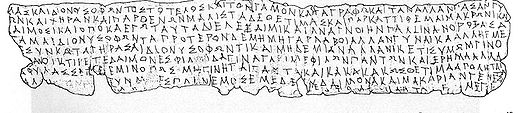
  • ….They “FORGOTTEN” to multiply the history of Greece and its language x 10!!!
  • The RIGHT of the STRONGER:
  • BARBARIC lies persist about the origins of ancient Greek cities such as Persepolis, Petra and Baalbek, among others, falsely attributed to having been built by the Persians, Phoenicians, Carthagenians, Nabateans and Romans respectively. The Persians found the abandoned city of Persepolis (built by descendants of Perseus), and the Nabateans who were nomadic herders found and made the abandoned Petra their home. The Romans would invade and falsely put their tag on everything they conquered.
  • One such work was the KYBALION which he and others translated from existing archaic works. History, origin, art and high technology have all been stolen, looted and claimed by others. Newton also stole claim to the laws of motion and physics, gaining this knowledge from ancient texts which he secretly held.
  • THE GREEKS SHOULD NEVER LEARN that: DEMOCRITUS , PYTHAGORAS, HERACLEITOS completely formulated the theory of NUCLEAR PHYSICS and SPECIAL RELATIVITY, unifying into formulas, as ELECTRICITY, GRAVITY, MAGNETISM, ASTRONOMY, and the Weak Currents of NUCLEAR ATOMS.
  • EVERY CIVILIZATION is judged by WHAT it left behind…BUT….
  • THE GREEKS MUST NEVER LEARN, that: the ASTRONOMERS MATHEMATICIANS: EUDOXUS, CALLIPOS
  • , ARISTARCHOS, ANAXIMANDROS, EUKLIDES, ARCHIMEDES, CONON, HIPPARCHUS, CLEOMEDES, APOLLONIOS, PTOLEMY, THEON, HYPATIA, PAPPUS, had EXHAUSTED the LIMITS of human INTELLIGENCE by solving MENTALY WITHOUT GRAPHICAL REPRESENTATION equations of 12 unknowns (twelve equations twelve unknowns) while the limit of today’s computers is “7 equations 7 unknowns”. Because the THIEVES of ANCIENT KNOWLEDGE, AS: – KEPLER, GALILEO, COPERNICUS etc. MUST be SHOWN!! …
  • The GREEKS SHOULD NOT KNOW that: the ENGINEERS – TECHNICIANS: EUPALINOS, SOSTRATOS, HERON, ZOSIMOS, KALLINIKOS, manufactured TOPOGRAPHIC instruments for TRIGONOMETRIC SURVEYING, AUTOMATIC mechanisms and instruments for ELECTRICAL applications, because the SWINDLER EDISON MUST be SHOWN as the INVENTOR of … ELECTRICITY, ALTHOUGH the above GREEK ENGINEERS used the ELECTRON (AMBER) as a NATURAL ACCUMULATOR of STATIC ELECTRICITY in technical applications…
  • The Greeks MUST NOT KNOW that: the GEOGRAPHERS – EXPLORERS SKYLAX, PYTHEAS, EUDOXUS, STRABON, PAUSANIAS, COSMAS the INDIKOPLEISTIS, HECATAEUS, had mapped the ENTIRE surface of the planet, because there is a danger that the Greeks will learn that ATLANTIS and the AMERICAN CONTINENT belonged administratively in DELPHI, while Asia belonged administratively to SARDIS, with the central coordinator being the APOLLONIAN Center of DELOS, to which the Transborean Greeks (Northern Siberia) sent as a token of recognition “every year, choice grain”, through the Greek ARIMASPAS and ISSIDONES and MASSAGESTAE of CENTRAL and SOUTHERN SIBERIA.
  • The GREEKS should NOT KNOW THAT THE GREEK DOCTORS, GALENOS, CELSIUS, HERACLIDES, HEROPHILUS, PRAXAGORAS, AGNODIKIS, KTIRIAS, HIPPOCRATES, ERIVIOTIS, CARRIED OUT “balancing electromagnetic fluids of the body” treatments by regulating the alkalinity and acidity of the organs. That they were making cures using “left-handed amino acids” (antibiotics) obtained from plants, fully knowing that only recently did molecular biology discover the action-reaction of left-handed amino acids (antibiotics) with right-handed amino acids (organism proteins).
  • The Greeks must not learn that the symbols “LEFT-CROWNED SWASTIKA” and “RIGHT-CROWNED SWASTIKA” were SYMBOLS of PHYSICS and MATHEMATICS, by which the Greeks PYTHAGORAS and DEMOCRITUS and ARISTARCHOS expressed right-handed and left-handed nuclei of atoms, planets, solar systems, galaxies and cosmic domains clusters of galaxies.
  • 2500 years ago HIPPOCRATES performed brain and heart surgery...
  • Despite the almost non-existent means of his time, HIPPOCRATES performed DIFFICULT surgeries. He and his students successfully treated orthopedic, cardiac and basic surgery cases. HIPPOCRATES even performed operations on the human skull, as we read in SEVERAL of his works… In addition to the operation itself, HIPPOCRATES attached great importance to the preparation of the patient and the operating room.
  • In the work Kat’iatreion, he describes in detail how the patient should be prepared before the operation, how the tools are sterilized, how the space is shaped, but also how artificial and natural light is used during the operation...
  • American archaeobotanists were ABLE for the FIRST time to study and analyze the contents of pills made by doctors in ANCIENT Greece and which were discovered 20 years ago, in a Greek shipwreck off the coast of TUSCANY…
  • DNA analyzes showed that each pill was a mixture of at least ten different plant extracts, including hibiscus and celery. “For the first time, we now have physical EVIDENCE of what is contained in the writings of the ANCIENT Greek physicians DIOSCORIDIS and GALENOS,” said ALLEN TWO WAY of the SMITHSONIAN INSTITUTION’s NATIONAL Museum of NATURAL HISTORY in WASHINGTON , according to New Scientist..
  • “Apostle ORPHEUS”

657879

Mobile: 6981101821

omilosfi@gmail.com

Account Information

IBAN: GR58 0140 1430 1430 0210 1064 040

Alphabank 143-0021-01-064-040

Find Us On Facebook

The supposed Phoenician origin of the Greek alphabet is over! https://euphoriatric.com/the-mathematical-structure-of-the-ancient-greek-language-vs-phoenician-deception/

A  sensational speech about the Greek language and its authentic Greek writing (alphabet) which does not come from the Phoenicians and the non-existent “Indo-Europeans” ,  a theory that calls for it to be removed from school books ,  was given at the Academy of Athens by its outgoing President, Akadimaikos Antonios Kounadis on January 14, 2019 AD , closing his annual term there.

The following  text of his speech was first published on the website of the ” Estia” newspaper.

THE ORIGIN OF THE GREEK LANGUAGE: SPOKEN AND WRITTEN

Speech by the former president of the Academy of Athens, Antonio Kounadis

delivered at the Academy of Athens on January 14, 2019.

THE GREEK LANGUAGE IS THE HIGHEST CULTURAL GOOD

   “The  opinion put forward in the 18th century, that the Greek language belongs to the Indo-European family of languages , as well  as the opinion that the Greek alphabet is of Phoenician-Semitic origin, have been the subject of intense debates and disputes that continue to this day. Two issues, which should not leave any Greek indifferent, since the  most important asset of our cultural heritage, the Greek language ,  spoken and written, inextricably linked to the identity, continuity, survival and perspective of Hellenism , is a matter all of us.

Of course also the speaker, due to my long-term involvement with Education and my related article, with which I formalized the  harmful legislative interventions in our language, with the pseudo-labeled characterization as Educational Reforms .

Given that these two topics are interdisciplinary in nature and in fact the subject of many different sciences, my attempt in this case is  to present authentic opinions of linguists, archaeologists, historians, anthropologists, paleontologists , so that more light can be shed on these two complicated and even dark topics, based on the latest findings and developments in  human archaeogenetics (aDNA) and population genetics . Developments, which overturned or even confirmed previous assumptions

ARISTOTLE: HELLENICIZES IT IS THE RIGHT NAME OF IT

  In  Plato’s Cratylus  , which is a dialogue about the correctness of names with interlocutors Hermogenes, the philosopher-mathematician Cratylus (founder of a philosophical school in the 5th century BC) and Socrates, the  beginnings of Comparative Linguistics can be found  in what it concerns names of barbarians (i.e. foreigners) and the comparative method (as it concerns the dialects of Greek, e.g. Aeolian, Doric, Ionic, Attic, etc.), as well as  the beginnings of Etymology for how the correct nomenclature is determined (naming) of words (names), nature or law . According to natural definition (according to Cratylos), there is an  agreement between a name (word) and its etymological conceptual content  (i.e. between signifier and signified), while according to the legal definition of names (words) naming is conventional  Greek language is preeminently conceptual or semantic, i.e. there is a causal relationship between nouns-words and their etymological meaning .

According to  Plato  (Kratylus, 435-436) ” he who believes in names, believes in things” . First,  Dionysius of Halicarnassus  (1st century BC) in his work “On the Composition of Names”  considers Plato to be the founder of Etymology,  writing: “The super-etymology discourse was first introduced by Plato in multiple men and allothi, indeed in the Cratylus.” . Regarding the value of the semantic property of names,  Aristotle  points out: “Reason, if it does not state, will not do its own work.” (The Art of Rhetoric C. 2149), then he does not exclude the Greek with the phrase: ” To Hellenizes is the right name .” (Art of rhetoric C. 4.1407).

HEISENBERG, NOBEL LAUREATE FOR ANCIENT GREEK  But even in recent times, the 

 German philosopher-physicist Wenner Heisenberg  (Nobel Prize 1932) had declared: ” 

The term in the ancient Greek language was my most important intellectual exercise. In this language there is the most complete correspondence between the word and the conceptual content . If the first alphabet (more precisely, a writing system) is Semitic-Phoenician and if the Phoenicians (a branch of the Semitic race that distinguished itself in shipping and trade) took it from the Hebrews and transmitted it to the Greeks, it has become the subject of many discussions and disputes. Related topics for investigation are when the Phoenician immigrants settled in Phoenicia and which are the oldest inscriptions or written texts of the Phoenician culture.

HERODOTUS: “it seems to me…” Regarding the existing opinion about the origin of the Greek alphabet from the “Phoenician letters”, that is, from the Phoenician essentially “Syllabary”, it is worth noting that the “Phoenicians based this opinion mainly on the well-known 

 saying of Herodotus: “The Phoenicians … brought in teachers Greeks and words and letters did not exist before Greeks, as I believe…” . That is, Herodotus formulates this with reservation (as I do), referring vaguely to letters and not to the letters of a specific scripture.

DIODORUS SIKELIOTIS: “the Phoenicians took it from others”

  However, the historian  Diodorus the Sicilian  (E 74) does not agree with Herodotus’ opinion (E 74), who clarifies that  the so-called “Phoenician letters” are not an invention of the Phoenicians but an adaptation of other letters, that is, of the Hellenic-Cretan ones, stating  :  They are not found from the beginning, but the types of the letters are only shifted ,…”.

NO PHOENICIAN INSCRIPTIONS WERE NEVER FOUND

Let it be noted that the Phoenicians, as seen from various historical sources, settled in Phoenicia (today’s Lebanon and partly Syria) mixed with the native Canaanites between 1,200 and 1,100 BC.  Written texts or inscriptions about the Phoenician culture have not been found until today.

THERE WAS GREEK SCRIPTURE DURING THE TRONIC WAR (1,200 BC)  Based on historical data, inscriptions and many references to (known) texts of ancient Greek authors, it has been accepted by the international scientific community that  

the Greek (alphabetic) writing probably existed before the time of the Trojan War . (We do not mean Linear A or B or certainly the most ancient Cretan hieroglyphic writing through ideograms.) However, the Greek (alphabetic) writing seems to have existed before the times of Homer, based on historical sources. E.g. in the Iliad (describing the Trojan War),  

Homer , referring to Bellerephon, writes ” 

signs that you have written on a canvas with a tymophothora many “. (Letter of Proitus to his father-in-law, Iovatis. G 169.) Also, according to the philosopher and  

historian Porphyry  (3rd AD century), Homer wrote the Iliad “not at all, not continuously, because they are contiguous, but” he  

wrote me every rhapsody  , and being shown in the midst of the cities of food, he disappeared…” (Dictionary of Souda or Suida).   Mistriotis mentions that  

Apollodorus  (180-110 BC) tells us that  

Oiax, during the Trojan War, wrote the news of the death of his brother, Palamedes, on a rudder , which the sea waves carried to his father Nafplion. Of interest is the Scientific Communication of the Greek researchers Tavros 

Papamarinopoulos  and his collaborators, which I presented at the Public Session of the Academy (19/10/2017) entitled “Astronomical Dates of the End of the Trojan War and the Return of Odysseus” (Prak tics of the Academy , vol. 92 A, 2017). The Announcement concludes that  

the end of the Trojan War dates back to 1200 BC.  This date indicates the existence of a writing during the time of the Trojan War, in view of what was extrapolated by Homer about Bellerephon and by Mistriotis – Apollodorus for what they mention about Oiacas. 

If there really was writing before 1200 BC, the claims that the Greeks allegedly took the writing system (Syllabary) from the Phoenicians are shaken, lacking in credibility . Of course, this question remains open in the absence of evidence, because the existing evidence is not enough.

EVANS: THE PHOENICIANS TOOK THE LETTERS FROM THE GREEKS

LINE 1left from a vase at Akrotiri Thiras – right from Zakros Palace, Arch. Museum of Sitia

According to  Sir Arthur Evans  “the writing of Crete is the mother of the Phoenician” , while according to  René Dussault  “the Phoenicians had received the alphabet from the Greeks,  who had formed it from the Cretan-Mycenaean script “. (See also Georgiev, Problems of the Minoan Language, Sofia 1953.)

PHOENICIAN WITHOUT VOWELS…

  The Phoenician is not an alphabet, but a “Syllabary”, without vowels, with 22 consonants and without the consonants X, F, P of the Greek alphabet . But also according to the  Irvain University Center TLG (Thesaurus Linguae Graecae), the  Cretan historian Dosiades  (who wrote the local history of Crete) mentions that  the alphabet was found by the Cretans .

WHERE DOES THE LETTER ALPHA COME FROM

   Plutarch   (Problems 737)  considers naive the opinion that the letter “alpha” is Phoenician from “Aleph” which was called the boon  (considered the first of the necessary). According to the Great Etymological Dictionary, the letter “alpha” comes  from the verb alfo  (= to find), because “it was found first of all the other elements.”

IONIC THE PRESENT ALPHABET

Each city-state or region in the archaic Greek world had its own alphabet, (with slight variations from those of other cities.)  The current Greek alphabet is the Ionic, with 24 letters, which prevailed from 403 BC. on Lord Euclid . The Corinthian also has 24 letters, the Cretan 21, the Miletus 24, the Chalcidic 25, from which the current Latin came, after adaptation by the inhabitants of Latin Italy, (who, it seems, received it from Greeks of Kimi.)

From the Greek alphabet also came the Etruscan, the Cyrillic, the ancient Phrygian, the Lycian alphabet, the Lydian, the Armenian, the Coptic, the Gothic,  etc.

ANCIENT GREEK SCRIPTURES

  There are many sources for the  beginnings of Greek writing  , among which:

1) The sign of the Dispelion of Kastoria brought to light in 1993 by professor G. Hourmouziadis, which archaeologists both from the “Democritos” Research Center and the external ones dated to 5250 BC. 

Sign plate signature of Dispilio Kastoria, Macedonia 5,250 BC.(left a copy of the sign – right some of its letters and symbols)


2) “The Ostrakos in the Hermitage of Iura of the Sporades”, which was found by the archaeologist Adam Samson with a Greek inscription of 5500 BC, in which the letters A Y D are clearly visible 
 without any inscriptions, their phonetic value being known.

Writing on a shell of 5,500 BC, Cave of Cyclops, Iura SporadesGreek letters A, Y, D are visible


3) “The Ὄstrakos in the Pilikata area of ​​Ithaca”
 , 

 dating to 2700 BC. , on which there are engraved symbolic figures similar to those of Linear Scriptures A and B.

Writing on a shell of 2,700 BC. in Pelikata, Ithaca – Cross Museum of Ithaca


THE EPICS OF HOMER WERE TRANSFERRED IN WRITING

In this case, it is reasonable to ask  how it is possible for thousands of Homeric verses to be preserved and transmitted over many centuries unchanged with amazing precision . This is why  Mistriotis  in his work “History of the Homeric Epics” (Sakellariu Prints, Athens 1903, edition 2) mentions: ” The polymorphism and instability in the expansion and contraction of vowels cannot be attributed to the lack of writing .” ».

Professor  Gilbert Heigt  states that  a poem like the Iliad could not have been handed down without writing  (The Classical Tradition, MIET ed.), while the famous writer  Horst Blank (Papadima ed., p. 148) affirms that: ” Today a great part of philologists close to the hypothesis that the compilation of the Homeric Epics had already made the written consolidation of the text necessary… the rhapsodists carried with them their written manuscript copy . Also, the  French Hellenist Jacqueline De Romiguy  categorically states: ” Homer and writing coexist .”. (Why Greece, Ed. To “Asty”, p. 28.) The dactylic hexameter in the Homeric Epics is based on prosody (long and short vowels, double consonants, diphthongs, etc.). The opinion that the Phoenicians borrowed some consonants and immediately the Greeks wrote the Epis spelled, has no strong arguments , as the Dictionary Souda or Suida states (see Phoenician city).

WILLIAM DURANT: THE PHOENICIANS TOOK IT FROM THE GREEKS

   The reference of the  American historian/philosopher, editor of the world history of culture ,  William Durant, is also characteristic:  ” The Phoenicians were not the inventors of the alphabet, they only circulated it from place to place. They took it from the Cretans and transported it to Tyre, Sidon, Byblos and other cities of the Mediterranean. There were the “gyrologists” and not the inventors of the alphabet .”

The  archaeologist-epigraphist Apostolos Arvanitopoulos  had declared: ” The alphabet was invented and implemented by the Ancient Greeks … and they gifted it to the lost humanity as its common property.” There are several testimonies with texts of ancient historians and writers (after the time of Homer), which support that  there was a written Greek language (a variety of Grammika B’) around 1200 BC, i.e. before the Phoenician-Semitic Syllabary . However, evidence (eg inscriptions) for the existence of Greek writing dating back to this period does not exist.

GILBERT MURRAY: GREEK IS THE BEST LANGUAGE

For this  language of incomparable perfection that we ourselves have abused, while for foreign Greekists and linguists it is an object of admiration and study , the statement of the  distinguished Greek professor at the University of Oxford, Gilbert Murray, is characteristic : “[…]  a thought can be expressed with ease and grace in Greek, while it becomes difficult and heavy in Latin, English, French, German. Greek is the most perfect language, because it expresses the thoughts of the most perfect people .”

The distinguished  Hellenist and linguist Spanish professor FR Adrados , a foreign partner of the Academy of Athens, has repeatedly stated that  Western European languages ​​are Semi-Hellenic or Crypto-Hellenic .

THE INVENTOR OF TONES AND SPIRITS

It is also worth noting that  Aristophanes of Byzantium  (2nd century BC)  is considered the first to refine and apply tones and spirits .

THE FAISTUS DISC

“On the “disc of Phaistos” dating before 1200 BC.  (which was found in Crete and has not been deciphered until today)  the letters B G L Y are clearly “printed” .

CLAY DOCUMENTS 2,000 BC

Michael  Ventris  and  John Chadwick  argued for the first time that  the “baked clay tablets, from the second millennium BC, found at Pylos, Knossos, Mycenae and other places, contained Greek writings that came from the ancient Mycenaean Kingdoms”” .

The Mycenaeans , as  FR Adrados  recently pointed out (following others),  were Greek, written with the help of an ancient syllabic script that was subsequently forgotten .

OSWALD PANAGL: THE LINEAR VARIATION OF ANCIENT GREEK

Also, in his speech at the Academy of Athens (March 8-10, 2013), the distinguished Austrian linguist and Mycenologist  Osvald Panagl  mentioned that:  The above tablets (of Knossos, Pylos, Mycenae) were written in a primitive variant of ancient Greek, 500 years earlier of the linguistic idiom of the Homeric Epics. Consequently, their date goes back to around 1300 BC.

ICLAIN OF MESSINIA:  LINEAR II   OF 1450 BC.

The Archaeologist M. Kosmopoulos in Iklaina Messinia with Linear B of 1450 BC.

Recently in  Iklaina of Messinia  (14 km from Pylos) the archaeologist  Michael Kosmopoulos , a professor at the University of Missouri in the USA (responsible for excavations since 1998 in this area), found “among rubble and garbage”  the oldest clay tablet to date Linear B dated between 1450 and 1400 BC. , as he informed me in his relevant letter.

OINOCHOES OF DIPYLOS

Winemaker Dipylos Kerameikos of 740 BC. with the letters:”THE CURRENT ORCHESTRA ALWAYS PLAYS TODE KAN MIN…”which according to Babiniotis means “1. Which of the musicians dances more lightly than all 2a. this (the vessel, the wine-cup) belongs to him and if you [see him, wish him every happiness] 2b. let him take it (the vessel)”National Archaeological Museum

However, the  oldest alphabetic inscription , engraved on a clay vessel, in ” Oinochoi of Dipylus ” is from the 8th BC. aἰ.: ” THE CURRENT ORCHESTRA ALWAYS PLAYS THIS FOR TEN MINUTES “. However, in view of the above, this inscription should not be the oldest. Taking into account that to date less than 5% of the Greek Secretariat has been known, it is reasonable to expect that in the future new findings will be brought to light by the archaeological hoe.

INDIVIDUAL LANGUAGE

  According to the linguist professor at Charles Sturt University in Australia  George Kanarakis  (and other researchers), based on historical comparative linguistics,  “the Greek language does not belong to any of the language groups of the Indo-European family and is therefore classified as an isolated language within the context of its homolingualism.”  The term  Indo-Europeans was introduced in 1813 by the British linguist, physician and physicist Thomas Young  (1779-1829).

The top international linguist – Hellenist  FR Adrados  in his announcement at the Academy of Athens said that  the Minoans  “whom we do not know how to define with precision, but they were not Indo-Europeans – the people who wrote the “Phaeisto disc” were not Europeans ”, neither they where they wrote the Mycenaean script.”

aDNA

The prevailing opinion, contrary to that of Sir Arthur Evans (according to which Libyans and Egyptians immigrated to Crete developing the Minoan civilization), is that  the Minoans do not belong to the linguistically Indo-European populations that settled Europe in the Neolithic era . However, the research team of  Georgios Stamatogiannopoulos , Professor of Genetics and Genetic Medicine at G. Washington University , in collaboration with Greek and foreign scientists of various specialties,  isolated αDNA (ancient DNA) from Minoan remains 4,300 years old  and determined the polymorphisms of the mitochondrion, the who  they have the characteristics of European culture . Extremely interesting is a recent publication by him and his collaborators entitled ” Population Genetics and the Theory of the Alleged Extinction of the Greeks of the Peloponnese during the Middle Ages ” that I announced at the Academy of Athens (27/4/2017), which proves that the Population Genetics can clarify important issues of origin and history of the Human population.

SANSKRIT IS BASED ON GREEK

The distinguished German linguist  Franz Bopp  (editor of the Comparative Grammar in 1857) has argued that  Sanskrit is based on Greek, and not the other way around .

CONCLUSIONS  Based on the above, we can reach the following conclusions:1.  

Plato laid the foundations of the Etymology of the Greek language , which is 

 preeminently semantic  (conceptual), that is, there is a causal relationship between words and their etymological meaning.2. Research through  

aDNA  showed that there were expansions of population groups from the Russian steppes both to the West (toward Central and Western Europe) and to the East of Europe, through the Asian steppes. 

A genetic signature of migrations to Greece has not been confirmed until today , however, if such exists, according to the top linguist J. Mallory, it will be very small in relation to the  

indigenous population settled in Greece at the time.3.  

The term Indo-Europeans is purely linguistic and does not imply any racial type of person. The existence of an Indo-European race is strongly disputed  by leading specialist scientists, based on recent genetic data. 

It is time for the old Indo-European case to be removed from the textbooks .4. The inclusion of ANCIENT-GREEK in the “Indo-European” common language is not disputed, however,  

the mother-language of this common language remains unknown . However, as previously discussed,  

ANCIENT-Greek seems to be superior to the other languages  ​​(including Sanskrit), however the question of the time of its appearance in the Greek space remains open (according to Dr. I. Lazaridis).5. In the Greek area, and specifically  

in Crete, the first writing system with ideograms  (hieroglyphs) appears 5,000 years ago,  

followed approximately 4,000 years ago by Linear A’  (which has not yet been deciphered),  

which is succeeded before 3,500 years (15th BC) the Linear B script  (including vowels), which was deciphered as Greek by the British architect M. Ventris. According to the famous linguist – Mycenologist 

 Osvald Panagl, the tablets of Knossos and Mycenae date from around 1300 BC, of ​​Pylos around 1200 BC, while the distinguished archaeologist 

 M. Kosmopoulos discovered in Iklaina (14 km from Pylos) the oldest to date clay tablet of Linear B, dated around 1450-1400 BC .6. In the Middle East and specifically  

in the former Phenicia it appears around 1150 BC. the so-called Phoenician-Semitic writing system, which is not an alphabet but a syllabary without vowels, with 22 consonants,  (which do not include the Greek consonants  

X, F, Ψ .)  

If there was writing during the time of the Trojan War (i.e. before 1200 BC), the hypothesis that the Greeks took the writing system (Syllabary) from the Phoenicians is shaky, lacking credibility .7.  

The first alphabet in the world is the Greek, from the 8th BC. aἰ Originally it had 27 letters, from 403 BC. 24 letters, after removing the digamma, Kopa and sabi . However, there are serious indications based on historical sources (Homeric Epistles, Mistriotis, etc.) and archaeological findings, that  

the Greek alphabet is much more ancient, possibly dating back to the years of the Trojan War  (Mistriotis, Apollodorus, etc.), it is much more  

likely that Homeric Epics to have been handed down in writing  (Mistriotis, J. Highget, H. Blanc, Jacqueline De Romiguy).

  In view of the above, it is necessary to continue the interdisciplinary research, whose conclusions of the different sciences should converge, especially towards those of  Archaeogenetics and Population Genetics , due to their rapid evolutions. The Greek language, a phenomenon of continuity and radiation, continues to be an object of admiration and study by leading linguists, Hellenists and intellectuals. According to the world-renowned Hellenist and professor of linguistics  FR Adrados, Greek has left its indelible stamp on all the Western European languages ​​that are considered semi-Hellenic or crypto-Hellenic , and according to the famous Hellenist professor at the University of Oxford  Gilbert Murray, Greek is the most perfect language of the world . Indeed,  the Greek language, written and spoken, is an achievement of the human spirit of unsurpassed perfection .

THE MATHEMATICAL STRUCTURE OF THE ANCIENT GREEK LANGUAGE VS “PHOENICIAN” DECEPTION.

H E R E: AN EXAMPLE OF AN I D E N T I C A L- C L A S S I C A L VARIATION OF A STANZA …, …………….

********************** J U S T………………V O W E L S !!!! ********************

( A N C I E N T G R E E K // ATTICA DIALECT)

A YOUNG MOTHERS WISH TO HER BABY SON :

“ΟΙΑ ΗΩ Ω ΥΙΕ ΑΕΙ ΕΙ” = AS THE DAWN MY SON, BE ALWAYS THE FLAME OF LIFE = ΟΠΩΣ Η ΑΥΓΉ ΝΑ ΕΙΣΑΙ ΠΑΝΤΑ ΥΙΕ ΜΟΥ Η ΦΛΟΓΑ ΤΗΣ ΖΩΗΣ (TRANSLATED INTO “NEW” GREEK).

ANALYTIC TRASLATION IN ORDER FROM; ANCIENT GREEK – NEW GREEK – ENGLISH

ΟΙΑ = ΟΠΩΣ= AS

ΗΩ = Η ΑΥΓΉ = THE DAWN

Ω ΥΙΕ = ΥΙΕ ΜΟΥ = OH MY SON

ΑΕΙ ΕΙ = ΝΑ ΕΙΣΑΙ ΠΑΝΤΑ = BE ALWAYS

(TRANSLATED INTO “NEW” GREEK) :

ΟΠΩΣ Η ΑΥΓΉ ΝΑ ΕΙΣΑΙ ΠΑΝΤΑ ΥΙΕ ΜΟΥ =

= AS THE DAWN MY SON, BE ALWAYS!!

Η ΦΛΟΓΑ ΤΗΣ ΖΩΗΣ=THE FLAME OF LIFE=2135

ΟΙΑ ΗΩ Ω ΥΙΕ ΑΕΙ ΕΙ = 2135

ATTENTION: – GO AFTER THE ANCIENT ALPHABET INDEX

The earliest numerical notation used by the Greeks was the Attic system. It employed the vertical stroke for a one, and symbols for“5”, “10”, “100”, “1000”, and “10,000”. Though there was some steam lining of its use. The (IONIAN)) Greek system of enumeration was a VERY SOPHISTICATED one, Like the ATTICA SYSTEM it was also DECIMAL Its distinguishing feature is that it was alphabetical and required the use of more than 27 different symbols for numbers plus a couple of other symbols for meaning. This made the system somewhat cumbersome to use. However, calculation lends itself to a great deal of skill within almost any system, the Greek system being no exception. ” Greek Enumeration and Basic Number Formation First, we note that the number symbols were the same as the letters of the Greek alphabet. symbol value symbol value symbol value ! 1 ” 10 # 100 $ 2 % 20 & 200 ‘ 3 ( 30 ) 300 * 4 + 40 , 400 – 5 . 50 / 500 6 0 60 1 600 2 7 3 70 4 700 5 8 6 80 7 800 8 9 90 900 where three additional characters, the (digamma), the (koppa), 1°c 2000, G. Donald Allen Greek Numbers and Arithmetic 2 and the (sampi) are used. Hence, &62 = 287 Larger Numbers Larger numbers were also available. The thousands, 1000 to 9000, were represented by placing adiacritical mark ! before a unit. Thus ! ‘&62 = 3287 In other sources we see the diacritical mark placed as a subscript before the unit. Thus ! ‘&62 = 3287 The uses of a M was used to represent numbers from 10,000 on up. Thus 9! = 50: 000 9″#&62 = 120: 287 Alternatively, depending on the history one reads 9 – = 50: 000 9!% ¢ &62 = 120: 287 Archimedes, in his book The Sand Reckoner, calculated the number of grains of sand to fill the universe”. This required him to develop an extention the power of Greek enumeration to include very large numbers. Fractions In the area of fractions, context was crucial for correctly reading a fraction. A diacritical mark was placed after the denominator of the (unit) fraction. So, $ ! = 1 2 ;<= +$ ! = 1 42 but this latter example could also mean 40 ! ” . More complex fractions could be written as well, with context again being important. The numerator was written with an overbar. Thus, .! 6* = 51 84 Numerous, similar, representations also have been used, with increasing sophistication over time. Indeed, Diophantus uses a fractional form identical to ours but with the numerator and denominator in reversed positions. 2The reader may ask, ”What universe?” It was the universe of Aristarchos the so called ‘ancient Copernicus’ because he proposed a sun centered universe with the earth and other planet orbiting it. More on this later. Greek Numbers and Arithmetic 3 # Calculation The arithmetic operations are complex in that so many symbols are used. However, as you can imagine, addition amounts to grouping and then carrying. For example 5+7= – + 2 = %$ = 12, not terribly unlike what we do. Multiplication was carried out using the distributive law. For example: &62 ¢ $ = (& + 6 + 2) £ $ = (200 + 80 + 7) £ 2 = 400 + 160 + 14 = 574 = /3* 

(ALPHA – ΑΛΦΑ = 1 + 30 + 500 + 1 = 532 => 5 + 3 + 2 = 10 => 1 + 0 = 1

EN = 5 + 50 = 55 => 5 + 5 = 10 => 1 + 0 = 1

OMIKRON – ΟΜΙΚΡΟΝ = 70 + 40 + 10 + 20 + 100 + 70 + 50 = 360, as there are degrees of the circle

INDEX:

ΓΡΆΜΜΑ=LETTERΑΞΊΑ=VALUEΓΡΆΜΜΑΑΞΊΑ=VALUEΓΡΆΜΜΑΑΞΊΑ=VALUEΓΡΆΜΜΑΑΞΊΑ=VALUE
Α´1Ι´10Ρ´100͵Α1000
Β´2Κ´20Σ´200͵Β2000
Γ´3Λ´30Τ´300͵Γ3000
Δ´4Μ´40Υ´400͵Δ4000
Ε´5Ν´50Φ´500͵Ε5000
Ϛ´6Ξ´60Χ´600͵Ϛ6000
Ζ´7Ο´70Ψ´700͵Z7000
Η´8Π´80Ω´800͵H8000
Θ´9Ϟ´90Ϡ´900͵Θ9000

A vast knowledge locked-coded into words because of mathematical values ​​they have. One of the pioneers on the matter was maximum Pythagoras.

The numbers, shapes, harmony and the stars have something in common, so respectively mathematics (numbers) geometry (shape), harmony (music) and astro-nomy (one star = a-choris- bracket + natural nomoipou govern ) were sisters sciences by Pythagoras, which in this series we discussed was the ladder to development (= ex -tou- helix, DNA) of mind-soul to the Creator.

A Creator who created based on these four disciplines. 27 symbols-figures in numerical value make up the Greek Alphabet, 3 groups of 9 numbers-symbols each group, totaling each group 45, 450, 4,500.
ALPHA = 1 + 30 + 500 + 1 = 532 => 5 + 3 + 2 = 10 => 1 + 0 = 1
EN = 5 + 50 = 55 => 5 + 5 = 10 => 1 + 0 = 1
OMIKRON = 70 + 40 + 10 + 20 + 100 + 70 + 50 = 360, as there are degrees of the circle

To be able to understand the meanings of the concepts of words of ancient Greek tongue should first know a little about the actual Greek language.

The ancient Greek language is the only one that is not based on the fact that some people just sit and agreed to call an object “x” or “y” as all other sterile world languages. The ancient Greek language is a MATHEMATICAL MASTERPIECE that wè`ll try to approach.

The beginning of everything is the same as the Ancient Greek alphabet (which of course we did not get it from someone else as we shall see, because factually not possible). The letters of the Greek alphabet as a whole was 33 and as many vertebrae, the last five vertebrae (playing the role of the antenna) directly related to the brain and corresponding to the last 5 ineffable letters which only the priests knew * one of them It was the right (or Gammadion) which in Latin became swstika and the Nazis stole and name Swastika. This symbol is the life-giving Sun (Apollo), the Nazis reversed it to symbolize the opposite of life-giving Sun, ie dark death.

There were also some letters which over time abolished as Digamma (F, Qoppa (Q), stigma (S ‘), Saba (ϡ)
Pythagoras inform us about the 3 levels of Greek language which are:

1. Talking
2. Signifier (a. Signal b. Signified)
3. caches (a. Time b. Vibration c. Lexarithmos d. Tonarithmos)
-The First is the speech
-The Second is the relationship between the mark and the signified that we will analyze below.
-The Third is the interval (distance & time), vibration (which awakens the brain through resonance frequencies of the created pulses  – Pallas Athena) the lexarithmos (relation of letters and words with numbers) and tonarithmos (relation of letters and words of tunes )

Each letter corresponding to a number, and a musical tone so letter = number = tone (musician), which shows that in our language behind letters-words are numbers (lexarithmoi) and musical sounds (tonarithmoi).

The four sisters sciences by Pythagoras were:
1. Numbers (mathematics)
2. Shapes (Geometry – γεωμετρια); from: geo+metria=earth measure, meter.
3. Music (Harmony)(nine muses..)
4. Astronomy (Astro+nomia from nomos=law)

The above sciences are interrelated with the Ancient Hellenic Language and are into each another like Russian bampouskes. Combine alphabet enclosing numbers and musical tones with these 4 disciplines.

1.Astronomia = + astir law, a-Justice = is not supported, so astronomy = the universal laws that govern what is not based somewhere, who have to do with music (harmony),shapes (geometry) numbers (mathematics ) and all the ether that surrounds the heavenly realms.

2. Pythagoras heard the harmony (music) of the celestial Spheres thus speak a language that has to do with the flow of the universe.

PHOENICIAN “ALPHABET”:  AN HISTORICAL DECEPTION 

This theory:

1. Completely rejects the theorem that the Greek language came from another language (the so-called “Indo-European”!!!), since it is PROVEN to be the only NON-conventional language of the world. In other words, the only language where a relationship betweenthe “word” (as a form) and the “meaning of the word” is established.

2. Consequently, it is proven that Greek is the first and only created language of the human species which provided the basis for all “conventional” languages, as are all the other languages of the world (where there is no causative relationship between the form and the meaning). These other languages are a corrupt form of Greek.

3. This theory proves, without a doubt, that the alphabet was created by the Greeks so that the 24 or 27 code letters would aid in attributing the meanings of the Greek words (and only of these).

4. Comparatively, this theory shows that the symbols of the Phoenician writings and their nouns, e.g., “alef” = ox, “beth” = hut, “gimel = camel, etc., not only do not contain coded meaning, but are also associated or refer to [the] primitive animal conditions – [one would expect in a culturally backward society].

”Τό πού, πόθ’ όπερ κρίνεται τού χρόνου” !!!(ancient Greek=” Where, what is it that is judged by time ”)

(Χρυσό ενεπίγραφο φύλλο μυρτιάς ή δάφνης, τέλος 4ου αι. π.Χ./ Από το ανατολικό νεκροταφείο της Πέλλας/Φέρει στικτή επιγραφή σε τρεις στίχους: ΦΕΡΣΕΦΟΝΗΙ ΠΟΣΕΙΔΙΠΠΟΣ ΜΥΣΤΗΣ ΕΥΣΕΒΗΣ/Εφορεία Αρχαιοτήτων Πέλλας)

(Gold engraved leaf of myrtle or laurel, end of the 4th century BC / From the east cemetery of Pella / It has a dotted inscription on three lines: FERSEFONHI POSEIDIPPOS MYTIS EYSEVIS / Ephorate of Antiquities of Pella the capital of ancient Macedonia)

No automatic alt text available.

Overwhelming evidence that one of the most important discoveries in the history of civilization is Greek ,a deception that usurps and distorts Greek History and Civilization. It is of utmost importance that the truth be restored not only for modern Greece, but also for thewhole of humanity.The deception that alphabetical script was discovered by the Phoenicians is a long-lived one.For the past 14 years [the Greek scholarly magazine] Davlos has published numerous articleson this problem. This prompted K. Katis to ask that we submit a relevant article for hismainstream daily so that this important issue would become known to a wider audience.

This article summarizes the strong evidence against the “Phoenician Deception,” and proves that the greatest discovery in the history of civilization is Greek. We believe it necessary to republish this article in [this issue of] Davlos exactly as it appeared in the daily.

A SCIENTIFIC MONSTROSITY.

According to linguistic theory, an “alphabet” is defined as “the sum of symbols following a specific sequence and order used to ascribe the essential utterances of a language, under thecondition that each utterance represents only one symbol and vice-versa”. Consequently, in alphabetical script (as an example, in the writings of the people of Europe, America,Australian, as well as the other parts of the world) each letter represents one essential sound.This is not true for the imperfect alphabets expressed through syllables where each symbolrepresents a syllable (with two or more voiced sounds). For example, in Greek Linear A and B, there is a symbol that represents the syllable ko (k + o), a symbol that represents the syllable po (p + o), etc. In Phoenician writing (which has only consonants and no vowels), this situation is even worse, as far as we can tell from the small amount of existing samples.

IN PHOENICIAN, EACH SYMBOL IS NOT EQUIVALENT TO ONE SPECIFIC SYLLABLE, BUT TO A VARIETY OF SYLLABLES, AND THUS THE READER CAN USE HIS IMAGINATION WHEN ATTEMPTING TO DECIPHER THE SOUNDS. FOR EXAMPLE, THERE ARE CONSONANTS WHICH CAN BE READ AS EITHER BA, BOU, BE, BI, BO, ETC. OTHERS  IS NOT AN ALPHABET, IT IS A LESS ADVANCED FORM OF WRITING THAT CAN BE READ AS GOU, GA, GE, GO, AND SO ON. CONSEQUENTLY, PHOENICIAN SCRIPT DOES NOT CONSTITUTE AN ALPHABET, AND IS NOT EVEN AN ADVANCED FORM OF SYLLABIC SCRIPT NEARING THE PERFECTION OF THE EQUIVALENT GREEK SYLLABIC WRITINGS. IT IS TRULY AMAZING TO THINK THAT, IN THE ACADEMIC WORLD OF THE PAST 150 YEARS, THE ALMOST CONTRADICTORY TERM OF “PHOENICIAN ALPHABET” HAS BEEN ESTABLISHED, WHICH, IN REALITY REFERS TO A TYPE OF WRITING THAT HAS NOTHING TO DO WITH AN ALPHABET. IT IS EVEN MORE UNBELIEVABLE TO THINK THAT THE SCIENTIFIC DOGMA THAT GREEK CAME FROM PHOENICIAN HAS BEEN ENFORCED. NOT ONLY THE PHOENICIAN IS NOT AN ALPHABET, IT IS A LESS ADVANCED FORM OF WRITING THAN GREEK LINEAR A AND B.

HTTPS://WWW.YOUTUBE.COM/WATCH?V=DKCPURQQS2Y

GREEKNESS OF THE ALPHABET

A) ARCHAEOLOGICAL EVIDENCE THE THEORY THAT THE ALPHABET IS A PHOENICIAN DISCOVERY HAS BEEN MAINTAINED THROUGH THE ARGUMENT, AMONG OTHER THINGS, THAT CERTAIN SYMBOLS OF PHOENICIAN WRITING ARE SIMILAR TO THE LETTERS OF THE ALPHABET. FOR EXAMPLE, THE PHOENICIAN ALEF IS THE REVERSE OR SIDEWAYS GREEK “A.” THIS ARGUMENT WAS A STRONG ONE UNTIL ABOUT 100 YEARS AGO, WHEN LINGUISTS AND HISTORIANS STILL MAINTAINED THAT THE GREEKS DID NOT KNOW HOW TO WRITE BEFORE 800 B. C.! AROUND 1900 A.D., HOWEVER, ARTHUR EVANS EXCAVATED THE GREEK MINOAN CRETE AND DISCOVERED THE GREEK LINEAR WRITINGS, WHOSE SYMBOLS CORRESPONDED TO 17 OF THE 24 LETTERS OF THE GREEK ALPHABET. GIVEN THAT (A), THE MOST ANCIENT EVIDENCE OF THE GREEK SCRIPTS (LINEAR A AND LINEAR B) THAT WERE LATER DISCOVERED IN PYLOS, MYCENAE, MENIDI AND THEBES — BUT ALSO IN MORE NORTHERN AREAS UP TO THE DANUBE RIVER AS WELL — WERE DATED TO BEFORE 1500 B.C. AND (B), THAT THE PHOENICIANS AND THEIR WRITINGS APPEAR IN HISTORY NO EARLIER THAN 1300 BC, EVANS WAS THE FIRST PERSON TO EXPRESS DOUBTS ABOUT THE THEORY THAT THE GREEKS RECEIVED THEIR SCRIPT FROM THE PHOENICIANS. HE PUT FORWARD THE SCIENTIFIC SUSPICION THAT IT WAS PROBABLY THE OTHER WAY ROUND. THE DOUBTS PERTAINING AS TO WHO WAS FIRST — THE PHOENICIANS OR THE GREEKS — IN DISCOVERING WRITING, BECAME A CERTAINTY WHEN FRENCH PROFESSOR, PAUL FORE, AN INTERNATIONALLY ACCLAIMED SPECIALIST ON PREHISTORIC ARCHAEOLOGY, PUBLISHED A REPORT IN NESTOR (AN AMERICAN ARCHAEOLOGICAL JOURNAL OF THE UNIVERSITY OF INDIANA — 16TH YEAR, 1989, PAGE 2288). IN THIS REPORT, HE SUBMITS AND DECIPHERS PLATES WITH GREEK LINEAR WRITING FOUND AT THE CYCLOPEAN WALL OF PILIKATES, IN ITHACA, DATED, THROUGH THE USE OF MODERN SCIENTIFIC METHODS, BACK TO 2700 B.C., THE LANGUAGE OF THESE PLATES WAS GREEK, AND THE DECODING BY PROFESSOR FORE RESULTED IN THE FOLLOWING SYLLABIC TEXT, EXPRESSED PHONETICALLY: A]RE-DA-TI. DA-MI-U-A-.A-TE-NA-KA-NA-RE (IJA)-TE. THE PHONETIC EQUIVALENT OF THIS IS TRANSLATED, ALWAYS ACCORDING TO THE PROFESSOR, AS: “ΙΔΟΎ ΤΙ ΕΓΏ Η ΑΡΕΔΆΤΙΣ ΔΊΔΩ ΕΙΣ ΤΗΝ ΑΝΑΣΣΑΝ, ΤΗΝ ΘΕΆΝ ΡΈΑΝ: 100 ΑΊΓΑΣ, 10 ΠΡΌΒΑΤΑ, 3 ΧΟΊΡΟΥΣ” [HERE IS WHAT I, AREDATIS, GIVES TO THE QUEEN- GODDESS REA, 100 GOATS, 10 SHEEP, 3 PIGS]. (SEE, “DAVLOS” MAGAZINE, ISSUE 107, NOVEMBER 1990, PAGE 6103). THUS, FORE PROVED THAT THE GREEKS WERE WRITING AND SPEAKING GREEK AT LEAST 1400 YEARS BEFORE THE APPEARANCE OF THE PHOENICIANS AND THEIR SCRIPT IN HISTORY. BUT, THE ARCHAEOLOGICAL EXCAVATIONS IN GREECE DURING THE LAST 15 YEARS HAVE GIVEN US MANY MORE GREAT SURPRISES: THE GREEKS WERE WRITING USING NOT ONLY LINEAR A AND B, BUT ALSO A TYPE OF WRITING IDENTICAL TO THAT OF THE ALPHABET SINCE AT LEAST 6000 B.C. IN FACT, AT DISPILIO, IN THE LAKE OF KASTORIA, IN NORTHERN GREECE, PROFESSOR G. HOUMOUZIADIS DISCOVERED A PLATE WITH WRITING VERY SIMILAR TO THAT OF THE ALPHABET, WHICH WAS DATED, USING RADIOACTIVE CARBON- 14 AND VISUAL PHOTOTHERMAL METHODOLOGY, BACK TO 5250 B.C. (SEE DAVLOS, ISSUE 147). THREE YEARS LATER, N. SAMSON, A CURATOR OF THE PREHISTORIC AND CLASSICAL ANTIQUITIES DEPARTMENT, DISCOVERED SHARDS OF VASES (“OSTRAKA”) WITH LETTERS IDENTICAL TO THE PRESENT GREEK ALPHABET WHILE EXCAVATING AT THE “CYCLOP’S CAVE,” ON THE DESERTED ISLAND OF YIOURA, NEAR THE INHABITED ISLAND OF ALONNISSOS, IN THE NORTHERN SPORADES ISLAND COMPLEX. THESE VASES WERE DATED TO5,500 TO 6,000 B.C. WITH THE SAME METHODS (SEE “DAVLOS,” ISSUE 185, MAY 1997). THE SAME ARCHAEOLOGIST, WHILE PERFORMING EXCAVATIONS ON THE ISLAND OF MILOS, DISCOVERED VESSELS OF THE PROTO-CYCLADIC PERIOD (MID-3RD MILLENNIUM B.C.) WITH LETTERS IDENTICAL TO THE GREEK LETTERS:

“X,” “N,” “M,” “K,” “Ξ” [KSI],”Π” [P], “Ο,” & “Ε.” (SEE N. SAMSON’S INTERVIEW IN DAVLOS,ISSUE 204, DECEMBER 1998, PAGE 12749.)

IT IS APPARENT THAT THESE ARCHAEOLOGICAL DISCOVERIES HAVE GIVEN A “COMICAL’ CHARACTER TO THE SO-CALLED “PHOENICIAN THEORY” ON THE DISCOVERY OF WRITING. IN ADDITION, THESE ARCHAEOLOGICAL DISCOVERIES HAVE REVOLUTIONIZED CHRONOLOGICAL DATING OF GREEK HISTORY AS IT IS TAUGHT TODAY, AS WELL AS THE WORLD HISTORY OF CIVILIZATION ITSELF. (SEE ALSO THE BOOK BY CON. KOUTROUVELLI, “RE- ESTABLISHING THE CHRONOLOGY OF PREHISTORIC TIMES BASED PRIMARILY ON ASTRONOMICAL INFORMATION FROM ANCIENT WRITERS,” DAVLOS PUBLISHING, 1999.)

b) The somewhat mathematical proof

While the house-of-cards which provided “proof”‘ of the so-called “Phoenician alphabet” was being torn down by archaeological discoveries, another overwhelming piece of evidence surfaced. This evidence was offered to us by the 20-year long discreet and timid research of the Greek Language and Writing by a great researcher, Elias Tsatsomoiros. Unfortunately E.Tsatsomoiros passed away on December 19th 1991, after having, however, completed his revolutionary work, History of the Genesis of the Greek Language-from the hunter-gatherer to the time of Zeus-the Deciphering of the Greek Alphabet. The undersigned [writer of this article] had the honor of publishing and editing this work (Davlos Publishing, 1991), but also the honor of having worked closely with the researcher for more than a decade. We had long discussions on the numerous problems arising from the research, and we had published a series of articles in Davlos magazine. This memorable researcher proved in a remarkable way that every letter of the Greek alphabet contained a consistent code meaning, which is literally introduced either exactly or metaphorically within the general meaning of the Greek word it belongs to, as a partial meaning. Consequently, every (ancient) Greek word is basically an acronym (similar to D(imosia) E (picheirisi) H(lektrismou) [=ΔΕΗ in Greek, or as U(nited) N(ations), in English], where every letter provides a significant or less significant notional element, and then, they all together provide the logical definition of the meaning expressed bythe word. The “significant difference” of each word’s meaning is usually provided by the firstletter. Obviously, there is not enough space in this article to present the code meaning of the letters of the Greek alphabet as a whole, as they are analyzed in this revolutionary volume of research in the field of human speech. As an example, I will choose only one of the now days 24 letters (orinaly 27) of the Hellenic alphabet, “Ypsilon” = “Y” or, small case, “u” (pronounced, long-e “eepsilon,” the 20th letter of the Greek alphabet, and familiar to us as “Y” in the so-called “Latin” alphabet– which is nothing more than a variationof the Greek “Chalcidean” alphabet). Ypsilon, therefore, as its shape indicates, has the code meaning of “a cavity” οr, if reversed, of a “convexity.” This meaning is introduced into the words containing this letter, and sometimes, by extension into the meaning of liquids (which, through their natural flow end up filling the “cavity”). I will quickly mention some of the names of vessels and liquids (such as the amphiconical κ-Υ-πελλο which is dated back to 2700 B.C. and is displayed at the Heraklion Museum). One may add to the words mentioned there, many others, such as kot-Y-li, go-Y-ttos, tr-Y-blion, p-Y-xis, amphore-Y-s, b-Y-tion, l-Y-chnos, procho-Y-s, ske-Y-os, etc, all having the meaning of a curvedobject. Also, some other words such as k-Y-hsis (rounding of the stomach ofan eng-Y-os [pregnant] woman); k-Y-ma (curving on the surface of the ocean); cr-Y-pti (curving of the ground); the preposition [h-Y-po] Y-po (meaning under a certain level); h-Y-per (preposition meaning above acertain level); Y-psos =height; and all of the hundreds of words that have h-Y-po or h-Y-per as a prefix, as well as thousands of others. This discovery, which unfortunately has been officially ignored, is a continuation of the forgotten Platonic approach to the problem of language (see Plato’s Cratylus ).


THE HERODOTUS EXTRACT

ALL THE GREEK WRITERS WHO MENTION THE ALPHABET (THEY CALLED IT “GRAMMATA”) CONSIDER IT A VERY ANCIENT GREEK INVENTION (BY PROMETHEUS, PALAMEDES, LINUS, ETC). THE THEORY OF THE PHOENICIAN ALPHABET WAS ALWAYS, AND IS STILL, BASED ON AN EXCEPTION TO THIS GENERAL RULE. THISEXCEPTION IS AN EXCERPT FROM HERODOTUS, THAT HE HIMSELF PRESENTS AS HIS ‘PERSONAL OPINION’ (“ΩΣ ΕΜΟΙ ΔΟΚΕΕΙ” = “AS IT SEEMS TO ME”). THIS OPINION WAS FORMED BASED ON THE SAYINGS OF OTHERS, AS HE HIMSELF MENTIONS IN THE PREVIOUS PARAGRAPHS (“ΑΝΑΠΥΝΘΑΝΟΜΕΝΟΣ” = TAKING INFORMATION FROM OTHERS). LET US HAVE A LOOK AT THE HERODOTUS’ EXCERPT (HISTORY, E 58): [58. AS FAR AS THE PHOENICIANS, THEY, WHO ARRIVED WITH CADMUS, INCLUDING THE GEFIRAIOI, HAD LIVED IN MANY OTHER PLACES AND INTRODUCED ALSO ARTS (NEW AND UNKNOWN) TO THE GREEKS; IN FACT, AND ALSO (SOME) WRITING, WHICHHAD NOT BEEN KNOWN TO THE GREEKS BEFORE THAT, AS I THINK, FIRST THIS WRITING WHICH WAS USED BY ALL THE PHOENICIANS. WITH THE PASSING OF TIME, HOWEVER, THE PHOENICIANS CHANGED THIS TYPE OF WRITING ALONG WITH THEIR LANGUAGE.]

THE MOST IMPORTANT THING ABOUT THIS EXCERPT IS THAT IN THE CRITICAL PHRASE “… AMA TIN FONI METEVALLON KAI TON RHITHMON TON GRAMMATON,” IT IS DISCLOSED THAT THE PHOENICIANS-GEFIRAIOI THAT WENT TO VIOTIA WITH CADMUS BROUGHT SOME FORM OF WRITING WITH THEM. BUT, AS THE PHOENICIANS “CHANGED THEIR LANGUAGE” (THEY LEARNED GREEK, IN OTHER WORDS), THEY ALSO CHANGED THEIR WRITING (THEY STARTED WRITING, THEREFORE, WITH THE EXISTING ANCIENT GREEK WRITING THAT ALREADY EXISTED IN VIOTIA). ALTHOUGH THIS STATEMENT WAS MADE BY HERODOTUS, THE TRANSLATORS, SUBSEQUENTLY, PROVIDED THE TRANSLATION [MEANING] THAT THE LOCAL GREEK VIOTES AND NOT THE PHOENICIAN EMIGRANTS CHANGED THEIR LANGUAGE AND WRITING AND ADOPTED THE PHOENICIAN! THIS GENERALLY INCOHERENT REFERENCE TO THE ALPHABET, AS IT HAS BEEN SAVED, HAS BEEN OBVIOUSLY ALTERED AND MEDDLED WITH, WHO KNOWS BY WHOM AND WHEN. LET US LOOK AT THE SUSPICIOUS CONTINUATION OF THE TEXT, AS IT HAS ARRIVED TO US:

AROUND THEM (THE PHOENICIANS) LIVED AT THAT PLACE DURING THAT YEAR (YEAR OF CADMUS) IONIAN GREEKS, WHO RECEIVED THROUGH CONTACT OR THROUGH TEACHINGS BY THE PHOENICIANS THEIR WRITINGS, CHANGING THEIR OWN WRITING WHICH THEY USED LITTLE. WHEN USING THIS WRITING AND SINCE THIS WRITING HAD BEEN INTRODUCED TO GREECE BY PHOENICIANS, THEY CALLED IT PHOENICIAN.

IONIAN GREEKS LIVING AROUND THE PHOENICIANS RECEIVED THE PHOENICIAN WRITING AND, USING A FEW OF ITS LETTERS, SINCE THEY HAD ALTERED THEM AND SINCE IT WAS JUST, THEY CALLED IT PHOENICIAN-TO PAY TRIBUTE TO THE PEOPLE WHO BROUGHT IT TO GREECE, IS A STRIKING CONTRADICTION. CONSEQUENTLY, ONE CAN ASSUME THAT THIS IS A FORGED PARAGRAPH, HYPOTHETICALLY EXPLANATORY, WHICH AIMS TO REDUCE THE PREVIOUS STATEMENT “…AS THEY CHANGED THEIR LANGUAGE, THEY CHANGED THEIR WRITING,” TO AN UNIMPORTANT STATEMENT. THIS IS HOW THE “PHOENICIAN THEORY” WAS SUBSTANTIATED AND IS MAINTAINED AS AN OBVIOUS FORGERY.

IN ADDITION

THE “PHOENICIAN THEORY” WAS ESTABLISHED IN EUROPE DURING A TIME, WHEN, AS THE RENOWNED BRITISH CLASSICAL SCHOLAR, S. G. REMBROKE (THE LEGACY OF GREECE, OXFORD UNIVERSITY PRESS, 1984) WROTE, “THE PHOENICIANS WERE GIVEN AN INTERMEDIARY ROLE “THAT IS NOT BASED ON ANY HISTORICAL INFORMATION”. A ROLE, IN OTHER WORDS, OF THE TRANSPORTER OF WISDOM AND CIVILIZATION FROM THE “CHOSEN” PEOPLE OF ISRAEL TO THE “UNCIVILIZED” NATIONS, AND SPECIFICALLY THE GREEKS. THIS, OF COURSE, COULD BE FORGIVEN, SINCE THIS WAS ESTABLISHED AROUND THE END OF THE MEDIEVAL AGES, WHEN RELIGIOUS FANATICISM AND BACKWARDNESS HAD REACHED SUCH A POINT THAT THE DAUGHTER OF AGAMEMNON, IPHIGENIA, IS PRESENTED AS THE DAUGHTER OF IEPHTHA; DEUKALION IS PRESENTED (CENTURIES LATER & COPIED & TWISTED,..AS…”NOAH”(!!)???!!!. APPIS IS A CONSUL OF JOSEPH? APOLLO, PRIAMOS, TIRESIAS, AND ORPHEUS: OF MOSES?… THE STORY OF THE OF THE ISRAELITES FROM EGYPT TO PALESTINE, AND OTHER SIMILAR DISTORTIONS IS A VERY BAD & TWISTED COPPY OF THE ARGONAUTS IS THE CROSSING. THE ABOVE ARE NOTED BY REMBROKE.

AND WE CONCLUDE: AT THE TIME, HELLENISM WAS IN COMATOSE SPIRITUAL CONDITION REGARDING NATIONAL AND HISTORICAL AWARENESS, AND THEREFORE TOTALLY UNABLE TO DEFEND ITS HISTORY AND CIVILIZATION, AND FOR THIS REASON COULD NOT REACT AND DID NOT REACT. TODAY, IT IS WITH OURTOLERANCE THAT OUR LANGUAGE IS DEEMED “INDO-EUROPEAN,” AND OUR WRITING “PHOENICIAN,” OUR ATHENA AND OUR SOCRATES ARE PRESENTED AS “BLACKS,” AND OUR CIVILIZATION AS “AFRICAN.” WHAT SPIRITUAL SITUATION ARE WE IN NOW? [I.E., WHAT’S OUR EXCUSE THIS TIME?]

 NOTES: ON PAGE 13745 OF THIS ARTICLE, IS A PICTURE OF A PIECE OF SHARD [POTTERY] DATED TO 6,000 B.C., FOUND ON THE ISLET OF YOURA OF THE NORTH SPORADES ISLAND COMPLEX WITH GREEK ALPHABETICAL WRITINGS. ONE CAN SEE THE LETTERS “A,” “Y,” & “D” [ALPHA, EEPSILON, AND DELTA ], ALMOST IDENTICAL TO THE GREEK LETTERS OF THE CLASSICAL ALPHABETS. THIS FINDING PROVES THAT THE GREEK ALPHABET IS OLDER THAN THE GREEK LINEAR WRITINGS. THIS FINDING ALSO COMPLETELY AND DEFINITELY DISPROVES THE FALSE THEORY THAT THE GREEKS GOT THEIR ALPHABET FROM THE PHOENICIANS, WHO MADE THEIR HISTORICAL APPEARANCE AROUND 1300 B.C., IN OTHER WORDS ABOUT 4,500 TO 5,000 YEARS AFTER THE CREATION OF THIS PLAQUE AT YOURA. ON PAGE 13747 ARE SHOWN LETTER-SYMBOLS FROM THE PROTO-CYCLADIC VESSELS OF MILOS (MID-THIRD MILLENNIUM B.C.). ONE CAN DISTINGUISH THE [LETTER] “X” [CHI] TO THE LEFT AND THE [LETTER] “N” TO THE RIGHT. THESE LETTERS ARE WRITTEN JUST AS THE LETTERS OF THE GREEK ALPHABET ARE WRITTEN TODAY.

  THE SPEECH AND CLEAR CONFESSION OF ALEXANDER THE GREAT(ALEXANDROS O MEGAS) TO BOTH ATHENIANS AND PERSIANS.

-Had I not greatly at heart the Common welfare of Greece I should not have come to tell you; but I am myself Greek by descent, (“te gar Hellên genos eimi tôrchaion“) and I would not willingly see Greece exchange freedom for slavery. …If you prosper in this war, forget not to do something for my freedom; consider the risk I have run, out of zeal for the Greek Cause,….I am Alexander of Macedon‘

Another cited excerpt makes it even more clear that Alexander  the First was proud of his Hellenic identity. While speaking to Persians:
Tell your king who sent you how a Greek man, viceroy of
the Macedonians (“anêr Hellên – Makedonôn hyparchos”)has received you hospitably

FIRSTLY WE INTEND TO EXAMINE THE ANCIENT EVIDENCE ON THE WAY THE ANCIENT MACEDONIANS WERE DEFINING THEMSELVES IN REFERENCE TO THEIR OWN IDENTITY. CONCERNING THEIR OWN BELIEFS ABOUT THEMSELVES WE SHALL REVIEW THE AVAILABLE EVIDENCE COMING FROM THE ANCIENT SOURCES, BOTH LITERARY AND ARCHAEOLOGICAL.
A. THE LITERARY EVIDENCE
THE FIRST AVAILABLE EVIDENCE COMES FROM THE
MACEDONIAN KING ALEXANDER DURING HIS SPEECH TO ATHENEANS. ESSENTIALLY WE HAVE A CLEAR CONFESSION THAT ALEXANDER CONSIDERS HIMSELF A GREEK.
-HAD I NOT GREATLY AT HEART THE COMMON WELFARE OF GREECE I SHOULD NOT HAVE COME TO TELL YOU; BUT I AM MYSELF GREEK BY DESCENT, (“TE GAR HELLÊN GENOS EIMI TÔRCHAION“) AND I WOULD NOT WILLINGLY SEE GREECE EXCHANGE FREEDOM FOR SLAVERY. …IF YOU PROSPER IN THIS WAR, FORGET NOT TO DO SOMETHING FOR MY FREEDOM; CONSIDER THE RISK I HAVE RUN, OUT OF ZEAL FOR THE GREEK CAUSE,….I AM ALEXANDER OF MACEDON‘1

Another cited excerpt makes it even more clear that Alexander I
was proud of his Hellenic identity. While speaking to Persians:
Tell your king who sent you how a Greek man, viceroy of
the Macedonians (“anêr Hellên – Makedonôn hyparchos”)has received you hospitably… “

What the word EUROPE means?

  1. ..THEN one knows..What the word ΕΥΡΩΠΗ (EUROPE) means!!! ..Here: Europa being abducted by Zeus disguised as a bull, detail from an Attic (Attica was – & still is the county of Athens) krater(, 5th century; in the Tarquinia National Museum From the (ΛΕΞΙΣ)-LEΞΙΣ(=Word) ops(ωψ)… …comes the unknown maybe complex ευρωπός (Europe = WIDE+ViIEW), but also well-known to us bottleneck (στενωπός – steno+opos = the narrow passage), and: πρόσωπον–prosopon(= person), ενώπιον – enopion= before etc.

After all this opens the way to and from … Europe, as an element of beauty, which etymologically is only the female of “euryopa” we saw in the beginning.

THE ISOLATED WORD IS  “ΕΥΡΎΟΠΑ” – “EVRYOPA” MEANING ONE WHO HAS WIDE EYES, WITH WHOM SUPERVISE EVERYTHING, THAT PERFORM AS THE “PANTEPOPTES”(=TOTAL CONTROLERS)..

In our mind now comes the Kyklop(s)-Κύκλωψ (κύκλος+ωψ) – kyclos=circle + ops) = one who has a round eye.Ex: Optic etc.

And that in turn reminds us of the Modern Hellenic the Word: presviops – From: πρέσβυς =(=γέρον=geron=elder, as geriatric ) + ωψ-ops  [=sight, up vision)] = one who suffers from (πρεσβυωπία)-presbyopia, ie. By inability to clearly distinguish near objects, which is common in the elderly, and the SA (Ancient) myopic (who constricts eyelids to public).The surprises continue as it is clear from the myo (= close lips) produced another series of words, such as the little-known myzo (= drink with closed lips, suck, suck), which we find among others, Xenophon (Snooze . 4,5,27):


THE ABOVE SCIENCES ARE INTERRELATED WITH THE ANCIENT HELLENIC LANGUAGE AND ARE INTO EACH ANOTHER LIKE RUSSIAN BAMPOUSKES. COMBINE ALPHABET ENCLOSING NUMBERS AND MUSICAL TONES WITH THESE 4 DISCIPLINES.

1.Astronomia = + astir law, a-Justice = is not supported, so astronomy = the universal laws that govern what is not based somewhere, who have to do with music (harmony),shapes (geometry) numbers (mathematics ) and all the ether that surrounds the heavenly realms.

2.THE PYTHAGORAS HEARD THE HARMONY (MUSIC) OF THE CELESTIAL SPHERES THUS SPEAK A LANGUAGE THAT HAS TO DO WITH THE FLOW OF THE UNIVERSE.

THE ENORMOUS IMPORTANCE OF MUSIC FOR THE PYTHAGOREANS

 <<<<<<<<PYTHAGORAS AND MUSIC>>>>>>>

So it said that Pythagoras, and practice once, with the help spondiakou State played a piper, extinguished the rage of an intoxicated young Tafromenitou, who during the night attacked with loud voices against his mistress at the door of his rival by drawing to set fire to the house. And so, being in a tizzy and he is steady due to the Phrygian melody lumen. This passion has rapidly healed Pythagoras, who happened at that moment, at an inappropriate time, to deal with the laws governing the stars. Then said the piper to turn the Phrygian melody spondaic, with which the young man, having calmed down, returned immediately and decency in his house, and just now not only tolerated by Pythagoras or admonition, but with fury and insults He had refused to meet him.

Ancient Greek Language is the only one that is not based on the fact that some people just sit and agreed to call an object “x” or “y” as all other sterile world languages. The Ancient Greek language is a mathematical masterpiece that will try to approach

Written text 7270 YEARS THAT FOUND IN KASTORIA overturns ALL!

GREEKS discover ALPHABET

Once again  is the Phoenician Deception Revealed!

The MYTH about the … “Phoenician … Alphabet” !!!
The first written text in Europe – In 1998 Professor. G.. Hourmouziadis said the publication of the text is impossible!

It is evident that any official publication would upset the entire history of discovery on scene of writing, imprinting the articulate voice of man with letters (and not ideograms) and even in the territory of Greece, in the territory of Europe.

It overturned ie the theory that the Greeks were they, light from the east (from Babylonian, Sumerian, palm trees, etc. !!) And we had to fill the big gap of four thousand years, ie when the Eastern peoples expressed by ideograms The Greeks wrote with syllables as today. It is obvious that indicates early stage thought and culture.

According to today’s theory – taught in Greek schools – the Greeks learned writing around 800 BC “by the …..Phoenicians”(!!).

What they can NOT explain to us how the Ancient Greek language may have 800,000 entries, first language on the planet, when the next has 250,000 entries.

How can the Homeric epics were written around 800 BC ie when they learned to write Greek?

Suddenly encountered the ancient Greeks on the historical scene in the 8th century BC, with the language of hundreds of thousands of entries, which is required to create linguistic prehistory least 10,000 years (according to official American linguistic exposure).

The English language is 1,600 years old and has 48% Greek words with a total of 240,000 entries. The German is 1,700 years old and has 250,000 entries with Greek words 46%.

What troubles the historians, or because they were not lost in the dust of history and the Greeks as the Canaanites, the Sumerians, the Babylonians, the Phoenicians, etc .;

The oldest organized written text found in the land of Europe and dates from before 7254 years (!) Today revealed the lake of Kastoria.

It is a wooden plaque engraved with an unknown message from a Neolithic fisherman or dealer limniaiou prehistoric settlement in dispilio, written two thousand years before the written findings of the Sumerians and four thousand years before cretomycenean clay tablets of linear writing. The shocking announcement made yesterday during the archaeological conference for this year’s excavation work in Northern Greece Professor of Prehistoric Archaeology at the Aristotle University of Thessaloniki Mr. George Hourmouziadis, the document revealed during excavation last summer.

The wooden sign with the inscription dated accurately by the method of carbon-14 in the “Democritus” in 5260 (!) BC, at the end of the Middle Neolithic period.

Mr. Hourmouziadis scientific arguments concluded that the engravings of the inscription, which is organized into verses should not be decorative, but “letters” that can be integrated into the palaioeuropean system.
Linear B tablets from Pylos. Used by Ventris to decipher language as Greek. 13th century BC


Tip: Astronomy = astir + Law, a-Justice = is not supported, so astronomy = the universal laws that govern weometry) numbers (mathematics ) and all the ether that surrounds the heavenly realms.

Tip 2: Pythagoras heard the harmony (music) of the celestial Spheres
So to speak the Ancient Greek language that has to do with the flow of the universe.
It`s is the only language, that can be used for H / Y due mathimatica and musicality not only the alphabet-word, but the mathematical concepts generated eg The word becomes THESIS(=Position: Synthesis, assault, filing, hypothesis, Exposition, Addition, prothesis, anaThesis, available Antithesis etc  if now these words to translate in English are totally unrelated.

That is not the Alphabet to be copied from somewhere else seen from that in the year 900 before the beginning of the Christian dating, Homer already available to the 6.5 million primary words (present tense and first person singular) that if the multiply CH72 which calls will draw a huge number which is not the final, because do not forget that the Greek language is not sterile, born.
IF we compare now eg the English language has 80,000 words, of which 80% are Greek as we inform the University of Wales, and measure that this sterile language evolves 1000 years, we effortlessly draw the conclusion that Homer receives a language which has a depth in time 100,000 years ago, 500,000 years ago? Who knows…
But the ultimate proof is mathimatikotita itself of which does not exist in any other language of the world.
Do not even forget that Creation uses mathematics, so our language is necessarily related to the source (root-0/1). Also the same mathematics have not been anywhere else as you read the following article by clicking HERE
But before the “crypt” is the “means”, ie the connection of words with meanings. We said earlier that foreign dialects defined by agreement, ie some agreed that the subject of so and so will call it “X”, which makes the languages ​​sterile, so they can give birth to new words, so there mathimatikotita therefore can not describe new concepts that exist in nature, resulting in the brain where it can not describe through new words new meanings remain in the dark, so the neurons of the brain does not generate new as opposed to those who use the Greek.
How could eg the English or the French or the X, Y with a word that has 10 concepts to describe accurately and therefore clearly a deeper meaning? Especially the multiple aspects of this? Can not. Here’s why it all started here. It means then is the connection between the mark and the signified, that the word itself is created in a way that describes the meaning esokleinei inside.
Example: the naming of the word curry (Walnut) comes from an observation of nature (as all words), ie when two horned animals (Rams, goats etc.) tra.kar.oun with their ker.ata hear the “crack” or “fem”, the sound he gave the name “horn” (horn) the horn gave the name hold or skull (head) and the nicknames of this curry (small head). Curry (nut) looks amazing to the human head and the interior of the brain.
Y is the root of the verb YO (rain) where Y is concavity (or convexity) that mates something, rain (water element) enters (nest) into the earth.
The musical – numeric alphabet creates musical – mathematical words that describe relevant concepts, which are derived from observation of nature ie of Creation, but the question is how many millennia may be needed to create this perfect mathematical complex letters are numbers and yet musical tones and words that all the numbers and music tones hide inside Except for complex musical harmonies, concepts which are not random at all but after extensive observation of nature?
Let’s analyze grammatically the word  ΕΡΩΣ (“EROS”=”LOVE”)
Ε= Εκπορευόμενη Δύναμις (του φωτός)  = emanating Force (light)
Ρ= Ροή πρωτίστως Φωτοενεργειών, = flow primarity    Photoenergy
Ω= Ο πλανήτης – γήινο πεδίο The planet = The Earth Field
Σ= Το εσωτερικόν θεώμενον = The inner being viewed

The word ΕΡΩΣ – EROS O + S is the flow of the power of light (life-knowledge) from the universe to the earthly plane and into the depths of ourselves.
In Hesiod’s Theogony the update is one of the three authorities (Chaos, Gaia, Eros). Light encloses the knowledge, life, beauty, beauty, serenity, happiness, goodness, love, harmony, etc ..

Eros is not only that which exists between a man and a woman if CHAOS EROS GAIA preexisting human. EROS between the universe to the earth, harmony of nature eg rain and vegetation, even in combination with the human element, eg a man and a beautiful evening sunset or generally anything that offers harmony and therefore bliss.
One aspect of Eros is also the harmony between man and woman which yields the holy genesis. The harmony stems from the duality of 0/1, Masculine (1) and the Feminine (c). The 0/0 or 1/1 not create because it is cosmic disharmony. The word then “Eros” means nothing aphrodisiac (sexual) but a higher spiritual state, do not forget that the word priest comes from there.
Arguably, therefore our Antisthenes recalls “PRINCIPLE OF WISDOM The NAMES EPISKEPSIS”.

The Greek alphabet became the basis for the creation of the Latin alphabet. Indeed, the Latin alphabet comes from the Etruscan alphabet which in turn, and in line with the prevailing view today, based on the Greek.

The development of the alphabet
The Alexandrian grammar classifying sixteen letters in the first Greek alphabet: A, B, C, D, E, I, K, L, M, N, O, P, R the S, T and Y. Later followed the I, P and X. By adding the letters G, O, D, H and Z was born the Ionic alphabet. In ancient Greek inscriptions found three variants of the alphabet: the Aeolian or Dorian, the Attic and Ionic.

The wind and the Doric alphabet is found in inscriptions of Thera, Milos, Peloponnese, Boeotia and Great Greece, in Sicily and Southern Italy. The Attic alphabet (the Attic letters) we find the inscriptions in Attica before the era of Euclid (402 BC). The Ionic alphabet is found in inscriptions in Ionian Sea and in Asia Minor.

Other uses
The letters of the Greek alphabet used in Greek numerals. The Greek alphabet is widely used as a symbol tank for use in science or as internationally agreed symbols (eg: π=3,14) or for any suitable use.
Like the Latin alphabet, the Greek used for the count (especially when you are interested in our series), eg All 24 rhapsodies of Odyssey numbered with small letters of the alphabet, while the Iliad to uppercase. Particularly in Astronomy the Greek alphabet used to count the stars, ie alpha Centauri is the brightest star of the constellation Centaurus, while Omega is the 24th in brightness. After the end of Greek letters follow Latin and then followed by Arabic numerals.

Visit the: www.the phoenician deception

Xenophon Zolotas

Prof. Xenophon Zolotas is a well-known Greek economist. The speeches that follows were given to a foreign audience, at the closing session of the International Bank for Reconstruction and Development, on September 26, 1957 and on October 2, 1959. Prof. Zolotas held the positions of the Governor of the bank of Greece and the Governor of the Funds for Greece, at that time.

“I always wished to address this Assembly in Greek, but I realized that it would have been indeed Greek to all present in this room. I found out, however, that I could make my address in Greek which would still be English to everybody. With your permission, Mr. Chairman, I shall do it now, using with the exception of articles and prepositions only Greek words.”

First speech

“Kyrie(=Lord),

I eulogize the archons of the Panethnic Numismatic Thesaurus and the Ecumenical Trapeza for the orthodoxy of their axioms, methods and policies, although there is an episode of cacophony of the Trapeza with Hellas.

With enthusiasm we dialogue and synagonize at the synods of our didymous Organizations in which polymorphous economic ideas and dogmas are analyzed and synthesized.

Our critical problems such as the numismatic plethora generate some agony and melancholy. This phenomenon is characteristic of our epoch. But, to my thesis, we have the dynamism to program therapeutic practices as a prophylaxis from chaos and catastrophe.

In parallel, a panethnic unhypocritical economic synergy and harmonization in a democratic climate is basic.

I apologize for my eccentric monologue. I emphasize my eucharistia to you Kyrie, to the eugenic and generous American Ethnos and to the organizers and protagonists of this Amphictyony and the gastronomic symposia.”

Second speech

“Kyrie,

It is Zeus’ anathema on our epoch for the dynamism of our economies and the heresy of our economic methods and policies that we should agonise between the Scylla of numismatic plethora and the Charybdis of economic anaemia.

It is not my idiosyncrasy to be ironic or sarcastic but my diagnosis would be that politicians are rather cryptoplethorists. Although they emphatically stigmatize numismatic plethora, energize it through their tactics and practices.

Our policies have to be based more on economic and less on political criteria.

Our gnomon has to be a metron between political, strategic and philanthropic scopes. Political magic has always been antieconomic.

In an epoch characterised by monopolies, oligopolies, menopsonies, monopolistic antagonism and polymorphous inelasticities, our policies have to be more orthological. But this should not be metamorphosed into plethorophobia which is endemic among academic economists.

Numismatic symmetry should not antagonize economic acme.

A greater harmonization between the practices of the economic and numismatic archons is basic.

Parallel to this, we have to synchronize and harmonize more and more our economic and numismatic policies panethnically.

These scopes are more practical now, when the prognostics of the political and economic barometer are halcyonic.

The history of our didymous organisations in this sphere has been didactic and their gnostic practices will always be a tonic to the polyonymous and idiomorphous ethnical economics. The genesis of the programmed organisations will dynamize these policies. I sympathise, therefore, with the aposties and the hierarchy of our organisations in their zeal to programme orthodox economic and numismatic policies, although I have some logomachy with them.

I apologize for having tyrannized you with my hellenic phraseology.

In my epilogue, I emphasize my eulogy to the philoxenous autochthons of this cosmopolitan metropolis and my encomium to you, Kyrie, and the stenographers.”

Mr Xenophon Zolotas

ETYMOLOGY OF SOME ANCIENT GREEK NAMES.

The word “Macedonia” is of Greek origin. The etymology is: The resident of the ancient area “Makednon” in ancient Greek called “Makednos” (eg, see. Herodotus’ Histories, Book 1, §56: «Makednon kaleomenon”). The root “Mak-” comes from “makos”, the Doric type Atticus “length” (which is the modern Greek word). In short, the “Makednos” meant “tall man”. In the new Greek the word “long”. The same root is the source of the English prefix “macro-“, which identifies several words to mean long (macro; biotic, macro instruction;) or large (macro; cosm, macro; molecule).

The name Alexander (“the Great”) is also of Greek origin. The “Alexander”, consists of two parts in Greek:
the “alex-” is a prefix meaning “protector” so we have modern Greek words “bulletproof (protects from bullets),” lightning rod “(protects from lightning), and” parachute “(protect from falling) .
and “Andreas” is the general word “man.” Homer Odyssey begins as follows:
“Man ennepe muse Polytropon me …” etc. In English the root “andro-” passed in words like “androgynous”, “android”, “Andrew”, and a few more.

Briefly, the “Alexander” means “protector of men”

But any other known ancient Macedonian name is also Greek origin! For example, take the name of Philip, Alexander’s father, started the expansion of the ancient Macedonian nation. And this is Greek. In Greek consists of two parts:
The prefix “pro” meaning “one who likes” or “having a friendly relationship with.” This root passed into English words such as “philosophy”, “philanthropy”, and even in “Philadelphia” and “Philippines”.

And the suffix “-ippos” ie. “Horse”. This root passed into Latin as “hippo-” (the initial h is the performance of the pronunciation of the Greek CSCE), and from there into English words such as “hippopotamus” (hippopotamus; literally “river horse”) and “hippocampus” (hippocampus).

Briefly, “Philip” means “friend of horses”
PHILIP
From the Greek name Philip (Philippos) which means “friend of horses”, composed of the elements friend (philos) “friend” and horse (hippos) “horse”(Ex. Hipppodrome, Hippocrate etc.). This was the name of five kings of Macedon, including Philip II the father of Alexander the Great. The name appears in the New Testament belonging to two people who are regarded as saints. First, one of the twelve apostles, and second, an early figure in the Christian church known as Philip the Deacon.

ALEXANDER
Latinized form of the Greek name Alexander (Alexandros), which meant “defending men” from Greek Alexis (alexo+andros=of the man:genetivus of aner) “to defend, help” and man (aner-(ἀνήρ`= man)) “andros” (-“ander” in Latin much later). In Greek mythology this was another name of the hero Paris, and it also belongs to several characters in the New Testament. However, the most famous bearer was Alexander the Great, King of Macedon. In the 4th century BC he built a huge empire out of Greece, Egypt, Persia, and parts of India. There he spred with the MOST civilized manners the Greek  Civilization & Culture.

He was Highily educated in Philosophy, Astronomy, Music & Martial strategic tactics(the latest from his father). Due to his fame, and later medieval tales involving him, use of his name spread throughout Europe.
AMYNTAS
Derived from Greek amyntor (amyntor) meaning “defender”. This was the name of several kings of Macedon.

Agathosthenis <good courage + = good (on actions and intellect) + power = the person holding power to think and to do good.
Agoraklis <purchase + market + = glory = glory he has fame in the market
Agorakritos <= purchase about judgment: he judged from the market
Athanasios <a (withdrawal) + at death – death = immortal (gilts. Immortality, Euthanasia etc;)
Athena Atheonoa = <a (superlative) + + God = mind that from the supreme mind (the goddess Athena, xepidise from the head of Zeus). The original name was Athena and is Pelasgic origin
Catherine <del + = always clean cleared
Alexander <Alexia + man (b. The man) = defender, protector men (gilts. Alexandra)

Its complicated by p. Alexis’ spurn – protect “; + a man, so Alexandros originally meant” one who protects the people. ” Somehow many associate some verb Alexis to remove, giving Alexandros the importance of “he who repels men ‘. The importance of this verb is “protect” and we find eg in ancient anthroponymia Aleximvrotos (from vrotos) and Alexinor (ἀνήρ`=the man) which mean “the protector of mortals.” Note that as they have shown great linguists, the name Alexandros is ancient, as already answered in Mycenaean Greek.

Amaryllis = The Shining(from: Amarysso-αμαρυσσω=shine, radiate
Amphiaraos <amfo + ara + st (suffix) = one who mitigates the curse – misfortune

Amphibios(Amphi+Bios=life)
Anargyros <a (withdrawal) + silver (money) = a nonprofit (gilts. ANARGYRON)
Anastasios <at + stasis = the reborn, the eternal (gilts. Anastasia)
Andreas <man (b. Man) = the brave, real man, brave warrior
Andromache <man (b. The man) + fight = the fighting men (ie. The great and fearless warrior) (gilts. Andromache)
Andronikos <man (b. The man) win + = one who conquers men (gilts. Andro+niki)
Antigonus <+ instead gignomai (born) = the worthy with generator father (gilts. Antigone)
Apollo <a (superlative) + + pole las (light bulbs – they lampsis) = one who shines everywhere. According to others: a (withdrawal) many + = one who does not belong to the many
Virtue <a (withdrawal) + = risis unparalleled, perfect, unique
Aristarchus <archo excellent + = one who initiates (heads) of optimum
Aristides <+ excellent OPD (vague: I saw) = the best on the face, the very good looking
Aristomachos <excellent + = the battle honors fighting (gilts. Aristomachos)
Aristonicus <+ excellent victory = one who manages the perfect victory (gilts. Aristonicus)
Aristotle <+ excellent end (purpose) = the perfectionist, one who intends to excellent
Aristophanes <+ excellent Fimios (say, trumpets, spread word) = one who speaks excellent
Artemis <air + = intersect that cuts – crosses the air
Archimedes <start + midomai (meditate) = the ruler of thought
Aspasia <= female kissing the arch. adjective aspasios = happy, happy (male. Aspasios)
Venus <foam + dito (= emerge) = emerging from the foam (sea)
Basil <vasielefs = one who belongs to the king (gilts. Basel)
Speedwell (Veronica) <from the ancient Macedonian name Fereniki> fetch = + victory that brings victory
George <Ca + work = the cultivator of the land, he produced work in the land, the farmer (gilts. Georgia)
Glafkonomi <Owl (or glaucous) + Act = brilliant – wise law
Gregory <= quickly awake, sleepless revved
Damocles <township glory + = the doxazomenos by the municipality (people), the popular
Damofili <township friend + = girlfriend municipality (people), that he loves his people
Despina <= overtop dominant, lady
Demaratus <township + weigh (= heave) = one who elevates (morally) the municipality (population)
Dimaretis <+ municipality virtue (> a + risis) = one who (with his deeds) benefit the municipality (people) (gilts. Dimareti)
Dimitra <da (Doric formula of “land” is a variant of “ca”) + mother = mother earth
Dimitrios = the dedicated to the goddess Demeter
Democritus <township judgment: + = one who is from the municipality (population)
Dimoniki <township + win = win municipality (population)
Demosthenes <township vigor + = one who gives strength to the municipality (population)
Dimostratos <+ troop municipality = one who is called the municipality (population)
Popular (see. Damofili)
Diagoras <Zeus (b. Zeus) + plead one running a speech by the power of Zeus
Dikaiarchou <archo righteous + = one who is righteous ruler
Dikaioklis <righteous glory + = one who glorifies the law
Dikaiopolis <righteous + polis = the righteous citizen
Diogenes <Zeus (b. Zeus) + = the maiden originating from Jupiter
Diocles <Zeus (b. Zeus) + = the glory glorifies Jupiter
Diomedes <Zeus (b. Zeus) + midomai (think =) = the thinking to the will of Zeus
Dionysus <Zeus (born of Zeus) + = the mind come from the mind of Zeus
Peace = eiro (hook)
Helen <elon (B vague weigh = destroy) + nafs (ISO. The NDI = ship) = one for which ships destroyed
Eleftherios <El (name of the Olympians) + ef + summer = one who with his coming will mean better and offered to the gods, in another interpretation:> Elefsis (> el + fair + quake – move) + courage = he who with courage and strength of the gods move everything in a good way
Hermes <EPDM (= ratio) = one who takes the floor
Hermogenes <Hermes (b. Hermes) + = the maiden originating from Mercury genus
Home <through + God = one rushes in (home)
Evangelia <ef + ad = good news, good news
Evangelos <ef = + angel messenger who brings good news
Eyboulos <+ ef parliament (House) = having the benevolent desire
Eunomia <ef Law + = one who defines good laws (gilts. Eunomia)
Eupolis <+ fair city = good citizen
Evridiki <= range + righteous one possessed of great justice (male. Eurydice)
Eurycleia <width + = glory that has great glory (male. Evryklis)
Eurynome <= range + Law that knows many laws (male. Eurynome)
Happiness <+ fair chance that has good luck (male. Eftychios)
Zafirios <sapphire (sapphire) = precious (gilts. Zafiria)
Zeus <Zeo (= life-giving) + ef = the provider good life
Zenobia <Jean (Dorian type of Zeus = Jupiter) + life = that lives thanks to Jupiter
Hegesistratos <lead + = army that led the army (male. Igistratos)
Ira <day (idiom of the word “earth – earth”). In others, an anagram of the word “air”
Herophilus <Ira + = girlfriend that loves Hera
Heron <Ira + s = he who belongs to Hera
Hephaestus <the (increase thanks euphony) + F (Achaean type “to” = light) + istimi (= possess good) = one who is well aware of the fire
Theodore <god + gift = one who is a gift from God
Thersites <Tarshish = one who is impudent
Thrasivoulos <Tarshish + desire = the one who has tharreti (up supercilious) desire
Jason <= Iasis therapist
Hipparchus <= horse + archo he led the horses
Hippodameia <horse + SAMe-oh = one tames horses
Hippocrates <horse + territory-oh = those who control horses
Hippolyte <= horse + unfasten that releases the horses (male. Hippolytus)
Isocrates <= equal + I hold he kept equidistant – equality
Calliope <beauty + hole (= hole mouth in a sense) = the sweet-voiced
Kleovoulos <glory + House = he who wants glory
Kleogenis <glory + = genus-derived glorified genus
Kosmas <comely = he who is kind and kalotropos
Laodice <people + trial = trial people
Laomideia <+ people = midomai the thought of people
Leonidas <lion + = he himself like the lion
Lysistrata <unfasten (future. Solve) + = army that dissolves the army
Maria <glitter (= lighten) = one sparkles [-> Mary (S48 Iliad, Odyssey l326) -> Maria (exevraismos the Greek name)] (male. Marios)
Mede <= midomai the thinking (gilts. Midia)
Nikareti <= victory + virtue that beats with virtue (male. Nikaretos)
Nikiforos <victory fetch = + he made wins
Nikolaos <win + people = one who gives victory to the people (female does not exist in ancient Greek. The new Greek is Nicoletta, epanellinismos the Frankish Nikolette)
Xenokratis <stranger hold + = one who keeps (away) foreign
Xenophanes <stranger fainymi + = one who resembles foreign
Odefssefs <betake + = essomai those found in the street, the Wandering
Homer <OMMA + APD = he who loses his eye, the blind
Orestes <term stand + = one who is on the mountain, the man of the mountain, the Hillbilly
Periandros <+ on man (b. The man) = one who is above the other men
Pericles <+ on = the glory yperdoxos, the amply
Peter <= the stone stable, the steadfast
Penelope <pini (thread) + lepo (unfold) = the weaver
Plato <width + s (= existing) = one who is broad (The philosopher Plato took this name because she had broad chest and forehead. Originally his name was Aristocles.
Pleistonikis <pleistos (superlative of “long”) + win = one who has many victories, the POLYNIKI
Poliarchos <city archo + = one who initiates the town
Poseidon <potos (= river) + yielding one running gives rivers
Prodikos <pre trial + = the chief justice
Protagoras <first market + = one who is first in the market (ie. In common)
Pythagoras <Pytho (= update -> Pytheas) market + = one who informs the market
Sophia <= wisdom, erudition, profound knowledge
Sophocles <wise glory + = glorious for its wisdom
Spyridon <spyris (b. Spyridon = psarokofino) = one who makes baskets for fish
Stratoklis <military glory + = the glorious soldier
Stylianos <column = constant as the column, that one can rely on it (gilts. Styliani)
Socrates <wise + keep one running observes wisely
Sotirios <= savior savior
Telemachus <tele battle + = one who gives battles from afar
Phaedra <= blithe cheerful
Filareti <friend + = virtue that loves virtue (male. Filaret)
Philip <horse friend + = one who loves horses
Philodemus <township friend + = one who loves the municipality (population)
Philostratus <army friend + = one who loves the army
Chariklia <thanks + = the famous glory for the sake of
ANTIGONUS
From the Greek Antigonus (Antigonos) which meant “against the ancestor”, from anti (anti) “against” and parent (goneus) “ancestor”. This was the name of one of Alexander the Great’s generals. After Alexander died, he took control of most of Asia Minor.
ARCHELAUS
Latinized form of the Greek name Archelaos (Archelaos), which meant “master of the people” from Aarhus (archos) “master” and Laos (laos) “people”. This was the name of a son of Herod the Great. He ruled over Judea, Samaria and Idumea.
ARISTOTLE
From the Greek name Aristotle (Aristoteles) which meant “the best purpose”, derived from excellent (aristos) “best” and the end (telos) “purpose, aim”. This was the name of a Greek philosopher of the 4th century BC who made lasting contributions to Western thought, including the fields of logic, metaphysics, ethics and biology.
KLEITOS
Means “splendid, famous” in Greek. This was the name of one of Alexander the Great’s generals.

https://youtube.com/watch?v=LKL3qWXZWUw%3Ffeature%3Doembed

CLEOPATRA
FROM THE GREEK NAME CLEOPATRA (KLEOPATRA) WHICH MEANT “GLORY OF THE FATHER”, DERIVED FROM GLORY (KLEOS) “GLORY” COMBINED WITH FATHER (PATROS) “OF THE FATHER”. THIS WAS THE NAME OF QUEENS OF EGYPT FROM THE PTOLEMAIC ROYAL FAMILY, INCLUDING CLEOPATRA VII, THE MISTRESS OF BOTH JULIUS CAESAR AND MARK ANTONY. AFTER BEING DEFEATED BY AUGUSTUS SHE COMMITTED SUICIDE BY ALLOWING HERSELF TO BE BITTEN BY AN ASP. SHAKESPEARE’S TRAGEDY ‘ANTONY AND CLEOPATRA’ (1606) IS BASED ON HER.

HTTP://WWW.BEHINDTHENAME.COM/GLOSSARY/VIEW/ANCIENT_GREEK_NAMES

THE MACEDONIAN NAME PERDIKKAS OBVIUSLY MEANS “FAMOUSLY JUST” [CA (T) – + RIGHTEOUS], BUT TO ACCEPT IT WE MUST “PROVE” SOMEHOW THE DOUBLING OF THE LETTER “K” IN THE THEME “TRIAL”, MEANING “JUSTICE”.

HELLENIC QUEST CALLED AN E-LEARNING PROGRAM THAT GREEK AS CNN BEGAN DISTRIBUTING WORLDWIDE AND INTENDED INITIALLY FOR ENGLISH SPEAKERS AND SPANISH SPEAKERS.
THE TEACHING METHOD IS TO VIEW INFORMATION ON THE SCREEN OF THE / Y WHILE SOUND AND MOVING IMAGE TRANSMISSION.

CNN, IN COLLABORATION WITH THE APPLE COMPUTER COMPANY PREPARED A GREEK EASY TUTORIAL AND ENGLISH-SPEAKING US HISPANICS. THE RATIONALE BEHIND THIS INITIATIVE WAS THAT THE GREEK INTENSIFIES RATIONAL SPIRIT, SCRAPES ENTREPRENEURSHIP AND ENCOURAGES CITIZENS TO CREATIVITY.
THE PROGRAM IS PRODUCED BY THE LARGE CORPORATION THE H / Y APPLE, O CHAIRMAN OF WHICH JOHN SCULLY SAID: WE DECIDED TO PUSH THE GREEK TUTORIAL, BECAUSE OUR SOCIETY NEEDS A TOOL THAT WILL ALLOW TODISCOVER SO FAR.
IN OTHER WORDS, THIS IS A MANIFESTATION OF THE TENDENCY TO RETURN TO THE SPIRIT WORLD CULTURE AND LANGUAGE OF THE ANCENT GREEKS.
ANOTHER RELATED EVENT: THE ENGLISH BUSINESSMEN MOTIVATE SENIOR EXECUTIVES TO LEARN ANCIENT GREEK BECAUSE THEY CONTAIN A SPECIAL MEANING FOR THE AREAS OF ORGANIZATION AND MANAGEMENT COMPANIES.
IN THIS CONCLUSION ALREADY LED AFTER BRITISH SPECIAL FINDINGS THAT THE GREEK LANGUAGE REINFORCES THE LOGIC AND STIMULATES LEADERSHIP ABILITIES. SO IT HAS GREAT VALUE, NOT ONLY IN COMPUTER SCIENCE AND HIGH TECHNOLOGY, BUT ALSO IN ORGANIZATION AND ADMINISTRATION ..

THESE PROPERTIES OF GREEK LED THE CALIFORNIA UNIVERSITY IRMAIN TAKE THE HOARDING OF WEALTH … HEAD OF PROGRAM PLACED THE LINGUIST –ELLINISTRIA- MAC NTONALI AND TEACHERS E BRUNNER AND PAKARI.
IN THE H/ Y IMYKO WERE EVALUATED 6 MILLION VERBAL FORMULAS OF THE ANCIENT GREEK O LANGUAGE WHEN ENGLISH HAS A TOTAL OF 490,000 WORDS AND 300 … 000 TECHNICAL TERMS, IE AS A LANGUAGE IS ONLY 1/100 OF OUR OWN. IN IMYKO CATEGORIZED 8,000 4,000 ANCIENT GREEK WRITINGS AND THE WORK CONTINUES.
TALKING ABOUT IT PROFESSOR BRUNNER SAID: ANYONE WHO WONDER WHY SO MANY MILLIONS OF DOLLARS FOR THE HOARDING OF WORDS OF GREEK RESPOND: BUT THIS IS THE LANGUAGE OF OUR ANCESTORS. AND OUR CONTACT WITH THEM WILL IMPROVE THE HELLENIQUE=GREEK)  CULTURE.
THE PROMOTERS OF THE PROGRAM ESTIMATE THAT THE GREEK VERBAL TYPES WILL REACH THE 90 MILLION, COMPARED WITH NINE MILLION LATIN. INTEREST IN THE GREEK RESULTED FROM THE RECORDING OF INFORMATION AND COMPUTER SCIENTISTS THAT THE H / PC ADVANCED TECHNOLOGY ACCEPT AS SIGN LANGUAGE ONLY THE GREEK.

ALL OTHER LANGUAGES ​​FEATURED SEMANTIC.
SIGN LANGUAGE IS CONSIDERED THE LANGUAGE IN WHICH THE SIGNIFIER, THAT IS THE WORD, AND THE SIGNIFIED, THAT IS, THE WORD EXPRESSES (THING, IDEA, STATE), HAVE AMONG THEIR PRIMARY RELATIONSHIP. WHILE SEMANTIC IS THE LANGUAGE IN WHICH ARBITRARILY DEFINED THAT AMERICAN THING (SIGNIFIED) MEANT BY AM (SIGNIFIER).
IN OTHER WORDS, THE ANCIENT GREEK LANGUAGE IS THE ONLY LANGUAGE WHOSE WORDS HAVE PRIMOGENITURE, WHILE IN ALL OTHER, WORDS ARE SYMMATIKES MEAN, THAT IS SOMETHING, JUST BECAUSE IT ‘AGREED’ AMONG THOSE WHO USE IT.
ALL OF THE WORDS IN GREEK MEANS EG THE WORD
ENTHUSIASM = EN+THEO – ΕΝ-ΘΕΏ (=IN-GOD)
GEOMETRY = EARTH + COUNT – ΓAIA +ΜΕΤΡΏ – GAI+METRO

ANTHROPOS(=MAN = THE INARTICULATE (THE ARTICULATED REASON)(ΆΝΘΡΩΠΟΣ = Ο ΆΝΑΡΘΡΩΝ (Ο ΑΡΘΡΏΝΩΝ ΛΌΓΟ)..
WE SAY CAUSAL RELATIONSHIP BETWEEN WORD-THING, WHICH IS NONEXISTENT IN OTHER LANGUAGES.

THE MOST PERFECT IMYKOS PROGRAMS KNOWLEDGE AND NEWTON REPRESENT THE VERBAL FORMULAS OF INTEGRALS IN GREEK AND IN PERFECT REPRESENTATIONAL SHAPES, WHICH CAN NOT DO IN OTHER LANGUAGES.
THIS IS BECAUSE THE GREEK HAS A MATHEMATICAL STRUCTURE THAT ALLOWS THE HARMONIOUS GEOMETRICAL DISPLAY. <> PARTICULARLY USEFUL ARE THE GREEK SUFFIXES AS:
TELE, LANDI = … LAND, GEO … NANO, MICRO, MEGA, PURPOSE … .ISMOS, ELECTRO …., CYCLO …., TUNER …., MACRO …., SMALL …., TRAY …., WRITES … LETTER … PLUS … … SYM, ETC .. EXAMPLE:
THE KNOWN TO ALL CD = COMPACT DISK = DISK SYMPAKTOMENOS
COMPUTERS CONSIDER THE GREEK LANGUAGE “NOT MARGINAL ‘, IE THAT ONLY IN THAT THERE ARE NO LIMITS AND SO IT IS NECESSARY TO NEW DISCIPLINES SUCH AS INFORMATION TECHNOLOGY, ELECTRONICS, THE GOVERNMENT AND OTHERS.
THESE SCIENCES ONLY IN THE GREEK LANGUAGE FIND MENTAL EXPRESSIONS THEY NEED, WITHOUT WHICH SCIENTIFIC THOUGHT IS UNABLE TO PROCEED.
FOR THESE REASONS THE SPANISH MEPS SOUGHT TO INTRODUCE GREEK AS THE OFFICIAL EUROPEAN UNION BECAUSE TO SPEAK OF A UNITED EUROPE WITHOUT THE GREEK IS LIKE TALKING TO A BLIND MAN ABOUT COLORS.

OF COURSE, IT CAN`T THAT ALL SUDDENLY IT BECOMES ‘OUT OF NOWHERE’ TO DISPLAY A HOMER AND WRITTEN TWO LITERARY MASTERPIECES, IT IS OBVIOUS THAT LONG AGO SHOULD HAVE BEEN A LANGUAGE (AND WRITING) HIGH LEVEL. INDEED, FROM THE ANCIENT GREEK SECRETARIAT KNOW THAT HOMER WAS NOT THE FIRST BUT THE LAST AND MOST FAMOUS OF A LONG LINE OF EPIC POETS, WHOSE NAMES HAVE SURVIVED (KREOFYLOS, PRODIKOS, ARKTINOS, ANTIMACHUS, KINAITHON, CALLIMACHUS) AND THE NAMES OF THEIR WORKS (FORONIS, FOKAIS, DANAIS, NEGRESS, PROGENY, OEDIPAL, THEBES …) HAVE NOT YET BEEN RESCUED THEMSELVES THEIR PROJECTS.
POSSIBLE CREATION OF NEW WORDS
THE POWER OF THE GREEK LANGUAGE IS ITS ABILITY TO BE MOLDED NOT ONLY PREFIX OR CONCLUSIVE BUT VARYING IN SOME CASES UP TO THE ROOT OF THE WORD (EG, “RUN” AND “WHEEL” EVEN THOUGH THEY ARE FROM THE SAME FAMILY DIFFER SLIGHTLY THE ROOT).
THE GREEK LANGUAGE IS QUALIFIED TO CREATE COMPOUND WORDS WITH INCREDIBLE POTENTIAL USES, MULTIPLYING THE VOCABULARY.
THE INTERNATIONAL DICTIONARY WEBSTER’S (WEBSTER’S NEW INTERNATIONAL DICTIONARY) SAYS: “THE LATIN AND GREEK, ESPECIALLY THE GREEK, AN INEXHAUSTIBLE SOURCE OF MATERIAL FOR CREATING SCIENTIFIC TERMS,” ​​WHILE THE FRENCH LEXICOGRAPHERS JEAN BOUFFARTIGUE AND ANNE-MARIE DELRIEU EMPHASIZED: “SCIENCE FINDS CONSTANTLY NEW OBJECTS OR CONCEPTS. HE NAMED THEM. THE TREASURE OF THE GREEK ROOTS IN FRONT OF HER AS LONG AS YOU DRAW FROM THERE. IT WOULD BE VERY SURPRISING NOT TO FIND THOSE IN NEED. “
THE FRENCH WRITER JACQUES LAKARRIER, STUNNED IN FRONT OF THE GRANDEUR OF GREEK, HAD DECLARED RELATIVELY: “THE GREEK LANGUAGE HAS THE CHARACTERISTIC TO OFFER ON THE WONDERFUL EXPRESSION OF ALL HIERARCHIES WITH A SIMPLE ROTATION OF THE FIRST COMPONENT. ONE HAS ONLY TO PUT A PAN – FIRST – INITIAL OVER- OR ANY OTHER INTENTION IN FRONT OF A SUBJECT. AND IF YOU COMBINE TOGETHER THESE PREFIXES, IT TAKES AN ENDLESS VARIETY OF GRADATIONS. THE PREFIXES ENCLOSED IN THE HAND, NOT AS A SEMANTIC SCALE, WHICH RISES TOWARDS THE SKY OF WORDS. “
IN HOMER’S ILIAD THETIS MOURNING THAT WILL GET THE SON OF KILLING HECTOR “DIONE AND DYSARISTOTOKEIAN IT CALLS”. THE WORD ITSELF IS A DIRGE, DYS + EXCELLENT + WHELP (= CALVE) AND MEANS SUCH ANALYZES ETYMOLOGICUM MEGA “, WHICH GAVE BIRTH TO EVIL EXCELLENT.”
A FEW YEARS AGO WAS RELEASED IN SWITZERLAND IN DICTIONARY NONEXISTENT WORDS (DICTIONNAIRE DES MOTS INEXISTANTS) PROPOSING TO REPLACE FRENCH WITH CIRCUMLOCUTIONS MONOLECTIC TERMS FROM THE GREEK. EG ANDROPREIE(=MANACTING), BIOPALESTE, DYSPAREGORETE, ECOGENIARCHE, ELPIDOPHORE(=HOPE+CARRY), GLOSSOCTONIE, PHILOMATHEEM(=LEARNLOVING) TACHYMATHIE(=QUICK LEARNING), THEOPEMPTE ETC. ABOUT 2,000 ENTRIES WITH SCOPE FOR FURTHER ENRICHMENT.
NOT FOR CHAUVINISTIC REASONS,
BUT TO LEARN SLOWLY ARE UNAWARE OF THE TRUTH!

 That is not the Alphabet is copied from elsewhere seen in that in the year 2300 BC by Homer already at the disposal of 6,500,000 primary words (first person singular present tense &) which if you multiply CH72 which calls will draw a huge number which is not the final, because do not forget that the Greek language is not sterile, born.The Greek language is the only one that can be used for H / Y due mathematical and musicality not only the alphabet-word, but the mathematical concepts generated eg The word becomes THESIS(=position): Synthesis, assault, filing, hypothesis, Exposition, Addition, prothesis, anaThesis, available Antithesis etc etc if now these words the English translation is completely unrelated.

IF WE COMPARE NOW EG THE ENGLISH LANGUAGE HAS 80,000 WORDS, OF WHICH 80% ARE GREEK AS WE INFORM THE UNIVERSITY OF WALES, AND MEASURE THAT THIS STERILE LANGUAGE EVOLVES 1000 YEARS, WE EFFORTLESSLY DRAW THE CONCLUSION THAT HOMER RECEIVES A LANGUAGE WHICH HAS A DEPTH THE YEAR 100,000 BC; 500,000 BC; WHO KNOWS …

But the ultimate proof is the same of the mathematic structure, which does not exist in any other language of the world. Do not even forget that the Creator uses math to create, so our language is necessarily related to the source (root-0/1).

BUT BEFORE THE “CRYPT” IS THE “SIGNIFIER”, IE THE CONNECTION OF WORDS WITH MEANINGS. HE SAID EARLIER THAT FOREIGN DIALECTS DEFINED BY AGREEMENT, IE SOME AGREED THAT SUCH AND SUCH A SUBJECT WOULD CALL IT “X”, WHICH MAKES THE LANGUAGES ​​STERILE, SO THEY CAN GIVE BIRTH TO NEW WORDS, SO THERE MATHIMATIKOTITA THEREFORE CAN NOT DESCRIBE NEW CONCEPTS THAT EXIST IN NATURE, RESULTING IN THE BRAIN WHERE IT CAN NOT DESCRIBE THROUGH NEW WORDS NEW MEANINGS REMAIN IN THE DARK, SO THE NEURONS OF THE BRAIN DOES NOT GENERATE NEW AS OPPOSED TO THOSE WHO USE THE GREEK.

HOW COULD EG THE ENGLISH OR THE FRENCH OR THE X, Y WITH A WORD THAT HAS 10 CONCEPTS TO DESCRIBE ACCURATELY AND THEREFORE CLEARLY A DEEPER MEANING? LET ALONE THE MULTIPLE ASPECTS OF THIS? IT CAN NOT BE SO WHY ALL STARTED HERE. IT MEANS THEREFORE IS CONNECTING THE SIGNAL TO THE SIGNIFIED, THAT THE WORD ITSELF IS GENERATED IN SUCH A MANNER THAT DESCRIBES THE MEANING ESOKLEINEI INSTRUMENTS.

EXAMPLE: THE NAMING OF THE WORD CURRY (WALNUT), AS WE READ IN THESECRETREALTRUTH, FROM AN OBSERVATION OF NATURE (AS ALL WORDS), IE WHEN TWO HORNED ANIMALS (RAMS, GOATS ETC.) TRA.KAR.OUN WITH KER.ATA THEIR SOUNDS “CRACK” OR “FEM”, THE SOUND HE GAVE THE NAME “HORN” (HORN) THE HORN GAVE THE NAME OF THE STATE OR SKULL (HEAD) AND THE NICKNAMES OF THIS CURRY (SMALL HEAD). CURRY (NUT) LOOKS AMAZING TO THE HUMAN HEAD AND THE INTERIOR OF THE BRAIN.
Y IS THE ROOT OF THE VERB YO (RAIN) WHERE Y IS CONCAVITY (OR CONVEXITY) THAT MATES SOMETHING, RAIN (WATER ELEMENT) ENTERS (NEST) INTO THE EARTH.

THE MUSICAL – NUMERIC ALPHABET CREATES MUSICAL – MATHEMATICAL WORDS THAT DESCRIBE RESPECTIVE CONCEPTS WHICH COME FROM THE OBSERVATION OF NATURE IE OF CREATION SO BY EXTENSION OF THE SAME CREATOR, BUT THE QUESTION IS HOW MANY MILLENNIA MAY BE NEEDED TO CREATE THIS PERFECT MATHEMATICAL COMPLEX LETTERS ARE NUMBERS, YET MUSICAL TONES AND WORDS THAT ALL THE NUMBERS AND MUSIC TONES INTO THEIR HIDE EXCEPT FOR COMPLEX MUSICAL HARMONIES, CONCEPTS WHICH ARE NOT RANDOM AT ALL BUT AFTER EXTENSIVE OBSERVATION OF NATURE?

ARGUABLY, THEREFORE OUR ANTISTHENES RECALLS “WISDOM AUTHORITY NAMES VISITATION”DE GROOT (NETHERLANDS HOMERIC TEXTS PROFESSOR AT THE UNIVERSITY OF MONTREAL)

“THE GREEK LANGUAGE HAS CONTINUITY AND TEACHES TO BE OWNERLESS AND GOT A GLORY, THAT AN OPINION. IN THIS LANGUAGE THERE IS NO ORTHODOXY. SO EVEN IF THE EDUCATION SYSTEM WANTS PEOPLE LAW-ABIDING – A MOLD – THE SPIRIT OF ANCIENT TEXTS AND LANGUAGE IN LEARNING TO BE A BOSS. “
JAMES JOYCE (FAMOUS IRISH AUTHOR, 1882-1941)

“ALMOST AFRAID TO TOUCH THE ODYSSEY, THE OPPRESSIVE BEAUTY IS UNBEARABLE.”
THE GREAT FRENCH WRITER JACQUES LAKARRIER SAID:

“IN GREEK THERE IS A VERTIGO OF WORDS, BECAUSE ONLY SHE EXPLORED, RECORDED AND ANALYZED THE INNERMOST PROCESSES OF SPEECH AND LANGUAGE, MORE THAN ANY OTHER LANGUAGE.”
THE GREAT FRENCH ENLIGHTENER VOLTAIRE HAD SAID

“MAY THE GREEK LANGUAGE TO BECOME COMMON ALL PEOPLES.”
THE FRENCH PROFESSOR AT THE SORBONNE SAID CHARLES FORIEL

“THE GREEK HAS HOMOGENEITY AS THE GERMAN, BUT RICHER THAN THAT. HE HAS THE CLARITY OF THE FRENCH, BUT IT HAS GREATER PRECISION. IT IS MORE FLEXIBLE THAN THE ITALIAN AND MUCH MORE HARMONIOUS THAN THE SPANISH. IS THAT WHAT IT TAKES TO BE CONSIDERED THE MOST BEAUTIFUL LANGUAGE OF EUROPE. “
MARIANNA MCDONALD, PROFESSOR OF THE UNIVERSITY OF CALIFORNIA AND HEAD OF TLG SAID

“KNOWLEDGE OF GREEK IS ESSENTIAL FOUNDATION OF HIGH CULTURAL CULTIVATION.”
THE BLIND AMERICAN WRITER HELEN KELLER HAD TOLD

“IF THE VIOLIN IS THE MOST PERFECT MUSICAL INSTRUMENT, THE GREEK LANGUAGE IS THE VIOLIN OF HUMAN THOUGHT.“
JOHN GOETHE (THE GREATEST POET OF GERMANY, 1749-1832)

“I LISTENED TO ST. PETER’S IN ROME THE GOSPEL IN ALL LANGUAGES. THE GREEK RESONATED STAR GLOWING IN THE NIGHT. “
DIALOGUE OF GOETHE WITH HIS DISCIPLES:

-DASKALE WHAT TO READ TO BECOME WISE AS YOU?

-THE GREEK CLASSICS.

-AND WHEN WE FINISH THE GREEK CLASSICS WHAT TO READ?

-OLD GREEK CLASSICS.
GEORGE BERNARD SHAW (GREAT IRISH PLAYWRIGHT, 1856-1950)

“IF THE LIBRARY OF YOUR HOME YOU DO NOT HAVE THE WORKS OF ANCIENT GREEK AUTHORS, THEN YOU LIVE IN A HOUSE WITHOUT LIGHT.”
MARK TILLIOS CICERO (THE FOREMOST MAN OF ANCIENT ROME, 106-43 BC)

“IF THE GODS SPEAK, THEN CERTAINLY USE THE LANGUAGE OF THE GREEKS.”
HUMPHREY KITTY (ENGLISH PROFESSOR AT THE UNIVERSITY OF BRISTOL, 1968)

“IT’S THE NATURE OF THE GREEK LANGUAGE IS CLEAN, PRECISE AND COMPLEX. THE AMBIGUITY AND LACK OF DIRECT ENORASEOS FEATURING SOMETIMES ENGLISH AND GERMAN, IS COMPLETELY FOREIGN TO THE GREEK LANGUAGE. “
IRINA KOVALEVA (MODERN RUSSIAN PROFESSOR AT THE UNIVERSITY LOMONOSOV, 1995)

“THE GREEK LANGUAGE IS BEAUTIFUL LIKE HEAVEN TO THE STARS.”
RH ROBINS (CONTEMPORARY ENGLISH LINGUIST, PROFESSOR AT THE UNIVERSITY OF LONDON)

“OF COURSE NOT ONLY IN LINGUISTICS WHERE GREEKS WERE PIONEERS IN EUROPE. OVERALL EUROPE’S SPIRITUAL LIFE GOES BACK TO THE WORK OF GREEK THINKERS.

EVEN TODAY WE RETURN UNCEASINGLY IN GREEK HERITAGE TO FIND STIMULATION AND ENCOURAGEMENT. “
FREDERICK SAGKREDO (BASQUE LINGUISTICS PROFESSOR – CHAIRMAN OF THE GREEK ACADEMY OF VASKONIAS)

“THE GREEK LANGUAGE IS THE BEST LEGACY THAT HAS BEEN AVAILABLE TO THE MAN ON THE EVOLUTION OF THE BRAIN. AGAINST ALL GREEK AND INSIST ALL LANGUAGES ARE INADEQUATE. “

“THE ANCIENT GREEK LANGUAGE SHOULD BECOME THE SECOND LANGUAGE OF ALL EUROPEANS, ESPECIALLY THE CULTURED PEOPLE.”

“THE GREEK LANGUAGE IS OF DIVINE ESSENCE.”
HEINRICH SCHLIEMANN (RENOWNED AMATEUR ARCHAEOLOGIST, 1822-1890)

“EVERYTHING I WANTED PASSIONATELY TO LEARN GREEK. I DID NOT DO IT BECAUSE I WAS AFRAID THAT THE DEEP CHARM OF THIS MAGNIFICENT LANGUAGE WOULD ABSORB SO MUCH THAT WOULD HAVE REMOVED MY OTHER ACTIVITIES. “(THE SCHLIEMANN SPOKE 18 LANGUAGES SEAMLESSLY. FOR TWO YEARS DID NOTHING OTHER THAN THE STUDYING 2 POEMS OF HOMER).
IBN KHALDOUN (LARGEST ARAB HISTORIAN)

“WHERE IS THE SECRETARIAT OF THE ASSYRIANS, THE CHALDEANS, THE EGYPTIANS? ALL MANKIND HAS INHERITED THE SECRETARIAT OF THE GREEKS ALONE. “
WILL DURANT (AMERICAN HISTORIAN AND PHILOSOPHER, PROFESSOR AT THE UNIVERSITY OF COLUMBIA)

“OUR ALPHABET CAME FROM GREECE BY KIMI AND ROME. OUR LANGUAGE IS LITTERED GREEK WORDS. OUR SCIENCE ESFYRILATISE MIAN INTERNATIONAL LANGUAGE BY THE GREEK TERMS. OUR GRAMMAR AND OUR RHETORIC, EVEN THE PUNCTUATION AND THE DIVISION AREAS PARAGRAPHS … IS GREEK INVENTIONS. OUR GENRES ARE GREEKS – THE LYRIC, THE ODE, THE ROMANCE, THE NOVEL, THE ESSAY, THE PROSFONISIS, BIOGRAPHY, HISTORY AND ABOVE ALL THE VISION. AND ALMOST ALL OF THESE WORDS ARE GREEK. “
JACQUELINE DE ROMIGY (MODERN FRENCH ACADEMICIAN AND AUTHOR)

“ANCIENT GREECE OFFERS US A LANGUAGE, WHICH WILL SAY THAT IT IS UNIVERSAL.”

“EVERYONE NEEDS TO LEARN GREEK, BECAUSE THE GREEK LANGUAGE HELPS US FIRST OF ALL TO UNDERSTAND OUR OWN LANGUAGE.”
BRUNO SNELL (DISTINGUISHED PROFESSOR AT THE UNIVERSITY OF HAMBURG)

“THE GREEK LANGUAGE IS THE PAST OF THE EUROPEANS.”
FRANGKISKOS LIGKORA (MODERN ITALIAN UNIVERSITY PROFESSOR AND PRESIDENT OF THE INTERNATIONAL ACADEMY FOR THE DISSEMINATION OF CULTURE)

“GREEKS CAN BE PROUD TO SPEAK THE GREEK LANGUAGE ALIVE AND THE MOTHER OF ALL OTHER LANGUAGES. DO NOT NEGLECT, SINCE THIS IS ONE OF THE FEW GOODS WE HAVE LEFT AND ALSO YOUR PASSPORT TO THE WORLD CIVILIZATION. “
THE. VANTROUSKA (PROFESSOR OF LINGUISTICS AT THE UNIVERSITY OF VIENNA)

“FOR A JAPANESE OR TURKISH, ALL EUROPEAN LANGUAGES ARE NOT SEEN AS SEPARATE BUT AS DIALECTS OF ONE AND THE SAME LANGUAGE, GREEK.”
PETER JONES (PHD – PROFESSOR AT OXFORD UNIVERSITY WHO DRAFTED LESSONS OF ANCIENT GREEK WITH READERSHIP, FOR PUBLICATION IN THE NEWSPAPER «DAILYTELEGRAPH»)

THE GREEKS OF ATHENS IN THE 5TH AND 4TH CENTURY HAD REACHED THE LANGUAGE TO THE POINT THAT WITH HER TO EXPLORE IDEAS SUCH AS DEMOCRACY AND THE ORIGINS OF THE UNIVERSE, CONCEPTS SUCH AS SULFUR AND LAW. IT IS A WONDERFUL AND GREAT LANGUAGE. “
GILBERT MURRAY (PROFESSOR, UNIVERSITY OF OXFORD)

“THE GREEK IS THE PERFECT LANGUAGE. OFTEN ONE FINDS THAT A THOUGHT CAN BE EXPRESSED WITH EASE AND GRACE IN GREEK, AND BECOMES DIFFICULT AND SEVERE IN LATIN, ENGLISH, FRENCH OR GERMAN. IT IS THE PERFECT LANGUAGE, BECAUSE IT EXPRESSES THE THOUGHTS MOST PERFECT PEOPLE. “
MAX VON LAYE (NOBEL PRIZE IN PHYSICS
)

“I GRACES IN DIVINE PROVIDENCE, BECAUSE IT PLEASED TO TEACH ANCIENT GREEK, WHO HELPED ME TO PENETRATE DEEPER INTO THE MEANING OF SCIENCE.”
E, NORDEN (THE GREAT GERMAN PHILOLOGIST)

“IN ADDITION TO CHINESE AND JAPANESE, ALL OTHER LANGUAGES WERE FORMED UNDER THE INFLUENCE OF GREEK, FROM WHICH THEY TOOK, BESIDES MANY WORDS, RULES AND GRAMMAR.”
MARTIN HEIDEGGER (GERMAN PHILOSOPHER, OF THE MAIN REPRESENTATIVES OF EXISTENTIALISM IN THE 20TH CENTURY)

“THE ANCIENT GREEK LANGUAGE BELONGS TO THE STANDARDS THROUGH WHICH SHOWCASE THE SPIRITUAL FORCES OF CREATIVE GENIUS, BECAUSE WITH RESPECT TO THE POSSIBILITIES PROVIDED IN THOUGHT, IS THE MOST POWERFUL AND YET THE MOST WITTY OF ALL LANGUAGES OF THE WORLD.”
DAVID CRYSTAL (AKA ENGLISH PROFESSOR, AUTHOR OF THE ENCYCLOPEDIA OF CAMBRIDGE FOR THE ENGLISH)

“IT’S AMAZING TO SEE HOW MUCH MORE WE RELY ON THE GREEK, TO TALK ABOUT ENTITIES AND EVENTS AT THE HEART OF MODERN LIFE.”
MICHAEL VENTRIS (THE MAN WHO DECIPHERED THE LINEAR B)

“THE ANCIENT GREEK LANGUAGE WAS AND IS HIGHER ALL THE OLD AND NEW LANGUAGES.”
R.H. ROBINS (LINGUIST AND AUTHOR)

“THE GREEK TRIUMPH IN THE SPIRITUAL CULTURE IS THAT GAVE SO MUCH TO SO MANY SECTORS […]. THEIR ACHIEVEMENTS IN THE FIELD OF LINGUISTICS WHICH WAS EXTREMELY STRONG, IE THE THEORY OF GRAMMAR AND GRAMMATICAL DESCRIPTION OF THE LANGUAGE IS STRONG ENOUGH TO MERIT AND TO WITHSTAND CRITICISM. ALSO BE SUCH AS TO INSPIRE GRATITUDE AND OUR ADMIRATION. “
LUIS JOSÉ NAVARRO (DEPUTY TO THE EDUCATIONAL PROGRAM “EVROKLASSIKA” OF THE EU)

“THE GREEK LANGUAGE FOR ME IS LIKE COSMOGONY. IT IS NOT JUST A LANGUAGE … “
JUAN JOSE PUHANA ARZA (BASQUE HELLENIST AND POLITICIAN)

“WE MUST PROCLAIM THAT THERE HAS BEEN IN THE WORLD A LANGUAGE WHICH CAN BE COMPARED TO THE CLASSICAL GREEK.”
D’EICHTAL (FRENCH AUTHOR)

“THE GREEK LANGUAGE IS A LANGUAGE WHICH HAS ALL THE FEATURES, ALL THE CONDITIONS OF AN INTERNATIONAL TONGUE … TOUCHES THESE SAME BEGINNINGS OF CIVILIZATION … WHICH NOT ONLY THERE WAS NO STRANGER TO NONE OF THE MAJOR EVENTS OF THE HUMAN SPIRIT, RELIGION, IN POLITICS, IN LITERATURE, THE ARTS, THE SCIENCES, BUT WAS ALSO THE FIRST TOOL – TO SCAN ALL THESE – SO TO SPEAK, THE WOMB … LANGUAGE LOGIC WHILE EUPHONIC, AMONG ALL THE OTHER … “
THEODORE F. BRUNNER (TLG FOUNDER AND DIRECTOR UNTIL 1997)

“ANYONE WHO WONDER WHY SO MANY MILLIONS OF DOLLARS SPENT ON THE HOARDING OF GREEK WORDS, WE REPLY: BUT THIS IS THE LANGUAGE OF OUR ANCESTORS AND CONTACT WITH THEM WILL IMPROVE OUR CULTURE.”
JACQUES LANG (FRENCH MINISTRY OF EDUCATION)

“I WOULD LIKE TO SEE TO LEARN ANCIENT GREEK, WITH THE SAME ZEAL THAT WE DEMONSTRATE, AND GREEK SCHOOLS.”
IN HIS WORK “A BRIEF HISTORY OF THE GREEK LANGUAGE” BY THE FAMOUS LINGUIST A.. MEILLET, SUPPORTED STRONGLY THE SUPERIORITY OF GREEK OVER OTHER LANGUAGES.


The name of Apollo itself—though not Paean, a possible name of a precursor god to or epithet of him—is generally considered to be absent from the Linear B (Mycenean Greek) texts although it is possible that the name is in fact attested in the lacunose form ]pe-rjo-[ (Linear B: ]-[) on the KN E 842 tablet.The spelling Ἀπόλλων (pronounced [a.pól.lɔːn] in Classical Attic) had almost superseded all other forms by the beginning of the common era, but the Doric form Apellon (Ἀπέλλων), is more archaic, derived from an earlier *Ἀπέλjων. It probably is a cognate to the Doric month Apellaios (Ἀπελλαῖος), and the offerings apellaia (ἀπελλαῖα) at the initiation of the young men during the family-festival apellai (ἀπέλλαι).According to some scholars the words are derived from the Doric word apella (ἀπέλλα), which originally meant “wall,” “fence for animals” and later “assembly within the limits of the square.”[ Apella (Ἀπέλλα) is the name of the popular assembly in Sparta,[9] corresponding to the ecclesia (ἐκκλησία). R. S. P. Beekes rejected the connection of the theonym with the noun apellai and suggested a Pre-Greek proto-form *Apalyun.Several instances of popular etymology are attested from ancient authors. Thus, the Greeks most often associated Apollo’s name with the Greek verb ἀπόλλυμι (apollymi), “to destroy”. Plato in Cratylus connects the name withἀπόλυσις (apolysis), “redeem”, with ἀπόλουσις (apolousis), “purification”, and with ἁπλοῦν ([h]aploun), “simple”, in particular in reference to the Thessalian form of the name, Ἄπλουν, and finally with Ἀειβάλλων (aeiballon), “ever-shooting”. Hesychius connects the name Apollo with the Doric ἀπέλλα (apella), which means “assembly”, so that Apollo would be the god of political life, and he also gives the explanation σηκός (sekos), “fold”, in which case Apollo would be the god of flocks and herds. In the Ancient Macedonian language πέλλα (pella) means “stone,” and some toponyms may be derived from this word: Πέλλα (Pella,[14] the capital of Ancient Macedonia) and Πελλήνη(Pellēnē/Pallene)

Language

7270-year-old Tablet Found in Kastoria Calls into Question History of Writing

Back in 1993, in a Neolithic lakeshore settlement that occupied an artificial island near the modern village of Dispilio on Lake Kastoria in the Kastoria Prefecture, professor George Hourmouziadis and his team unearthed the Dispilio Tablet (also known as the Dispilio Scripture or the Dispilio Disk), a wooden tablet bearing inscribed markings (charagmata) that has been carbon 14-dated to about 7300 BP (5260 BC).

In February 2004, during the announcement of the Tablet’s discovery to the world, Hourmouziadis claimed that the text with the markings could not be easily publicized because it would ultimately change the current historical background concerning the origins of writing and articulate speech depicted with letters instead of ideograms within the borders of the ancient Greek world and by extension, the broader European one.

According to the Professor of Prehistoric Archaeology at the Aristotle University of Thessaloniki, the markings suggested that the current theory proposing that the ancient Greeks received their alphabet from the ancient civilizations of the Middle East (Babylonians, Sumerians and Phoenicians etc) fails to close the historic gap of some 4,000 years. This gap translates into the following facts:  while ancient eastern civilizations would use ideograms to express themselves, the ancient Greeks were using syllables in a similar manner like we use today.

The currently accepted historic theory taught around the world suggests that the ancient Greeks learned to write around 800 BC from the Phoenicians. However, a question emerges among scholars: how is it possible for the Greek language to have 800,000 word entries, ranking first among all known languages in the world, while the second next has only 250,000 word entries? How is it possible for the Homeric Poems to have been produced at about 800 BC, which is just when the ancient Greeks learned to write? It would be impossible for the ancient Greeks to write these poetic works without having had a history of writing of at least 10,000 years back, according to a US linguistic research.

The tablet is 2,000 years older than the written findings from the Sumerian era and 4,000 years older than the Cretan-Mycenean linear types of writing.

The markings on the tablet did not resemble the human figures, the sun and moon or other figures ideograms usually depict. They actually showed signs of advanced apheresis, which indicates they are the result of cognitive processes.

The tablet was partially damaged when it was exposed to the oxygen-rich environment outside of the mud and water in which it was immersed for a long period of time, and it is now under conservation. The full academic publication of the tablet apparently awaits the completion of the work of conservation

– See more at: http://greece.greekreporter.com/2012/07/16/7270-year-old-tablet-found-in-kastoria-calls-into-question-history-of-writing/#sthash.o0yDtSd4.dpuf

Main article: Ancient Macedonian language

The Pella curse tablet (Greek katadesmos): from Prof. Radcliffe G. Edmonds III, Bryn Mawr College.

ALEXANDER THE GREAT – ”Medallion” East of the Empire, Beroia (provincial capital of Macedonia, the Heart of Greece), 3rd century A.D., Gold, Diam. 54 mm; 96.3 g
Museu Calouste Gulbenkian, Lisboa

The obverse shows the diademed head of Alexander the Great (r. 336-323 BC). This posthumous and idealized portrait includes symbols of Alexander’s deification, one of which is the ram’s horn, characteristic of the Egyptian god Amon. This iconography derives from the type of coin introduced by one of Alexander’s immediate successors, King Lysimachos of Thrace (297-281 BC).

The reverse shows a hunting scene, with the hunter’s spear piercing a wild boar that is being attacked by two dogs. The legend “King Alexander”, which appears to the left and above, identifies the hunter.

The “medallion” is part of a treasure including twenty similar pieces found in Aboukir, Egypt, in 1902. The designation “medallion” is purely a matter of convention based on the piece’s morphology and size, as the use given to such pieces cannot be definitively established.

THE MATHEMATICAL STRUCTURE OF THE ANCIENT GREEK LANGUAGE VS “PHOENICIAN” DECEPTION.

H E R E: AN EXAMPLE OF AN I D E N T I C A L- C L A S S I C A L VARIATION OF A STANZA …, …………….

********************** J U S T………………V O W E L S !!!! ********************

( A N C I E N T G R E E K // ATTICA DIALECT)

A YOUNG MOTHERS WISH TO HER BABY SON :

“ΟΙΑ ΗΩ Ω ΥΙΕ ΑΕΙ ΕΙ” = AS THE DAWN MY SON, BE ALWAYS THE FLAME OF LIFE = ΟΠΩΣ Η ΑΥΓΉ ΝΑ ΕΙΣΑΙ ΠΑΝΤΑ ΥΙΕ ΜΟΥ Η ΦΛΟΓΑ ΤΗΣ ΖΩΗΣ (TRANSLATED INTO “NEW” GREEK).

ANALYTIC TRASLATION IN ORDER FROM; ANCIENT GREEK – NEW GREEK – ENGLISH

ΟΙΑ = ΟΠΩΣ= AS

ΗΩ = Η ΑΥΓΉ = THE DAWN

Ω ΥΙΕ = ΥΙΕ ΜΟΥ = OH MY SON

ΑΕΙ ΕΙ = ΝΑ ΕΙΣΑΙ ΠΑΝΤΑ = BE ALWAYS

(TRANSLATED INTO “NEW” GREEK) :

ΟΠΩΣ Η ΑΥΓΉ ΝΑ ΕΙΣΑΙ ΠΑΝΤΑ ΥΙΕ ΜΟΥ =

= AS THE DAWN MY SON, BE ALWAYS!!

Η ΦΛΟΓΑ ΤΗΣ ΖΩΗΣ=THE FLAME OF LIFE=2135

ΟΙΑ ΗΩ Ω ΥΙΕ ΑΕΙ ΕΙ = 2135

ATTENTION: – GO AFTER THE ANCIENT ALPHABET INDEX

The earliest numerical notation used by the Greeks was the Attic system. It employed the vertical stroke for a one, and symbols for“5”, “10”, “100”, “1000”, and “10,000”. Though there was some steam lining of its use. The (IONIAN)) Greek system of enumeration was a VERY SOPHISTICATED one, Like the ATTICA SYSTEM it was also DECIMAL Its distinguishing feature is that it was alphabetical and required the use of more than 27 different symbols for numbers plus a couple of other symbols for meaning. This made the system somewhat cumbersome to use. However, calculation lends itself to a great deal of skill within almost any system, the Greek system being no exception. ” Greek Enumeration and Basic Number Formation First, we note that the number symbols were the same as the letters of the Greek alphabet. symbol value symbol value symbol value ! 1 ” 10 # 100 $ 2 % 20 & 200 ‘ 3 ( 30 ) 300 * 4 + 40 , 400 – 5 . 50 / 500 6 0 60 1 600 2 7 3 70 4 700 5 8 6 80 7 800 8 9 90 900 where three additional characters, the (digamma), the (koppa), 1°c 2000, G. Donald Allen Greek Numbers and Arithmetic 2 and the (sampi) are used. Hence, &62 = 287 Larger Numbers Larger numbers were also available. The thousands, 1000 to 9000, were represented by placing adiacritical mark ! before a unit. Thus ! ‘&62 = 3287 In other sources we see the diacritical mark placed as a subscript before the unit. Thus ! ‘&62 = 3287 The uses of a M was used to represent numbers from 10,000 on up. Thus 9! = 50: 000 9″#&62 = 120: 287 Alternatively, depending on the history one reads 9 – = 50: 000 9!% ¢ &62 = 120: 287 Archimedes, in his book The Sand Reckoner, calculated the number of grains of sand to fill the universe”. This required him to develop an extention the power of Greek enumeration to include very large numbers. Fractions In the area of fractions, context was crucial for correctly reading a fraction. A diacritical mark was placed after the denominator of the (unit) fraction. So, $ ! = 1 2 ;<= +$ ! = 1 42 but this latter example could also mean 40 ! ” . More complex fractions could be written as well, with context again being important. The numerator was written with an overbar. Thus, .! 6* = 51 84 Numerous, similar, representations also have been used, with increasing sophistication over time. Indeed, Diophantus uses a fractional form identical to ours but with the numerator and denominator in reversed positions. 2The reader may ask, ”What universe?” It was the universe of Aristarchos the so called ‘ancient Copernicus’ because he proposed a sun centered universe with the earth and other planet orbiting it. More on this later. Greek Numbers and Arithmetic 3 # Calculation The arithmetic operations are complex in that so many symbols are used. However, as you can imagine, addition amounts to grouping and then carrying. For example 5+7= – + 2 = %$ = 12, not terribly unlike what we do. Multiplication was carried out using the distributive law. For example: &62 ¢ $ = (& + 6 + 2) £ $ = (200 + 80 + 7) £ 2 = 400 + 160 + 14 = 574 = /3* 

(ALPHA – ΑΛΦΑ = 1 + 30 + 500 + 1 = 532 => 5 + 3 + 2 = 10 => 1 + 0 = 1

EN = 5 + 50 = 55 => 5 + 5 = 10 => 1 + 0 = 1

OMIKRON – ΟΜΙΚΡΟΝ = 70 + 40 + 10 + 20 + 100 + 70 + 50 = 360, as there are degrees of the circle

INDEX:

ΓΡΆΜΜΑ=LETTERΑΞΊΑ=VALUEΓΡΆΜΜΑΑΞΊΑ=VALUEΓΡΆΜΜΑΑΞΊΑ=VALUEΓΡΆΜΜΑΑΞΊΑ=VALUE
Α´1Ι´10Ρ´100͵Α1000
Β´2Κ´20Σ´200͵Β2000
Γ´3Λ´30Τ´300͵Γ3000
Δ´4Μ´40Υ´400͵Δ4000
Ε´5Ν´50Φ´500͵Ε5000
Ϛ´6Ξ´60Χ´600͵Ϛ6000
Ζ´7Ο´70Ψ´700͵Z7000
Η´8Π´80Ω´800͵H8000
Θ´9Ϟ´90Ϡ´900͵Θ9000

A vast knowledge locked-coded into words because of mathematical values ​​they have. One of the pioneers on the matter was maximum Pythagoras.

The numbers, shapes, harmony and the stars have something in common, so respectively mathematics (numbers) geometry (shape), harmony (music) and astro-nomy (one star = a-choris- bracket + natural nomoipou govern ) were sisters sciences by Pythagoras, which in this series we discussed was the ladder to development (= ex -tou- helix, DNA) of mind-soul to the Creator.

A Creator who created based on these four disciplines. 27 symbols-figures in numerical value make up the Greek Alphabet, 3 groups of 9 numbers-symbols each group, totaling each group 45, 450, 4,500.
ALPHA = 1 + 30 + 500 + 1 = 532 => 5 + 3 + 2 = 10 => 1 + 0 = 1
EN = 5 + 50 = 55 => 5 + 5 = 10 => 1 + 0 = 1
OMIKRON = 70 + 40 + 10 + 20 + 100 + 70 + 50 = 360, as there are degrees of the circle

To be able to understand the meanings of the concepts of words of ancient Greek tongue should first know a little about the actual Greek language.

The ancient Greek language is the only one that is not based on the fact that some people just sit and agreed to call an object “x” or “y” as all other sterile world languages. The ancient Greek language is a MATHEMATICAL MASTERPIECE that wè`ll try to approach.

The beginning of everything is the same as the Ancient Greek alphabet (which of course we did not get it from someone else as we shall see, because factually not possible). The letters of the Greek alphabet as a whole was 33 and as many vertebrae, the last five vertebrae (playing the role of the antenna) directly related to the brain and corresponding to the last 5 ineffable letters which only the priests knew * one of them It was the right (or Gammadion) which in Latin became swstika and the Nazis stole and name Swastika. This symbol is the life-giving Sun (Apollo), the Nazis reversed it to symbolize the opposite of life-giving Sun, ie dark death.

There were also some letters which over time abolished as Digamma (F, Qoppa (Q), stigma (S ‘), Saba (ϡ)
Pythagoras inform us about the 3 levels of Greek language which are:

1. Talking
2. Signifier (a. Signal b. Signified)
3. caches (a. Time b. Vibration c. Lexarithmos d. Tonarithmos)
-The First is the speech
-The Second is the relationship between the mark and the signified that we will analyze below.
-The Third is the interval (distance & time), vibration (which awakens the brain through resonance frequencies of the created pulses  – Pallas Athena) the lexarithmos (relation of letters and words with numbers) and tonarithmos (relation of letters and words of tunes )

Each letter corresponding to a number, and a musical tone so letter = number = tone (musician), which shows that in our language behind letters-words are numbers (lexarithmoi) and musical sounds (tonarithmoi).

The four sisters sciences by Pythagoras were:
1. Numbers (mathematics)
2. Shapes (Geometry – γεωμετρια); from: geo+metria=earth measure, meter.
3. Music (Harmony)(nine muses..)
4. Astronomy (Astro+nomia from nomos=law)

The above sciences are interrelated with the Ancient Hellenic Language and are into each another like Russian bampouskes. Combine alphabet enclosing numbers and musical tones with these 4 disciplines.

1.Astronomia = + astir law, a-Justice = is not supported, so astronomy = the universal laws that govern what is not based somewhere, who have to do with music (harmony),shapes (geometry) numbers (mathematics ) and all the ether that surrounds the heavenly realms.

2. Pythagoras heard the harmony (music) of the celestial Spheres thus speak a language that has to do with the flow of the universe.

PHOENICIAN “ALPHABET”:  AN HISTORICAL DECEPTION 

This theory:

1. Completely rejects the theorem that the Greek language came from another language (the so-called “Indo-European”!!!), since it is PROVEN to be the only NON-conventional language of the world. In other words, the only language where a relationship betweenthe “word” (as a form) and the “meaning of the word” is established.

2. Consequently, it is proven that Greek is the first and only created language of the human species which provided the basis for all “conventional” languages, as are all the other languages of the world (where there is no causative relationship between the form and the meaning). These other languages are a corrupt form of Greek.

3. This theory proves, without a doubt, that the alphabet was created by the Greeks so that the 24 or 27 code letters would aid in attributing the meanings of the Greek words (and only of these).

4. Comparatively, this theory shows that the symbols of the Phoenician writings and their nouns, e.g., “alef” = ox, “beth” = hut, “gimel = camel, etc., not only do not contain coded meaning, but are also associated or refer to [the] primitive animal conditions – [one would expect in a culturally backward society].

”Τό πού, πόθ’ όπερ κρίνεται τού χρόνου” !!!(ancient Greek=” Where, what is it that is judged by time ”)

(Χρυσό ενεπίγραφο φύλλο μυρτιάς ή δάφνης, τέλος 4ου αι. π.Χ./ Από το ανατολικό νεκροταφείο της Πέλλας/Φέρει στικτή επιγραφή σε τρεις στίχους: ΦΕΡΣΕΦΟΝΗΙ ΠΟΣΕΙΔΙΠΠΟΣ ΜΥΣΤΗΣ ΕΥΣΕΒΗΣ/Εφορεία Αρχαιοτήτων Πέλλας)

(Gold engraved leaf of myrtle or laurel, end of the 4th century BC / From the east cemetery of Pella / It has a dotted inscription on three lines: FERSEFONHI POSEIDIPPOS MYTIS EYSEVIS / Ephorate of Antiquities of Pella the capital of ancient Macedonia)

No automatic alt text available.

Overwhelming evidence that one of the most important discoveries in the history of civilization is Greek ,a deception that usurps and distorts Greek History and Civilization. It is of utmost importance that the truth be restored not only for modern Greece, but also for thewhole of humanity.The deception that alphabetical script was discovered by the Phoenicians is a long-lived one.For the past 14 years [the Greek scholarly magazine] Davlos has published numerous articleson this problem. This prompted K. Katis to ask that we submit a relevant article for hismainstream daily so that this important issue would become known to a wider audience.

This article summarizes the strong evidence against the “Phoenician Deception,” and proves that the greatest discovery in the history of civilization is Greek. We believe it necessary to republish this article in [this issue of] Davlos exactly as it appeared in the daily.

A SCIENTIFIC MONSTROSITY.

According to linguistic theory, an “alphabet” is defined as “the sum of symbols following a specific sequence and order used to ascribe the essential utterances of a language, under thecondition that each utterance represents only one symbol and vice-versa”. Consequently, in alphabetical script (as an example, in the writings of the people of Europe, America,Australian, as well as the other parts of the world) each letter represents one essential sound.This is not true for the imperfect alphabets expressed through syllables where each symbolrepresents a syllable (with two or more voiced sounds). For example, in Greek Linear A and B, there is a symbol that represents the syllable ko (k + o), a symbol that represents the syllable po (p + o), etc. In Phoenician writing (which has only consonants and no vowels), this situation is even worse, as far as we can tell from the small amount of existing samples.

IN PHOENICIAN, EACH SYMBOL IS NOT EQUIVALENT TO ONE SPECIFIC SYLLABLE, BUT TO A VARIETY OF SYLLABLES, AND THUS THE READER CAN USE HIS IMAGINATION WHEN ATTEMPTING TO DECIPHER THE SOUNDS. FOR EXAMPLE, THERE ARE CONSONANTS WHICH CAN BE READ AS EITHER BA, BOU, BE, BI, BO, ETC. OTHERS  IS NOT AN ALPHABET, IT IS A LESS ADVANCED FORM OF WRITING THAT CAN BE READ AS GOU, GA, GE, GO, AND SO ON. CONSEQUENTLY, PHOENICIAN SCRIPT DOES NOT CONSTITUTE AN ALPHABET, AND IS NOT EVEN AN ADVANCED FORM OF SYLLABIC SCRIPT NEARING THE PERFECTION OF THE EQUIVALENT GREEK SYLLABIC WRITINGS. IT IS TRULY AMAZING TO THINK THAT, IN THE ACADEMIC WORLD OF THE PAST 150 YEARS, THE ALMOST CONTRADICTORY TERM OF “PHOENICIAN ALPHABET” HAS BEEN ESTABLISHED, WHICH, IN REALITY REFERS TO A TYPE OF WRITING THAT HAS NOTHING TO DO WITH AN ALPHABET. IT IS EVEN MORE UNBELIEVABLE TO THINK THAT THE SCIENTIFIC DOGMA THAT GREEK CAME FROM PHOENICIAN HAS BEEN ENFORCED. NOT ONLY THE PHOENICIAN IS NOT AN ALPHABET, IT IS A LESS ADVANCED FORM OF WRITING THAN GREEK LINEAR A AND B.

HTTPS://WWW.YOUTUBE.COM/WATCH?V=DKCPURQQS2Y

GREEKNESS OF THE ALPHABET

A) ARCHAEOLOGICAL EVIDENCE THE THEORY THAT THE ALPHABET IS A PHOENICIAN DISCOVERY HAS BEEN MAINTAINED THROUGH THE ARGUMENT, AMONG OTHER THINGS, THAT CERTAIN SYMBOLS OF PHOENICIAN WRITING ARE SIMILAR TO THE LETTERS OF THE ALPHABET. FOR EXAMPLE, THE PHOENICIAN ALEF IS THE REVERSE OR SIDEWAYS GREEK “A.” THIS ARGUMENT WAS A STRONG ONE UNTIL ABOUT 100 YEARS AGO, WHEN LINGUISTS AND HISTORIANS STILL MAINTAINED THAT THE GREEKS DID NOT KNOW HOW TO WRITE BEFORE 800 B. C.! AROUND 1900 A.D., HOWEVER, ARTHUR EVANS EXCAVATED THE GREEK MINOAN CRETE AND DISCOVERED THE GREEK LINEAR WRITINGS, WHOSE SYMBOLS CORRESPONDED TO 17 OF THE 24 LETTERS OF THE GREEK ALPHABET. GIVEN THAT (A), THE MOST ANCIENT EVIDENCE OF THE GREEK SCRIPTS (LINEAR A AND LINEAR B) THAT WERE LATER DISCOVERED IN PYLOS, MYCENAE, MENIDI AND THEBES — BUT ALSO IN MORE NORTHERN AREAS UP TO THE DANUBE RIVER AS WELL — WERE DATED TO BEFORE 1500 B.C. AND (B), THAT THE PHOENICIANS AND THEIR WRITINGS APPEAR IN HISTORY NO EARLIER THAN 1300 BC, EVANS WAS THE FIRST PERSON TO EXPRESS DOUBTS ABOUT THE THEORY THAT THE GREEKS RECEIVED THEIR SCRIPT FROM THE PHOENICIANS. HE PUT FORWARD THE SCIENTIFIC SUSPICION THAT IT WAS PROBABLY THE OTHER WAY ROUND. THE DOUBTS PERTAINING AS TO WHO WAS FIRST — THE PHOENICIANS OR THE GREEKS — IN DISCOVERING WRITING, BECAME A CERTAINTY WHEN FRENCH PROFESSOR, PAUL FORE, AN INTERNATIONALLY ACCLAIMED SPECIALIST ON PREHISTORIC ARCHAEOLOGY, PUBLISHED A REPORT IN NESTOR (AN AMERICAN ARCHAEOLOGICAL JOURNAL OF THE UNIVERSITY OF INDIANA — 16TH YEAR, 1989, PAGE 2288). IN THIS REPORT, HE SUBMITS AND DECIPHERS PLATES WITH GREEK LINEAR WRITING FOUND AT THE CYCLOPEAN WALL OF PILIKATES, IN ITHACA, DATED, THROUGH THE USE OF MODERN SCIENTIFIC METHODS, BACK TO 2700 B.C., THE LANGUAGE OF THESE PLATES WAS GREEK, AND THE DECODING BY PROFESSOR FORE RESULTED IN THE FOLLOWING SYLLABIC TEXT, EXPRESSED PHONETICALLY: A]RE-DA-TI. DA-MI-U-A-.A-TE-NA-KA-NA-RE (IJA)-TE. THE PHONETIC EQUIVALENT OF THIS IS TRANSLATED, ALWAYS ACCORDING TO THE PROFESSOR, AS: “ΙΔΟΎ ΤΙ ΕΓΏ Η ΑΡΕΔΆΤΙΣ ΔΊΔΩ ΕΙΣ ΤΗΝ ΑΝΑΣΣΑΝ, ΤΗΝ ΘΕΆΝ ΡΈΑΝ: 100 ΑΊΓΑΣ, 10 ΠΡΌΒΑΤΑ, 3 ΧΟΊΡΟΥΣ” [HERE IS WHAT I, AREDATIS, GIVES TO THE QUEEN- GODDESS REA, 100 GOATS, 10 SHEEP, 3 PIGS]. (SEE, “DAVLOS” MAGAZINE, ISSUE 107, NOVEMBER 1990, PAGE 6103). THUS, FORE PROVED THAT THE GREEKS WERE WRITING AND SPEAKING GREEK AT LEAST 1400 YEARS BEFORE THE APPEARANCE OF THE PHOENICIANS AND THEIR SCRIPT IN HISTORY. BUT, THE ARCHAEOLOGICAL EXCAVATIONS IN GREECE DURING THE LAST 15 YEARS HAVE GIVEN US MANY MORE GREAT SURPRISES: THE GREEKS WERE WRITING USING NOT ONLY LINEAR A AND B, BUT ALSO A TYPE OF WRITING IDENTICAL TO THAT OF THE ALPHABET SINCE AT LEAST 6000 B.C. IN FACT, AT DISPILIO, IN THE LAKE OF KASTORIA, IN NORTHERN GREECE, PROFESSOR G. HOUMOUZIADIS DISCOVERED A PLATE WITH WRITING VERY SIMILAR TO THAT OF THE ALPHABET, WHICH WAS DATED, USING RADIOACTIVE CARBON- 14 AND VISUAL PHOTOTHERMAL METHODOLOGY, BACK TO 5250 B.C. (SEE DAVLOS, ISSUE 147). THREE YEARS LATER, N. SAMSON, A CURATOR OF THE PREHISTORIC AND CLASSICAL ANTIQUITIES DEPARTMENT, DISCOVERED SHARDS OF VASES (“OSTRAKA”) WITH LETTERS IDENTICAL TO THE PRESENT GREEK ALPHABET WHILE EXCAVATING AT THE “CYCLOP’S CAVE,” ON THE DESERTED ISLAND OF YIOURA, NEAR THE INHABITED ISLAND OF ALONNISSOS, IN THE NORTHERN SPORADES ISLAND COMPLEX. THESE VASES WERE DATED TO5,500 TO 6,000 B.C. WITH THE SAME METHODS (SEE “DAVLOS,” ISSUE 185, MAY 1997). THE SAME ARCHAEOLOGIST, WHILE PERFORMING EXCAVATIONS ON THE ISLAND OF MILOS, DISCOVERED VESSELS OF THE PROTO-CYCLADIC PERIOD (MID-3RD MILLENNIUM B.C.) WITH LETTERS IDENTICAL TO THE GREEK LETTERS:

“X,” “N,” “M,” “K,” “Ξ” [KSI],”Π” [P], “Ο,” & “Ε.” (SEE N. SAMSON’S INTERVIEW IN DAVLOS,ISSUE 204, DECEMBER 1998, PAGE 12749.)

IT IS APPARENT THAT THESE ARCHAEOLOGICAL DISCOVERIES HAVE GIVEN A “COMICAL’ CHARACTER TO THE SO-CALLED “PHOENICIAN THEORY” ON THE DISCOVERY OF WRITING. IN ADDITION, THESE ARCHAEOLOGICAL DISCOVERIES HAVE REVOLUTIONIZED CHRONOLOGICAL DATING OF GREEK HISTORY AS IT IS TAUGHT TODAY, AS WELL AS THE WORLD HISTORY OF CIVILIZATION ITSELF. (SEE ALSO THE BOOK BY CON. KOUTROUVELLI, “RE- ESTABLISHING THE CHRONOLOGY OF PREHISTORIC TIMES BASED PRIMARILY ON ASTRONOMICAL INFORMATION FROM ANCIENT WRITERS,” DAVLOS PUBLISHING, 1999.)

b) The somewhat mathematical proof

While the house-of-cards which provided “proof”‘ of the so-called “Phoenician alphabet” was being torn down by archaeological discoveries, another overwhelming piece of evidence surfaced. This evidence was offered to us by the 20-year long discreet and timid research of the Greek Language and Writing by a great researcher, Elias Tsatsomoiros. Unfortunately E.Tsatsomoiros passed away on December 19th 1991, after having, however, completed his revolutionary work, History of the Genesis of the Greek Language-from the hunter-gatherer to the time of Zeus-the Deciphering of the Greek Alphabet. The undersigned [writer of this article] had the honor of publishing and editing this work (Davlos Publishing, 1991), but also the honor of having worked closely with the researcher for more than a decade. We had long discussions on the numerous problems arising from the research, and we had published a series of articles in Davlos magazine. This memorable researcher proved in a remarkable way that every letter of the Greek alphabet contained a consistent code meaning, which is literally introduced either exactly or metaphorically within the general meaning of the Greek word it belongs to, as a partial meaning. Consequently, every (ancient) Greek word is basically an acronym (similar to D(imosia) E (picheirisi) H(lektrismou) [=ΔΕΗ in Greek, or as U(nited) N(ations), in English], where every letter provides a significant or less significant notional element, and then, they all together provide the logical definition of the meaning expressed bythe word. The “significant difference” of each word’s meaning is usually provided by the firstletter. Obviously, there is not enough space in this article to present the code meaning of the letters of the Greek alphabet as a whole, as they are analyzed in this revolutionary volume of research in the field of human speech. As an example, I will choose only one of the now days 24 letters (orinaly 27) of the Hellenic alphabet, “Ypsilon” = “Y” or, small case, “u” (pronounced, long-e “eepsilon,” the 20th letter of the Greek alphabet, and familiar to us as “Y” in the so-called “Latin” alphabet– which is nothing more than a variationof the Greek “Chalcidean” alphabet). Ypsilon, therefore, as its shape indicates, has the code meaning of “a cavity” οr, if reversed, of a “convexity.” This meaning is introduced into the words containing this letter, and sometimes, by extension into the meaning of liquids (which, through their natural flow end up filling the “cavity”). I will quickly mention some of the names of vessels and liquids (such as the amphiconical κ-Υ-πελλο which is dated back to 2700 B.C. and is displayed at the Heraklion Museum). One may add to the words mentioned there, many others, such as kot-Y-li, go-Y-ttos, tr-Y-blion, p-Y-xis, amphore-Y-s, b-Y-tion, l-Y-chnos, procho-Y-s, ske-Y-os, etc, all having the meaning of a curvedobject. Also, some other words such as k-Y-hsis (rounding of the stomach ofan eng-Y-os [pregnant] woman); k-Y-ma (curving on the surface of the ocean); cr-Y-pti (curving of the ground); the preposition [h-Y-po] Y-po (meaning under a certain level); h-Y-per (preposition meaning above acertain level); Y-psos =height; and all of the hundreds of words that have h-Y-po or h-Y-per as a prefix, as well as thousands of others. This discovery, which unfortunately has been officially ignored, is a continuation of the forgotten Platonic approach to the problem of language (see Plato’s Cratylus ).


THE HERODOTUS EXTRACT

ALL THE GREEK WRITERS WHO MENTION THE ALPHABET (THEY CALLED IT “GRAMMATA”) CONSIDER IT A VERY ANCIENT GREEK INVENTION (BY PROMETHEUS, PALAMEDES, LINUS, ETC). THE THEORY OF THE PHOENICIAN ALPHABET WAS ALWAYS, AND IS STILL, BASED ON AN EXCEPTION TO THIS GENERAL RULE. THISEXCEPTION IS AN EXCERPT FROM HERODOTUS, THAT HE HIMSELF PRESENTS AS HIS ‘PERSONAL OPINION’ (“ΩΣ ΕΜΟΙ ΔΟΚΕΕΙ” = “AS IT SEEMS TO ME”). THIS OPINION WAS FORMED BASED ON THE SAYINGS OF OTHERS, AS HE HIMSELF MENTIONS IN THE PREVIOUS PARAGRAPHS (“ΑΝΑΠΥΝΘΑΝΟΜΕΝΟΣ” = TAKING INFORMATION FROM OTHERS). LET US HAVE A LOOK AT THE HERODOTUS’ EXCERPT (HISTORY, E 58): [58. AS FAR AS THE PHOENICIANS, THEY, WHO ARRIVED WITH CADMUS, INCLUDING THE GEFIRAIOI, HAD LIVED IN MANY OTHER PLACES AND INTRODUCED ALSO ARTS (NEW AND UNKNOWN) TO THE GREEKS; IN FACT, AND ALSO (SOME) WRITING, WHICHHAD NOT BEEN KNOWN TO THE GREEKS BEFORE THAT, AS I THINK, FIRST THIS WRITING WHICH WAS USED BY ALL THE PHOENICIANS. WITH THE PASSING OF TIME, HOWEVER, THE PHOENICIANS CHANGED THIS TYPE OF WRITING ALONG WITH THEIR LANGUAGE.]

THE MOST IMPORTANT THING ABOUT THIS EXCERPT IS THAT IN THE CRITICAL PHRASE “… AMA TIN FONI METEVALLON KAI TON RHITHMON TON GRAMMATON,” IT IS DISCLOSED THAT THE PHOENICIANS-GEFIRAIOI THAT WENT TO VIOTIA WITH CADMUS BROUGHT SOME FORM OF WRITING WITH THEM. BUT, AS THE PHOENICIANS “CHANGED THEIR LANGUAGE” (THEY LEARNED GREEK, IN OTHER WORDS), THEY ALSO CHANGED THEIR WRITING (THEY STARTED WRITING, THEREFORE, WITH THE EXISTING ANCIENT GREEK WRITING THAT ALREADY EXISTED IN VIOTIA). ALTHOUGH THIS STATEMENT WAS MADE BY HERODOTUS, THE TRANSLATORS, SUBSEQUENTLY, PROVIDED THE TRANSLATION [MEANING] THAT THE LOCAL GREEK VIOTES AND NOT THE PHOENICIAN EMIGRANTS CHANGED THEIR LANGUAGE AND WRITING AND ADOPTED THE PHOENICIAN! THIS GENERALLY INCOHERENT REFERENCE TO THE ALPHABET, AS IT HAS BEEN SAVED, HAS BEEN OBVIOUSLY ALTERED AND MEDDLED WITH, WHO KNOWS BY WHOM AND WHEN. LET US LOOK AT THE SUSPICIOUS CONTINUATION OF THE TEXT, AS IT HAS ARRIVED TO US:

AROUND THEM (THE PHOENICIANS) LIVED AT THAT PLACE DURING THAT YEAR (YEAR OF CADMUS) IONIAN GREEKS, WHO RECEIVED THROUGH CONTACT OR THROUGH TEACHINGS BY THE PHOENICIANS THEIR WRITINGS, CHANGING THEIR OWN WRITING WHICH THEY USED LITTLE. WHEN USING THIS WRITING AND SINCE THIS WRITING HAD BEEN INTRODUCED TO GREECE BY PHOENICIANS, THEY CALLED IT PHOENICIAN.

IONIAN GREEKS LIVING AROUND THE PHOENICIANS RECEIVED THE PHOENICIAN WRITING AND, USING A FEW OF ITS LETTERS, SINCE THEY HAD ALTERED THEM AND SINCE IT WAS JUST, THEY CALLED IT PHOENICIAN-TO PAY TRIBUTE TO THE PEOPLE WHO BROUGHT IT TO GREECE, IS A STRIKING CONTRADICTION. CONSEQUENTLY, ONE CAN ASSUME THAT THIS IS A FORGED PARAGRAPH, HYPOTHETICALLY EXPLANATORY, WHICH AIMS TO REDUCE THE PREVIOUS STATEMENT “…AS THEY CHANGED THEIR LANGUAGE, THEY CHANGED THEIR WRITING,” TO AN UNIMPORTANT STATEMENT. THIS IS HOW THE “PHOENICIAN THEORY” WAS SUBSTANTIATED AND IS MAINTAINED AS AN OBVIOUS FORGERY.

IN ADDITION

THE “PHOENICIAN THEORY” WAS ESTABLISHED IN EUROPE DURING A TIME, WHEN, AS THE RENOWNED BRITISH CLASSICAL SCHOLAR, S. G. REMBROKE (THE LEGACY OF GREECE, OXFORD UNIVERSITY PRESS, 1984) WROTE, “THE PHOENICIANS WERE GIVEN AN INTERMEDIARY ROLE “THAT IS NOT BASED ON ANY HISTORICAL INFORMATION”. A ROLE, IN OTHER WORDS, OF THE TRANSPORTER OF WISDOM AND CIVILIZATION FROM THE “CHOSEN” PEOPLE OF ISRAEL TO THE “UNCIVILIZED” NATIONS, AND SPECIFICALLY THE GREEKS. THIS, OF COURSE, COULD BE FORGIVEN, SINCE THIS WAS ESTABLISHED AROUND THE END OF THE MEDIEVAL AGES, WHEN RELIGIOUS FANATICISM AND BACKWARDNESS HAD REACHED SUCH A POINT THAT THE DAUGHTER OF AGAMEMNON, IPHIGENIA, IS PRESENTED AS THE DAUGHTER OF IEPHTHA; DEUKALION IS PRESENTED (CENTURIES LATER & COPIED & TWISTED,..AS…”NOAH”(!!)???!!!. APPIS IS A CONSUL OF JOSEPH? APOLLO, PRIAMOS, TIRESIAS, AND ORPHEUS: OF MOSES?… THE STORY OF THE OF THE ISRAELITES FROM EGYPT TO PALESTINE, AND OTHER SIMILAR DISTORTIONS IS A VERY BAD & TWISTED COPPY OF THE ARGONAUTS IS THE CROSSING. THE ABOVE ARE NOTED BY REMBROKE.

AND WE CONCLUDE: AT THE TIME, HELLENISM WAS IN COMATOSE SPIRITUAL CONDITION REGARDING NATIONAL AND HISTORICAL AWARENESS, AND THEREFORE TOTALLY UNABLE TO DEFEND ITS HISTORY AND CIVILIZATION, AND FOR THIS REASON COULD NOT REACT AND DID NOT REACT. TODAY, IT IS WITH OURTOLERANCE THAT OUR LANGUAGE IS DEEMED “INDO-EUROPEAN,” AND OUR WRITING “PHOENICIAN,” OUR ATHENA AND OUR SOCRATES ARE PRESENTED AS “BLACKS,” AND OUR CIVILIZATION AS “AFRICAN.” WHAT SPIRITUAL SITUATION ARE WE IN NOW? [I.E., WHAT’S OUR EXCUSE THIS TIME?]

 NOTES: ON PAGE 13745 OF THIS ARTICLE, IS A PICTURE OF A PIECE OF SHARD [POTTERY] DATED TO 6,000 B.C., FOUND ON THE ISLET OF YOURA OF THE NORTH SPORADES ISLAND COMPLEX WITH GREEK ALPHABETICAL WRITINGS. ONE CAN SEE THE LETTERS “A,” “Y,” & “D” [ALPHA, EEPSILON, AND DELTA ], ALMOST IDENTICAL TO THE GREEK LETTERS OF THE CLASSICAL ALPHABETS. THIS FINDING PROVES THAT THE GREEK ALPHABET IS OLDER THAN THE GREEK LINEAR WRITINGS. THIS FINDING ALSO COMPLETELY AND DEFINITELY DISPROVES THE FALSE THEORY THAT THE GREEKS GOT THEIR ALPHABET FROM THE PHOENICIANS, WHO MADE THEIR HISTORICAL APPEARANCE AROUND 1300 B.C., IN OTHER WORDS ABOUT 4,500 TO 5,000 YEARS AFTER THE CREATION OF THIS PLAQUE AT YOURA. ON PAGE 13747 ARE SHOWN LETTER-SYMBOLS FROM THE PROTO-CYCLADIC VESSELS OF MILOS (MID-THIRD MILLENNIUM B.C.). ONE CAN DISTINGUISH THE [LETTER] “X” [CHI] TO THE LEFT AND THE [LETTER] “N” TO THE RIGHT. THESE LETTERS ARE WRITTEN JUST AS THE LETTERS OF THE GREEK ALPHABET ARE WRITTEN TODAY.

  THE SPEECH AND CLEAR CONFESSION OF ALEXANDER THE GREAT(ALEXANDROS O MEGAS) TO BOTH ATHENIANS AND PERSIANS.

-Had I not greatly at heart the Common welfare of Greece I should not have come to tell you; but I am myself Greek by descent, (“te gar Hellên genos eimi tôrchaion“) and I would not willingly see Greece exchange freedom for slavery. …If you prosper in this war, forget not to do something for my freedom; consider the risk I have run, out of zeal for the Greek Cause,….I am Alexander of Macedon‘

Another cited excerpt makes it even more clear that Alexander  the First was proud of his Hellenic identity. While speaking to Persians:
Tell your king who sent you how a Greek man, viceroy of
the Macedonians (“anêr Hellên – Makedonôn hyparchos”)has received you hospitably

FIRSTLY WE INTEND TO EXAMINE THE ANCIENT EVIDENCE ON THE WAY THE ANCIENT MACEDONIANS WERE DEFINING THEMSELVES IN REFERENCE TO THEIR OWN IDENTITY. CONCERNING THEIR OWN BELIEFS ABOUT THEMSELVES WE SHALL REVIEW THE AVAILABLE EVIDENCE COMING FROM THE ANCIENT SOURCES, BOTH LITERARY AND ARCHAEOLOGICAL.
A. THE LITERARY EVIDENCE
THE FIRST AVAILABLE EVIDENCE COMES FROM THE
MACEDONIAN KING ALEXANDER DURING HIS SPEECH TO ATHENEANS. ESSENTIALLY WE HAVE A CLEAR CONFESSION THAT ALEXANDER CONSIDERS HIMSELF A GREEK.
-HAD I NOT GREATLY AT HEART THE COMMON WELFARE OF GREECE I SHOULD NOT HAVE COME TO TELL YOU; BUT I AM MYSELF GREEK BY DESCENT, (“TE GAR HELLÊN GENOS EIMI TÔRCHAION“) AND I WOULD NOT WILLINGLY SEE GREECE EXCHANGE FREEDOM FOR SLAVERY. …IF YOU PROSPER IN THIS WAR, FORGET NOT TO DO SOMETHING FOR MY FREEDOM; CONSIDER THE RISK I HAVE RUN, OUT OF ZEAL FOR THE GREEK CAUSE,….I AM ALEXANDER OF MACEDON‘1

Another cited excerpt makes it even more clear that Alexander I
was proud of his Hellenic identity. While speaking to Persians:
Tell your king who sent you how a Greek man, viceroy of
the Macedonians (“anêr Hellên – Makedonôn hyparchos”)has received you hospitably… “

What the word EUROPE means?

  1. ..THEN one knows..What the word ΕΥΡΩΠΗ (EUROPE) means!!! ..Here: Europa being abducted by Zeus disguised as a bull, detail from an Attic (Attica was – & still is the county of Athens) krater(, 5th century; in the Tarquinia National Museum From the (ΛΕΞΙΣ)-LEΞΙΣ(=Word) ops(ωψ)… …comes the unknown maybe complex ευρωπός (Europe = WIDE+ViIEW), but also well-known to us bottleneck (στενωπός – steno+opos = the narrow passage), and: πρόσωπον–prosopon(= person), ενώπιον – enopion= before etc.

After all this opens the way to and from … Europe, as an element of beauty, which etymologically is only the female of “euryopa” we saw in the beginning.

THE ISOLATED WORD IS  “ΕΥΡΎΟΠΑ” – “EVRYOPA” MEANING ONE WHO HAS WIDE EYES, WITH WHOM SUPERVISE EVERYTHING, THAT PERFORM AS THE “PANTEPOPTES”(=TOTAL CONTROLERS)..

In our mind now comes the Kyklop(s)-Κύκλωψ (κύκλος+ωψ) – kyclos=circle + ops) = one who has a round eye.Ex: Optic etc.

And that in turn reminds us of the Modern Hellenic the Word: presviops – From: πρέσβυς =(=γέρον=geron=elder, as geriatric ) + ωψ-ops  [=sight, up vision)] = one who suffers from (πρεσβυωπία)-presbyopia, ie. By inability to clearly distinguish near objects, which is common in the elderly, and the SA (Ancient) myopic (who constricts eyelids to public).The surprises continue as it is clear from the myo (= close lips) produced another series of words, such as the little-known myzo (= drink with closed lips, suck, suck), which we find among others, Xenophon (Snooze . 4,5,27):


THE ABOVE SCIENCES ARE INTERRELATED WITH THE ANCIENT HELLENIC LANGUAGE AND ARE INTO EACH ANOTHER LIKE RUSSIAN BAMPOUSKES. COMBINE ALPHABET ENCLOSING NUMBERS AND MUSICAL TONES WITH THESE 4 DISCIPLINES.

1.Astronomia = + astir law, a-Justice = is not supported, so astronomy = the universal laws that govern what is not based somewhere, who have to do with music (harmony),shapes (geometry) numbers (mathematics ) and all the ether that surrounds the heavenly realms.

2.THE PYTHAGORAS HEARD THE HARMONY (MUSIC) OF THE CELESTIAL SPHERES THUS SPEAK A LANGUAGE THAT HAS TO DO WITH THE FLOW OF THE UNIVERSE.

THE ENORMOUS IMPORTANCE OF MUSIC FOR THE PYTHAGOREANS

 <<<<<<<<PYTHAGORAS AND MUSIC>>>>>>>

So it said that Pythagoras, and practice once, with the help spondiakou State played a piper, extinguished the rage of an intoxicated young Tafromenitou, who during the night attacked with loud voices against his mistress at the door of his rival by drawing to set fire to the house. And so, being in a tizzy and he is steady due to the Phrygian melody lumen. This passion has rapidly healed Pythagoras, who happened at that moment, at an inappropriate time, to deal with the laws governing the stars. Then said the piper to turn the Phrygian melody spondaic, with which the young man, having calmed down, returned immediately and decency in his house, and just now not only tolerated by Pythagoras or admonition, but with fury and insults He had refused to meet him.

Ancient Greek Language is the only one that is not based on the fact that some people just sit and agreed to call an object “x” or “y” as all other sterile world languages. The Ancient Greek language is a mathematical masterpiece that will try to approach

Written text 7270 YEARS THAT FOUND IN KASTORIA overturns ALL!

GREEKS discover ALPHABET

Once again  is the Phoenician Deception Revealed!

The MYTH about the … “Phoenician … Alphabet” !!!
The first written text in Europe – In 1998 Professor. G.. Hourmouziadis said the publication of the text is impossible!

It is evident that any official publication would upset the entire history of discovery on scene of writing, imprinting the articulate voice of man with letters (and not ideograms) and even in the territory of Greece, in the territory of Europe.

It overturned ie the theory that the Greeks were they, light from the east (from Babylonian, Sumerian, palm trees, etc. !!) And we had to fill the big gap of four thousand years, ie when the Eastern peoples expressed by ideograms The Greeks wrote with syllables as today. It is obvious that indicates early stage thought and culture.

According to today’s theory – taught in Greek schools – the Greeks learned writing around 800 BC “by the …..Phoenicians”(!!).

What they can NOT explain to us how the Ancient Greek language may have 800,000 entries, first language on the planet, when the next has 250,000 entries.

How can the Homeric epics were written around 800 BC ie when they learned to write Greek?

Suddenly encountered the ancient Greeks on the historical scene in the 8th century BC, with the language of hundreds of thousands of entries, which is required to create linguistic prehistory least 10,000 years (according to official American linguistic exposure).

The English language is 1,600 years old and has 48% Greek words with a total of 240,000 entries. The German is 1,700 years old and has 250,000 entries with Greek words 46%.

What troubles the historians, or because they were not lost in the dust of history and the Greeks as the Canaanites, the Sumerians, the Babylonians, the Phoenicians, etc .;

The oldest organized written text found in the land of Europe and dates from before 7254 years (!) Today revealed the lake of Kastoria.

It is a wooden plaque engraved with an unknown message from a Neolithic fisherman or dealer limniaiou prehistoric settlement in dispilio, written two thousand years before the written findings of the Sumerians and four thousand years before cretomycenean clay tablets of linear writing. The shocking announcement made yesterday during the archaeological conference for this year’s excavation work in Northern Greece Professor of Prehistoric Archaeology at the Aristotle University of Thessaloniki Mr. George Hourmouziadis, the document revealed during excavation last summer.

The wooden sign with the inscription dated accurately by the method of carbon-14 in the “Democritus” in 5260 (!) BC, at the end of the Middle Neolithic period.

Mr. Hourmouziadis scientific arguments concluded that the engravings of the inscription, which is organized into verses should not be decorative, but “letters” that can be integrated into the palaioeuropean system.
Linear B tablets from Pylos. Used by Ventris to decipher language as Greek. 13th century BC


Tip: Astronomy = astir + Law, a-Justice = is not supported, so astronomy = the universal laws that govern weometry) numbers (mathematics ) and all the ether that surrounds the heavenly realms.

Tip 2: Pythagoras heard the harmony (music) of the celestial Spheres
So to speak the Ancient Greek language that has to do with the flow of the universe.
It`s is the only language, that can be used for H / Y due mathimatica and musicality not only the alphabet-word, but the mathematical concepts generated eg The word becomes THESIS(=Position: Synthesis, assault, filing, hypothesis, Exposition, Addition, prothesis, anaThesis, available Antithesis etc  if now these words to translate in English are totally unrelated.

That is not the Alphabet to be copied from somewhere else seen from that in the year 900 before the beginning of the Christian dating, Homer already available to the 6.5 million primary words (present tense and first person singular) that if the multiply CH72 which calls will draw a huge number which is not the final, because do not forget that the Greek language is not sterile, born.
IF we compare now eg the English language has 80,000 words, of which 80% are Greek as we inform the University of Wales, and measure that this sterile language evolves 1000 years, we effortlessly draw the conclusion that Homer receives a language which has a depth in time 100,000 years ago, 500,000 years ago? Who knows…
But the ultimate proof is mathimatikotita itself of which does not exist in any other language of the world.
Do not even forget that Creation uses mathematics, so our language is necessarily related to the source (root-0/1). Also the same mathematics have not been anywhere else as you read the following article by clicking HERE
But before the “crypt” is the “means”, ie the connection of words with meanings. We said earlier that foreign dialects defined by agreement, ie some agreed that the subject of so and so will call it “X”, which makes the languages ​​sterile, so they can give birth to new words, so there mathimatikotita therefore can not describe new concepts that exist in nature, resulting in the brain where it can not describe through new words new meanings remain in the dark, so the neurons of the brain does not generate new as opposed to those who use the Greek.
How could eg the English or the French or the X, Y with a word that has 10 concepts to describe accurately and therefore clearly a deeper meaning? Especially the multiple aspects of this? Can not. Here’s why it all started here. It means then is the connection between the mark and the signified, that the word itself is created in a way that describes the meaning esokleinei inside.
Example: the naming of the word curry (Walnut) comes from an observation of nature (as all words), ie when two horned animals (Rams, goats etc.) tra.kar.oun with their ker.ata hear the “crack” or “fem”, the sound he gave the name “horn” (horn) the horn gave the name hold or skull (head) and the nicknames of this curry (small head). Curry (nut) looks amazing to the human head and the interior of the brain.
Y is the root of the verb YO (rain) where Y is concavity (or convexity) that mates something, rain (water element) enters (nest) into the earth.
The musical – numeric alphabet creates musical – mathematical words that describe relevant concepts, which are derived from observation of nature ie of Creation, but the question is how many millennia may be needed to create this perfect mathematical complex letters are numbers and yet musical tones and words that all the numbers and music tones hide inside Except for complex musical harmonies, concepts which are not random at all but after extensive observation of nature?
Let’s analyze grammatically the word  ΕΡΩΣ (“EROS”=”LOVE”)
Ε= Εκπορευόμενη Δύναμις (του φωτός)  = emanating Force (light)
Ρ= Ροή πρωτίστως Φωτοενεργειών, = flow primarity    Photoenergy
Ω= Ο πλανήτης – γήινο πεδίο The planet = The Earth Field
Σ= Το εσωτερικόν θεώμενον = The inner being viewed

The word ΕΡΩΣ – EROS O + S is the flow of the power of light (life-knowledge) from the universe to the earthly plane and into the depths of ourselves.
In Hesiod’s Theogony the update is one of the three authorities (Chaos, Gaia, Eros). Light encloses the knowledge, life, beauty, beauty, serenity, happiness, goodness, love, harmony, etc ..

Eros is not only that which exists between a man and a woman if CHAOS EROS GAIA preexisting human. EROS between the universe to the earth, harmony of nature eg rain and vegetation, even in combination with the human element, eg a man and a beautiful evening sunset or generally anything that offers harmony and therefore bliss.
One aspect of Eros is also the harmony between man and woman which yields the holy genesis. The harmony stems from the duality of 0/1, Masculine (1) and the Feminine (c). The 0/0 or 1/1 not create because it is cosmic disharmony. The word then “Eros” means nothing aphrodisiac (sexual) but a higher spiritual state, do not forget that the word priest comes from there.
Arguably, therefore our Antisthenes recalls “PRINCIPLE OF WISDOM The NAMES EPISKEPSIS”.

The Greek alphabet became the basis for the creation of the Latin alphabet. Indeed, the Latin alphabet comes from the Etruscan alphabet which in turn, and in line with the prevailing view today, based on the Greek.

The development of the alphabet
The Alexandrian grammar classifying sixteen letters in the first Greek alphabet: A, B, C, D, E, I, K, L, M, N, O, P, R the S, T and Y. Later followed the I, P and X. By adding the letters G, O, D, H and Z was born the Ionic alphabet. In ancient Greek inscriptions found three variants of the alphabet: the Aeolian or Dorian, the Attic and Ionic.

The wind and the Doric alphabet is found in inscriptions of Thera, Milos, Peloponnese, Boeotia and Great Greece, in Sicily and Southern Italy. The Attic alphabet (the Attic letters) we find the inscriptions in Attica before the era of Euclid (402 BC). The Ionic alphabet is found in inscriptions in Ionian Sea and in Asia Minor.

Other uses
The letters of the Greek alphabet used in Greek numerals. The Greek alphabet is widely used as a symbol tank for use in science or as internationally agreed symbols (eg: π=3,14) or for any suitable use.
Like the Latin alphabet, the Greek used for the count (especially when you are interested in our series), eg All 24 rhapsodies of Odyssey numbered with small letters of the alphabet, while the Iliad to uppercase. Particularly in Astronomy the Greek alphabet used to count the stars, ie alpha Centauri is the brightest star of the constellation Centaurus, while Omega is the 24th in brightness. After the end of Greek letters follow Latin and then followed by Arabic numerals.

Visit the: www.the phoenician deception

Xenophon Zolotas

Prof. Xenophon Zolotas is a well-known Greek economist. The speeches that follows were given to a foreign audience, at the closing session of the International Bank for Reconstruction and Development, on September 26, 1957 and on October 2, 1959. Prof. Zolotas held the positions of the Governor of the bank of Greece and the Governor of the Funds for Greece, at that time.

“I always wished to address this Assembly in Greek, but I realized that it would have been indeed Greek to all present in this room. I found out, however, that I could make my address in Greek which would still be English to everybody. With your permission, Mr. Chairman, I shall do it now, using with the exception of articles and prepositions only Greek words.”

First speech

“Kyrie(=Lord),

I eulogize the archons of the Panethnic Numismatic Thesaurus and the Ecumenical Trapeza for the orthodoxy of their axioms, methods and policies, although there is an episode of cacophony of the Trapeza with Hellas.

With enthusiasm we dialogue and synagonize at the synods of our didymous Organizations in which polymorphous economic ideas and dogmas are analyzed and synthesized.

Our critical problems such as the numismatic plethora generate some agony and melancholy. This phenomenon is characteristic of our epoch. But, to my thesis, we have the dynamism to program therapeutic practices as a prophylaxis from chaos and catastrophe.

In parallel, a panethnic unhypocritical economic synergy and harmonization in a democratic climate is basic.

I apologize for my eccentric monologue. I emphasize my eucharistia to you Kyrie, to the eugenic and generous American Ethnos and to the organizers and protagonists of this Amphictyony and the gastronomic symposia.”

Second speech

“Kyrie,

It is Zeus’ anathema on our epoch for the dynamism of our economies and the heresy of our economic methods and policies that we should agonise between the Scylla of numismatic plethora and the Charybdis of economic anaemia.

It is not my idiosyncrasy to be ironic or sarcastic but my diagnosis would be that politicians are rather cryptoplethorists. Although they emphatically stigmatize numismatic plethora, energize it through their tactics and practices.

Our policies have to be based more on economic and less on political criteria.

Our gnomon has to be a metron between political, strategic and philanthropic scopes. Political magic has always been antieconomic.

In an epoch characterised by monopolies, oligopolies, menopsonies, monopolistic antagonism and polymorphous inelasticities, our policies have to be more orthological. But this should not be metamorphosed into plethorophobia which is endemic among academic economists.

Numismatic symmetry should not antagonize economic acme.

A greater harmonization between the practices of the economic and numismatic archons is basic.

Parallel to this, we have to synchronize and harmonize more and more our economic and numismatic policies panethnically.

These scopes are more practical now, when the prognostics of the political and economic barometer are halcyonic.

The history of our didymous organisations in this sphere has been didactic and their gnostic practices will always be a tonic to the polyonymous and idiomorphous ethnical economics. The genesis of the programmed organisations will dynamize these policies. I sympathise, therefore, with the aposties and the hierarchy of our organisations in their zeal to programme orthodox economic and numismatic policies, although I have some logomachy with them.

I apologize for having tyrannized you with my hellenic phraseology.

In my epilogue, I emphasize my eulogy to the philoxenous autochthons of this cosmopolitan metropolis and my encomium to you, Kyrie, and the stenographers.”

Mr Xenophon Zolotas

ETYMOLOGY OF SOME ANCIENT GREEK NAMES.

The word “Macedonia” is of Greek origin. The etymology is: The resident of the ancient area “Makednon” in ancient Greek called “Makednos” (eg, see. Herodotus’ Histories, Book 1, §56: «Makednon kaleomenon”). The root “Mak-” comes from “makos”, the Doric type Atticus “length” (which is the modern Greek word). In short, the “Makednos” meant “tall man”. In the new Greek the word “long”. The same root is the source of the English prefix “macro-“, which identifies several words to mean long (macro; biotic, macro instruction;) or large (macro; cosm, macro; molecule).

The name Alexander (“the Great”) is also of Greek origin. The “Alexander”, consists of two parts in Greek:
the “alex-” is a prefix meaning “protector” so we have modern Greek words “bulletproof (protects from bullets),” lightning rod “(protects from lightning), and” parachute “(protect from falling) .
and “Andreas” is the general word “man.” Homer Odyssey begins as follows:
“Man ennepe muse Polytropon me …” etc. In English the root “andro-” passed in words like “androgynous”, “android”, “Andrew”, and a few more.

Briefly, the “Alexander” means “protector of men”

But any other known ancient Macedonian name is also Greek origin! For example, take the name of Philip, Alexander’s father, started the expansion of the ancient Macedonian nation. And this is Greek. In Greek consists of two parts:
The prefix “pro” meaning “one who likes” or “having a friendly relationship with.” This root passed into English words such as “philosophy”, “philanthropy”, and even in “Philadelphia” and “Philippines”.

And the suffix “-ippos” ie. “Horse”. This root passed into Latin as “hippo-” (the initial h is the performance of the pronunciation of the Greek CSCE), and from there into English words such as “hippopotamus” (hippopotamus; literally “river horse”) and “hippocampus” (hippocampus).

Briefly, “Philip” means “friend of horses”
PHILIP
From the Greek name Philip (Philippos) which means “friend of horses”, composed of the elements friend (philos) “friend” and horse (hippos) “horse”(Ex. Hipppodrome, Hippocrate etc.). This was the name of five kings of Macedon, including Philip II the father of Alexander the Great. The name appears in the New Testament belonging to two people who are regarded as saints. First, one of the twelve apostles, and second, an early figure in the Christian church known as Philip the Deacon.

ALEXANDER
Latinized form of the Greek name Alexander (Alexandros), which meant “defending men” from Greek Alexis (alexo+andros=of the man:genetivus of aner) “to defend, help” and man (aner-(ἀνήρ`= man)) “andros” (-“ander” in Latin much later). In Greek mythology this was another name of the hero Paris, and it also belongs to several characters in the New Testament. However, the most famous bearer was Alexander the Great, King of Macedon. In the 4th century BC he built a huge empire out of Greece, Egypt, Persia, and parts of India. There he spred with the MOST civilized manners the Greek  Civilization & Culture.

He was Highily educated in Philosophy, Astronomy, Music & Martial strategic tactics(the latest from his father). Due to his fame, and later medieval tales involving him, use of his name spread throughout Europe.
AMYNTAS
Derived from Greek amyntor (amyntor) meaning “defender”. This was the name of several kings of Macedon.

Agathosthenis <good courage + = good (on actions and intellect) + power = the person holding power to think and to do good.
Agoraklis <purchase + market + = glory = glory he has fame in the market
Agorakritos <= purchase about judgment: he judged from the market
Athanasios <a (withdrawal) + at death – death = immortal (gilts. Immortality, Euthanasia etc;)
Athena Atheonoa = <a (superlative) + + God = mind that from the supreme mind (the goddess Athena, xepidise from the head of Zeus). The original name was Athena and is Pelasgic origin
Catherine <del + = always clean cleared
Alexander <Alexia + man (b. The man) = defender, protector men (gilts. Alexandra)

Its complicated by p. Alexis’ spurn – protect “; + a man, so Alexandros originally meant” one who protects the people. ” Somehow many associate some verb Alexis to remove, giving Alexandros the importance of “he who repels men ‘. The importance of this verb is “protect” and we find eg in ancient anthroponymia Aleximvrotos (from vrotos) and Alexinor (ἀνήρ`=the man) which mean “the protector of mortals.” Note that as they have shown great linguists, the name Alexandros is ancient, as already answered in Mycenaean Greek.

Amaryllis = The Shining(from: Amarysso-αμαρυσσω=shine, radiate
Amphiaraos <amfo + ara + st (suffix) = one who mitigates the curse – misfortuneAmphibios(Amphi+Bios=life)
Anargyros <a (withdrawal) + silver (money) = a nonprofit (gilts. ANARGYRON)
Anastasios <at + stasis = the reborn, the eternal (gilts. Anastasia)
Andreas <man (b. Man) = the brave, real man, brave warrior
Andromache <man (b. The man) + fight = the fighting men (ie. The great and fearless warrior) (gilts. Andromache)
Andronikos <man (b. The man) win + = one who conquers men (gilts. Andro+niki)
Antigonus <+ instead gignomai (born) = the worthy with generator father (gilts. Antigone)
Apollo <a (superlative) + + pole las (light bulbs – they lampsis) = one who shines everywhere. According to others: a (withdrawal) many + = one who does not belong to the many
Virtue <a (withdrawal) + = risis unparalleled, perfect, unique
Aristarchus <archo excellent + = one who initiates (heads) of optimum
Aristides <+ excellent OPD (vague: I saw) = the best on the face, the very good looking
Aristomachos <excellent + = the battle honors fighting (gilts. Aristomachos)
Aristonicus <+ excellent victory = one who manages the perfect victory (gilts. Aristonicus)
Aristotle <+ excellent end (purpose) = the perfectionist, one who intends to excellent
Aristophanes <+ excellent Fimios (say, trumpets, spread word) = one who speaks excellent
Artemis <air + = intersect that cuts – crosses the air
Archimedes <start + midomai (meditate) = the ruler of thought
Aspasia <= female kissing the arch. adjective aspasios = happy, happy (male. Aspasios)
Venus <foam + dito (= emerge) = emerging from the foam (sea)
Basil <vasielefs = one who belongs to the king (gilts. Basel)
Speedwell (Veronica) <from the ancient Macedonian name Fereniki> fetch = + victory that brings victory
George <Ca + work = the cultivator of the land, he produced work in the land, the farmer (gilts. Georgia)
Glafkonomi <Owl (or glaucous) + Act = brilliant – wise law
Gregory <= quickly awake, sleepless revved
Damocles <township glory + = the doxazomenos by the municipality (people), the popular
Damofili <township friend + = girlfriend municipality (people), that he loves his people
Despina <= overtop dominant, lady
Demaratus <township + weigh (= heave) = one who elevates (morally) the municipality (population)
Dimaretis <+ municipality virtue (> a + risis) = one who (with his deeds) benefit the municipality (people) (gilts. Dimareti)
Dimitra <da (Doric formula of “land” is a variant of “ca”) + mother = mother earth
Dimitrios = the dedicated to the goddess Demeter
Democritus <township judgment: + = one who is from the municipality (population)
Dimoniki <township + win = win municipality (population)
Demosthenes <township vigor + = one who gives strength to the municipality (population)
Dimostratos <+ troop municipality = one who is called the municipality (population)
Popular (see. Damofili)
Diagoras <Zeus (b. Zeus) + plead one running a speech by the power of Zeus
Dikaiarchou <archo righteous + = one who is righteous ruler
Dikaioklis <righteous glory + = one who glorifies the law
Dikaiopolis <righteous + polis = the righteous citizen
Diogenes <Zeus (b. Zeus) + = the maiden originating from Jupiter
Diocles <Zeus (b. Zeus) + = the glory glorifies Jupiter
Diomedes <Zeus (b. Zeus) + midomai (think =) = the thinking to the will of Zeus
Dionysus <Zeus (born of Zeus) + = the mind come from the mind of Zeus
Peace = eiro (hook)
Helen <elon (B vague weigh = destroy) + nafs (ISO. The NDI = ship) = one for which ships destroyed
Eleftherios <El (name of the Olympians) + ef + summer = one who with his coming will mean better and offered to the gods, in another interpretation:> Elefsis (> el + fair + quake – move) + courage = he who with courage and strength of the gods move everything in a good way
Hermes <EPDM (= ratio) = one who takes the floor
Hermogenes <Hermes (b. Hermes) + = the maiden originating from Mercury genus
Home <through + God = one rushes in (home)
Evangelia <ef + ad = good news, good news
Evangelos <ef = + angel messenger who brings good news
Eyboulos <+ ef parliament (House) = having the benevolent desire
Eunomia <ef Law + = one who defines good laws (gilts. Eunomia)
Eupolis <+ fair city = good citizen
Evridiki <= range + righteous one possessed of great justice (male. Eurydice)
Eurycleia <width + = glory that has great glory (male. Evryklis)
Eurynome <= range + Law that knows many laws (male. Eurynome)
Happiness <+ fair chance that has good luck (male. Eftychios)
Zafirios <sapphire (sapphire) = precious (gilts. Zafiria)
Zeus <Zeo (= life-giving) + ef = the provider good life
Zenobia <Jean (Dorian type of Zeus = Jupiter) + life = that lives thanks to Jupiter
Hegesistratos <lead + = army that led the army (male. Igistratos)
Ira <day (idiom of the word “earth – earth”). In others, an anagram of the word “air”
Herophilus <Ira + = girlfriend that loves Hera
Heron <Ira + s = he who belongs to Hera
Hephaestus <the (increase thanks euphony) + F (Achaean type “to” = light) + istimi (= possess good) = one who is well aware of the fire
Theodore <god + gift = one who is a gift from God
Thersites <Tarshish = one who is impudent
Thrasivoulos <Tarshish + desire = the one who has tharreti (up supercilious) desire
Jason <= Iasis therapist
Hipparchus <= horse + archo he led the horses
Hippodameia <horse + SAMe-oh = one tames horses
Hippocrates <horse + territory-oh = those who control horses
Hippolyte <= horse + unfasten that releases the horses (male. Hippolytus)
Isocrates <= equal + I hold he kept equidistant – equality
Calliope <beauty + hole (= hole mouth in a sense) = the sweet-voiced
Kleovoulos <glory + House = he who wants glory
Kleogenis <glory + = genus-derived glorified genus
Kosmas <comely = he who is kind and kalotropos
Laodice <people + trial = trial people
Laomideia <+ people = midomai the thought of people
Leonidas <lion + = he himself like the lion
Lysistrata <unfasten (future. Solve) + = army that dissolves the army
Maria <glitter (= lighten) = one sparkles [-> Mary (S48 Iliad, Odyssey l326) -> Maria (exevraismos the Greek name)] (male. Marios)
Mede <= midomai the thinking (gilts. Midia)
Nikareti <= victory + virtue that beats with virtue (male. Nikaretos)
Nikiforos <victory fetch = + he made wins
Nikolaos <win + people = one who gives victory to the people (female does not exist in ancient Greek. The new Greek is Nicoletta, epanellinismos the Frankish Nikolette)
Xenokratis <stranger hold + = one who keeps (away) foreign
Xenophanes <stranger fainymi + = one who resembles foreign
Odefssefs <betake + = essomai those found in the street, the Wandering
Homer <OMMA + APD = he who loses his eye, the blind
Orestes <term stand + = one who is on the mountain, the man of the mountain, the Hillbilly
Periandros <+ on man (b. The man) = one who is above the other men
Pericles <+ on = the glory yperdoxos, the amply
Peter <= the stone stable, the steadfast
Penelope <pini (thread) + lepo (unfold) = the weaver
Plato <width + s (= existing) = one who is broad (The philosopher Plato took this name because she had broad chest and forehead. Originally his name was Aristocles.
Pleistonikis <pleistos (superlative of “long”) + win = one who has many victories, the POLYNIKI
Poliarchos <city archo + = one who initiates the town
Poseidon <potos (= river) + yielding one running gives rivers
Prodikos <pre trial + = the chief justice
Protagoras <first market + = one who is first in the market (ie. In common)
Pythagoras <Pytho (= update -> Pytheas) market + = one who informs the market
Sophia <= wisdom, erudition, profound knowledge
Sophocles <wise glory + = glorious for its wisdom
Spyridon <spyris (b. Spyridon = psarokofino) = one who makes baskets for fish
Stratoklis <military glory + = the glorious soldier
Stylianos <column = constant as the column, that one can rely on it (gilts. Styliani)
Socrates <wise + keep one running observes wisely
Sotirios <= savior savior
Telemachus <tele battle + = one who gives battles from afar
Phaedra <= blithe cheerful
Filareti <friend + = virtue that loves virtue (male. Filaret)
Philip <horse friend + = one who loves horses
Philodemus <township friend + = one who loves the municipality (population)
Philostratus <army friend + = one who loves the army
Chariklia <thanks + = the famous glory for the sake of
ANTIGONUS
From the Greek Antigonus (Antigonos) which meant “against the ancestor”, from anti (anti) “against” and parent (goneus) “ancestor”. This was the name of one of Alexander the Great’s generals. After Alexander died, he took control of most of Asia Minor.
ARCHELAUS
Latinized form of the Greek name Archelaos (Archelaos), which meant “master of the people” from Aarhus (archos) “master” and Laos (laos) “people”. This was the name of a son of Herod the Great. He ruled over Judea, Samaria and Idumea.
ARISTOTLE
From the Greek name Aristotle (Aristoteles) which meant “the best purpose”, derived from excellent (aristos) “best” and the end (telos) “purpose, aim”. This was the name of a Greek philosopher of the 4th century BC who made lasting contributions to Western thought, including the fields of logic, metaphysics, ethics and biology.
KLEITOS
Means “splendid, famous” in Greek. This was the name of one of Alexander the Great’s generals.

CLEOPATRA
FROM THE GREEK NAME CLEOPATRA (KLEOPATRA) WHICH MEANT “GLORY OF THE FATHER”, DERIVED FROM GLORY (KLEOS) “GLORY” COMBINED WITH FATHER (PATROS) “OF THE FATHER”. THIS WAS THE NAME OF QUEENS OF EGYPT FROM THE PTOLEMAIC ROYAL FAMILY, INCLUDING CLEOPATRA VII, THE MISTRESS OF BOTH JULIUS CAESAR AND MARK ANTONY. AFTER BEING DEFEATED BY AUGUSTUS SHE COMMITTED SUICIDE BY ALLOWING HERSELF TO BE BITTEN BY AN ASP. SHAKESPEARE’S TRAGEDY ‘ANTONY AND CLEOPATRA’ (1606) IS BASED ON HER.

HTTP://WWW.BEHINDTHENAME.COM/GLOSSARY/VIEW/ANCIENT_GREEK_NAMES

THE MACEDONIAN NAME PERDIKKAS OBVIUSLY MEANS “FAMOUSLY JUST” [CA (T) – + RIGHTEOUS], BUT TO ACCEPT IT WE MUST “PROVE” SOMEHOW THE DOUBLING OF THE LETTER “K” IN THE THEME “TRIAL”, MEANING “JUSTICE”.

HELLENIC QUEST CALLED AN E-LEARNING PROGRAM THAT GREEK AS CNN BEGAN DISTRIBUTING WORLDWIDE AND INTENDED INITIALLY FOR ENGLISH SPEAKERS AND SPANISH SPEAKERS.
THE TEACHING METHOD IS TO VIEW INFORMATION ON THE SCREEN OF THE / Y WHILE SOUND AND MOVING IMAGE TRANSMISSION.

CNN, IN COLLABORATION WITH THE APPLE COMPUTER COMPANY PREPARED A GREEK EASY TUTORIAL AND ENGLISH-SPEAKING US HISPANICS. THE RATIONALE BEHIND THIS INITIATIVE WAS THAT THE GREEK INTENSIFIES RATIONAL SPIRIT, SCRAPES ENTREPRENEURSHIP AND ENCOURAGES CITIZENS TO CREATIVITY.
THE PROGRAM IS PRODUCED BY THE LARGE CORPORATION THE H / Y APPLE, O CHAIRMAN OF WHICH JOHN SCULLY SAID: WE DECIDED TO PUSH THE GREEK TUTORIAL, BECAUSE OUR SOCIETY NEEDS A TOOL THAT WILL ALLOW TODISCOVER SO FAR.
IN OTHER WORDS, THIS IS A MANIFESTATION OF THE TENDENCY TO RETURN TO THE SPIRIT WORLD CULTURE AND LANGUAGE OF THE ANCENT GREEKS.
ANOTHER RELATED EVENT: THE ENGLISH BUSINESSMEN MOTIVATE SENIOR EXECUTIVES TO LEARN ANCIENT GREEK BECAUSE THEY CONTAIN A SPECIAL MEANING FOR THE AREAS OF ORGANIZATION AND MANAGEMENT COMPANIES.
IN THIS CONCLUSION ALREADY LED AFTER BRITISH SPECIAL FINDINGS THAT THE GREEK LANGUAGE REINFORCES THE LOGIC AND STIMULATES LEADERSHIP ABILITIES. SO IT HAS GREAT VALUE, NOT ONLY IN COMPUTER SCIENCE AND HIGH TECHNOLOGY, BUT ALSO IN ORGANIZATION AND ADMINISTRATION ..

THESE PROPERTIES OF GREEK LED THE CALIFORNIA UNIVERSITY IRMAIN TAKE THE HOARDING OF WEALTH … HEAD OF PROGRAM PLACED THE LINGUIST –ELLINISTRIA- MAC NTONALI AND TEACHERS E BRUNNER AND PAKARI.
IN THE H/ Y IMYKO WERE EVALUATED 6 MILLION VERBAL FORMULAS OF THE ANCIENT GREEK O LANGUAGE WHEN ENGLISH HAS A TOTAL OF 490,000 WORDS AND 300 … 000 TECHNICAL TERMS, IE AS A LANGUAGE IS ONLY 1/100 OF OUR OWN. IN IMYKO CATEGORIZED 8,000 4,000 ANCIENT GREEK WRITINGS AND THE WORK CONTINUES.
TALKING ABOUT IT PROFESSOR BRUNNER SAID: ANYONE WHO WONDER WHY SO MANY MILLIONS OF DOLLARS FOR THE HOARDING OF WORDS OF GREEK RESPOND: BUT THIS IS THE LANGUAGE OF OUR ANCESTORS. AND OUR CONTACT WITH THEM WILL IMPROVE THE HELLENIQUE=GREEK)  CULTURE.
THE PROMOTERS OF THE PROGRAM ESTIMATE THAT THE GREEK VERBAL TYPES WILL REACH THE 90 MILLION, COMPARED WITH NINE MILLION LATIN. INTEREST IN THE GREEK RESULTED FROM THE RECORDING OF INFORMATION AND COMPUTER SCIENTISTS THAT THE H / PC ADVANCED TECHNOLOGY ACCEPT AS SIGN LANGUAGE ONLY THE GREEK.

ALL OTHER LANGUAGES ​​FEATURED SEMANTIC.
SIGN LANGUAGE IS CONSIDERED THE LANGUAGE IN WHICH THE SIGNIFIER, THAT IS THE WORD, AND THE SIGNIFIED, THAT IS, THE WORD EXPRESSES (THING, IDEA, STATE), HAVE AMONG THEIR PRIMARY RELATIONSHIP. WHILE SEMANTIC IS THE LANGUAGE IN WHICH ARBITRARILY DEFINED THAT AMERICAN THING (SIGNIFIED) MEANT BY AM (SIGNIFIER).
IN OTHER WORDS, THE ANCIENT GREEK LANGUAGE IS THE ONLY LANGUAGE WHOSE WORDS HAVE PRIMOGENITURE, WHILE IN ALL OTHER, WORDS ARE SYMMATIKES MEAN, THAT IS SOMETHING, JUST BECAUSE IT ‘AGREED’ AMONG THOSE WHO USE IT.
ALL OF THE WORDS IN GREEK MEANS EG THE WORD
ENTHUSIASM = EN+THEO – ΕΝ-ΘΕΏ (=IN-GOD)
GEOMETRY = EARTH + COUNT – ΓAIA +ΜΕΤΡΏ – GAI+METRO

ANTHROPOS(=MAN = THE INARTICULATE (THE ARTICULATED REASON)(ΆΝΘΡΩΠΟΣ = Ο ΆΝΑΡΘΡΩΝ (Ο ΑΡΘΡΏΝΩΝ ΛΌΓΟ)..
WE SAY CAUSAL RELATIONSHIP BETWEEN WORD-THING, WHICH IS NONEXISTENT IN OTHER LANGUAGES.

THE MOST PERFECT IMYKOS PROGRAMS KNOWLEDGE AND NEWTON REPRESENT THE VERBAL FORMULAS OF INTEGRALS IN GREEK AND IN PERFECT REPRESENTATIONAL SHAPES, WHICH CAN NOT DO IN OTHER LANGUAGES.
THIS IS BECAUSE THE GREEK HAS A MATHEMATICAL STRUCTURE THAT ALLOWS THE HARMONIOUS GEOMETRICAL DISPLAY. <> PARTICULARLY USEFUL ARE THE GREEK SUFFIXES AS:
TELE, LANDI = … LAND, GEO … NANO, MICRO, MEGA, PURPOSE … .ISMOS, ELECTRO …., CYCLO …., TUNER …., MACRO …., SMALL …., TRAY …., WRITES … LETTER … PLUS … … SYM, ETC .. EXAMPLE:
THE KNOWN TO ALL CD = COMPACT DISK = DISK SYMPAKTOMENOS
COMPUTERS CONSIDER THE GREEK LANGUAGE “NOT MARGINAL ‘, IE THAT ONLY IN THAT THERE ARE NO LIMITS AND SO IT IS NECESSARY TO NEW DISCIPLINES SUCH AS INFORMATION TECHNOLOGY, ELECTRONICS, THE GOVERNMENT AND OTHERS.
THESE SCIENCES ONLY IN THE GREEK LANGUAGE FIND MENTAL EXPRESSIONS THEY NEED, WITHOUT WHICH SCIENTIFIC THOUGHT IS UNABLE TO PROCEED.
FOR THESE REASONS THE SPANISH MEPS SOUGHT TO INTRODUCE GREEK AS THE OFFICIAL EUROPEAN UNION BECAUSE TO SPEAK OF A UNITED EUROPE WITHOUT THE GREEK IS LIKE TALKING TO A BLIND MAN ABOUT COLORS.

OF COURSE, IT CAN`T THAT ALL SUDDENLY IT BECOMES ‘OUT OF NOWHERE’ TO DISPLAY A HOMER AND WRITTEN TWO LITERARY MASTERPIECES, IT IS OBVIOUS THAT LONG AGO SHOULD HAVE BEEN A LANGUAGE (AND WRITING) HIGH LEVEL. INDEED, FROM THE ANCIENT GREEK SECRETARIAT KNOW THAT HOMER WAS NOT THE FIRST BUT THE LAST AND MOST FAMOUS OF A LONG LINE OF EPIC POETS, WHOSE NAMES HAVE SURVIVED (KREOFYLOS, PRODIKOS, ARKTINOS, ANTIMACHUS, KINAITHON, CALLIMACHUS) AND THE NAMES OF THEIR WORKS (FORONIS, FOKAIS, DANAIS, NEGRESS, PROGENY, OEDIPAL, THEBES …) HAVE NOT YET BEEN RESCUED THEMSELVES THEIR PROJECTS.
POSSIBLE CREATION OF NEW WORDS
THE POWER OF THE GREEK LANGUAGE IS ITS ABILITY TO BE MOLDED NOT ONLY PREFIX OR CONCLUSIVE BUT VARYING IN SOME CASES UP TO THE ROOT OF THE WORD (EG, “RUN” AND “WHEEL” EVEN THOUGH THEY ARE FROM THE SAME FAMILY DIFFER SLIGHTLY THE ROOT).
THE GREEK LANGUAGE IS QUALIFIED TO CREATE COMPOUND WORDS WITH INCREDIBLE POTENTIAL USES, MULTIPLYING THE VOCABULARY.
THE INTERNATIONAL DICTIONARY WEBSTER’S (WEBSTER’S NEW INTERNATIONAL DICTIONARY) SAYS: “THE LATIN AND GREEK, ESPECIALLY THE GREEK, AN INEXHAUSTIBLE SOURCE OF MATERIAL FOR CREATING SCIENTIFIC TERMS,” ​​WHILE THE FRENCH LEXICOGRAPHERS JEAN BOUFFARTIGUE AND ANNE-MARIE DELRIEU EMPHASIZED: “SCIENCE FINDS CONSTANTLY NEW OBJECTS OR CONCEPTS. HE NAMED THEM. THE TREASURE OF THE GREEK ROOTS IN FRONT OF HER AS LONG AS YOU DRAW FROM THERE. IT WOULD BE VERY SURPRISING NOT TO FIND THOSE IN NEED. “
THE FRENCH WRITER JACQUES LAKARRIER, STUNNED IN FRONT OF THE GRANDEUR OF GREEK, HAD DECLARED RELATIVELY: “THE GREEK LANGUAGE HAS THE CHARACTERISTIC TO OFFER ON THE WONDERFUL EXPRESSION OF ALL HIERARCHIES WITH A SIMPLE ROTATION OF THE FIRST COMPONENT. ONE HAS ONLY TO PUT A PAN – FIRST – INITIAL OVER- OR ANY OTHER INTENTION IN FRONT OF A SUBJECT. AND IF YOU COMBINE TOGETHER THESE PREFIXES, IT TAKES AN ENDLESS VARIETY OF GRADATIONS. THE PREFIXES ENCLOSED IN THE HAND, NOT AS A SEMANTIC SCALE, WHICH RISES TOWARDS THE SKY OF WORDS. “
IN HOMER’S ILIAD THETIS MOURNING THAT WILL GET THE SON OF KILLING HECTOR “DIONE AND DYSARISTOTOKEIAN IT CALLS”. THE WORD ITSELF IS A DIRGE, DYS + EXCELLENT + WHELP (= CALVE) AND MEANS SUCH ANALYZES ETYMOLOGICUM MEGA “, WHICH GAVE BIRTH TO EVIL EXCELLENT.”
A FEW YEARS AGO WAS RELEASED IN SWITZERLAND IN DICTIONARY NONEXISTENT WORDS (DICTIONNAIRE DES MOTS INEXISTANTS) PROPOSING TO REPLACE FRENCH WITH CIRCUMLOCUTIONS MONOLECTIC TERMS FROM THE GREEK. EG ANDROPREIE(=MANACTING), BIOPALESTE, DYSPAREGORETE, ECOGENIARCHE, ELPIDOPHORE(=HOPE+CARRY), GLOSSOCTONIE, PHILOMATHEEM(=LEARNLOVING) TACHYMATHIE(=QUICK LEARNING), THEOPEMPTE ETC. ABOUT 2,000 ENTRIES WITH SCOPE FOR FURTHER ENRICHMENT.
NOT FOR CHAUVINISTIC REASONS,
BUT TO LEARN SLOWLY ARE UNAWARE OF THE TRUTH!

 That is not the Alphabet is copied from elsewhere seen in that in the year 2300 BC by Homer already at the disposal of 6,500,000 primary words (first person singular present tense &) which if you multiply CH72 which calls will draw a huge number which is not the final, because do not forget that the Greek language is not sterile, born.The Greek language is the only one that can be used for H / Y due mathematical and musicality not only the alphabet-word, but the mathematical concepts generated eg The word becomes THESIS(=position): Synthesis, assault, filing, hypothesis, Exposition, Addition, prothesis, anaThesis, available Antithesis etc etc if now these words the English translation is completely unrelated.

IF WE COMPARE NOW EG THE ENGLISH LANGUAGE HAS 80,000 WORDS, OF WHICH 80% ARE GREEK AS WE INFORM THE UNIVERSITY OF WALES, AND MEASURE THAT THIS STERILE LANGUAGE EVOLVES 1000 YEARS, WE EFFORTLESSLY DRAW THE CONCLUSION THAT HOMER RECEIVES A LANGUAGE WHICH HAS A DEPTH THE YEAR 100,000 BC; 500,000 BC; WHO KNOWS …

But the ultimate proof is the same of the mathematic structure, which does not exist in any other language of the world. Do not even forget that the Creator uses math to create, so our language is necessarily related to the source (root-0/1).

BUT BEFORE THE “CRYPT” IS THE “SIGNIFIER”, IE THE CONNECTION OF WORDS WITH MEANINGS. HE SAID EARLIER THAT FOREIGN DIALECTS DEFINED BY AGREEMENT, IE SOME AGREED THAT SUCH AND SUCH A SUBJECT WOULD CALL IT “X”, WHICH MAKES THE LANGUAGES ​​STERILE, SO THEY CAN GIVE BIRTH TO NEW WORDS, SO THERE MATHIMATIKOTITA THEREFORE CAN NOT DESCRIBE NEW CONCEPTS THAT EXIST IN NATURE, RESULTING IN THE BRAIN WHERE IT CAN NOT DESCRIBE THROUGH NEW WORDS NEW MEANINGS REMAIN IN THE DARK, SO THE NEURONS OF THE BRAIN DOES NOT GENERATE NEW AS OPPOSED TO THOSE WHO USE THE GREEK.

HOW COULD EG THE ENGLISH OR THE FRENCH OR THE X, Y WITH A WORD THAT HAS 10 CONCEPTS TO DESCRIBE ACCURATELY AND THEREFORE CLEARLY A DEEPER MEANING? LET ALONE THE MULTIPLE ASPECTS OF THIS? IT CAN NOT BE SO WHY ALL STARTED HERE. IT MEANS THEREFORE IS CONNECTING THE SIGNAL TO THE SIGNIFIED, THAT THE WORD ITSELF IS GENERATED IN SUCH A MANNER THAT DESCRIBES THE MEANING ESOKLEINEI INSTRUMENTS.

EXAMPLE: THE NAMING OF THE WORD CURRY (WALNUT), AS WE READ IN THESECRETREALTRUTH, FROM AN OBSERVATION OF NATURE (AS ALL WORDS), IE WHEN TWO HORNED ANIMALS (RAMS, GOATS ETC.) TRA.KAR.OUN WITH KER.ATA THEIR SOUNDS “CRACK” OR “FEM”, THE SOUND HE GAVE THE NAME “HORN” (HORN) THE HORN GAVE THE NAME OF THE STATE OR SKULL (HEAD) AND THE NICKNAMES OF THIS CURRY (SMALL HEAD). CURRY (NUT) LOOKS AMAZING TO THE HUMAN HEAD AND THE INTERIOR OF THE BRAIN.
Y IS THE ROOT OF THE VERB YO (RAIN) WHERE Y IS CONCAVITY (OR CONVEXITY) THAT MATES SOMETHING, RAIN (WATER ELEMENT) ENTERS (NEST) INTO THE EARTH.

THE MUSICAL – NUMERIC ALPHABET CREATES MUSICAL – MATHEMATICAL WORDS THAT DESCRIBE RESPECTIVE CONCEPTS WHICH COME FROM THE OBSERVATION OF NATURE IE OF CREATION SO BY EXTENSION OF THE SAME CREATOR, BUT THE QUESTION IS HOW MANY MILLENNIA MAY BE NEEDED TO CREATE THIS PERFECT MATHEMATICAL COMPLEX LETTERS ARE NUMBERS, YET MUSICAL TONES AND WORDS THAT ALL THE NUMBERS AND MUSIC TONES INTO THEIR HIDE EXCEPT FOR COMPLEX MUSICAL HARMONIES, CONCEPTS WHICH ARE NOT RANDOM AT ALL BUT AFTER EXTENSIVE OBSERVATION OF NATURE?

ARGUABLY, THEREFORE OUR ANTISTHENES RECALLS “WISDOM AUTHORITY NAMES VISITATION”DE GROOT (NETHERLANDS HOMERIC TEXTS PROFESSOR AT THE UNIVERSITY OF MONTREAL)

“THE GREEK LANGUAGE HAS CONTINUITY AND TEACHES TO BE OWNERLESS AND GOT A GLORY, THAT AN OPINION. IN THIS LANGUAGE THERE IS NO ORTHODOXY. SO EVEN IF THE EDUCATION SYSTEM WANTS PEOPLE LAW-ABIDING – A MOLD – THE SPIRIT OF ANCIENT TEXTS AND LANGUAGE IN LEARNING TO BE A BOSS. “
JAMES JOYCE (FAMOUS IRISH AUTHOR, 1882-1941)

“ALMOST AFRAID TO TOUCH THE ODYSSEY, THE OPPRESSIVE BEAUTY IS UNBEARABLE.”
THE GREAT FRENCH WRITER JACQUES LAKARRIER SAID:

“IN GREEK THERE IS A VERTIGO OF WORDS, BECAUSE ONLY SHE EXPLORED, RECORDED AND ANALYZED THE INNERMOST PROCESSES OF SPEECH AND LANGUAGE, MORE THAN ANY OTHER LANGUAGE.”
THE GREAT FRENCH ENLIGHTENER VOLTAIRE HAD SAID

“MAY THE GREEK LANGUAGE TO BECOME COMMON ALL PEOPLES.”
THE FRENCH PROFESSOR AT THE SORBONNE SAID CHARLES FORIEL

“THE GREEK HAS HOMOGENEITY AS THE GERMAN, BUT RICHER THAN THAT. HE HAS THE CLARITY OF THE FRENCH, BUT IT HAS GREATER PRECISION. IT IS MORE FLEXIBLE THAN THE ITALIAN AND MUCH MORE HARMONIOUS THAN THE SPANISH. IS THAT WHAT IT TAKES TO BE CONSIDERED THE MOST BEAUTIFUL LANGUAGE OF EUROPE. “
MARIANNA MCDONALD, PROFESSOR OF THE UNIVERSITY OF CALIFORNIA AND HEAD OF TLG SAID

“KNOWLEDGE OF GREEK IS ESSENTIAL FOUNDATION OF HIGH CULTURAL CULTIVATION.”
THE BLIND AMERICAN WRITER HELEN KELLER HAD TOLD

“IF THE VIOLIN IS THE MOST PERFECT MUSICAL INSTRUMENT, THE GREEK LANGUAGE IS THE VIOLIN OF HUMAN THOUGHT.“
JOHN GOETHE (THE GREATEST POET OF GERMANY, 1749-1832)

“I LISTENED TO ST. PETER’S IN ROME THE GOSPEL IN ALL LANGUAGES. THE GREEK RESONATED STAR GLOWING IN THE NIGHT. “
DIALOGUE OF GOETHE WITH HIS DISCIPLES:

-DASKALE WHAT TO READ TO BECOME WISE AS YOU?

-THE GREEK CLASSICS.

-AND WHEN WE FINISH THE GREEK CLASSICS WHAT TO READ?

-OLD GREEK CLASSICS.
GEORGE BERNARD SHAW (GREAT IRISH PLAYWRIGHT, 1856-1950)

“IF THE LIBRARY OF YOUR HOME YOU DO NOT HAVE THE WORKS OF ANCIENT GREEK AUTHORS, THEN YOU LIVE IN A HOUSE WITHOUT LIGHT.”
MARK TILLIOS CICERO (THE FOREMOST MAN OF ANCIENT ROME, 106-43 BC)

“IF THE GODS SPEAK, THEN CERTAINLY USE THE LANGUAGE OF THE GREEKS.”
HUMPHREY KITTY (ENGLISH PROFESSOR AT THE UNIVERSITY OF BRISTOL, 1968)

“IT’S THE NATURE OF THE GREEK LANGUAGE IS CLEAN, PRECISE AND COMPLEX. THE AMBIGUITY AND LACK OF DIRECT ENORASEOS FEATURING SOMETIMES ENGLISH AND GERMAN, IS COMPLETELY FOREIGN TO THE GREEK LANGUAGE. “
IRINA KOVALEVA (MODERN RUSSIAN PROFESSOR AT THE UNIVERSITY LOMONOSOV, 1995)

“THE GREEK LANGUAGE IS BEAUTIFUL LIKE HEAVEN TO THE STARS.”
RH ROBINS (CONTEMPORARY ENGLISH LINGUIST, PROFESSOR AT THE UNIVERSITY OF LONDON)

“OF COURSE NOT ONLY IN LINGUISTICS WHERE GREEKS WERE PIONEERS IN EUROPE. OVERALL EUROPE’S SPIRITUAL LIFE GOES BACK TO THE WORK OF GREEK THINKERS.

EVEN TODAY WE RETURN UNCEASINGLY IN GREEK HERITAGE TO FIND STIMULATION AND ENCOURAGEMENT. “
FREDERICK SAGKREDO (BASQUE LINGUISTICS PROFESSOR – CHAIRMAN OF THE GREEK ACADEMY OF VASKONIAS)

“THE GREEK LANGUAGE IS THE BEST LEGACY THAT HAS BEEN AVAILABLE TO THE MAN ON THE EVOLUTION OF THE BRAIN. AGAINST ALL GREEK AND INSIST ALL LANGUAGES ARE INADEQUATE. “

“THE ANCIENT GREEK LANGUAGE SHOULD BECOME THE SECOND LANGUAGE OF ALL EUROPEANS, ESPECIALLY THE CULTURED PEOPLE.”

“THE GREEK LANGUAGE IS OF DIVINE ESSENCE.”
HEINRICH SCHLIEMANN (RENOWNED AMATEUR ARCHAEOLOGIST, 1822-1890)

“EVERYTHING I WANTED PASSIONATELY TO LEARN GREEK. I DID NOT DO IT BECAUSE I WAS AFRAID THAT THE DEEP CHARM OF THIS MAGNIFICENT LANGUAGE WOULD ABSORB SO MUCH THAT WOULD HAVE REMOVED MY OTHER ACTIVITIES. “(THE SCHLIEMANN SPOKE 18 LANGUAGES SEAMLESSLY. FOR TWO YEARS DID NOTHING OTHER THAN THE STUDYING 2 POEMS OF HOMER).
IBN KHALDOUN (LARGEST ARAB HISTORIAN)

“WHERE IS THE SECRETARIAT OF THE ASSYRIANS, THE CHALDEANS, THE EGYPTIANS? ALL MANKIND HAS INHERITED THE SECRETARIAT OF THE GREEKS ALONE. “
WILL DURANT (AMERICAN HISTORIAN AND PHILOSOPHER, PROFESSOR AT THE UNIVERSITY OF COLUMBIA)

“OUR ALPHABET CAME FROM GREECE BY KIMI AND ROME. OUR LANGUAGE IS LITTERED GREEK WORDS. OUR SCIENCE ESFYRILATISE MIAN INTERNATIONAL LANGUAGE BY THE GREEK TERMS. OUR GRAMMAR AND OUR RHETORIC, EVEN THE PUNCTUATION AND THE DIVISION AREAS PARAGRAPHS … IS GREEK INVENTIONS. OUR GENRES ARE GREEKS – THE LYRIC, THE ODE, THE ROMANCE, THE NOVEL, THE ESSAY, THE PROSFONISIS, BIOGRAPHY, HISTORY AND ABOVE ALL THE VISION. AND ALMOST ALL OF THESE WORDS ARE GREEK. “
JACQUELINE DE ROMIGY (MODERN FRENCH ACADEMICIAN AND AUTHOR)

“ANCIENT GREECE OFFERS US A LANGUAGE, WHICH WILL SAY THAT IT IS UNIVERSAL.”

“EVERYONE NEEDS TO LEARN GREEK, BECAUSE THE GREEK LANGUAGE HELPS US FIRST OF ALL TO UNDERSTAND OUR OWN LANGUAGE.”
BRUNO SNELL (DISTINGUISHED PROFESSOR AT THE UNIVERSITY OF HAMBURG)

“THE GREEK LANGUAGE IS THE PAST OF THE EUROPEANS.”
FRANGKISKOS LIGKORA (MODERN ITALIAN UNIVERSITY PROFESSOR AND PRESIDENT OF THE INTERNATIONAL ACADEMY FOR THE DISSEMINATION OF CULTURE)

“GREEKS CAN BE PROUD TO SPEAK THE GREEK LANGUAGE ALIVE AND THE MOTHER OF ALL OTHER LANGUAGES. DO NOT NEGLECT, SINCE THIS IS ONE OF THE FEW GOODS WE HAVE LEFT AND ALSO YOUR PASSPORT TO THE WORLD CIVILIZATION. “
THE. VANTROUSKA (PROFESSOR OF LINGUISTICS AT THE UNIVERSITY OF VIENNA)

“FOR A JAPANESE OR TURKISH, ALL EUROPEAN LANGUAGES ARE NOT SEEN AS SEPARATE BUT AS DIALECTS OF ONE AND THE SAME LANGUAGE, GREEK.”
PETER JONES (PHD – PROFESSOR AT OXFORD UNIVERSITY WHO DRAFTED LESSONS OF ANCIENT GREEK WITH READERSHIP, FOR PUBLICATION IN THE NEWSPAPER «DAILYTELEGRAPH»)

THE GREEKS OF ATHENS IN THE 5TH AND 4TH CENTURY HAD REACHED THE LANGUAGE TO THE POINT THAT WITH HER TO EXPLORE IDEAS SUCH AS DEMOCRACY AND THE ORIGINS OF THE UNIVERSE, CONCEPTS SUCH AS SULFUR AND LAW. IT IS A WONDERFUL AND GREAT LANGUAGE. “
GILBERT MURRAY (PROFESSOR, UNIVERSITY OF OXFORD)

“THE GREEK IS THE PERFECT LANGUAGE. OFTEN ONE FINDS THAT A THOUGHT CAN BE EXPRESSED WITH EASE AND GRACE IN GREEK, AND BECOMES DIFFICULT AND SEVERE IN LATIN, ENGLISH, FRENCH OR GERMAN. IT IS THE PERFECT LANGUAGE, BECAUSE IT EXPRESSES THE THOUGHTS MOST PERFECT PEOPLE. “
MAX VON LAYE (NOBEL PRIZE IN PHYSICS
)

“I GRACES IN DIVINE PROVIDENCE, BECAUSE IT PLEASED TO TEACH ANCIENT GREEK, WHO HELPED ME TO PENETRATE DEEPER INTO THE MEANING OF SCIENCE.”
E, NORDEN (THE GREAT GERMAN PHILOLOGIST)

“IN ADDITION TO CHINESE AND JAPANESE, ALL OTHER LANGUAGES WERE FORMED UNDER THE INFLUENCE OF GREEK, FROM WHICH THEY TOOK, BESIDES MANY WORDS, RULES AND GRAMMAR.”
MARTIN HEIDEGGER (GERMAN PHILOSOPHER, OF THE MAIN REPRESENTATIVES OF EXISTENTIALISM IN THE 20TH CENTURY)

“THE ANCIENT GREEK LANGUAGE BELONGS TO THE STANDARDS THROUGH WHICH SHOWCASE THE SPIRITUAL FORCES OF CREATIVE GENIUS, BECAUSE WITH RESPECT TO THE POSSIBILITIES PROVIDED IN THOUGHT, IS THE MOST POWERFUL AND YET THE MOST WITTY OF ALL LANGUAGES OF THE WORLD.”
DAVID CRYSTAL (AKA ENGLISH PROFESSOR, AUTHOR OF THE ENCYCLOPEDIA OF CAMBRIDGE FOR THE ENGLISH)

“IT’S AMAZING TO SEE HOW MUCH MORE WE RELY ON THE GREEK, TO TALK ABOUT ENTITIES AND EVENTS AT THE HEART OF MODERN LIFE.”
MICHAEL VENTRIS (THE MAN WHO DECIPHERED THE LINEAR B)

“THE ANCIENT GREEK LANGUAGE WAS AND IS HIGHER ALL THE OLD AND NEW LANGUAGES.”
R.H. ROBINS (LINGUIST AND AUTHOR)

“THE GREEK TRIUMPH IN THE SPIRITUAL CULTURE IS THAT GAVE SO MUCH TO SO MANY SECTORS […]. THEIR ACHIEVEMENTS IN THE FIELD OF LINGUISTICS WHICH WAS EXTREMELY STRONG, IE THE THEORY OF GRAMMAR AND GRAMMATICAL DESCRIPTION OF THE LANGUAGE IS STRONG ENOUGH TO MERIT AND TO WITHSTAND CRITICISM. ALSO BE SUCH AS TO INSPIRE GRATITUDE AND OUR ADMIRATION. “
LUIS JOSÉ NAVARRO (DEPUTY TO THE EDUCATIONAL PROGRAM “EVROKLASSIKA” OF THE EU)

“THE GREEK LANGUAGE FOR ME IS LIKE COSMOGONY. IT IS NOT JUST A LANGUAGE … “
JUAN JOSE PUHANA ARZA (BASQUE HELLENIST AND POLITICIAN)

“WE MUST PROCLAIM THAT THERE HAS BEEN IN THE WORLD A LANGUAGE WHICH CAN BE COMPARED TO THE CLASSICAL GREEK.”
D’EICHTAL (FRENCH AUTHOR)

“THE GREEK LANGUAGE IS A LANGUAGE WHICH HAS ALL THE FEATURES, ALL THE CONDITIONS OF AN INTERNATIONAL TONGUE … TOUCHES THESE SAME BEGINNINGS OF CIVILIZATION … WHICH NOT ONLY THERE WAS NO STRANGER TO NONE OF THE MAJOR EVENTS OF THE HUMAN SPIRIT, RELIGION, IN POLITICS, IN LITERATURE, THE ARTS, THE SCIENCES, BUT WAS ALSO THE FIRST TOOL – TO SCAN ALL THESE – SO TO SPEAK, THE WOMB … LANGUAGE LOGIC WHILE EUPHONIC, AMONG ALL THE OTHER … “
THEODORE F. BRUNNER (TLG FOUNDER AND DIRECTOR UNTIL 1997)

“ANYONE WHO WONDER WHY SO MANY MILLIONS OF DOLLARS SPENT ON THE HOARDING OF GREEK WORDS, WE REPLY: BUT THIS IS THE LANGUAGE OF OUR ANCESTORS AND CONTACT WITH THEM WILL IMPROVE OUR CULTURE.”
JACQUES LANG (FRENCH MINISTRY OF EDUCATION)

“I WOULD LIKE TO SEE TO LEARN ANCIENT GREEK, WITH THE SAME ZEAL THAT WE DEMONSTRATE, AND GREEK SCHOOLS.”
IN HIS WORK “A BRIEF HISTORY OF THE GREEK LANGUAGE” BY THE FAMOUS LINGUIST A.. MEILLET, SUPPORTED STRONGLY THE SUPERIORITY OF GREEK OVER OTHER LANGUAGES.


The name of Apollo itself—though not Paean, a possible name of a precursor god to or epithet of him—is generally considered to be absent from the Linear B (Mycenean Greek) texts although it is possible that the name is in fact attested in the lacunose form ]pe-rjo-[ (Linear B: ]-[) on the KN E 842 tablet.The spelling Ἀπόλλων (pronounced [a.pól.lɔːn] in Classical Attic) had almost superseded all other forms by the beginning of the common era, but the Doric form Apellon (Ἀπέλλων), is more archaic, derived from an earlier *Ἀπέλjων. It probably is a cognate to the Doric month Apellaios (Ἀπελλαῖος), and the offerings apellaia (ἀπελλαῖα) at the initiation of the young men during the family-festival apellai (ἀπέλλαι).According to some scholars the words are derived from the Doric word apella (ἀπέλλα), which originally meant “wall,” “fence for animals” and later “assembly within the limits of the square.”[ Apella (Ἀπέλλα) is the name of the popular assembly in Sparta,[9] corresponding to the ecclesia (ἐκκλησία). R. S. P. Beekes rejected the connection of the theonym with the noun apellai and suggested a Pre-Greek proto-form *Apalyun.Several instances of popular etymology are attested from ancient authors. Thus, the Greeks most often associated Apollo’s name with the Greek verb ἀπόλλυμι (apollymi), “to destroy”. Plato in Cratylus connects the name withἀπόλυσις (apolysis), “redeem”, with ἀπόλουσις (apolousis), “purification”, and with ἁπλοῦν ([h]aploun), “simple”, in particular in reference to the Thessalian form of the name, Ἄπλουν, and finally with Ἀειβάλλων (aeiballon), “ever-shooting”. Hesychius connects the name Apollo with the Doric ἀπέλλα (apella), which means “assembly”, so that Apollo would be the god of political life, and he also gives the explanation σηκός (sekos), “fold”, in which case Apollo would be the god of flocks and herds. In the Ancient Macedonian language πέλλα (pella) means “stone,” and some toponyms may be derived from this word: Πέλλα (Pella,[14] the capital of Ancient Macedonia) and Πελλήνη(Pellēnē/Pallene)

Language

7270-year-old Tablet Found in Kastoria Calls into Question History of Writing

Back in 1993, in a Neolithic lakeshore settlement that occupied an artificial island near the modern village of Dispilio on Lake Kastoria in the Kastoria Prefecture, professor George Hourmouziadis and his team unearthed the Dispilio Tablet (also known as the Dispilio Scripture or the Dispilio Disk), a wooden tablet bearing inscribed markings (charagmata) that has been carbon 14-dated to about 7300 BP (5260 BC).

In February 2004, during the announcement of the Tablet’s discovery to the world, Hourmouziadis claimed that the text with the markings could not be easily publicized because it would ultimately change the current historical background concerning the origins of writing and articulate speech depicted with letters instead of ideograms within the borders of the ancient Greek world and by extension, the broader European one.

According to the Professor of Prehistoric Archaeology at the Aristotle University of Thessaloniki, the markings suggested that the current theory proposing that the ancient Greeks received their alphabet from the ancient civilizations of the Middle East (Babylonians, Sumerians and Phoenicians etc) fails to close the historic gap of some 4,000 years. This gap translates into the following facts:  while ancient eastern civilizations would use ideograms to express themselves, the ancient Greeks were using syllables in a similar manner like we use today.

The currently accepted historic theory taught around the world suggests that the ancient Greeks learned to write around 800 BC from the Phoenicians. However, a question emerges among scholars: how is it possible for the Greek language to have 800,000 word entries, ranking first among all known languages in the world, while the second next has only 250,000 word entries? How is it possible for the Homeric Poems to have been produced at about 800 BC, which is just when the ancient Greeks learned to write? It would be impossible for the ancient Greeks to write these poetic works without having had a history of writing of at least 10,000 years back, according to a US linguistic research.

The tablet is 2,000 years older than the written findings from the Sumerian era and 4,000 years older than the Cretan-Mycenean linear types of writing.

The markings on the tablet did not resemble the human figures, the sun and moon or other figures ideograms usually depict. They actually showed signs of advanced apheresis, which indicates they are the result of cognitive processes.

The tablet was partially damaged when it was exposed to the oxygen-rich environment outside of the mud and water in which it was immersed for a long period of time, and it is now under conservation. The full academic publication of the tablet apparently awaits the completion of the work of conservation

– See more at: http://greece.greekreporter.com/2012/07/16/7270-year-old-tablet-found-in-kastoria-calls-into-question-history-of-writing/#sthash.o0yDtSd4.dpuf

Main article: Ancient Macedonian language

The Pella curse tablet (Greek katadesmos): from Prof. Radcliffe G. Edmonds III, Bryn Mawr College.

ALEXANDER THE GREAT – ”Medallion” East of the Empire, Beroia (provincial capital of Macedonia, the Heart of Greece), 3rd century A.D., Gold, Diam. 54 mm; 96.3 g
Museu Calouste Gulbenkian, Lisboa

The obverse shows the diademed head of Alexander the Great (r. 336-323 BC). This posthumous and idealized portrait includes symbols of Alexander’s deification, one of which is the ram’s horn, characteristic of the Egyptian god Amon. This iconography derives from the type of coin introduced by one of Alexander’s immediate successors, King Lysimachos of Thrace (297-281 BC).

The reverse shows a hunting scene, with the hunter’s spear piercing a wild boar that is being attacked by two dogs. The legend “King Alexander”, which appears to the left and above, identifies the hunter.

The “medallion” is part of a treasure including twenty similar pieces found in Aboukir, Egypt, in 1902. The designation “medallion” is purely a matter of convention based on the piece’s morphology and size, as the use given to such pieces cannot be definitively established.

likely that Homeric Epics to have been handed down in writing  (Mistriotis, J. Highget, H. Blanc, Jacqueline De Romiguy).

  In view of the above, it is necessary to continue the interdisciplinary research, whose conclusions of the different sciences should converge, especially towards those of  Archaeogenetics and Population Genetics , due to their rapid evolutions. The Greek language, a phenomenon of continuity and radiation, continues to be an object of admiration and study by leading linguists, Hellenists and intellectuals. According to the world-renowned Hellenist and professor of linguistics  FR Adrados, Greek has left its indelible stamp on all the Western European languages ​​that are considered semi-Hellenic or crypto-Hellenic , and according to the famous Hellenist professor at the University of Oxford  Gilbert Murray, Greek is the most perfect language of the world . Indeed,  the Greek language, written and spoken, is an achievement of the human spirit of unsurpassed perfection .

RECENT ARTICLES

  • Some LOW LEVEL individuals are promoting this tree as… linguistic history(!!), how FUNNY it is when one of the two central trunks starts with the word European which ALL Greeks know that the word EUROPE is from GREEK MYTHOLOGY-COSMOLOGY and the word Hellenic should have been placed there instead, it comes later in a branch with Greek, that is, they again separate the ancient from the modern Greek… how complex now when they know that if they remove our language from their vocabularies, the whole trunk will collapse!
  • And the pacifier Indo India another Greek word is the basis….POOR “scientists” tells you!
  • https://euphoriatric.com/the-mathematical-structure-of…/
  • The University professors who, INSTEAD OF SERVING the TRUTH keep a FISHY SILENCE in the FACE of the DESTRUCTION of HISTORY AND LANGUAGE, and EVEN MORE so those who appoint them to their positions, are considered guilty.
  • Just as unfortunately today everything on our planet IS SICK, so in our country there is a morbid lack of meritocracy, so that positions and positions are held by unfit people with only the virtue of acquaintances and their submission to what the globalization agenda naturally imposes.
  • However, be aware of this: just as the PHYSICAL TAXIS cannot be changed either by laws or by force, so it is NEVER allowed to be practiced for a long time to the detriment of the humanizing Greek Speech and our humanizing Language.
  • It is only a matter of time for the repentant human race, after being soiled in the spiritual mud, to take REFUSE ONCE AGAIN in the THREADS of the LIGHT-GIVING GREEK CULTURE ORDER to BE REBORN.
  • After all, this is his destination!
  • https://euphoriatric.com/the-mathematical-structure-of…/
  • https://euphoriatric.com/etymology-means/
  • https://euphoriatric.com/euphoriatric-symbols-historical…/
  • https://euphoriatric.com/pythagoras-the-nine-muses/
  • THE “Phoenician “DECEPTION
  • The Phoenicians and Greek Alphabet
  • “…the Greek alphabet existed at the time of ATLANTIS, 9,500 BC, since PLATO speaks of inscriptions with oaths as well as names of kings carved into vows, and therefore carried history at least from 15,000 BC. But according to the “PHILHELLENIC” pile researchers, it comes from…. the Phoenician alphabet  of the 14th century BC. That is, the wretches have deliberately
  • ….They “FORGOTTEN” to multiply the history of Greece and its language x 10!!!
  • The RIGHT of the STRONGER:
  • BARBARIC lies persist about the origins of ancient Greek cities such as Persepolis, Petra and Baalbek, among others, falsely attributed to having been built by the Persians, Phoenicians, Carthagenians, Nabateans and Romans respectively. The Persians found the abandoned city of Persepolis (built by descendants of Perseus), and the Nabateans who were nomadic herders found and made the abandoned Petra their home. The Romans would invade and falsely put their tag on everything they conquered.
  • One such work was the KYBALION which he and others translated from existing archaic works. History, origin, art and high technology have all been stolen, looted and claimed by others. Newton also stole claim to the laws of motion and physics, gaining this knowledge from ancient texts which he secretly held.
  • THE GREEKS SHOULD NEVER LEARN that: DEMOCRITUS , PYTHAGORAS, HERACLEITOS completely formulated the theory of NUCLEAR PHYSICS and SPECIAL RELATIVITY, unifying into formulas, as ELECTRICITY, GRAVITY, MAGNETISM, ASTRONOMY, and the Weak Currents of NUCLEAR ATOMS.
  • EVERY CIVILIZATION is judged by WHAT it left behind…BUT….
  • THE GREEKS MUST NEVER LEARN, that: the ASTRONOMERS MATHEMATICIANS: EUDOXUS, CALLIPOS
  • , ARISTARCHOS, ANAXIMANDROS, EUKLIDES, ARCHIMEDES, CONON, HIPPARCHUS, CLEOMEDES, APOLLONIOS, PTOLEMY, THEON, HYPATIA, PAPPUS, had EXHAUSTED the LIMITS of human INTELLIGENCE by solving MENTALY WITHOUT GRAPHICAL REPRESENTATION equations of 12 unknowns (twelve equations twelve unknowns) while the limit of today’s computers is “7 equations 7 unknowns”. Because the THIEVES of ANCIENT KNOWLEDGE, AS: – KEPLER, GALILEO, COPERNICUS etc. MUST be SHOWN!! …
  • The GREEKS SHOULD NOT KNOW that: the ENGINEERS – TECHNICIANS: EUPALINOS, SOSTRATOS, HERON, ZOSIMOS, KALLINIKOS, manufactured TOPOGRAPHIC instruments for TRIGONOMETRIC SURVEYING, AUTOMATIC mechanisms and instruments for ELECTRICAL applications, because the SWINDLER EDISON MUST be SHOWN as the INVENTOR of … ELECTRICITY, ALTHOUGH the above GREEK ENGINEERS used the ELECTRON (AMBER) as a NATURAL ACCUMULATOR of STATIC ELECTRICITY in technical applications…
  • The Greeks MUST NOT KNOW that: the GEOGRAPHERS – EXPLORERS SKYLAX, PYTHEAS, EUDOXUS, STRABON, PAUSANIAS, COSMAS the INDIKOPLEISTIS, HECATAEUS, had mapped the ENTIRE surface of the planet, because there is a danger that the Greeks will learn that ATLANTIS and the AMERICAN CONTINENT belonged administratively in DELPHI, while Asia belonged administratively to SARDIS, with the central coordinator being the APOLLONIAN Center of DELOS, to which the Transborean Greeks (Northern Siberia) sent as a token of recognition “every year, choice grain”, through the Greek ARIMASPAS and ISSIDONES and MASSAGESTAE of CENTRAL and SOUTHERN SIBERIA.
  • The GREEKS should NOT KNOW THAT THE GREEK DOCTORS, GALENOS, CELSIUS, HERACLIDES, HEROPHILUS, PRAXAGORAS, AGNODIKIS, KTIRIAS, HIPPOCRATES, ERIVIOTIS, CARRIED OUT “balancing electromagnetic fluids of the body” treatments by regulating the alkalinity and acidity of the organs. That they were making cures using “left-handed amino acids” (antibiotics) obtained from plants, fully knowing that only recently did molecular biology discover the action-reaction of left-handed amino acids (antibiotics) with right-handed amino acids (organism proteins).
  • The Greeks must not learn that the symbols “LEFT-CROWNED SWASTIKA” and “RIGHT-CROWNED SWASTIKA” were SYMBOLS of PHYSICS and MATHEMATICS, by which the Greeks PYTHAGORAS and DEMOCRITUS and ARISTARCHOS expressed right-handed and left-handed nuclei of atoms, planets, solar systems, galaxies and cosmic domains clusters of galaxies.
  • 2500 years ago HIPPOCRATES performed brain and heart surgery...
  • Despite the almost non-existent means of his time, HIPPOCRATES performed DIFFICULT surgeries. He and his students successfully treated orthopedic, cardiac and basic surgery cases. HIPPOCRATES even performed operations on the human skull, as we read in SEVERAL of his works… In addition to the operation itself, HIPPOCRATES attached great importance to the preparation of the patient and the operating room.
  • In the work Kat’iatreion, he describes in detail how the patient should be prepared before the operation, how the tools are sterilized, how the space is shaped, but also how artificial and natural light is used during the operation...
  • American archaeobotanists were ABLE for the FIRST time to study and analyze the contents of pills made by doctors in ANCIENT Greece and which were discovered 20 years ago, in a Greek shipwreck off the coast of TUSCANY…
  • DNA analyzes showed that each pill was a mixture of at least ten different plant extracts, including hibiscus and celery. “For the first time, we now have physical EVIDENCE of what is contained in the writings of the ANCIENT Greek physicians DIOSCORIDIS and GALENOS,” said ALLEN TWO WAY of the SMITHSONIAN INSTITUTION’s NATIONAL Museum of NATURAL HISTORY in WASHINGTON , according to New Scientist..
  • “Apostle ORPHEUS”

THE ” INDOEUROPEAN” FAIRYTALE ..MOST FAKE DECEPTION VS FACTS

Some LOW LEVEL individuals are promoting this tree as… linguistic history(!!), how FUNNY it is when one of the two central trunks starts with the word European which ALL Greeks know that the word EUROPE is from GREEK MYTHOLOGY-COSMOLOGY and the word Hellenic should have been placed there instead, it comes later in a branch with Greek, that is, they again separate the ancient from the modern Greek… how complex now when they know that if they remove our language from their vocabularies, the whole trunk will collapse!
And the pacifier Indo India another Greek word is the basis….POOR “scientists” tells you!

By:
ΘΕΟΦΑΝΏ ΠΟΛΥMEPH

So now that you have arbitrarily established the INCORRECT use of the WORD ΟΜΟΦΥΛΟΣ/ “HOMOPHYLOS”(=SAME RACE OR GEND) iINSTEAD OF: “HOMOPHYLOPHILOS (=HOMOSEXUAL) to the point that I even see “friends”INCORRECTLY using “NEOLOGISM(!)”, arrange when you translate ANCIENT TEXTS into “MODERN GREEK” to translate the ANCIENT WORD “HOMOPHYLOS”😊 SAME RACE). with the word… SHAMELESS («ΚΊΝΑΙΔΟΣ/KINAEDOS»
ΑΙΔΩΣ/AEDOS= PUDENCY)….. KNOWN TACTIC...

In this way, while until the 80s the term “PLATONIC LOVE” STRICTLY meant NON-FLESH in ALL the languages of the world (Platonic love), SUDDENLY you discovered… that PLATO and those with him were ….USING THE WORD HOMOPHYLOS, AS.. INSTAED OF “HOMOPHYLOPHILOS =HOMOSEXUAL.
HOMOPHYLOS= SAME GEND, SAME RACE….NOTHING TO DO WITH HOMOPHYLOPHILOS

So did the Romans and SUBSEQUENTLY the ENEMIES of the GREEK SPIRIT, CENTURIES BEFORE THEY FALSIFIED the TERMS “LOVER” and “BELOVED” with the RESULT that TODAY THE COMPLETELY ILLITERATE CLAIM that all the ANCIENT GREEKS were brothers and that HOMOSEXUALITY was almost forced .
And all this, while the laws that reflect the real attitude of society towards these people have been saved.

I AM SORRY, THAT THE WORLD HAS NEITHER THE TIME NOR THE DISPOSITION TO BE INFORMED BY STUDYING, BECOMING ..ONE UNDER THE DRIFT…OF EVERY PAID OR ILLITERATE PERSON FOUND IN A PUBLIC PLACE OR ON FOOT…
.. .
The University professors who, INSTEAD OF SERVING the TRUTH keep a FISHY SILENCE in the FACE of the DESTRUCTION of HISTORY AND LANGUAGE, and EVEN MORE so those who appoint them to their positions, are considered guilty.
Just as unfortunately today everything on our planet IS SICK, so in our country there is a morbid lack of meritocracy, so that positions and positions are held by unfit people with only the virtue of acquaintances and their submission to what the globalization agenda naturally imposes.

FIND US ON FACEBOOK

This entry was posted in Uncategorized by Konstantin. Bookmark the permalink.Edit

Proudly powered by W

  Previous

Next  

RECENT ARTICLES

FILE

SUBSCRIBE TO THE NEWSLETTER LIST

Contact

Poseidonos 18, Voula, 16673

Athens, Greece

Phone: 210 9657879

Mobile: 6981101821

omilosfi@gmail.com

Account Information

IBAN: GR58 0140 1430 1430 0210 1064 040

Alphabank 143-0021-01-064-040

Find Us On Facebook

ARCHIMEDES

Archimedes, born in Syracuse around 287 BC, emerged as a leading mathematician and inventor during the Hellenistic period. Renowned for inventions like the Archimedes screw, he left an indelible mark on both engineering and theoretical sciences.

His mathematical breakthroughs included hydrostatic principles, allowing the measurement of an object’s volume when submerged in water, and advancements in calculating surface areas and volumes. The method of exhaustion, a precursor to integral calculus, showcased his analytical brilliance.

Archimedes’ genius extended to geometry, introducing the fundamental Archimedes’ principle in buoyancy. Surviving works such as “On the Sphere and Cylinder” reflect his profound exploration of mathematical concepts.

Beyond his intellectual pursuits, Archimedes played a crucial role in practical engineering, designing war machines instrumental during the Roman siege of Syracuse. Tragically, his life ended heroically during the sack of Syracuse in 212/211 BC, defending the city with inventive war machines. His legacy endures as a symbol of brilliance and innovation, influencing fields from mathematics to engineering.

Why Archimedes was the greatest scientist of the Classical age

A mathematician, physicist, astronomer, inventor and engineer, the ancient Greek thinker Archimedes left a legacy much greater than a story about bathtubs, yelling “Eureka” and streaking nude down the street – even if, as Jonny Wilkes explores, it took a while for the rest of the world to catch up to him

Study: Archimedes Set Roman Ships Afire with Cannons The steam cannons could have fired hollow balls made of clay and filled with something similar to an incendiary chemical mixture known as Greek fire in order to set Roman ships ablaze. A heated cannon barrel would have converted barely more than a tenth of a cup of water (30 grams) into enough steam to hurl the projectiles.

A legend begun in the Medieval Ages tells of how Archimedes used mirrors to concentrate sunlight as a defensive weapon during the siege of Syracuse, then a Greek colony on the island of Sicily, from 214 to 212 B.C.

Channeling steam power

Italian inventor Leonardo da Vinci sketched a steam cannon in the late 15th century, which he credited to Archimedes, and several other historical accounts mention the device in connection with Archimedes.

Indirect evidence for the steam cannon also comes from the Greek-Roman historian Plutarch, who tells of a pole-shaped device that forced besieging Roman soldiers to flee at one point from the walls of Syracuse.

********************ARCHIMEDES’ RAY OF LIGHT*****************************”

You will have heard and seen many times in various articles and documentaries about this unique ingenious invention of the “Light Ray of Archimedes” which was created by the ancient Greek mathematician, engineer, physicist, astronomer and inventor Archimedes out of necessity and this because then the Archimedes who lived in Syracuse which was under siege by the Romans thought of an incredible and easy way to spoil the plans of the Romans. In the 2nd century AD the writer Lucian during the Siege of Syracuse in 214-212 BC. wrote that Archimedes destroyed enemy Roman ships by using fire. After several centuries, Anthemius the Trallian says that the burning glass is the weapon of Archimedes. This parabolic device is also known as “Archimedes’ Ray of Light”, a directed energy weapon in which the mirrors are made of copper and highly polished which he used to focus sunlight on ships so that they catch fire, of course another theory says that he had the soldiers polish the shields well so that the sun’s rays would reflect on them and mark the ships so they would catch fire.
Archimedes used mirrors that were made of bronze or copper, there is no authoritative reference to this, but they assumed it with the materials used at the time, which were very well polished,
with the result that when the sun’s rays fell on these parabolic mirrors, they reflected the rays that the mirror operator wanted,
concentrating them on the object
that he wanted, causing very high temperatures.
An attempt to represent Archimedes’ ray of light was made in 1973 by the Greek scientist Ioannis Sakkas at the naval base of Skaramangas,
out of Athens.
70 mirrors with a copper coating and a size of 1.5 by 1 meter were used and they were directed by sailors from the navy. So they marked
a replica of a Roman warship made of plywood at a distance of 50 meters. The ship caught fire in 1-2 minutes, but they probably say its tar paint helped with that.
Also on the Discovery Channel in the show “Mythbusters” in 2005 they tried to repeat this achievement but failed and ruled that it is a myth. In 2005 MIT repeated the experiment using 127 square 30cm mirror tiles and succeeded in setting fire to a ship in San Francisco.
In 2010 the Mythbusters were told to try the ray of light again in an episode that even featured Barack Obama entitled “The President’s Challenge”. There were many experiments such as having 500 students mark with mirrors a model of a Roman ship at a distance of 120 meters but to no avail. Mythbusters said it was more likely just to blind and distract the ships crew.
In 2010, a 19-year-old student, Eric Jackman from America, succeeded and built a parabolic solar system that he called the “Death Ray”. Made from a conventional satellite dish and 5,800 small mirrors. With a hole in the plate he placed a PVC plastic pipe behind the mirror. As the sun hits the plate,
sunlight passes through the hole and reflects off the translucent plastic at the bottom of the tube and thus aids in aiming. The beam can melt various metals such as steel and even cement. The R5800 death ray was completely destroyed in a fire where it was stored on December 14, 2010. About 8 months after this video was filmed,
where this has been replaced by the R23k in 2013 which has 23,000 mirrors and a focusing power 10,000 times greater than daylight.
The same technique works with the mirrors in renewable energy parks, which have hundreds or even thousands of mirrors aimed at one point, and in this way there is a huge energy production.
Weapons based on Archimedes’ invention were presented by DARPA in the US Department of Defense research program that used microwaves to penetrate the victim’s skin causing high temperatures creating the sensation of flame.
They even want to install laser beam weapons on her warships.
and in fact in the spring of 2014 with a prototype laser weapon LWSD (Laser Weapons System) they installed one on their warship. LaWS is a solid state laser. They are expensive and consume a lot of power at 25% meaning the transport vessel needs to generate around 130kW of power to enable the 32kW output weapon to be used. As you can see in several videos from the US Navy showing it destroying an unmanned aircraft (BQM-147) in 4 seconds and boats that were targeting them.
Of course, they have solved many of the problems they were facing. It is now able to disable the sensors of RHIB patrol boats and surveillance drones. In the future this weapon will be able to destroy missiles, warplanes and combat helicopters.
Another weapon made for the US military by Lockheed Martin is a 60kW laser.
It is a combined beam laser, that is, it combines several individual lasers into one, which are produced through optical fibers. You are based on a US Pentagon design that was originally developed by the Robust Electric Laser Initiative Program and then by Lockheed Martin and the US military with investment in it. It was built for tactical vehicles for land, sea and air defense.
We’re coming to 2020 with a laser weapon that can and does shoot down unmanned aircraft (Drones), deployed on a US Navy ship for the first time. This laser was seen on the “USS Portland” and a demonstration of this weapon took place on May 16, 2020 when the Technology Maturation Laser Weapon System Demonstrator (LWSD) shot down a combat drone. This weapon was installed for temporary reasons on the ship and remains in a test stage as specified by the US Navy. When this weapon (LWSD) is completed, Northrup Grumman’s work will appear on US Navy amphibious vehicles sometime in the near future
.

The Greek-Roman physician and philosopher Galen similarly mentioned a burning device used against the Roman ships, but used words that Rossi said cannot translate into “burning mirror.”

Rossi calculated that such cannons could have fired a cannonball weighing roughly 13 pounds (6 kilograms) at speeds of roughly 134 miles per hour (60 meters per second). That allowed the cannons to possibly target troops or ships at distances of approximately 492 feet (150 m) while firing at a fairly flat trajectory to make aiming easier.

“As far as I know, it is the first paper about that use of a steam cannon by Archimedes,” Rossi told LiveScience.

Past investigations by Greek engineer Joannis Stakas and Evanghelos Stamatis, a historian, showed that a parabolic mirror can set small, stationary wooden ships on fire. MIT researchers carried out a similar demonstration more than three decades later in 2005.

But whether mirrors could have maintained a constantly changing curvature to keep the right burning focus on moving ships seems doubtful, Rossi noted. He added that ancient sailors could have easily put out any fires that started from a slow-burning mirror.

By contrast, Greek fire emerged in many historical accounts as a deadly threat for ancient warships. The unknown chemical mixture reportedly burned underwater, and saw most use by the Byzantine Empire that dominated the Eastern Mediterranean starting in A.D. 330. Other records mention earlier versions of the burning mixture.

Recreating the past

The steam cannons only represent the latest historical investigation by Rossi. He previously coauthored the book “Ancient Engineers’ Inventions: Precursors of the Present” (Springer, 2009), along with military historians Flavio Russo and Ferruccio Russo.

The trio plan to meet up with other historians in the future and possibly reconstruct versions of the ancient weapons. Flavio previously built several working reconstructions of ancient Roman artillery weapons, and Ferruccio specializes in 3-D virtual reconstructions of mechanical devices.

Some of Rossi’s other work looked at ancient motors that may have moved siege towers used by the Greeks and Romans. The likeliest motors may have relied on counterweights, and emerged in records as the invention of Heron of Alexandria in the first century.

Such devices could have been placed inside the protection of the towers themselves, Rossi noted. He pointed to an account by the Roman general Julius Caesar, who told of using such towers against a town defended by Gallic tribes in modern-day France. The sight of towers appearing to move by themselves frightened the defenders into negotiating for surrender.

A research paper on the siege towers was presented alongside Rossi’s recent work entitled “Archimedes’ Cannons against the Roman Fleet?” at the International World Conference held in Syracuse, Italy from June 8-10. The conference proceedings appear in a book titled “The Genius of Archimedes — 23 Centuries of Influence on Mathematics, Science and Engineering” (Springer, 2010).

In the end, the engineering talents of Archimedes did not save him from death when the Romans finally stormed Syracuse. But at least a love of history among Rossi and his colleagues may lead to the resurrection of some of his ancient devices.

It was the time of the Second Punic War and the city of Syracuse in Sicily had made the fatal mistake of siding with the Carthaginians against Rome. So, in 216 BC, a large Roman fleet under the command of Consul Claudius Marcellus set out to besiege Syracuse and bring it to its knees.

It ought to have gone smoothly and swiftly enough for the well-drilled Romans. But they had not reckoned on the intervention of a remarkable, 70-year-old man. Archimedes, the greatest (and virtually the only) Greek technologist, was a Syracusian, born and bred. And though he despised violence and had no interest at all in military campaigns, in his home town’s hour of need he turned his ingenuity upon the invaders and helped to hold them at bay for almost four years.

The Romans had never seen the like of some of the war-machines he unleashed upon them. A huge pair of pincers appeared from the city walls, grasped the hull of a ship between its jaws, shook it, and sent it crashing in ruins into the sea. Giant catapults hurled showers of heavy spears and stones onto vessels at anchor some distance from the shore. But there is one weapon that Archimedes is said to have used which is so fantastic that it defies credibility. In fairness, one of the few ancient writers to mention it is Plutarch and he had a vested interest in making Greek brains seem superior to Roman brawn. According to Plutarch, Archimedes reflected the Sun’s rays onto the Roman galleys and set them alight. Such a story, true or not, was too good for the medieval chroniclers over a thousand years later to resist. Like the tabloid journalists of their day, they embellished the tale with details of their own until history and legend became hopelessly intertwined. Some of these later writers say that Archimedes used the polished round shields of the Greek troops to concentrate the sunlight, while others insist that he focused the rays with a giant single mirror. Joannes Zonaras, a Byzantine historian of the 12th century, wrote:”At last, in an incredible manner, he burned up the whole Roman fleet. For by tilting a kind of mirror he ignited the air from the beam and kindled a great flame, the whole of which he directed at the ships at anchor in the path of the fire, until he consumed them all.

“Evidently, Zonaras had only a tenuous grasp on the principles of optics. Archimedes, on the other hand, understood reflection as well as anyone up until the time of Newton. Yet even he would have struggled to exploit it as an incendiary weapon.

One recent piece of research looked at the effect of 440 men each wielding a polished metal mirror almost three feet across. The calculations showed that even if the men worked in concert, all pointing their mirrors precisely the same way at the same time – a difficult enough feat – the best they could hope for would be to ignite a small patch of wood 50 yards away. Such a capability would hardly have struck terror into the Romans who, in any case, were not short of a drop or two of water with which to douse any smoldering timber.

Conceivably, mirrors could have been used as an anti-personnel weapon. Fifty mirrors, say, accurately trained on the steersman of a Roman galley might have given him a nasty burn, though the prospect of the entire fleet being disabled in this way seems a bit far-fetched.

Perhaps, after all, the tale of Archimedes and his military mirrors is a product of overwrought imagination. The real damage to the Roman ships, as both Thucydides and Aeneas Tacitus claimed, may have been caused by burning gobbets of sulfur, pitch, and charcoal, lobbed from shore-based catapults. This could well have inspired the legend. As O. N. Stavroudis, of the University of Arizona, pointed out: “To the terrified Roman seamen such an attack would have seemed like great bolts of fire descending from the Sun itself. And the few surviving Greeks would perhaps allow, with half a grin, that indeed it

A wall painting from the Uffizi Gallery, Stanzino delle Matematiche, in Florence, Italy, shows the Greek mathematician Archimedes’ mirror burning Roman military ships. Painted in 1600 by Gieulio Parigi. (Image credit: Giulio Parigi)

Greek inventor Archimedes is said to have used mirrors to burn ships of an attacking Roman fleet. But new research suggests he may have used steam cannons and fiery cannonballs instead.

A legend begun in the Medieval Ages tells of how Archimedes used mirrors to concentrate sunlight as a defensive weapon during the siege of Syracuse, then a Greek colony on the island of Sicily, from 214 to 212 B.C. No contemporary Roman or Greek accounts tell of such a mirror device, however.

Both engineering calculations and historical evidence support use of steam cannons as “much more reasonable than the use of burning mirrors,” said Cesare Rossi, a mechanical engineer at the University of Naples “Federico II,” in Naples, Italy, who along with colleagues analyzed evidence of both potential weapons.

Channeling steam power

Italian inventor Leonardo da Vinci sketched a steam cannon in the late 15th century, which he credited to Archimedes, and several other historical accounts mention the device in connection with Archimedes.

Indirect evidence for the steam cannon also comes from the Greek-Roman historian Plutarch, who tells of a pole-shaped device that forced besieging Roman soldiers to flee at one point from the walls of Syracuse.

The Greek-Roman physician and philosopher Galen similarly mentioned a burning device used against the Roman ships, but used words that Rossi said cannot translate into “burning mirror.”

Rossi calculated that such cannons could have fired a cannonball weighing roughly 13 pounds (6 kilograms) at speeds of roughly 134 miles per hour (60 meters per second). That allowed the cannons to possibly target troops or ships at distances of approximately 492 feet (150 m) while firing at a fairly flat trajectory to make aiming easier.

“As far as I know, it is the first paper about that use of a steam cannon by Archimedes,” Rossi told LiveScience.

Past investigations by Greek engineer Joannis Stakas and Evanghelos Stamatis, a historian, showed that a parabolic mirror can set small, stationary wooden ships on fire. MIT researchers carried out a similar demonstration more than three decades later in 2005.

But whether mirrors could have maintained a constantly changing curvature to keep the right burning focus on moving ships seems doubtful, Rossi noted. He added that ancient sailors could have easily put out any fires that started from a slow-burning mirror.

By contrast, Greek fire emerged in many historical accounts as a deadly threat for ancient warships. The unknown chemical mixture reportedly burned underwater, and saw most use by the Byzantine Empire that dominated the Eastern Mediterranean starting in A.D. 330. Other records mention earlier versions of the burning mixture.

Recreating the past

The steam cannons only represent the latest historical investigation by Rossi. He previously coauthored the book “Ancient Engineers’ Inventions: Precursors of the Present” (Springer, 2009), along with military historians Flavio Russo and Ferruccio Russo.

The trio plan to meet up with other historians in the future and possibly reconstruct versions of the ancient weapons. Flavio previously built several working reconstructions of ancient Roman artillery weapons, and Ferruccio specializes in 3-D virtual reconstructions of mechanical devices.

Some of Rossi’s other work looked at ancient motors that may have moved siege towers used by the Greeks and Romans. The likeliest motors may have relied on counterweights, and emerged in records as the invention of Heron of Alexandria in the first century.

Such devices could have been placed inside the protection of the towers themselves, Rossi noted. He pointed to an account by the Roman general Julius Caesar, who told of using such towers against a town defended by Gallic tribes in modern-day France. The sight of towers appearing to move by themselves frightened the defenders into negotiating for surrender.

A research paper on the siege towers was presented alongside Rossi’s recent work entitled “Archimedes’ Cannons against the Roman Fleet?” at the International World Conference held in Syracuse, Italy from June 8-10. The conference proceedings appear in a book titled “The Genius of Archimedes — 23 Centuries of Influence on Mathematics, Science and Engineering” (Springer, 2010).

In the end, the engineering talents of Archimedes did not save him from death when the Romans finally stormed Syracuse. But at least a love of history among Rossi and his colleagues may lead to the resurrection.

Everywhere you look in ancient Greece, you are sure to find not only pioneers, but forefathers of their fields; famous Greeks who advanced their discipline leaps and bounds, and whose influence can be felt to this day. Medicine had Hippocrates, politics had Solon, history had Herodotus, and philosophy had the likes of Socrates, Plato and Aristotle. When it comes to mathematics, one name stands above all others: Archimedes.

His discoveries and writings shaped mathematical thought for millennia, from his plethora of geometrical findings to his accurate approximation of pi. He experimented with calculus before it even existed and laid out a law of the lever that, he purportedly declared, would allow him to “move the Earth”.

Archimedes’ genius stretched far beyond theory, though. He was an inventor and engineer, who conceived of machines still in use and weapons powerful enough to give the Roman military cause to worry. That is, of course, if all the stories are to be believed.

Who was Archimedes?

As next to nothing is known about the life of Archimedes, stories written by historians long after his death comprise the only biographical information we have – other than his written works, many of which survive only in fragments.

From what can be surmised, Archimedes was born c287 BC in Syracuse, a Greek-speaking city on the south-east coast of Sicily. In one of his works, he named his father as Phidias, an astronomer, but nothing else is known about his family or upbringing.

He studied a spell since he seemed to form relationships with the polymath Eratosthenes of Cyrene (chief of the Library of Alexandria, one of the Seven Wonders of the Ancient World) and the astronomer Conon of Samos, a great intellect of the city.

For nearly all of his life, Archimedes lived and worked in Syracuse, often in the employ of the king, which led to perhaps his most famous story.

What was Archimedes’ ‘Eureka moment’ and did it really happen?

According to the first-century BC Roman architect Vitruvius, Archimedes was approached by Hieron (or Hiero) II of Syracuse to determine whether the golden crown that had just been made for the king was, indeed, solid gold. Hieron suspected the goldsmith of substituting silver.

This posed a tricky problem for Archimedes, as he had to reveal the truth without causing any damage to the crown.

Initially stumped for a solution, inspiration finally came to Archimedes when he settled into a relaxing bath: observing how the water rose as he lowered himself into the tub, he realised the answer might lie in water displacement.

The amount displaced was equal to the amount of his body in the water. So astounded was he that he leaped out of the bath and ran down the street, still naked, yelling “Eureka!”, or “I have found it!”

By placing the crown into water and measuring the displacement, Archimedes could work out the volume and, therefore, the density. Gold is denser than silver, so he could compare the results to a solid lump of gold the same weight as the crown.

EUREKA, it turned out that the king had been cheated.

While the story is certainly apocryphal, the great mathematician is credited with a significant discovery concerning buoyancy. He just did not necessarily make it while naked in the bath.

Archimedes’ Principle – which states that an object immersed in fluid will be buoyed upwards by a force equal to the weight of the fluid being displaced – secured his reputation as a founding father of hydrostatics, the study of fluids at rest.

What were some of Archimedes’ greatest discoveries and inventions?

Archimedes laid out his Principle on hydrostatics in his work On Floating Bodies, which survives partly in Greek and in a medieval Latin translation.

This was just one of the many solutions to mathematical questions that he got through in his illustrious career. He proved the law of the lever in On the Equilibrium of Planes, and, the work of which he was most proud – On the Sphere and Cylinder – unpicked the relationship between a sphere and a cylinder.

In geometry, Archimedes proved a number of theorems by finding the areas and volumes of an array of shapes, including cones, parabolas and spheres, using methods that would later develop into what became calculus.

The same techniques helped Archimedes reach an approximation for the value of pi between 3.1408 and 3.1429. The true value is 3.14159 (and so on).

As well as mathematics and physics, Archimedes wrote on astronomy too. In The Sand Reckoner, he attempted to calculate the number of grains of sand needed to fill the universe.

He is also credited – in the writings of the great Roman orator Marcus Tullius Cicero and mathematician Pappus of Alexandria – with a device to show the positions of the Sun, Moon and planets. This may be the legendary Antikythera Mechanism, the world’s first analogue computer (and the MacGuffin, dubbed the Archimedes Dial, in the fifth Indiana Jones movie, Indiana Jones and the Dial of Destiny).

Among Archimedes’ inventions are war machines used during the siege of Syracuse, an early odometer (a small cart where a series of gears dropped a pebble in a box every mile) and the so-called Archimedes Screw, a device to draw water upwards.

According to an anecdotal story, it had been invented in conjunction with another of his achievements: the Syracusia, one of the largest ships in antiquity.

Built for the king of Syracuse, it was large enough for more than 1,900 people and featured among its hundreds of rooms a temple, library and gymnasium. But its size increased the risk of leaks in the hull, leading to Archimedes developing the screw to remove water from the lower decks.

In truth, something similar may have existed earlier in Egypt, but it still bears Archimedes’ name and remains in widespread use around the world today.

What did Archimedes do during the Siege of Syracuse?

During the Second Punic War (218-201 BC), Syracuse incurred the wrath of Rome by switching allegiance to Carthage, resulting in what was expected to be a short and straightforward military campaign under the command of general Marcus Claudius Marcellus and Appius Claudius Pulcher.

Yet the siege of Syracuse lasted for two years, from 214-212 BC, thanks in no small part to Archimedes.

As related in The Histories by second-century BC historian Polybius, the mathematician designed a number of weapons and machines to defend the walls of Syracuse from sea attack, including improved forms of the catapult.

The machine-gun catapult of Dionysius of Alexandria (3rd century BC)
– The first application of flat chain drive worldwide.

The polybolos is commonly believed to have been invented during the 3rd century BC by Dionysius of Alexandria, a #Greek engineer who was working at the arsenal of Rhodes.

During that time, the Rhodians had a particular interest in artillery, and were keeping abreast with the latest developments in this aspect of warfare.

The polybolos (which may be translated literally as ‘multiple thrower’) was a type of weapon used in the ancient world.

The polybolos has been described as a sort of ballista / catapult that was capable of firing several projectiles before needing to be reloaded.
That’s why it’s sometimes referred to as an ancient machine gun.

Α repeating straight catapult that had the ability to automatically throw arrows continuously and was the crowning achievement of ancient Greek catapult engineering.

The catapult created on behalf of the Rhodians was equipped with a rotating cylinder that bore two notches (one longitudinal and one helical) and a wooden case that carried the arrows to be fired.

Also on either side of the “syringos” was a pair of pentagonal sprockets connected by an iron-bound wooden flat chain.

A pin from eac chain was attached to the same point as the catapult’s sliding “spike”. The “dyostra” carried a bent spindle with its tip entering the helical groove of the overlying cylinder.

By clockwise rotation of the rear sprockets’ levers (by the gun operator) the “spindle” was automatically moved forward, the cylinder automatically rotated anti-clockwise until its longitudinal slot was aligned with the corresponding opening of the arrow case, and then an arrow was dropped into the slot of the cylinder.

At the same time, the string automatically entered the grip of the “dyostra” and a fixed pin automatically pushed the trigger and secured the grip.

By counter-clockwise rotation of the sprockets, the “distar” automatically moved back, the cylinder automatically rotated clockwise until its longitudinal notch was aligned with the “distar” groove, and the arrow automatically fell into it.

At the same time a fixed pin automatically pressed the trigger and the grip was raised. Then the string was automatically released and the arrow was shot.

By constantly moving back and forth the levers in this manner and in no time the wielder fired all the arrows of the quiver in succession.

Museum of Ancient Technology “Archimedes” in Olympia, 

Chief among them was the Archimedes Claw, a crane-like contraption with a hook at the end that could be dropped onto Roman ships and lift them out of the water, and his alleged heat ray (also known as the Archimedes Death Ray).

While debate rages over whether this existed at all, the idea was to angle a series of mirrors to focus the Sun’s rays onto the wood of the enemy’s hulls, which would then catch on fire.

How did Archimedes die?

Syracuse did eventually fall to the Romans in 212 BC, while the defenders were distracted with the celebrations of a religious festival.

Marcellus had demanded that Archimedes be taken alive, knowing what his genius could be worth to Rome, but, as the story goes, a soldier approached the mathematician while absorbed in some calculations.

With his mind elsewhere, he failed to heed what the soldier was saying, and the angered Roman stabbed and killed him.

Where is Archimedes’ tomb?

Today, visitors to the Parco Archeologico della Neapolis in Syracuse will be able to visit what’s called the ‘Tomb of Archimedes’.

However, this is not where the great man was buried, but rather a Roman construction from a couple of centuries later. Archimedes’ true resting place was lost to time, neglected and left to decay.

That said, the Roman statesman and orator Cicero claimed he discovered its whereabouts while serving as an official in Sicily.

He knew it to be the right place from the stone adornments of a sphere and cylinder, placed there in honour of Archimede’s mathematical achievements. Cicero had the tomb restored, but again it would be lost over time.

How has Archimedes’ legacy changed over history?

Despite his contributions both in the realms of mathematical theory and in defensive weaponry, Syracuse quickly forgot Archimedes after his death (which goes to explain how his tomb became lost).

It is not known if he had children, or followers, but there is little evidence to suggest that anyone took up the mantle of carrying on his work.

Only in the sixth century AD did Archimedes’ legacy start to be formed when Isidore of Miletus, an architect on the Hagia Sophia, compiled his works for the first time.

Then Eutocius of Ascalon wrote commentaries on Archimedes, which were translated into Arabic in the eighth and ninth centuries, bringing the great mathematician of Syracuse to the attention of the great mathematicians of medieval Islam.

Archimedes’ reputation would flourish, making him a constant source of inspiration during the Middle Ages, the Renaissance and the Scientific Revolution.

The real Archimedes Dial? The Antikythera mechanism explained

The archaeological macguffin at the heart of Indiana Jones and Dial of Destiny is based on a very real treasure: the Antikythera mechan

A floating object’s weight Fp and its buoyancy Fa (Fb in the text) must be equal in size.

Archimedes’ principle allows the buoyancy of any floating object partially or fully immersed in a fluid to be calculated. The downward force on the object is simply its weight. The upward, or buoyant, force on the object is that stated by Archimedes’ principle above. Thus, the net force on the object is the difference between the magnitudes of the buoyant force and its weight. If this net force is positive, the object rises; if negative, the object sinks; and if zero, the object is neutrally buoyant—that is, it remains in place without either rising or sinking. In simple words, Archimedes’ principle states that, when a body is partially or completely immersed in a fluid, it experiences an apparent loss in weight that is equal to the weight of the fluid displaced by the immersed part of the body(s).

Formula

A floating object’s weight Fp and its buoyancy Fa (Fb in the text) must be equal in size.

Consider a cuboid immersed in a fluid, its top and bottom faces orthogonal to the direction of gravity (assumed constant across the cube’s stretch). The fluid will exert a normal force on each face, but only the normal forces on top and bottom will contribute to buoyancy. The pressure difference between the bottom and the top face is directly proportional to the height (difference in depth of submersion). Multiplying the pressure difference by the area of a face gives a net force on the cuboid ⁠ ⁠—  the buoyancy ⁠ ⁠—  equaling in size the weight of the fluid displaced by the cuboid. By summing up sufficiently many arbitrarily small cuboids this reasoning may be extended to irregular shapes, and so, whatever the shape of the submerged body, the buoyant force is equal to the weight of the displaced fluid. weight of displaced fluid=weight of object in vacuum−weight of object in fluid{\displaystyle {\text{ weight of displaced fluid}}={\text{weight of object in vacuum}}-{\text{weight of object in fluid}}\,}

The weight of the displaced fluid is directly proportional to the volume of the displaced fluid (if the surrounding fluid is of uniform density). The weight of the object in the fluid is reduced, because of the force acting on it, which is called upthrust. In simple terms, the principle states that the buoyant force (Fb) on an object is equal to the weight of the fluid displaced by the object, or the density (ρ) of the fluid multiplied by the submerged volume (V) times the gravity (g)[1][3]

We can express this relation in the equation:��=���{\displaystyle F_{a}=\rho gV}

where ��{\displaystyle F_{a}} denotes the buoyant force applied onto the submerged object, �\rho  denotes the density of the fluid, �V represents the volume of the displaced fluid and �g is the acceleration due to gravity. Thus, among completely submerged objects with equal masses, objects with greater volume have greater buoyancy.

Suppose a rock’s weight is measured as 10 newtons when suspended by a string in a vacuum with gravity acting on it. Suppose that, when the rock is lowered into the water, it displaces water of weight 3 newtons. The force it then exerts on the string from which it hangs would be 10 newtons minus the 3 newtons of buoyant force: 10 − 3 = 7 newtons. Buoyancy reduces the apparent weight of objects that have sunk completely to the sea-floor. It is generally easier to lift an object through the water than it is to pull it out of the water.

For a fully submerged object, Archimedes’ principle can be reformulated as follows:apparent immersed weight=weight of object−weight of displaced fluid{\text{apparent immersed weight}}={\text{weight of object}}-{\text{weight of displaced fluid}}\,

then inserted into the quotient of weights, which has been expanded by the mutual volumedensity of objectdensity of fluid=weightweight of displaced fluid{\frac  {{\text{density of object}}}{{\text{density of fluid}}}}={\frac  {{\text{weight}}}{{\text{weight of displaced fluid}}}}

yields the formula below. The density of the immersed object relative to the density of the fluid can easily be calculated without measuring any volume isdensity of objectdensity of fluid=weightweight−apparent immersed weight.{\frac  {{\text{density of object}}}{{\text{density of fluid}}}}={\frac  {{\text{weight}}}{{\text{weight}}-{\text{apparent immersed weight}}}}.\,

Authors

Jonny Wilkes

Jonny WilkesFreelance writer

Jonny Wilkes is a former staff writer for BBC History Revealed, and he continues to write for both the magazine and HistoryExtra. He has BA in History from the University of York.

.

#Archimedes#Syracuse#mathematician#Hellenistic#sciences#Roman#AncientRoman#Statue#Ancient#History#Historyfacts#Historic#Historical

ARISTARHUS

ARISTARHUS

ANCIENT GREEK ASTRONOMER ARISTARCHOS was the first, who DISCOVERED the HELIOCENTRIC SYSTEM, MAINTAINING THAT THE EARTH REVOLVES AROUND THE SUN.THE SAGES OF ANTIQUITY WERE DIVIDED BETWEEN THE ADVOCATES OF THE GEOCENTRIC THEORY OF THE WORLD AND THOSE OF THE HELIOCENTRIC THEORY. In OTHER WORDS, THE EARTH, ROTATES AROUND THE SUN..

ARISTARHUS of SAMOS: & HIS HELIOCENTRIC SYSTEMARISTARHUS was certainly both a mathematician and astronomer and he is most celebrated as the first to propose a sun-centred universe. He is also famed for his pioneering attempt to determine the sizes and distances of the sun and moon.There was a time when people thought that the earth was the center of the universe. Although Nicolaus Copernicus and Galileo Galilei got credit for this idea in the 1500’s, this theory was ACTUALY originated by the ANCIENT GREEK ASTRONOMER and MATHEMATICIAN known as ARISTARHUS of SAMOS. HERE`s MORE information about WHO was and his CONTRIBUTION to ASTRONOMY:Early Life of AristarchusAristarchus of Samos was born approximate 310 B.C in an area known as Samos, Greece. There are historical records that show his formal education took place in Alexandria. He eventually became head of the Greek educational system at Lyceum in Greece.Sun is at the CenterAristarchus is known for his revolutionary astronomical hypothesis. It was Aristarchus who initially put forth a theory of the Sun and not the Earth being the fixed center of the universe. It was his belief the earth and the other planets actually moved around the sun. Aristarchus also provided a theory on stars being distant suns. He claimed they did not move, and the universe was much larger than others could imagine.Inspired by Philolaus of CrotonAristarchus of Samos was inspired by the work of Philolaus of Croton, who put forth the idea that the cosmos existed because unlimited fire is found at the center of a cosmic sphere. This is the first person recognized as placing the other planets in their correct order as well as correct distance from the sun.Development of HypothesisThe written book “On the Sizes and Distances of the Sun and Moon” is the only known work that Aristarchus wrote. When he had completed this, Aristarchus felt presenting it would have not have benefited him since it was a contradiction to the general consensus of the Greek scientific community. His book was based on the observations made during a lunar eclipse. He determined the Earth’s shadow was twice the diameter of the Moon’s shadow. Aristarchus did record the Sun and Moon being two degrees when measured for an angular diameter. He was also able to show the angular distance between the Moon and sun during the time of quarter moon as 87 degrees.Implications of this TheoryMany modern scientists believe the hypothesis put forth by Aristarchus had other interesting aspects to it beyond all the planets in the universe rotating around the sun. With the use of geometry, he determined the Sun may be as much as 20 times farther away from the earth than the moon. His figures were not as accurate as such calculations would be by future astronomers. Aristarchus did use a sound geometric method for his calculations. This was the correct way to make such a determination. It was using this method that made more sophisticated and accurate celestial calculations possible.Aristarchus of Samos died in circa 230 B.C. He is recognized by most astronomers as someone who was advanced in his thinking and ideas for the time when he lived. Aristarchus of Samos did not get much recognition during his life for his work but he did achieve credit later on.The GREEKS SHOULD NEVER LEARN that: DEMOCRITUS , PYTHAGORAS, HERACLEITOS completely formulated the theory of NUCLEAR PHYSICS and SPECIAL RELATIVITY, unifying into single MATHEMATICAL(https://heptapolis.com/mathematics-greek-language), formulas, as ELECTRICITY, GRAVITY, MAGNETISM, ASTRONOMY, and the Weak Currents of NUCLEAR ATOMS.The Greeks MUST NEVER LEARN that: the ASTRONOMERS – MATHEMATICIANS: EUDOXUS, CALLIPOS , ARISTARCHOS, ANAXIMANDROS, EUKLIDES, ARCHIMEDES, CONON, HIPPARCHUS, CLEOMEDES, APOLLONIOS, PTOLEMY, THEON, HYPATIA, PAPPUS, had EXHAUSTED the LIMITS of human INTELLIGENCE by solving MENTALY WITHOUT GRAPHICAL REPRESENTATION equations of 12 unknowns (twelve equations twelve unknowns) while the limit of today’s computers is “7 equations 7 unknowns”. Because the THIEVES of ANCIENT KNOWLEDGE, AS: – KEPLER, GALILEO, COPERNICUS etc. MUST be SHOWN!! …The GREEKS SHOULD NOT KNOW that: the ENGINEERS – TECHNICIANS: EUPALINOS, SOSTRATOS, HERON, ZOSIMOS, KALLINIKOS, manufactured TOPOGRAPHIC instruments for TRIGONOMETRIC SURVEYING, AUTOMATIC mechanisms and instruments for ELECTRICAL applications, because the SWINDLER EDISON MUST be SHOWN as the INVENTOR of … ELECTRICITY, ALTHOUGH the above GREEK ENGINEERS used the ELECTRON (AMBER) as a NATURAL ACCUMULATOR of STATIC ELECTRICITY in technical applications…The Greeks MUST NOT KNOW that: the GEOGRAPHERS – EXPLORERS SKYLAX, PYTHEAS, EUDOXUS, STRABON, PAUSANIAS, COSMAS the INDIKOPLEISTIS, HECATAEUS, had mapped the ENTIRE surface of the planet, because there is a danger that the Greeks will learn that ATLANTIS and the AMERICAN CONTINENT belonged administratively in DELPHI, while Asia belonged administratively to SARDIS, with the central coordinator being the APOLLONIAN Center of DELOS, to which the Transborean Greeks (Northern Siberia) sent as a token of recognition “every year, choice grain”, through the Greek ARIMASPAS and ISSIDONES and MASSAGESTAEof Central and Southern SIBERIA.The Greeks should not know that the Greek DOCTORS, GALENOS, CELSIUS, HERACLIDES, HEROPHILUS, PRAXAGORAS, AGNODIKIS, KTIRIAS, HIPPOCRATES, ERIVIOTIS, carried out “balancing electromagnetic fluids of the body” treatments by regulating the alkalinity and acidity of the organs. That they were making cures using “left-handed amino acids” (antibiotics) obtained from plants, fully knowing that only recently did molecular biology discover the action-reaction of left-handed amino acids (antibiotics) with right-handed amino acids (organism proteins).The Greeks must not learn that the symbols “LEFT-CROWNED SWASTIKA” and “RIGHT-CROWNED SWASTIKA” were SYMBOLS of PHYSICS and MATHEMATICS, by which the Greeks PYTHAGORAS and DEMOCRITUS and ARISTARCHOS expressed right-handed and left-handed nuclei of atoms, planets, solar systems, galaxies and cosmic domains clusters of galaxies.2500 years ago HIPPOCRATES performed brain and heart surgery…Despite the almost non-existent means of his time, HIPPOCRATES performed difficult surgeries. He and his students successfully treated orthopedic, cardiac and basic surgery cases. HIPPOCRATES even performed operations on the human skull, as we read in several of his works… In addition to the operation itself, HIPPOCRATES attached great importance to the preparation of the patient and the operating room.In the work Kat’iatreion, he describes in detail how the patient should be prepared before the operation, how the tools are sterilized, how the space is shaped, but also how artificial and natural light is used during the operation…American archaeobotanists were able for the first time to study and analyze the contents of pills made by doctors in ancient Greece and which were discovered 20 years ago, in a Greek shipwreck off the coast of Tuscany…DNA analyzes showed that each pill was a mixture of at least ten different plant extracts, including hibiscus and celery. “For the first time, we now have physical evidence of what is contained in the writings of the ancient Greek physicians DIOSCORIDIS and GALENOS,” said ALLEN TWOWAY of the SMITHSONIAN INSTITUTION’s NATIONAL Museum of NATURAL HISTORY in WASHINGTON , according to New Scientist..Apostle ORPHEUS” ETYMOLOGY OF the NAME ROOT:ÁRISTOS ARKHḖ / ÁRKHŌ > ARÍSTARKHOSNATIVE NAME ROOT: GREEKÁRISTOS (ἌΡῘΣΤΟΣ) ARKHḖ (Ᾰ̓ΡΧΉ) ÁRKHŌ (ἌΡΧΩ) ARÍSTARKHOS (ἈΡΊΣΤΑΡΧΟΣ)MEANING: This name derives from the Ancient Greek name “Arístarkhos (Ἀρίσταρχος)”, composed of two elements: “áristos (ἄρῐστος)” (best, better, excellent, first-rate, thorough) plus “arkhḗ (ᾰ̓ρχή) árkhō (ἄρχω)” (beginning, origin, sovereignty, dominion, authority). In turn the name means “the perfect source, the right origin”. 1) Aristarchus of Samos (~310–230 BC) was an ancient Greek astronomer and mathematician who presented the first known model that placed the Sun at the center of the known universe with the Earth revolving around it. 2) Aristarchus of Samothrace (~220–143 BC) was a grammarian noted as the most influential of all scholars of Homeric poetry. He was the librarian of the library of Alexandria..

Aristarchus of SAMOS: The Greek thatThey “Forgot” to Mention as the Father of the Heliocentric Model.

His ideas on Astronomy were not initially accepted and considered inferior to those of Aristotle and Ptolemy, until they were successfully revived and developed by Copernicus some 2000 years later.

HELIOCENTRISM

However, we know from various references that Aristarchus had written another book in which he proposed the alternative hypothesis of the heliocentric model.

“Cleanthis, [a contemporary of Aristarchus] believed that it was the duty of the Greeks to condemn Aristarchus of Samia on the charge of setting in motion the hearth [center] of the Universe [i.e. the Earth] and thus disturbs the tranquility of the gods: “As you move the hearth of the world and disturb the tranquility of the Olympians (gods)” …, you assumed that the sky remains stationary and the Earth turns on an inclined circle, while at the same time revolving around from its axis.”

Size of the Moon distance and size of the Sun

He found that the Moon and the Sun are almost the same apparent size from Earth and concluded that their diameters would be proportional to their distance from Earth.

The rebirth of Aristarchus theory

Stobaeus in his collection “On Physics” writes: “Aristarchus ton Helion istisisi”.

Plutarch in his work “On the likes of the Philosophers” states:

“Aristarchus placed the Sun behind the plains, and the Earth moves around the solar circle, and the Earth evolves according to an oblique circle, if it is also rotated around its axis, and during these inclinations it shadows the disc”.

The only work of Aristarchus that has survived to this day, “On the sizes and distances of the Sun and the Moon” (On the sizes and distances of the Sun and the Moon), is based on a geocentric model.

Archimedes wrote: “King Gelon, you know that the world is the name that most astronomers give to a sphere, in the center of which is the Earth, and that the radius of this sphere is equal to the distance between the Sun and and the Earth. This is the explanation given by astronomers. But Aristarchus wrote a book, which contains certain propositions, from which it is concluded that the real world is much larger.

It is believed that the flat stars and the Sun are stationary, that the Earth moves around the Sun in a circular orbit, with the Sun at its center. Even though the sphere of the plain stars, which is at the same center as the Sun, is so large that the circle around which the Earth revolves is as far from the plain stars as the center of a sphere is from the surface of … Aristarchus means the following: since we believe that the Earth is, let’s say, the center of the world, the relationship of the Earth to what we call “the world” is equal to the relationship of the sphere, which contains the circle on which the Earth is said to revolve, towards the sphere of the plain stars.”

Hence, Aristarchus believed that the stars are infinitely distant, and he considered this to be the explanation for the absence of visible parallax, that is, the observed motion of the stars as the Earth moves around the Sun. In fact the stars are much further away than was assumed in ancient times, which explains the fact that stellar parallax is detectable only with telescopes. But it had been assumed that the geocentric model was a simpler and better explanation for the lack of parallax.

The rejection of the heliocentric view was apparently quite strong, as indicated by the following text of Plutarch (On the apparent face of the circle of the moon):

Aristarchus observed the movement of the Moon through the Earth’s shadow during a lunar eclipse. He estimated that the diameter of the Earth was 3 times the diameter of the Moon.

Using Eratosthenes’ calculation that the circumference of the Earth was 42,000 km, he deduced that the Moon has a circumference equal to 14,000 km. Today, the Moon is known to have a circumference approximately equal to 10,916 km.
of the last quarter of the Moon. He estimated the angle to be 87°.
Aristarchus observed/argued that the Sun, Moon and Earth form almost a right angle at the time of the first or last quarter of the Moon. He estimated the angle to be 87°.

Using correct Geometry, but incorrect observational evidence, Aristarchus concluded that the Sun was 20 times further away than the Moon. In reality the Sun is about 390 times further away.

So he concluded that the Sun was 20 times the diameter of the Moon, which is computationally logical and correct, but also wrong (since it is based on wrong data). But this estimate of his indicates that the Sun is clearly larger than the Earth, which supports the heliocentric model.

Aristarchus was the first to propose the currently accepted heliocentric theory and founded Astronomy on logical thought, a view which, unfortunately, a portion of the international astronomical community, either justified by ignorance or even unjustifiably, does not seem to share at all. Unfortunately for the heliocentric theory, ardent supporters of the geocentric theory, also introduced by Samius Pythagoras, were scientists of the stature of an Aristotle, a Hipparchus or a Ptolemy… Consequently, the revolutionary idea of Aristarchus could not be accepted.

It fell into oblivion without being completely forgotten until the Renaissance, when in 1543, about two millennia later, it was vindicated by the famous Polish astronomer Nicolaus Copernicus. Although Copernicus simply brought the heliocentric theory out of obscurity, thus repeating the ideas of Aristarchus, he is nevertheless regarded today as the proponent of the heliocentric theory, and the currently accepted heliocentric system is still internationally called “Copernicus” and not “Aristarchian”. , as it should be.

The survival of the heliocentric theory, despite the polemics of its opponents, is due less to Copernicus and more to the overwhelming proofs of its correctness, given from time to time by Galileo, Kepler, Newton et al. So, the question whether the work of Copernicus is original and what is its value arises easily.

In order to give a responsible answer to this question, one should take into account the difficulties of the age of Copernicus, during which the doctrines of Aristotle prevailed, with which no one was allowed to disagree. In addition, criticism of the Polish astronomer’s theories began immediately and was particularly intense.

Although Copernicus’s contribution to the revival of the heliocentric theory is important, this is not enough for him to be recognized as the author of this theory. It is true that Copernicus knew the views of Aristarchus. This is attested by a surviving manuscript fragment of his treatise De Revolutionibus Orbium Coelestium. In it, the paragraph referred to in Aristarchus’s treatise appears to have been deleted and which, paradoxically, was not included in the printed version of his treatise presented in 1543. The fact of the deletion is characterized by some as plagiarism, while others consider the omission of reference to Aristarchus also in his theory as lack of courage or cowardice.

However, it should be emphasized that it is not absolutely certain whether the erasure should be attributed to Copernicus himself or to his editor, given that the treatise was published after his death. It is also noteworthy that the Polish astronomer did not give his consent for the publication of his treatise for a whole decade, fearing the condemnation of the Roman Catholic Church.

Finally, in 1543, a copy of his manuscript was published in Nuremberg, which was condemned in 1616 by the Church of Rome.

Copernicus is therefore not the introducer but simply the man who brought out of oblivion and spread the heliocentric theory, the authorship of which belongs exclusively to Aristarchus. Copernicus’ contribution lies mainly in the fact that he introduced the geometric mechanism of Ptolemy’s geocentric system into the heliocentric system of Aristarchus. But it is evident that, since the real difficulty, namely, the belief that the planets move smoothly in circular orbits, could not be overcome, his whole effort was on the wrong track

.
For the restoration of the truth but also for reasons of historical self-awareness, the widest possible information is required on the work of the great Greek astronomer Aristarchus, as one of the leading figures in the world of Greek astronomers, mathematicians and philosophers of antiquity.

Archimedes in his mathematical treatise “Psammitis” writes: “Aristarchus the Samian is supposed to be because the plains of the stars and Alion remain motionless, while Gan revolves around Alion in a circular circumference, which is in the middle of the road text”.

Edit

Proudly powered by WordPress

THE SILK IN THE ANTIQUITY

THE SILK IN THE ANTIQUITY

Alexander the Great, Aristotle and Pamphili from Kos

Interesting information from the Museum Guide
The comments of PLINY the Elder:
“The women weave webs, like spiders, making a luxurious material for women’s dresses, called silk. The process of breathing and weaving the thread was first invented in KOS, by a woman named PAMPHILI, daughter of PLATAEUS. She had the undoubted glory of inventing the way to lighten women’s clothing to the point of nudity.”
In this way PLINY the Elder, a writer of the 1st century, comments on the property of silk to “reveal” the human body (Naturalis Historia XI, xxvi-xxvii). We obtained the information from the Silk Museum guide written by Alexandra Tranta (published by PIOP), where one can find many interesting facts about the history of silk.

ALEXANDER THE GREAT, ARISTOTELES AND PAMPHILI
We also READ: “SILK CLOTH WAS INTRODUCED TO ANCIENT GREECE WITH THE CAMPAIGNS OF ALEXANDER THE GREAT (334-323). WISHING TO UNRAVEL THE SECRET OF SILK PRODUCTION ALEXANDER SENDS COCOONS TO HIS TEACHER, ARISTOTLE, WHO, THE FIRST OFTHE ANCIENT GREEK WRITERS, MENTIONS THE SILKWORM, DESCRIBING IT, AS A kind OF “LARGE WORM” (ARISTOTLE, ON ANIMAL STORIES, V.XIX, 551 b):
“From the large worm, which has one horn and differs from the others, it becomes first a variable of the tapeworm, then a bombylus, and then a necydalus; and in six months it changes all these forms. And from this life also the cobs are analyzed by the women’s clothes, being rubbed
, and then they woven; and the first is said to be woven in K. Pamphili Plato’s daughter”. Hist. Anim.V.19.6. Aristotle, “The Histories about Animals”.

Here ARISTOTLE mentions as the first silk weaver PAMPHILI from KOS in even earlier times (the first one is not called ὑφῆναι ἐν Kῷ Pamphili) and describes the process of converting the cocoon into silk.
He speaks, in fact, of its transformations, as well as of the process of pulling the thread from the cocoon: “therefore the animal and the analyzable buds of the women’s tennis shoes are woven together”.
Aristotle mentions that Pamphili from Kos wove silk cloth, but we don’t know if silk-making was later forgotten. Thus, we do not know if silk was imported or reused because it had fallen into oblivion when Alexander “discovered” it in his campaigns.

Image: Detail of a black-figure lekyth by the AMASIS Painter depicting women in domestic work: weaving on the standing loom and grinding. Metropolitan Museum, New York.
https://anihneftes.wordpress.com/, https://www.archaiologia.gr/
https://euphoriatric.com/living-arts-bird-of-paradise…/

The oldest silk was found in Cyprus

In Pyrgos, Cyprus, the archaeologist Christos Dumas found a fossilized cocoon of a lepidopteran species similar to the silkworm (!) and connected it to the many figures in Cretan art showing women collecting cocoons in forests.

Nevertheless, there is a reference to the introduction of silk into Greece as early as Alexander the Great, who, wishing to discover the secret of silk production, sent cocoons to his teacher, Aristotle, who was the first of the ancient Greek authors in his work “The Life Stories” refers to the silkworm and its transformation process.

A little later, a small piece of 4,000-year-old silk fabric (the oldest silk found in the Mediterranean), was unearthed by Italian researchers. In the container where the cloth was found, there were also wool and cotton fibers, as well as weights and a small spool.

(K.M.): At least for me, the event caused sensation, admiration and curiosity… We know that in other countries, when a …shovel that is at least 200 years old is discovered, a Museum is built to …show it off!

The ancient Greeks did have knowledge of sea silk, in 5Th century BC ,referring to it as “sea wool” continuing in the 2nd century CE, indicating its use as a luxury item. Archaeological finds of *Pinna nobilis shells in ancient Greek sites suggest a potential for the material, though the fibers may have been used for other purposes, such as food, as they were in Southern Italy. The earliest saved written records for sea silk date to the 2nd century CE, and while the Greeks may have been among the cultures that worked with this rare fiber, the Magna Graecia connection remains less clear compared to later production centers.

SILK IN ANCIENT GREEK CONTEXT

Term for Sea Silk:

By the 2nd century CE, the Greek term for sea silk was tà ἐκ τῆς θαλάσσης (thalassis eria), or “sea wool,” which still denoted a luxury textile material,

Use as a Luxury Item:

Sea silk was already considered a luxury item in the ancient world, and the Greeks were likely continuing used this precious, naturally golden-brown fiber.

Magna Graecia Connection

Pinna nobilis Distribution:

The noble pen shell (Pinna nobilis), the source of sea silk, is endemic to the Mediterranean and was always present in the waters of Magna Graecia, as in the main land of Greece

Shell Remains:

Remains of the noble pen shell have been found in ancient Greek sites in locations like Thessaly and Santorini, suggesting that the material was available in the region.

This very luxurious textile made (Later in Latin “Byssus”, from the Greek Βυσσος=filaments) of the Mediterranean pen shell, known for its naturally iridescent, golden-brown color. While silk production from silkworms in ancient Magna Graecia was limited, Greek maritime networks and the trade.

In luxury Marine Silk and goods did connect back the regions to Greece, especially in Thessaly, Corinth and Santorini, where it was started once, commerce. Sea-silk remained a luxury product, during the Roman era was, as before, appreciated by the elite, and its production was a dying art, with ancient sources mentioning its existence and appreciation in the classical period..

 “SEA SILK” IN THE COPPER AGE for UNDERWEAR

According to a recent study, “sea silk” was used for the spidery, fitted underwear of women, as shown by the figures in Minoan and Mycenaean frescoes. The almost transparent “bodice” that they wore under the vest, and which gives the impression that their breasts were bare, was instead covered by a very thin, fitted underwear made on a loom from the organic silk of the “Noble Pinna” shell (Pinna Nobilis) that was endemic to the Aegean archipelago (Dr. Eleni Konstantinidi – Syvridi).

The noble pen shell or fan mussel, commonly known in English as the “noble pen shell or fan mussel”, is the largest bivalve mollusc in the Mediterranean Sea (marine bivalve mollusc) that can exceed one meter in length, with a lifespan of (45) years. It belongs to the Pinnidae family and the Anisomyaria order, and resembles a huge mussel. It has the property of producing a rare type of silk, which was the finest textile material of animal origin with brilliant transparency and sparkling in the sun like gold. The threads were extremely expensive, more valuable than gold and precious stones, and is even mentioned in Champollion’s Rosetta in the British Museum.

The laminae, with their broad triangular and relatively fragile shells, reddish-brown in color with fan-like radial striations, and their inner surface covered with nacre, are found on soft bottoms and seagrass beds standing upright on the bottom. They produce teardrop-shaped pearls, and secrete from their glands a network of fringes (byssus), made of a multitude of silken threads, consisting of keratin and other proteins, which solidify immediately, and reach a length of (6) centimeters.

This was the raw material for the processing of luxurious threads for the transparent underwear worn by priestesses and goddesses in the signet rings of Crete, in the wall paintings of Mycenaean times, and in Sardinia until Roman times (goddesses and priestesses attire). These delicately tufted “busts” were symbols of high social status, and were worn by the wives of officials and wealthy individuals (Evagella Campi, Dr. Italian history).

Today, the shells tend to disappear due to parasitic infection, and they survive only within the Amvrakikos Gulf in the Ionian Sea, and in the Gulf of Kalloni in Lesvos. In Italy, their fishing has been banned. According to the BBC, there is probably only one person left in the world today in Sardinia, who collects the viscose, spins it and weaves it like our ancestors into shiny fabrics for newlyweds, etc. Her name is Chiara Vigo from Sant’Antico, a small island southwest of Sardinia.

practitioners keep it alive–more for tradition’s sake than economic reward.

Unfortunately the Pinna nobilis clams which are the source of byssus fibers have declined rapidly in number thanks to overfishing, pollution, and the general decline of the Mediterranean sea-grass beds. Other fibers like seaweed based cellulose or watered silk have adopted the “sea silk” name further confusing the issue. Today the sea silk industry only barely survives in Sardinia where a handful of aging practitioners keep it alive–more for tradition’s sake than economic reward.

A few pieces have survived in museums including the extraordinary mediaeval chasuble of St. Yves pictured below

Luxury fiber is a strange thing. Linen comes from flax (which has some legitimate claims to being the first domesticated plant). Silk is derived from the cocoons of lepidoterans. Qiviut comes from the undercoats of musk-oxen. One of the rarest of all luxury fibers comes from an even more peculiar source. “Sea silk” is produced by collecting and spinning the long micro filaments or “byssus” secreted by several kinds of bivalve mollusks–expecially Pinna nobilis (a large saltwater clam once widespread in the Mediterranean ocean). Pinna nobilis can grow up to a meter (3 feet) in size and anchors itself to the ocean floor with an extremely fine fiber it excretes from a land in its foot.

NO V I O L E N T SILK:

Peace Silk, or Ahimsa silk, is made without hurting silkworms. Rather than boiling the cocoons, small incisions are made to allow the month to exit the cocoon once the metamorphosis is complete.

Unlike conventional silk production, which involves boiling silkworms alive in their cocoons to extract the silk fibers, Peace Silk is produced by allowing the silkworms to complete their metamorphosis into moths before harvesting their cocoons. Ahimsa is a Sanskrit term meaning ‘non-violence’ or ‘non-harm.General Information, Caring For & Breeding Silkworms

Background

Silkworms are the larva of a moth (Bombyx mori) native to Asia that spins a cocoon of fine, strong, lustrous fiber that is the source of commercial silk. The culture of silkworms is called sericulture. The various species raised today are distinguished by the quality of the silk they produce. Silkworms feed on the leaves of the mulberries (genus Morus) and sometimes on the Osage orange (Maclura pomifera).

Bombyx Mori will not bite, making it an ideal worm for feeding most reptiles, amphibians and other animals. And they offer great nutritional value as a live feeder. mulberry leaves

Mulberry Leaves

Newborns are small enough for most baby reptiles to eat and young silkworms can even be fed so they will grow to a desired size. Silkworms are soft-bodied, slow moving and can grow to 3 inches in length. They are also relatively fast growing, reaching about 3 inches in length and ready to cocoon in as little as 25 – 28 days.

Silkworms go through four stages of development, as do most insects: egg, larva, pupa and adult. Click here to see a life cycle chart. The adult (imago) stage is the silkworm moth. The larva is the caterpillar (not really a “worm” at all). The pupa is what the silkworm changes into after spinning its cocoon before emerging as a moth. Since the silkworm grows so much, it must shed its skin four times while it is growing. These stages-within-a-stage are called instars.

Today, the silkworm moth lives only in captivity. Silkworms have been domesticated so that they can no longer survive independently in nature,

particularly since they have lost the ability to fly. All wild populations are extinct. Also contributing to their extinction is the extraordinary fact that they only eat mulberry leaves.

Silkworms have been used by researchers to study pheromones or sexual attractant substances. The pheromones are released by female moths and the males detect the chemicals with olfactory hairs on their antennae. This allows the male to find the female for mating. The male antennae are made of many small hairs to increase the chances of picking up small amounts of the pheromones over long distances.

How to Grow Your Worms to the Perfect Size silkworm eggs

Silkworm Eggs and Moth The great thing about silkworms is that they only grow as much as you feed them, and they can go for up to a week without food. Keep in mind, however, that they will become dehydrated and begin to die off after a few days without food, and should be fed at least once daily in order to remain healthy. But, in general, if you have too many you can feed them a few times per week and they’ll stay alive until you need them without growing too much larger.

Wash hands thoroughly before handling the worms or the food or they may develop bacterial problems. Using a cheese grater, grate a small amount of food onto the them and repeat until the caterpillars reach the desired size. For best results, maintain temperatures between 78° and 88° F.

Excessive condensation forming in the container after feeding is the leading cause of failure. If this condensation does form, take the lid off your container and allow the container and old food to completely dry out. In the future, make sure the previous food is dry before feeding again. Old damp food is a breeding ground for mold and other problems, dry food is not. A fan can help for quicker dry outs.

As the silkworms grow, you may need to transfer your worms to a larger plastic container. The lid needs to have ventilation holes. If not, you need to vent the lid so the silkworms won’t suffocate and to allow condensation to dissipate. You can also use a shoebox. The old food and waste matter can be removed, but does not have to be if it remains thoroughly dry.

Under ideal conditions (78° to 88° F and allowed to feed nearly continuously) silkworms can go from egg to 1 inch in length in about 12 days, and 3 inches in under 30 days. The worms will begin to spin cocoons at about 28 – 30 days old or when they are between 2 1/2 and 3 inches long.

From Cocoon to MOTH silkworm

Silkworm moths emerge from their cocoons after spending about two to three weeks metamorphosing. As moths, they do not eat or fly. They will usually mate, lay eggs and die within a week. Fertile eggs turn from yellow to gray or purple in a week or so. If the eggs don’t hatch within 3 weeks, they usually will not hatch until the following year (see above—from egg to larva).

Proper Handling Procedures

Again, in order for your worms to stay healthy for many weeks, you’ll need to keep the silkworms as dry as possible. If condensation builds up during feeding, vent the container lid to prevent excess humidity.

Be sure to wash your hands thoroughly before handling the worms or their food. Silkworms can be susceptible to bacteria if you don’t properly handle them. As long as the container environment remains dry, your worms will be fine.

Mold develops from high temperatures and high humidity. If the worms are covered with droppings, silk and old food for too long, mold may develop and kill the worms. If mold does develop, grate about 1/4 inch of food (sold separately) all over the worms with a cheese grater. As the worms crawl to the top of the new food pile you can transfer them off the moldy food and place them into a new container.

Silkworms are susceptible to bruising and dying if not handled with care, especially as they grow larger.

When handling and transferring the worms, be very gentle.

BACK TO PINNNA NOBOLIS!

The Pinna nobilis (noble pen shell) primarily lives within or on the edges of seagrass meadows, which are composed of marine flowering plants rather than true “seaweed” (algae).
Its most common and preferred habitats include:
Posidonia oceanica (Neptune Grass): This is the primary seagrass species associated with Pinna nobilis. The mussel anchors its pointed end deep into the sediment among the roots of this grass.
Cymodocea nodosa (Little Neptune Grass): It is also frequently found in meadows of this seagrass, especially in lagoon environments.
Caulerpa prolifera: In certain regions like Tunisia, they have been observed living within meadows of this green algae.
Ecological Relationship:
While the mussel lives among these plants, it also serves as a substrate for other organisms. Diverse species of true seaweed (algae), along with sponges and bryozoans, often grow directly on the exposed part of the Pinna nobilis shell, creating a “miniature ecosystem” on the animal itself.
The species is currently Critically Endangered due to a devastating parasitic outbreak. For information on current protection efforts,

RESTORATION PROGRAMME OF PINNA NOBILIS – RAC/SPA
The Mediterranean endemic fan mussel Pinna nobilis is suffering an ongoing basin-scale mass mortality event (MME) since 2016. As most Mediterranean populations have collapsed, the species has been declared as Critically Endangered in the IUCN Red List of threatened species. In an effort to track the progress of the MME and provide updated information on the status of the species in the Greek seas, data collected through dedicated surveys and opportunistic assessments during 2019 and 2020 have been compiled. During surveys conducted at 258 sites, a total of 14,589 fan mussels were recorded, of which 81.1% were dead. Of the remaining 2,762 live individuals, 256 were juveniles. Two marine areas that still sustain living populations were identified, namely Kalloni Gulf (Lesvos Island), and Laganas Bay (Zakynthos Island). The inner part of Kalloni Gulf appears to maintain the largest surviving population of the species in the eastern Mediterranean, with an abundance estimate of 684,000 individuals (95% confidence interval: 322,000-1,453,000). Solitary, potentially resistant, scattered individuals were recorded at several sites. Other previously abundant populations that had been assessed in the past, specifically those of Lake Vouliagmeni (Korinthiakos Gulf), Souda Bay (Crete) and Gera Gulf (Lesvos Island) with a total of ~350,000 individuals, have now been wiped out. Our results document the collapse of most P. nobilis populations throughout the Greek seas. The MME has progressed substantially between early 2019 and mid-2020, as indicated by the increase in mortality at sites consecutively monitored multiple times. This work highlights the urgent need for continuous monitoring of surviving populations and calls for immediate implementation of an effective protection and management strategy that will ensure the persistence of surviving individuals and the production of resistant offspring.
Article Details
How to Cite
ZOTOU, M., GKRANTOUNIS, P., KARADIMOU, E., TSIRINTANIS, K., SINI, M., POURSANIDIS, D., AZZOLIN, M., DAILIANIS, T., KYTINOU, E., ISSARIS, Y., GERAKARIS, V., SALOMIDI, M., LARDI, P., RAMFOS, A., AKRIVOS, V., SPINOS, E., DIMITRIADIS, C., PAPAGEORGIOU, D., LATTOS, A., GIANTSIS, I. A., MICHAELIDIS, B., VASSILOPOULOU, V., MILIOU, A., & KATSANEVAKIS, S. (2020). Pinna nobilis in the Greek seas (NE Mediterranean): on the brink of extinction?. Mediterranean Marine Science, 21(3), 575–591. https://doi.org/10.12681/mms.23777
Issue
Vol. 21 No. 3 (2020) 

The “Project Sea-silk” went public in 2004, when the Natural History Museum and the Museum of Cultures Basel, Switzerland, presented in a joint exhibition for the first time over 20 textile objects of sea-silk, dating from fourteenth to twentieth centuries. The exhibition catalogue, Muschelseide – Goldene Fäden vom Meeresgrund, (Maeder et al. 2004) represents the first illustrated book to the theme. All exhibition and catalogue texts were written in German and Italian, as from the beginning of my studies it was clear, that sea-silk was first of all a cultural heritage of Italy. Parts of the exhibition were conceived as a travelling exhibition and presented later in Taranto and Lecce, Italy, and in Lugano, Switzerland. Since 2010, an extensive and richly illustrated Internet site presents the inventoried sixty sea-silk items, the biology of the Pinna nobilis L. and its fibre beard, the production process of the fibres, and – the most important part – the history of sea-silk, followed by a large bibliography. The regularly updated projects homepage www.muschelseide.ch is written in English, German and Italian.

The result is a fine, resistant textile material, once famous and highly appreciated for its natural iridescent, brown-golden colour. (Figure 2) The pen shell Pinna nobilis L. is protected since 1992, prohibiting a reanimation of the sea-silk productFelicitas Maeder Project Sea-silk, Natural History Museum Basel, Switzerland Abstract Sea-silk is made of the fibre beard of the pen shell (Pinna nobilis L.), endemic in the Mediterranean. The fibres were cut off the mussel, washed, dried, combed and spun. The result is a fine textile material, since antiquity appreciated for its naturally iridescent browngolden colour. Sea-silk was rare and nearly unknown in textile history. Sixty small textile items have been inventoried, mostly knitted, but also stitched, embroidered or fur-like. They belong to natural history, not textile collections. The oldest fragment was dated fourth century CE; the oldest surviving item is a knitted cap dated fourteenth century. Sea-silk is often confused with byssus. In the sixteenth century, naturalists have denoted the fibre beard of Pinna by the Latin term byssus, in analogy to the ancient byssus meaning fine linen. These double meaning has created many misapprehensions. Today new problems arise from old textile byssus relics newly declared as sea-silk. Contents: Revealing an old story /

The pen shell and its product: byssus / Written and material evidences of sea-silk / The ambiguity of the terms byssus and sea-silk / Sea-silk in antiquity / What a mess! Byssus and sea-silk in modern mass media Revealing an old story In the long, fascinating history of textiles, sea-silk is only a tiny chapter. In textile research it has hardly ever been a topic – with a few exceptions. Forbes mentions sea-silk in Volume 4 of his Studies in Ancient Technology. In the last part of the chapter named “Other fibres”, he writes: “Vestments were made […] even from the bundles of fibres from the pinna mussel of the eastern Mediterranean coast.“ (Forbes 1956, 63). Furthermore sea-silk was – and still is – a topic in both myth and legends, especially because of its golden gloss and the corresponding associations.

In 1998, the first critical, 200-page monograph was published in the Canadian journal Ars Textrina: “Pinna and her silken beard: A foray into historical misappropriations” (McKinley 1998). Daniel McKinley (1924-2010) meticulously analysed texts from antiquity to the twentieth century, from Portugal to China, identified unexamined iterations of recurring assertions, deconstructed myths and legends and uncovered countless errors. It’s a great pity that this essential source for any future studies didn’t get the attention it deserved. One reason may be that it has not been easy to access. I am happy to make the whole text – with the permission of the author’s family – available on the Internet site of the ‘Project Sea-silk’: http://www.muschelseide.ch/…/bibliogr…/Monographien.html In the same year 1998, without knowing of each other, I started the ‘Project Sea-silk’ at the Natural History Museum Basel, Switzerland with three main objectives: • To compile an inventory of all objects in sea-silk still existing in museums and private collections worldwide • To trace the history of this almost forgotten textile material, its production and manufacture, trade and diffusion • To document the knowledge and remains of this cultural heritage of Greece and Italy especially: “Magna Graecia”

The pen shell and its product: byssus Sea-silk is a product of the noble pen shell Pinna nobilis L. (Šiletić 2004). (Figure 1) This bivalve is the largest shellfish of the Mediterranean, where it is endemic. The sedentary mollusc stands upright in the sea grass weeds along the coast, with almost one third buried in the sand. To withstand the flow, it fastens itself with a beard of very fine, strong filaments in the ground. These fibrous tufts, zoologically called byssus, with a length of up to 20 cm, constitute the raw material for sea-silk. The tufts cut off the mussel have to be washed several times, dried, combed and spun like other natural fibres.

…IN GENERAL…

Ancient Greeks knew ALL of silk, INITIALY in Magna Greacia (Syracuse – Corinthian colony) and Athens, Thebe and Corinth, developing their own production, particularly on the island of Cos, using this time wild silkworms from Asia. Philosophers like Aristotle described it, noting its mysterious origin, and while the secret of true sericulture was lost LOST and REINTRODUCED from China later, Greeks traded, continued producing again Both Pinna Nobilis silk and Mulberry silk for luxury garments, before inking the East and West through the burgeoning Silk Road.

Early Knowledge & Introduction Alexander the Great: Silk apparently returned to Greece in the 4th century BC after Alexander’s campaigns, introducing the Hellenistic world to the exotic fabric. Aristotle’s Account: He described silk being spun on the island of Cos from wild silkworm cocoons from IONIA(Today’s “MinorAsia”in nowday’s Turkey), though his knowledge was vague, suggesting it wasn’t yet mainstream. “Seres”: The Greeks called China the “Seres” (Land of Silk), acknowledging its source, and the term “silk” (sērikós) derives from this.

Production & Trade Cos (Kós): Became famous for silk production, using imported Chinese raw silk for weaving, a practice that continued for centuries. Importation: Silk also came via the Silk Road from China and was a highly valued commodity, exchanged for gold and other precious goods. Other Cities: Syracuse, Athens, Thebes, and Corinth were also known for their silk industries. Usage & Mystery Luxury Item: Silk was a symbol of wealth and exoticism, used for rich robes and fine textiles, though initially rare. “Sea Silk”: All Greeks in Magna Greacia knew of “sea wool” (Amorgina), a very luxury fiber from the sea shell Pinna Nobilis, differed from Chinese silk. Secret Lost: The secret of true sericulture (raising silkworms) was lost later in the West until Byzantine monks smuggled eggs from China in the 6th century CE, making the earlier Greek knowledge distinct.

Proudly powered by WordPres

MASTIC OF CHIOS

“KONSTANTINS MASTICARE” (2014)

PROPORTIONS:

A) INTAKE:

Mastic 60%, Inulin 5%, Camu-camu 5%, MSM 10%, Sunseed Lecitine 5%, Allohe Vera 5% PROBIOFORM 10%; in Double as much destilled water volume.

B) APPLICATION:

1) MASTIC 8%,

2) (HIPPOPHAES RHAMNOIDES) = “SEA BUCKTHORN – COLD Pressed oil”.

3) 15%, ROYAL JELLY,.

4) 10%, Camu-camu

5) 5%, MSM 5%,

6) Sunflowerseed -Lecitine

7) 10%, Tahitian Vanilla poweder

5%, Cold Pressed Coco`s oil

9) 15%, Manuka honey

&

10) 22%, Probioform 5%.

No photo description available.

APHRODITE(=ΑΦΡΟΔΙΤΗ) KALLIPYGOS (=BEAUTIFUL BUTTOCKS) (καλλίπυγος from: CALLOS+PYGI = BEAUTY +BUTTOCKS)/

LOUVRE MUSEUM

(STOLEN DURING THE OTTOMANIC OCKUPATION (AFTER the “BYZANTINE” ONE, WHEN THE ETHNIC GREEK RELIGION-PHILOSOPHY, , SCIENCE TEMPLES, STATUES & INENERAL ..ALL HELLLENIC, INCLUDED THE WORD HELLEN..WERE RBIDEN..KALLIPYGIA = ΚΑΛΑΛΑΛΛΊΠΥΓΟΣ (adj)(=with shapely beautiful buttocks)

MASTIC of CHIOS & ITS

THERAPEUTIC PROPERTIES, COSMETICS etc

Η ΜΑΣΤΙΧΑ ΧΙΟΥ ΚΑΙ ΟΙ ΘΕΡΑΠΕΥΤΙΚΕΣ ΤΗΣ ΙΔΙΟΤΗΤΕΣ

The word MASTIC is derived from the Greek verb, (μαστιχειν –mastihein = “to GNASH the teeth”, which is the SOURCE of the English word MASTICATE

The word MASTIC, a SYNONYM for gum in many languages..

IMITATIONS AND SUBSTITUTES

The RARITY of MASTIC and the DIFFICULTY of its production make it expensive. As a result, IMITATIONS in the form of OTHER resins appear in the market, sold as “MASTIC,” such as.

BOSWELLIA or “gum arabic”. OTHER trees, such as Pistacia palaestina, can also produce a resin similar to mastic. YET other substances, such as pine tree resin and almond tree resin, are sometimes used in place of mastic.

MASTIC is a NATURAL resin that comes from the TRUNK of the MASTIC tree. The color is WHITISH – YELLOWISH and TRANSPARENT. The MASTIC tree grows ONLY in SOUTHERN CHIOS. It takes the full development of 40-50 YEARS and lives about 100 from the 5th to the 6th year gives the resin after the 15th produces 60-250gr and in rare cases 400g. The exclusive production of the island of Chios due in accordance with temperate climate theories in the area and underwater volcanoes and limestone soil. ATTEMPTS have been made to cultivate the MASTIC tree and in OTHER parts of Greece and OTHER countries, BUT WITHOUT success.

The PROPERTIES of mastic had been discovered SINCE ANCIENT times. The first reports from HERODOTUS in the 5th century BC .. MANY ANCIENT authors refer to the THERAPEUTIC PROPERTIES of mastic as: PLINY, THEOPHRASTOS, DIOSCORIDIS and GALENOS. The MEDICINAL properties were WELL KNOWN to HIPPOCRATES. In ANCIENT ROME they used TOOTHPICKS of MASTIC to WHITEN their teeth. In ANCIENT GREECE chewed the DRIED resinous liquid that flowed from the bark of the mastic tree. Also found prescriptions which seems mastic used in various diseases. The mastic production is from June to September. The flavor of gum chewing in the beginning is rather bitter but then disappears and the special scent adds a special flavor. The hardness is due to many factors such as temperature, exposure time of mastic and size of your tear.

COSMETICS :

researches alleged that CHIOS MASTIC EXTRACT REDUCES the DISINTEGRATION of COLLAGEN.

What Does Collagen Do?

May help to maintain Arthros & joints problems, healthy hair, skin and nails.It is thought that from the age of 25, your body loses collagen at a rate of 1.5% per annum, so by the age of 35, your body will have lost 15% and by 45, 30%. This is when you really start to notice a change in your skin’s elasticity and texture.

Collagen naturally contains glucosamine and chondroitin which may help to support healthy joints by attracting fluid back into the joint space to cushion the bone and by rebuilding cartilage.

Kollagen är den viktigaste struktursubstansen i bindväven och därmed viktig för hudens elasticitet och densitet, men är även av avgörande betydelse för ledfunktionen. Antioxidativ, naturlig vitamin C från Acai & Camu-camu bär skyddar cellerna mot skador från oxidativ stress.

Medicine:People in the Mediterranean region have used mastic as a medicine for gastrointestinal ailments for several thousand years. The first-century Greek physician and botanist, Dioscorides, wrote about the medicinal properties of mastic in his classic treatise De MATERIA MEDICA (“About Medical Substances”).Consumption of mastic has been proven to absorb cholesterol, thus easing high blood pressure and reducing the risk of heart attacks. Mastic oil also has antibacterial and antifungal properties, and as such is widely used in the preparation of ointments for skin disorders and afflictions. It is also used in the manufacture of plasters.In recent years, university researchers have provided the scientific evidence for the medicinal properties of mastic. A 1985 study by the University of Thessaloniki and by the Meikai University discovered that mastic can reduce bacterial plaque in the mouth by 41.5%. A 1998 study by the University of Athens found that mastic oil has antibacterial and antifungal properties. Another 1998 University of Nottingham study, claims that mastic can heal peptic ulcers by killing Helicobacter pylori, which causes peptic ulcers, gastritis, and duodenitis. Some in vivo studies have shown that mastic gum has no effect on H. pylori when taken for short periods of time. However, a recent and more extensive study showed that mastic gum reduced H. pylori populations after an insoluble and sticky polymer (poly-β-myrcene) constituent of mastic gum was removed and taken for a longer period of time. Further analysis showed the acid fraction was the most active antibacterial extract, and the most active pure compound was isomasticadienolic acid.Mastic is a natural resin that comes from the trunk of the mastic tree. The color is whitish – yellowish and translucent transparent up. The mastic tree grows only in southern Chios. It takes the full development of 40-50 years and lives about 100 from the 5th to the 6th year gives the resin after the 15th produces 60-250gr and in rare cases 400g. The exclusive production of the island of Chios due in accordance with temperate climate theories in the area and underwater volcanoes and limestone soil. Attempts have been made to cultivate the mastic mastic tree and in other parts of Greece and other countries, but without success.

DIOSCORIDIS (1st century AD.) “Father of pharmacology”, PHYSICIAN and BOTANIST from CILICIA, had a PHARMACY for 35 years and classify drugs into 5 categories. His work “De Materia Medica” I did not overcome until the 16th century. DIOSCORIDIS praises the healing properties of Chios Mastic indicating that helps in cases of indigestion, the reproduction of blood in chronic cough, while acting as a sedative drug. It also found that chewing mastic than oral hygiene and gives pure and fresh breath. In another reference to the fact he speaks of a mastic, the essential oil of mastic, which as stated variously applied for diseases of the uterus, as mild heating, astringent and emollient agent. Chios Mastic (natural rubber)

· Chios MASTIC(Mastiha)

What is Mastiha? Mastiha is the natural and rare tree resin of the pistacia lentiscus var Chia tree. SCIENTIFIC research has shown that this resin has ANTI-OXIDANT, ANTI-BACTERIAL, and ANTIINFLAMMATORY qualities. It has been documented from antiquity for its HEALTH benefits, its use as the FIRST NATURAL CHEWING GUM and as a COOKING spice. Today, it is STILL chewed as well as used in PHARMACEUTICALS, COSMETICS, and in the CULINARY world. CHIOS MASTIHA contributes to a HEALTHY GASTROINTESTINAL system and has BENEFICIAL effects for BOTH oral hygiene and skin care. CHIOS Mastiha is PROTECTED by the European Union as a Protected Designation of Origin (PDO) product. This DISTINKTION RECOGNIZE the name of a SPECIFIC region or country where a SPECIFIC agricultural product originates exclusively due to the geographical environment. This includes the natural and human factors and production, alteration and processes which take place in the delineated geographical area. All PDO products bear the EU symbol designating them as such. Chewing Chios Mastiha is a TRULY UNIQUE experience. To create your own natural piece of gum, select a few medium pieces of the resin, or combine a small piece with a large one. The larger pieces tend to be softer than the small ones, so it is recommended that one chew a MIXTURE rather than chew only the small, hard pieces. BEFORE chewing, let the pieces moisten in your mouth. Mastiha may taste a bit bitter at first, but that taste fades into a light herbal flavor. Begin chewing and Mastiha becomes a WHITE SILKY COLOR . The resin keeps its hard texture indefinitely and this is precisely why it is recommended for GUM HEALTH and amazingly clean teeth! Keep chewing the gum for a HALF hour in order to gain all the therapeutic benefits. For more information on CHIOS Mastiha, click on the informational brochures below.:

Chios Mastiha Overview Chios Mastiha Medical and Scientific Reports Chios Mastiha Guide to Beauty Care.

De första rapporterna om mastic och mastix identifierats i antiken och i huvudsak härrör från Herodotos (484-420 f.Kr.), som skall anges att i det antika Grekland tuggade det torkade hartsartade vätska som strömmar från barken av mastic. I medicinska texter sen antiken fann rikedom recept, viktigaste ingrediensen kitt, vilket är till gagn för människors hälsa och tillskrivs många egenskaper. Vanligtvis används i kombination med andra naturmaterial för att behandla många sjukdomar. I själva verket, på grund av den starka inverkan av antiflegmonodous eleanolikou och oleanolic acid (3-oxotriterpenio) fungerar mastic getväppling lyse inflammation start från specifika organ periodontit, esofagit, gastrit, duodenalsår och kolit tills hemorrojder. Förhindrar också stagnation inom dessa områden förebygga symtom som matsmältningsbesvär eller gasbildning. Dessutom är uppslutnings underlättas genom reflex utsöndring av saliv och magsaft genom tuggummi. Faktum är att mastixen som fortfarande används idag för att mjuka tumörer i anus, bröst, lever, öronspott, mjälte, mage, tarm och matstrupe, även för diarré hos barn. Dessutom anses det vara ett smärtstillande, hostdämpande, orexigenic, afrodisiakum, sammandragande, erytropoes, urindrivande, slemlösande och blodstillande. Mastix nämns som den traditionella motgift mot bölder, acne, cancer, sår och tumörer, maligna vesikler kardiodynias, vårtor, tröghet, gingivit, dålig andedräkt, vita flytningar, mastit, spetsar och åderförkalkning. Senaste medicinska studier vid universitetet i Nottingham sade att även i minimala doser (1 mg dagligen i 2 veckor), kan kitt läka magsår, som är ansvarig för bakterien Helicobacter Pylori, på grund av dess antimikrobiella åtgärder, samtidigt som viktiga och dess effekt på leverfunktionen, och aktiverar avgiftande aktivitet. På detta sätt absorberas kolesterol, är vars koncentration i blodet minskar, vilket minskar risken för hjärt-och kärlsjukdomar. Fortfarande, out och diuretiska egenskaper, medan viktig är inhiberingen av leukotriensyntes genom verkan av mastix. Annan modern vetenskaplig forskning som lett till isolering och identifiering av ursolic och oleanolic syra, avslöjade och bekräftade att många av de läkemedelsverksamhet kitt, såsom cancer, leverskyddande, anti-inflammatorisk, antiulcer, antimikrobiell (mot många patogener såsom Staphylococcus och salmonella) anti-hyperlipidemi och antivirala åtgärder, förklaras främst att ursolsyra, och isomeren, oleanolic syra. Den näst vanligaste användningen av mastix i samband med vård av munhålan. Den är lämplig för att göra tandkräm (Epitomae 2,26), tillhandahålla rent andning och släppa överflödig fukt i munnen (Aëtius 3.141). I själva verket har det visat sig att tillsats av naturligt gummi pasta i tandkräm, tvättlösningar och frisk andedräkt leder till att stärka immunförsvaret av vävnad mellan tänderna och tandköttet, vilket verkar mot bildandet av plack och andra parodontala sjukdomar. Verkningsmekanismen involverar reaktionen av komponenterna i tandköttet polymorfa cellkärnor i området för den orala håligheten och orsakar ansamling av vita blodkroppar. Av särskilt intresse är det faktum att mastixen som används för trimning. Den fungerade som solskydd mot brännskador från solen (Oribasius, Ad Eustathium 6,53), medan en viktig ingrediens i tillverkningen av tvål och skönhetskräm (Aëtius 8,14). I moderna kosmetika, kitt, på grund av ursolsyra och dess isomer, oleanolic syra, används i preparat som är avsedda att förbättra hårväxten och SKYDD mot IRRITATION i hårbotten. Dessutom är företagens KOSMETIKA och PARFYMER med hjälp mastic, såsom ETERISK olja vid framställning av PARFYMER och ANSIKTSKRÄMER, som ursolsyra, bland annat fastställs strukturerna för KOLLAGEN och ELASTICITET i HUDEN och därigenom MINSKA åldringstiden. Ändå, det kitt som används i konfektyrer som TILLSATS vid framställning av stora mängder godis, sötsaker och bageri smak medan matlagning lägger en distinkt smak till kött, ost eller som krydda. Inom dryckesindustrin, tjänar till att framställa likör ouzo, såsom genom tillsats av gummi dryck får sin smak och minskar skadliga effekterna av alkohol. Slutligen är det kitt en idealisk mat konserveringsmedel, eftersom den förhindrar tillväxten av skadliga mikroorganismer i dem, såsom Salmonella enteritidis, Staphylococcus aureus, Pseudo fragi, Candida albicans, osv. Den biologiska aktiviteten hos Chios mastic tuggummi har utvärderats i flera in vitro-studier relaterade till förmågan att hämma oxidation av LDL (det onda kolesterolet), där den har den högsta antioxidant aktivitet jämfört med andra plaster och gummin, och därmed ökat skydd för det kardiovaskulära systemet. Harts av mastixc från Chios innehåller avsevärda mängder av olika polyfenoler jämfört med andra naturliga produkter, i kombination med andra komponenter (t.ex. terpenoids) förvärvar positiva hälsoegenskaper. Bland dessa egenskaper, har en viktig roll som spelas av den allmänna antioxidant. Antioxiderande aktivitet Skydd av LDL (det onda kolesterolet) genom oxidation som leder till en minskning av kolesterol deponeras i vävnader och därmed en minskning av produktionstakten av aterosklerotiska plack, vilket minskar risken för hjärtsjukdomar och vissa cancerformer. Dessutom polyfenoler utställning och andra skyddsåtgärder-fysiologiska effekter, bra för hälsan, den viktigaste av dessa kan sammanfattas enligt följande:

Minska blodsocker och blodkolesterol

Skydd av epitelceller i andningsorganen

Öka nivåerna av HDL (det goda kolesterolet) och lägre nivåer av LDL (dåligt kolesterol)

Antitumöraktivitet (i tjocktarmscancer cell apoptos)

Antimikrobiell och antibakteriell aktivitet

Antiallergiska egenskaper (hämning av trombocytaggregation)

Sammanfattningsvis vill vi säga att de dagliga TUGGUMMI Chios, FRÄMST i råformat (kristaller eller “tårar” kitt) och finkornig, godis (tuggummi) eller Mastich olja, förutom vackra naturliga smak och färskhet attribut, har betydligt resulterar i att skydda och BEVARA vår HÄLSA, genom olika effekter på vår kropp. Slutligen, är det underförstått att det kitt produkt är unik, både för sina egenskaper och för den exklusiva ursprung, eftersom det kitt trädet växer bara på ön Chios. http://www.gummastic.gr/index.php?contentid=73&langflag=_enhttp://www.fytokomia.gr/permalink/4150.html Hem »Hälsa».

Den helande egenskaper kitt De helande egenskaper kitt mastix. Sedan antiken redan var känd välgörande egenskaper kitt och mastic olja för hälsan. Mastix kallas aromatisk harts, som utvinns ur kitt eller mastic träd, som endast växer på ön Chios och i ingen annan del av världen, eftersom alla ansträngningar, växternas tillväxt i andra delar av Grekland och därefter, misslyckades . Minsta regn, mycket sol och kalkrik jordart är den perfekta miljön för framgång av anläggningen. Det kitt anses vara en produkt med riktigt fantastiska funktioner för medicinsk, konfekt, ortodonti, etc. Undersökningar visar att masticen har antiseptisk och antiinflammatorisk effekt. Mastic fungerar healing, inflammation botar specifika sjukdomar, som: parodontit, esofagit, gastrit, sår i tolvfingertarmen, kolit och hemorrojder. Kliniskt har mastic accepteras särskilt fördelaktigt för behandling av duodenalsår, eftersom det kan inhibera tillväxten av Helicobacter pylori, som lever under den gastrointestinala slemhinnan i 90% av patienterna med duodenalsår och 60% av patienterna som lider av magsår, vilket orsakar förändringar av cellens struktur. Nyligen genomförda studier har påvisat närvaron av polyfenoliska föreningar som är kända för deras starka antioxidant aktivitet, och skydda vävnader och celler av organismen i närvaro av fria radikaler. Andra positiva egenskaper av mastic, som mednutrition.gr, är som följer: Sänkning blodsocker-och kolesterolnivåer. Skydd av epitelceller i luftvägarna. Ökande halter av HDL (det goda kolesterolet) och minska nivåerna av � LDL (det onda kolesterolet). Antikarkiniki åtgärden (i colon cancer cell apoptos). Antimikrobiell och antibakteriell aktivitet. Antiallergiska egenskaper. As mentioned above the aromatic resinous substance derived from the trunk and branches of the mastic tree. Its use is known from ancient times. It has been used in traditional and practical therapeutic for various conditions such as abdominal pain, dyspepsia and peptic ulcers. In modern times the scientific community, in a correct and scientific way, is to document the beneficial properties of Chios mastic. Be noted here that the systematic use of chewing can cause significant inhibition of bacterial growth in the oral cavity, while reducing the formation of plaque on teeth. Chewing also helps dressage gum, with all its beneficial effects on the health of teeth and because of the special taste and hardness, causes secretion saloiy, resulting in a feeling of freshness and cleanliness. It is 100% natural product and for this reason may contain a very small percentage of impurities. It consists further washing with water. POWDER MASTIC CHIOY (food preparation) Nutritional composition with Chios mastic powder and inulin, a unique combination that helps KALLI functioning and healthy digestive system. Inulin is a natural fiber that is isolated from horseradish roots and demonstrably contribute to the growth of beneficial gut bacteria (bifidus). It is proposed that additional preparation in the daily diet, once daily at a dose of 3.2 g (teaspoon each) mixed with water or beverage, preferably before breakfast. Please note that the product is partially soluble in water (suitable for diabetics). Mastic (natural aqueous gum flavor) It is naturally flavored water that carries the authentic flavor mastic and some of its beneficial properties. Is 100% natural extract containing a low amount of the essential oil of mastic while transporting all of the soluble components that exhibit beneficial properties. The Mastic, taken from the mastic, through simple distillation with steam, so synapostazei with mastic oil (essential oil), and then separated from it by the simple process of phase separation. Use morning and night as a moisturizer and toner offering freshness and natural glow to the skin. Same time can be used for deep cleaning and perfuming the skin of the body. Kosmitologikes studies suggest that extracts Chios Mastic reduce apoiodomisi collagen. The mastic is dermatologically tested. In clinical trials conducted at University Avenue, proved that the mastic is safe for the skin, as contact with the skin of healthy volunteers induced no irritation problems. SCENTED OIL SOAP MASTIC The soap combines the beneficial properties of olive oil with antibacterial and regenerative properties of Chios mastic and mastic oil. Produced from 100% natural ingredients with no chemical additives and pigments. In this soap has enhanced feature, fragrant aroma of Chios mastic. Spread HONEY Mastic Unique in flavor and quality honey pine scented Mastic Chios. The fir honey is considered one of the best and aromatikoteres honey varieties. Is particularly thick and due to the high concentration of trace elements has high nutritional and biological value. The MASTIC is KNOWN for its ANTIMICROBIAL, ANTI-INFLAMMATORY and ANTIOXIDANT properties and is BENEFICIAL to the HEALTH of the digestive system. The spread with honey mastic is the ideal combination of two natural products that promote health and ideally complements a healthy and balanced diet. (ideal for the energy they need in their breakfast children) CHEWING GUM IN TABLETS WITHOUT SUGAR 15% Chios MASTIC. It is the innovative new gum of Chios Mastic Growers Association in tablet form. Produced by a NOVEL technique involving vanguard

simply compressing the ingredients in tablet form, with NO heat or other stresses incurred MOST of the chewing commercial gum. Safeguarded so the utmost naturalness and properties of mastic and transported safely to the consumer the benefit of actions. UNLIKE common chewing gum, contributes to the soothing treatment of XEROSTOMIA, and due to its particular taste and causes greater relative hardness drooling, resulting freshness and cleanliness. Made from pure, natural materials and thus the taste, appearance and mouthfeel may differ. Read also: Mastic, its role in our health and mastic, culture.

This entry was posted in *The Tao of Green Gourmet” by Konstantin(1993). Bookmark the permalink.

Proudly powered by WordPress

THE MATHEMATICAL STRUCTURE OF THE ANCIENT GREEK LANGUAGE VS “PHOENICIAN” DECEPTION.

The ancient Greek language is a MATHEMATICAL MASTERPIECE that wè`ll try to approach.
The beginning of everything is the same as the Ancient Greek alphabet (which of course we did not get it from someone else as we shall see, because factually not possible). The letters of the Greek alphabet as a whole was 33 and as many vertebrae, the last five vertebrae (playing the role of the antenna) directly related to the brain and corresponding to the last 5 ineffable letters which only the priests knew * one of them It was the right (or Gammadion) which in Latin became swstika and the Nazis stole and name Swastika. This symbol is the life-giving Sun (Apollo), the Nazis reversed it to symbolize the opposite of life-giving Sun, ie dark death.
There were also some letters which over time abolished as Digamma (F, Qoppa (Q), stigma (S ‘), Saba (ϡ)

“THE HELLENIC ALPHABET IS AN HYMN TO THE — L I G H T”

May be an image of text that says 'Το Ελληνικο Αλφάβητο είναι ένας ύμνος προς το φως.'

THE LAST 3 LETERS OF THE GREEK ALPHABET:

XH(Chi), ΨY(Psi), ΩΜΕΓΑ(OMEGA) (=O-great) .
IF WE REVERSE IT : OH GREAT SOUL!=OH MEGA PSYCHE! = Ω! ΜΕΓΑ ΨΥ+ΧΉ

THE GREATNESS OF THE GREEK LANGUAGE
P.S: THE ORIGINAL GREEK ALPHABET WAS (33) THIRTY LETTERS, AS OUR 33 VERTEBRA, WHICH STARTED DISSAPEARING, DURING THE “HELLENISTIC” AND CHRISTIAN PERIODS …

THIS IS THE— O N L Y —TOOL TO UNDERSTAND THE INTERCONNECTION AND INTERDEPENDENCE OF THE FOLLOWING ACHIEVEMENTS:
-ARCHITECTURE, ASTRONOMY, GEOMETRY, MATHEMATICS, TRIGONOMETRY, MEDICINE, STEREOMETRY, PHYSICS, CHEMISTRY, PHILOSOPHY, MUSIC, FINE ARTS, DRAMA, POETRY, RYTHMIC, HARMONY

.The TOOL processes the object and trains the user’s brain! The ancient Greeks do the same as a tool..! …H E R E: AN EXAMPLE OF AN I D E N T I C A L- C L A S S I C A L VARIATION OF A STANZA….. A WHOLE MEANING..., …………….

*********J U S T…………..V O W E L S !!!*******

(—————-A N C I E N T G R E E K // SPARTAN)———-^^^^^^^^^^^^^^^^

A YOUNG MOTHERS WISH TO HER BABY SON :

“ΟΙΑ ΗΩ Ω ΥΙΕ ΑΕΙ ΕΙ” = AS THE DAWN MY SON, BE ALWAYS THE FLAME OF LIFE = ΟΠΩΣ Η ΑΥΓΉ ΝΑ ΕΙΣΑΙ ΠΑΝΤΑ ΥΙΕ ΜΟΥ Η ΦΛΟΓΑ ΤΗΣ ΖΩΗΣ (TRANSLATED INTO “NEW” GREEK).

ANALYTIC TRASLATION IN ORDER FROM; ANCIENT GREEK – NEW GREEK – ENGLISH

ΟΙΑ = ΟΠΩΣ= AS

ΗΩ = Η ΑΥΓΉ = THE DAWN

Ω ΥΙΕ = ΥΙΕ ΜΟΥ = OH MY SON

ΑΕΙ ΕΙ = ΝΑ ΕΙΣΑΙ ΠΑΝΤΑ = BE ALWAYS

(TRANSLATED INTO “NEW” GREEK) :

ΟΠΩΣ Η ΑΥΓΉ ΝΑ ΕΙΣΑΙ ΠΑΝΤΑ ΥΙΕ ΜΟΥ =

= AS THE DAWN MY SON, BE ALWAYS!!

Η ΦΛΟΓΑ ΤΗΣ ΖΩΗΣ=THE FLAME OF LIFE=2135

ΟΙΑ ΗΩ Ω ΥΙΕ ΑΕΙ ΕΙ = 2135

ATTENTION: – GO AFTER THE ANCIENT ALPHABET INDEX

*********PYTHAGORAS AND THE MATHEMATICAL STRUCTURE OF THE ANCIENT GREEK LANGUAGE******************

What does the Greek language mean??

Few of us know it...

(Α,Β,Γ,Δ,Ε,Ζ,Η,Θ,Ι,Κ,Λ,Μ,Ν,Ξ,Ο,Π,Ρ,Σ,Τ,Υ,Φ,Χ,Ψ,Ω

α,β,γ,δ,ε,ζ,η,θ,ι,κ,λ,μ,ν,ξ,ο,π,ρ,σ,τ,υ,φ,χ,ψ,ω)

The English language has 490,000 words of which 130,257 words. is from the Greek language..
“Greek with its mathematical structure is the language of IT and the new generation of advanced computers, because only in it are there no limits.”
(Bill Gates, Microsoft)
Greek and Chinese. they are the only languages with a continuous living presence from the
same peoples and…..in the same place for 5,000 years.
“All languages are considered hidden Greek, with rich borrowings from the mother of languages, Greek.”
(Francisco Adrados, linguist).
The Greek language has words for meanings that remain unexpressed in other languages, such as rival, warmth and philotimos. Only the Greek language distinguishes life from life, love from love. Only it separates, maintaining the same fundamental theme, accident from accident, interest from interest.
The amazing thing is that the Greek language itself constantly teaches us how to write
correctly. Through etymology, we can understand the correct spelling of even words we have never seen or written.
“Pirouni” for example, for someone with basic knowledge of Ancient Greek, it is obvious that it is written with “ei” and not with “i-n” as we very wrongly write it today. The reason is very simple, “fork” comes from the verb “piero” which means to pierce-pierce, precisely because we pierce with this food to catch it.
Also, the word “concrete” cannot of course be written “concealed”, as it comes from “krimenos” (one who has been judged) and certainly not from “krymonos” (one who has hidden). So having several letters for the same sound (e.g. η, ι, υ, ε, etc.) should not only not make it difficult for us, but on the contrary it should help us to write more correctly, as long as we have a basic understanding of our language.
In addition, the spelling in turn helps us in the etymology but also in tracing the historical course of each word. And what can help us understand our everyday modern Greek language more than anything else, is the knowledge of Ancient Greek.
It is a really shocking feeling to speak and at the same time realize what exactly you are saying, while you are speaking and mouthing each word at the same time thinking about its meaning.
It’s a real shame that Ancient is taught in such a horrible way in school to make you dislike something so beautiful and fascinating.
WISDOM
In language we have the signifier (the word) and the signified (the concept). In the Greek language these two have a primary relationship, as unlike other languages the signifier is not a random sequence of letters. In an ordinary language like English we can all agree to say the cloud car and the car cloud, and once we agree it holds true. In Greek, such a thing is impossible. For this reason, many separate Greek as a “conceptual” language from the rest of the “semiological” languages.
In fact, the great philosopher and mathematician Wenner Heisenberg had noticed this important quality about which he had said “My term in the ancient Greek language was my greatest intellectual exercise. In this language there is the most complete correspondence between the word and its conceptual content”.

The 520 different proofs of the PYTHAGORAS THEOREM and the THREE  

THEOREMS in the EUCLIDES  GEOMETRY. 

The letters in the Greek language are NOT sterile SYMBOLS. UPRIGHT, UPSIDE DOWN, with special INTONATION, WERE the TOTAL of the 1620 SYMBOLS used in HARMONY (Mousike in New Greek). Their MOST important property is that EACH letter has a NUMERICAL  VALUE /AMOUNT, EACH LETTER IS A NUMBER, SO BY EXTENSION, EVERY WORD IS A NUMBER. 

A VAST KNOWLEDGE, LOCKED-CODED INTO THE WORDS, BECAUSE OF THE MATHEMATICAL  QUOTATIONS  THEY HAVE. ONE of the PIONEERS IN THIS AREA CONSTITUTED  THE GREAT PYTHAGORAS.   

The letters of the Greek alphabet in total were 33 as many as the vertebrae, the last 5 vertebrae (which play the role of the antenna) have a direct connection with the brain and correspond to the last 5 unspoken letters which only the priests knew* one of them it was Sostika (or Gammadion) which in Latin became swstika and the Nazis stole it and called it Swastika.
This symbol is of the life-giving Sun (Apollo), the Nazis reversed it to symbolize the opposite of the life-giving Sun, i.e. dark death.
There were still some letters which over time were abolished such as Digamma (F), Coppa (Q), Stigma (S’), Sambi (ϡ)
Pythagoras informs us about the 3 levels of the Greek language which are the following: 1. Omilon 2. Signifier (a. sign, b. signified) 3. Crypton (a. intervals b. vibration c. lexarithm d. tonarithm)
– The first is speech
– The second is the relationship between the sign and the signified which we will analyze below
– The third is space (distance & time), vibration (which awakens the brain through eigenfrequencies from the created pulses
– Athena Pallas) the lexarithm (relationship of letters and words with numbers) and the tonarithm (relationship of letters and words with musical tones) Each letter corresponded to a number, but also to a musical tone so letter=number=tone (musical), which shows that in our language behind the letters-words there are numbers (lexarithms) and musical sounds (tonarithms).
The 4 sister sciences according to Pythagoras were: 1. Numbers (mathematics) 2. Shapes (Geometry) 3. Music (Harmony) 4. Astronomy
These sciences are interrelated and lie within each other like Russian baboons. Now combine the alphabet that encloses numbers and musical tones with these 4 sciences.
tip1: Astronomy= astar + law, a-star = that which is not supported, so astronomy= the universal laws that govern that which is not supported somewhere, which have to do with music (harmony), shapes (geometry) numbers (mathematics ) and all this with the Aether which surrounds the heavenly spheres.
tip 2: Pythagoras heard the harmony (music) of the heavenly Spheres
So we speak a language that has to do with the flow of the universe. The Greek language is the only one that can be used for PCs due to the mathematical and musicality not only of the Alphabet-words, but also of the mathematical concepts that are born e.g. the word THESIS becomes: synThesis, apThesis, kaThesis, hypoThesis, exposure, proThesis, preThesis, assignment, disThesis, antiThesis, etc., etc. if we now translate these words into English, they are completely unrelated to each other.

That the Greek Alphabet cannot be copied from somewhere else is shown by the fact that in the years 2300 BC. Homer already has at his disposal 6,500,000 primary words (first person present & singular) which if we multiply them by X72 which are the calls, we will get a a huge number which is not the final one, because let’s not forget that the Greek language is NOT sterile, GENNA.
IF we now compare e.g. the English language which has 80,000 words of which 80% are Greek as the University of Wales informs us, and measure that this barren language evolves for 1000 years, we can easily draw the conclusion that Homer receives a language which has depth in the time 100,000 BC? 500,000 BC? Who knows…
HOWEVER, the absolute proof is its mathematicality itself, which does not exist in any other language on the planet. Let’s not forget that the Creator uses mathematics to create, so our language is necessarily related to the source (root-0/1).
But before “Krypton” there is “Meaning”, i.e. the connection of words with their meanings. They said earlier that foreign dialects were defined by agreement, that is, some agreed that such and such an object would be called “X”, which makes languages sterile, so they can’t give birth to new words, so there’s no mathematicality, so they can’t describe new ones concepts that exist in nature, with the result that since the brain cannot describe new concepts through the new words, it remains in the dark, so the neurons of the brain do not generate new ones in contrast to those who use Greek.
How could e.g. English or French or X, Y with a word that has 10 meanings to accurately and therefore clearly describe a deeper meaning? let alone the multiple sides of it? it can’t, so here’s why it all started here.
So the Sign is the connection of the sign with the signified, i.e. the word itself is created in such a way that it describes the meaning enclosed within it. Example: the naming of the word KARYON (Walnut) comes from an observation of nature (like all words), i.e. when two horned animals (rams, goats, etc.) collide with their horns, the “crack” is heard or “kar”, this sound gave the name “keras” (horn) the horn gave the name krata or kara (head) and its diminutive Karyon (small head).
The Carrion (walnut) bears a striking resemblance to the human head and its interior with a brain. Y is the root of the verb ΙΟ (to rain) where there is Y there is a cavity (or convexity) i.e. it feminizes something, the rain (liquid element) enters (feminizes) the earth.
The musical-numerical alphabet creates musical-mathematical words which describe corresponding concepts, which come from the observation of the nature i.e. of Creation and therefore by extension of the Creator himself, but the question is how many millennia it might have taken to create this perfect mathematical complex where the letters are numbers and at the same time musical tones and the words i.e. the set of numbers and musical tones hide within them apart from complex musical harmonies, concepts which are not random at all but after extensive observation of nature?
Antisthenes therefore reminds us “The principle of wisdom is the visitation of names”

The NUMBERS, SHAPES, HARMONY AND the STARS HAVE SOMETHING IN COMMON, SO THE CORRESPONDING  MATHEMATICS  (NUMBERS), GEOMETRY (SHAPES), HARMONY (MUSIC) AND ASTRO-NOMY  (ASTER = A -WITHOUT SUPPORT + NATURAL LAWS {=NOMY} [αστήρ=α-χωρίς-στήριγμα  + φυσικοί νόμοι που τα διέπουν]) WERE SISTERS  SCIENCES BY PYTHAGORAS, THAT IN THE SPECIFIC ORDER MENTIONED WERE THE LADDER FOR  the EVOLUTION (ΕΞΈΛΙΞΗ {EXELIXIS} = εκ -του- ΈΛΙΚΟΣ, DNA {OF-THE-STRANDED, DNA) OF THE MIND SOUL TOWARDS the CREATOR. 

A 27 SYMBOLS /NUMBERS – WITH NUMERICAL  VALUE, MAKE UP THE GREEK ALPHABET, 3 GROUPS of 9 SYMBOLS /NUMBERS EACH GROUP Ä, WITH EACH GROUP SUMP OF 45, 450, 4500.

 “ΑΛΦΑ” (ALPHA, ‘Α’) = 1 +30 +500 +1 = 532 => 5 +3 +2 = 10 => 1 +0 = 1

“EN” (ONE) = 5 +50 = 55 => 5 +5 = 10 => 1 +0 = 1

“ΟΜΙΚΡΟΝ” (OMIKRON, ‘O’) = 70 +40 +10 +20 +100 +70 +50 =360, AS MANY, AS THE DEGREES OF THE CIRCLE. 

BUT TO BE ABLE TO UNDERSTAND the MEANINGS of the CONCEPTS  OF THE WORDS OF THE ANCIENT GREEK LANGUAGE, YOU MUST FIRST BE AWARE OF SOME THINGS ABOUT THE ANCIENT GREEK LANGUAGE ITSELF. 

 THE ANCIENT GREEK LANGUAGE is the ONLY one, that is NOT BASED on the FACT, that some people just sat down and.. agreed to CALL an object ‘x’ or ‘y’ like ALL OTHER STERIL WORLD LANGUAGES. ​​ THE GREEK LANGUAGE IS A MATHEMATICAL MASTERPIECE WHICH WE WILL TRY TO APPROACH .

THE BEGINNING OF EVERYTHING IS THE GREEK ALPHABET (WHICH OF COURSE WE DIDN’T GET IT FROM SOMEONE ELSE, AS WE WILL SEE BELOW , BECAUSE ACTUALLY, THAT IS NOT POSSIBLE).

PYTHAGORAS TELL US ABOUT THE 3 LEVELS OF THE GREEK LANGUAGE, WHICH IS AS FOLLOWS:

1) SPEAKING 

2) SIGNIFIER (a. signal, b. signified)

3) KRYPTON  (a. intervals, b. vibration, c.). 

A) LEXARITHMOS [the NUMERIC  VALUE of the LETTER, WORD OR SENTENCE], 

B) TONARITHMOS  [THE TONE, THAT ASSEMBLES     EACH SOUND].

-The FIRST is the speech.

-The SECOND is the relationship between the MARK and the signified which we will analyze BELOW. 

-THE THIRD IS THE INTERVALL (distance & time), THE VIBRATION (WHICH TRIGGERS  THE BRAIN VIA RESONANCE  FREQUENCIES  OF THE CREATION PULSEN – PALLAS ATHENA), THE LEXARITHMOS”  (RELATIONSHIP of LETTERS and WORDS with NUMBERS) 

AND 

“TONARITHMOS”(RELATIONSHIP OF LETTERS AND WORDS WITH MUSICAL TONES).

EACH LETTER CORRESPONDS TO A NUMBER, BUT ALSO IN A MUSICAL TONE SO LETTER = NUMBER = TONE (musical), WHICH SHOWS, THAT THIS

LANGUAGE BEHIND THE LETTERS-WORDS, ARE NUMBERS (LEXARITHMOS) AND MUSICAL SOUNDS (TONARITHMOS ).

he earliest numerical notation used by the Greeks was the Attic system. It employed the vertical stroke for a one, and symbols for“5”, “10”, “100”, “1000”, and “10,000”. Though there was some steam lining of its use. The (IONIAN)) Greek system of enumeration was a VERY SOPHISTICATED one, Like the ATTICA SYSTEM it was also DECIMAL Its distinguishing feature is that it was alphabetical and required the use of more than 27 different symbols for numbers plus a couple of other symbols for meaning. This made the system somewhat cumbersome to use. However, calculation lends itself to a great deal of skill within almost any system, the Greek system being no exception. ” Greek Enumeration and Basic Number Formation First, we note that the number symbols were the same as the letters of the Greek alphabet. symbol value symbol value symbol value ! 1 ” 10 # 100 $ 2 % 20 & 200 ‘ 3 ( 30 ) 300 * 4 + 40 , 400 – 5 . 50 / 500 6 0 60 1 600 2 7 3 70 4 700 5 8 6 80 7 800 8 9 90 900 where three additional characters, the (digamma), the (koppa), 1°c 2000, G. Donald Allen Greek Numbers and Arithmetic 2 and the (sampi) are used. Hence, &62 = 287 Larger Numbers Larger numbers were also available. The thousands, 1000 to 9000, were represented by placing adiacritical mark ! before a unit. Thus ! ‘&62 = 3287 In other sources we see the diacritical mark placed as a subscript before the unit. Thus ! ‘&62 = 3287 The uses of a M was used to represent numbers from 10,000 on up. Thus 9! = 50: 000 9″#&62 = 120: 287 Alternatively, depending on the history one reads 9 – = 50: 000 9!% ¢ &62 = 120: 287 Archimedes, in his book The Sand Reckoner, calculated the number of grains of sand to fill the universe”. This required him to develop an extention the power of Greek enumeration to include very large numbers. Fractions In the area of fractions, context was crucial for correctly reading a fraction. A diacritical mark was placed after the denominator of the (unit) fraction. So, $ ! = 1 2 ;<= +$ ! = 1 42 but this latter example could also mean 40 ! ” . More complex fractions could be written as well, with context again being important. The numerator was written with an overbar. Thus, .! 6* = 51 84 Numerous, similar, representations also have been used, with increasing sophistication over time. Indeed, Diophantus uses a fractional form identical to ours but with the numerator and denominator in reversed positions. 2The reader may ask, ”What universe?” It was the universe of Aristarchos the so called ‘ancient Copernicus’ because he proposed a sun centered universe with the earth and other planet orbiting it. More on this later. Greek Numbers and Arithmetic 3 # Calculation The arithmetic operations are complex in that so many symbols are used. However, as you can imagine, addition amounts to grouping and then carrying. For example 5+7= – + 2 = %$ = 12, not terribly unlike what we do. Multiplication was carried out using the distributive law. For example: &62 ¢ $ = (& + 6 + 2) £ $ = (200 + 80 + 7) £ 2 = 400 + 160 + 14 = 574 = /3* 

(ALPHA – ΑΛΦΑ = 1 + 30 + 500 + 1 = 532 => 5 + 3 + 2 = 10 => 1 + 0 = 1

EN = 5 + 50 = 55 => 5 + 5 = 10 => 1 + 0 = 1

OMIKRON – ΟΜΙΚΡΟΝ = 70 + 40 + 10 + 20 + 100 + 70 + 50 = 360, as there are degrees of the circle

INDEX:

ΓΡΆΜΜΑ=LETTERΑΞΊΑ=VALUEΓΡΆΜΜΑΑΞΊΑ=VALUEΓΡΆΜΜΑΑΞΊΑ=VALUEΓΡΆΜΜΑΑΞΊΑ=VALUE
Α´1Ι´10Ρ´100͵Α1000
Β´2Κ´20Σ´200͵Β2000
Γ´3Λ´30Τ´300͵Γ3000
Δ´4Μ´40Υ´400͵Δ4000
Ε´5Ν´50Φ´500͵Ε5000
Ϛ´6Ξ´60Χ´600͵Ϛ6000
Ζ´7Ο´70Ψ´700͵Z7000
Η´8Π´80Ω´800͵H8000
Θ´9Ϟ´90Ϡ´900͵Θ9000

A vast knowledge locked-coded into words because of mathematical values ​​they have. One of the pioneers on the matter was maximum Pythagoras.

The numbers, shapes, harmony and the stars have something in common, so respectively mathematics (numbers) geometry (shape), harmony (music) and astro-nomy (one star = a-choris- bracket + natural nomoipou govern ) were sisters sciences by Pythagoras, which in this series we discussed was the ladder to development (= ex -tou- helix, DNA) of mind-soul to the Creator.

A Creator who created based on these four disciplines. 27 symbols-figures in numerical value make up the Greek Alphabet, 3 groups of 9 numbers-symbols each group, totaling each group 45, 450, 4,500.
ALPHA = 1 + 30 + 500 + 1 = 532 => 5 + 3 + 2 = 10 => 1 + 0 = 1
EN = 5 + 50 = 55 => 5 + 5 = 10 => 1 + 0 = 1
OMIKRON = 70 + 40 + 10 + 20 + 100 + 70 + 50 = 360, as there are degrees of the circle

To be able to understand the meanings of the concepts of words of ancient Greek tongue should first know a little about the actual Greek language.

The ancient Greek language is the only one that is not based on the fact that some people just sit and agreed to call an object “x” or “y” as all other sterile world languages. The ancient Greek language is a MATHEMATICAL MASTERPIECE that wè`ll try to approach.

The beginning of everything is the same as the Ancient Greek alphabet (which of course we did not get it from someone else as we shall see, because factually not possible). The letters of the Greek alphabet as a whole was 33 and as many vertebrae, the last five vertebrae (playing the role of the antenna) directly related to the brain and corresponding to the last 5 ineffable letters which only the priests knew * one of them It was the right (or Gammadion) which in Latin became swstika and the Nazis stole and name Swastika. This symbol is the life-giving Sun (Apollo), the Nazis reversed it to symbolize the opposite of life-giving Sun, ie dark death.

THE GREATNESS OF THE GREEK LANGUAGE
P.S: THE ORIGINAL GREEK ALPHBET WAS (33) THIRTY LETTERS, AS OUR 33 VERTEBRA WHICH STARTED DISAPEARING ,DURING THE “HELLENISTIC” AND CHRISTIAN PERIODS …
THIS IS THE— O N L Y —TOOL TO UNDERTAND THE INTERCONECTION AND INTERDEPENDENCE OF THE FOLLOWING ACHIEVEMENTS:
-ARCHITECTURE, ASTRONOMY, GEOMETRY, MATHEMATICS, TRIGONOMETRY, MEDICINE, STEREOMETRY, PHYSICS, CHEMISTRY, PHILOSOPHY, MUSIC, FINE ARTS, DRAMA, POETRY, RYTHMIC, HARMONY

There were also some letters which over time abolished as Digamma (F, Qoppa (Q), stigma (S ‘), Saba (ϡ)
Pythagoras inform us about the 3 levels of Greek language which are:

1. Talking
2. Signifier (a. Signal b. Signified)
3. caches (a. Time b. Vibration c. Lexarithmos d. Tonarithmos)
-The First is the speech
-The Second is the relationship between the mark and the signified that we will analyze below.
-The Third is the interval (distance & time), vibration (which awakens the brain through resonance frequencies of the created pulses  – Pallas Athena) the lexarithmos (relation of letters and words with numbers) and tonarithmos (relation of letters and words of tunes )

Each letter corresponding to a number, and a musical tone so letter = number = tone (musician), which shows that in our language behind letters-words are numbers (lexarithmoi) and musical sounds (tonarithmoi).

The four sisters sciences by Pythagoras were:
1. Numbers (mathematics)
2. Shapes (Geometry – γεωμετρια); from: geo+metria=earth measure, meter.
3. Music (Harmony)(nine muses..)
4. Astronomy (Astro+nomia from nomos=law)

The above sciences are interrelated with the Ancient Hellenic Language and are into each another like Russian bampouskes. Combine alphabet enclosing numbers and musical tones with these 4 disciplines.

1.Astronomia = + astir law, a-Justice = is not supported, so astronomy = the universal laws that govern what is not based somewhere, who have to do with music (harmony),shapes (geometry) numbers (mathematics ) and all the ether that surrounds the heavenly realms.

2. Pythagoras heard the harmony (music) of the celestial Spheres thus speak a language that has to do with the flow of the universe.

PHOENICIAN “ALPHABET”:  AN HISTORICAL DECEPTION 

This theory:

1. Completely rejects the theorem that the Greek language came from another language (the so-called “Indo-European”!!!), since it is PROVEN to be the only NON-conventional language of the world. In other words, the only language where a relationship betweenthe “word” (as a form) and the “meaning of the word” is established.

2. Consequently, it is proven that Greek is the first and only created language of the human species which provided the basis for all “conventional” languages, as are all the other languages of the world (where there is no causative relationship between the form and the meaning). These other languages are a corrupt form of Greek.

3. This theory proves, without a doubt, that the alphabet was created by the Greeks so that the 24 or 27 code letters would aid in attributing the meanings of the Greek words (and only of these).

4. Comparatively, this theory shows that the symbols of the Phoenician writings and their nouns, e.g., “alef” = ox, “beth” = hut, “gimel = camel, etc., not only do not contain coded meaning, but are also associated or refer to [the] primitive animal conditions – [one would expect in a culturally backward society].

”Τό πού, πόθ’ όπερ κρίνεται τού χρόνου” !!!(ancient Greek=” Where, what is it that is judged by time ”)

(Χρυσό ενεπίγραφο φύλλο μυρτιάς ή δάφνης, τέλος 4ου αι. π.Χ./ Από το ανατολικό νεκροταφείο της Πέλλας/Φέρει στικτή επιγραφή σε τρεις στίχους: ΦΕΡΣΕΦΟΝΗΙ ΠΟΣΕΙΔΙΠΠΟΣ ΜΥΣΤΗΣ ΕΥΣΕΒΗΣ/Εφορεία Αρχαιοτήτων Πέλλας)

(Gold engraved leaf of myrtle or laurel, end of the 4th century BC / From the east cemetery of Pella / It has a dotted inscription on three lines: FERSEFONHI POSEIDIPPOS MYTIS EYSEVIS / Ephorate of Antiquities of Pella the capital of ancient Macedonia)

Silver ampulla with a gold wreath from the Kingdom of Macedon‘s royal tombs at Aegae (Vergina)

Late 4th-century BC Hellenistic gold oak wreath, including gold cicadas and a bee Funerary gold oak crown from the royal tombs at Aegae (Vergina)(British Museum)

Funerary gold oak crown from the tomb of Philip II of Macedon (r. 359–336 BC) in Aegae (Vergina)

The beautiful Macedonian dialect of the Spartans.

It is proven and known to all that the Macedonians are a Doric race. Herodotus mentions that the Macedonians are a Greek race, identical with the Dorians, which originally inhabited Pindos (Herodotus, history, 8.137 , Herodotus, history, 1.56.3O

The Macedonians themselves considered the Heraklides to be their ancestors and the Macedonian royal dynasty, the Argeades, traced its origin to the first Dorian king of Argos Timenos.

That it is mixed with the Dorians is complex in history because of a charm that characterized the Laconians to consider themselves and those living in Sparta the most privileged subset of the rest of the Dorians, of course and the superior of all Greeks. (Baby, are we all Dorians, after all? This is funny, so we don’t get confused) Nevertheless, the language of all Dorians in Greece is more or less the same.
Thus the Macedonians initially had their own identical Doric dialect.

In the excavations of Pella in 1989, an inscription in an idiosyncratic Doric dialect which is considered to be a Macedonian language, the “Katadesmos of Pella”, came to the surface.

The Katadesmos of Pella is a curse (ara) or magical poem written on a sheet of lead and dates from around the beginning of the 4th century BC, it should be noted that Alexander was not born yet, nor even his father Philip.

What is the binding of Pella?

It is a love magic poem by a woman, probably named Dagina, whose Dionysophane lover was to marry Thetima (“she who honors the gods”).

In the Attic dialect her name should be Theotimi. She invokes “Macron and the demons” (parakattisthema makroni et tois daimosi, [Attic. parakatatisthemai) to convert Dionysophant (the light of Dionysus) to marry her instead of Thetima, and never to marry another woman unless she unwraps him binding. Look at the magic

Overwhelming evidence that one of the most important discoveries in the history of civilization is Greek ,a deception that usurps and distorts Greek History and Civilization. It is of utmost importance that the truth be restored not only for modern Greece, but also for the whole of humanity.The deception that alphabetical script was discovered by the Phoenicians is a long-lived one.For the past 14 years [the Greek scholarly magazine] Davlos has published numerous articleson this problem. This prompted K. Katis to ask that we submit a relevant article for hismainstream daily so that this important issue would become known to a wider audience.

This article summarizes the strong evidence against the “Phoenician Deception,” and proves that the greatest discovery in the history of civilization is Greek. We believe it necessary to republish this article in [this issue of] Davlos exactly as it appeared in the daily.

A SCIENTIFIC MONSTROSITY.

According to linguistic theory, an “alphabet” is defined as “the sum of symbols following a specific sequence and order used to ascribe the essential utterances of a language, under the condition that each utterance represents only one symbol and vice-versa”. Consequently, in alphabetical script (as an example, in the writings of the people of Europe, America,Australian, as well as the other parts of the world) each letter represents one essential sound.This is not true for the imperfect alphabets expressed through syllables where each symbol represents a syllable (with two or more voiced sounds). For example, in Greek Linear A and B, there is a symbol that represents the syllable ko (k + o), a symbol that represents the syllable po (p + o), etc. In Phoenician writing (which has only consonants and no vowels), this situation is even worse, as far as we can tell from the small amount of existing samples.

In Phoenician, each symbol is not equivalent to one specific syllable, but to a variety of syllables, and thus the reader can use his imagination when attempting to decipher the sounds. For example, there are consonants which can be read as either ba, bou, be, bi, bo, etc. Others  is not an alphabet, it is a less advanced form of writing that can be read as gou, ga, ge, go, and so on. Consequently, Phoenician script does not constitute an alphabet, and is not even an advanced form of syllabic script nearing the perfection of the equivalent Greek syllabic writings. It is truly amazing to think that, in the academic world of the past 150 years, the almost contradictory term of “Phoenician alphabet” has been established, which, in reality refers to a type of writing that has nothing to do with an alphabet. It is even more unbelievable to think that the scientific dogma that Greek came from Phoenician has been enforced. Not only the Phoenician is not an alphabet, it is a less advanced form of writing than Greek Linear A and B.

https://www.youtube.com/watch?v=dkCPuRqqs2Y

GREEKNESS OF THE ALPHABET

a) Archaeological Evidence The theory that the alphabet is a Phoenician discovery has been maintained through the argument, among other things, that certain symbols of Phoenician writing are similar to the letters of the alphabet. For example, the Phoenician alef is the reverse or sideways Greek “A.” This argument was a strong one until about 100 years ago, when linguists and historians still maintained that the Greeks did not know how to write before 800 B. C.! Around 1900 A.D., however, Arthur Evans excavated the Greek Minoan Crete and discovered the Greek Linear writings, whose symbols corresponded to 17 of the 24 letters of the Greek Alphabet. Given that (A), the most ancient evidence of the Greek scripts (Linear A and Linear B) that were later discovered in Pylos, Mycenae, Menidi and Thebes — but also in more northern areas up to the Danube river as well — were dated to before 1500 B.C. And (B), that the Phoenicians and their writings appear in history no earlier than 1300 BC, Evans was the first person to express doubts about the theory that the Greeks received their script from the Phoenicians. He put forward the scientific suspicion that it was probably the other way round. The doubts pertaining as to who was first — the Phoenicians or the Greeks — in discovering writing, became a certainty when French professor, Paul Fore, an internationally acclaimed specialist on Prehistoric Archaeology, published a report in Nestor (an American Archaeological Journal of the University of Indiana — 16th year, 1989, page 2288). In this report, he submits and deciphers plates with Greek Linear writing found at the cyclopean wall of Pilikates, in Ithaca, dated, through the use of modern scientific methods, back to 2700 B.C., The language of these plates was Greek, and the decoding by professor Fore resulted in the following syllabic text, expressed phonetically: A]RE-DA-TI. DA-MI-U-A-.A-TE-NA-KA-NA-RE (ija)-TE. The phonetic equivalent of this is translated, always according to the professor, as: “Ιδού τι εγώ η Αρεδάτις δίδω εις την ανασσαν, την θεάν Ρέαν: 100 αίγας, 10 πρόβατα, 3 χοίρους” [Here is what I, Aredatis, gives to the queen- goddess Rea, 100 goats, 10 sheep, 3 pigs]. (See, “Davlos” magazine, issue 107, November 1990, page 6103). Thus, Fore proved that the Greeks were writing and speaking Greek at least 1400 years before the appearance of the Phoenicians and their script in history. But, the archaeological excavations in Greece during the last 15 years have given us many more great surprises: The Greeks were writing using not only Linear A and B, but also a type of writing identical to that of the alphabet since at least 6000 B.C. In fact, at Dispilio, in the lake of Kastoria, in northern Greece, professor G. Houmouziadis discovered a plate with writing very similar to that of the alphabet, which was dated, using radioactive Carbon- 14 and visual photothermal methodology, back to 5250 B.C. (see Davlos, issue 147). Three years later, N. Samson, a curator of the Prehistoric and Classical Antiquities Department, discovered shards of vases (“ostraka”) with letters identical to the present Greek alphabet while excavating at the “Cyclop’s Cave,” on the deserted island of Yioura, near the inhabited island of Alonnissos, in the Northern Sporades island complex. These vases were dated to5,500 to 6,000 B.C. with the same methods (see “Davlos,” issue 185, May 1997). The same archaeologist, while performing excavations on the island of Milos, discovered vessels of the proto-cycladic period (mid-3rd millennium B.C.) with letters identical to the Greek letters:

“X,” “N,” “M,” “K,” “Ξ” [ksi],”Π” [p], “Ο,” & “Ε.” (See N. Samson’s interview in Davlos,issue 204, December 1998, page 12749.)

It is apparent that these archaeological discoveries have given a “comical’ character to the so-called “Phoenician Theory” on the discovery of writing. In addition, these archaeological discoveries have revolutionized chronological dating of Greek history as it is taught today, as well as the world history of civilization itself. (See also the book by Con. Koutrouvelli, “Re- establishing the Chronology of Prehistoric Times based primarily on astronomical information from Ancient Writers,” Davlos Publishing, 1999.)

b) The somewhat mathematical proof

While the house-of-cards which provided “proof”‘ of the so-called “Phoenician alphabet” was being torn down by archaeological discoveries, another overwhelming piece of evidence surfaced. This evidence was offered to us by the 20-year long discreet and timid research of the Greek Language and Writing by a great researcher, Elias Tsatsomoiros. Unfortunately E.Tsatsomoiros passed away on December 19th 1991, after having, however, completed his revolutionary work, History of the Genesis of the Greek Language-from the hunter-gatherer to the time of Zeus-the Deciphering of the Greek Alphabet. The undersigned [writer of this article] had the honor of publishing and editing this work (Davlos Publishing, 1991), but also the honor of having worked closely with the researcher for more than a decade. We had long discussions on the numerous problems arising from the research, and we had published a series of articles in Davlos magazine. This memorable researcher proved in a remarkable way that every letter of the Greek alphabet contained a consistent code meaning, which is literally introduced either exactly or metaphorically within the general meaning of the Greek word it belongs to, as a partial meaning. Consequently, every (ancient) Greek word is basically an acronym (similar to D(imosia) E (picheirisi) H(lektrismou) [=ΔΕΗ in Greek, or as U(nited) N(ations), in English], where every letter provides a significant or less significant notional element, and then, they all together provide the logical definition of the meaning expressed bythe word. The “significant difference” of each word’s meaning is usually provided by the firstletter. Obviously, there is not enough space in this article to present the code meaning of the letters of the Greek alphabet as a whole, as they are analyzed in this revolutionary volume of research in the field of human speech. As an example, I will choose only one of the now days 24 letters (orinaly 27) of the Hellenic alphabet, “Ypsilon” = “Y” or, small case, “u” (pronounced, long-e “eepsilon,” the 20th letter of the Greek alphabet, and familiar to us as “Y” in the so-called “Latin” alphabet– which is nothing more than a variationof the Greek “Chalcidean” alphabet). Ypsilon, therefore, as its shape indicates, has the code meaning of “a cavity” οr, if reversed, of a “convexity.” This meaning is introduced into the words containing this letter, and sometimes, by extension into the meaning of liquids (which, through their natural flow end up filling the “cavity”). I will quickly mention some of the names of vessels and liquids (such as the amphiconical κ-Υ-πελλο which is dated back to 2700 B.C. and is displayed at the Heraklion Museum). One may add to the words mentioned there, many others, such as kot-Y-li, go-Y-ttos, tr-Y-blion, p-Y-xis, amphore-Y-s, b-Y-tion, l-Y-chnos, procho-Y-s, ske-Y-os, etc, all having the meaning of a curvedobject. Also, some other words such as k-Y-hsis (rounding of the stomach ofan eng-Y-os [pregnant] woman); k-Y-ma (curving on the surface of the ocean); cr-Y-pti (curving of the ground); the preposition [h-Y-po] Y-po (meaning under a certain level); h-Y-per (preposition meaning above acertain level); Y-psos =height; and all of the hundreds of words that have h-Y-po or h-Y-per as a prefix, as well as thousands of others. This discovery, which unfortunately has been officially ignored, is a continuation of the forgotten Platonic approach to the problem of language (see Plato’s Cratylus ).


As Antisthenes used to tell us, “The beginning of wisdom, you visit the names”. For example, the “archon” is the one who has his own land (here = land + οχεν). And really, even nowadays it is very important to have one’s own land / own house.
“Helper” means the one who runs to the call. Scream=voice + see=run. Aster is the star, but the word itself tells us that it moves, it does not stand still in the sky (a + ster from isthimi meaning to stand).
What is really interesting is that many times the word describes properties of the concept it expresses, but in such a way that impresses and gives food for thought.
For example “envy” is etymologically derived from the verb “fhtino” which means to decrease. And really envy as an emotion slowly diminishes and destroys us. It “diminishes” us – diminishes us as human beings – and even diminishes our health. And, of course, when we refer to something that is so much that it never ends, what do we call it? But, of course, “plenty”.
We have the word “nice” derived from “hour”. Because for something to be beautiful, it has to come on time. The fruit is not nice when it is unripe or rotten and a beautiful woman is not someone at 70 or of course at 10. Even the best food isn’t nice when we’re full because, in that case, we can’t enjoy it.
We still have the word “freedom” for which the “Etymological Mega” is extended “in spite of eleuthein where era” = to go where one loves .. So based on the word itself, you are free when you have the possibility to go where you love. What an interesting interpretation!!!
The statue is etymologically derived from agallomai (thanks) because when we see (in the initial phase the Gods) a beautiful ancient Greek statue our soul is pleased, rejoices. And from this sight comes the rejoicing. However, if we analyze this word, we will see that it is composed of agallomai + iásias (= medicine). So, to summarize, when we see a beautiful statue (or anything beautiful), our soul rejoices and we are healed. And really, we all know that our mental state is directly linked to our physical health.
Parentheses: and since the “conversation” brought it, the Greek language also tells us what is ugly. From the negative “a” and the word shape we can easily understand what. Think about it for a moment.
At this point, we can only dwell on the corresponding Latin word for statue (which alone is not Latin). The Latins called the statue, statua from the Greek “isthimi” we already mentioned, and they called it so because it stands still. Note the vast difference in philosophy between the two languages, what in Greek means something so deep conceptually, to the Latins it is simply an immovable thing.
The relationship that language has with human thought is obvious. As George Orwell says in his immortal work “1984”, simple language means simple thinking. There the regime tried to limit language to limit people’s thinking, constantly abolishing words.

THE HERODOTUS EXTRACT

All the Greek writers who mention the alphabet (they called it “grammata”) consider it a very ancient Greek invention (by Prometheus, Palamedes, Linus, etc). The theory of the Phoenician alphabet was always, and is still, based on an exception to this general rule. Thisexception is an excerpt from Herodotus, that he himself presents as his ‘personal opinion’ (“ως εμοι δοκεει” = “as it seems to me”). This opinion was formed based on the sayings of others, as he himself mentions in the previous paragraphs (“αναπυνθανομενος” = taking information from others). Let us have a look at the Herodotus’ excerpt (History, E 58): [58. As far as the Phoenicians, they, who arrived with Cadmus, including the Gefiraioi, had lived in many other places and introduced also arts (new and unknown) to the Greeks; in fact, and also (some) writing, whichhad not been known to the Greeks before that, as I think, first this writing which was used by all the Phoenicians. With the passing of time, however, the Phoenicians changed this type of writing along with their language.]

The most important thing about this excerpt is that in the critical phrase “… ama tin foni metevallon kai ton rhithmon ton grammaton,” it is disclosed that the Phoenicians-Gefiraioi that went to Viotia with Cadmus brought some form of writing with them. But, as the Phoenicians “changed their language” (they learned Greek, in other words), they also changed their writing (they started writing, therefore, with the existing ancient Greek writing that already existed in Viotia). Although this statement was made by Herodotus, the translators, subsequently, provided the translation [meaning] that the local Greek Viotes and not the Phoenician emigrants changed their language and writing and adopted the Phoenician! This generally incoherent reference to the alphabet, as it has been saved, has been obviously altered and meddled with, who knows by whom and when. Let us look at the suspicious continuation of the text, as it has arrived to us:

Around them (the Phoenicians) lived at that place during that year (year of Cadmus) Ionian Greeks, who received through contact or through teachings by the Phoenicians their writings, changing their own writing which they used little. When using this writing and since this writing had been introduced to Greece by Phoenicians, they called it Phoenician.

Ionian Greeks living around the Phoenicians received the Phoenician writing and, using a few of its letters, since they had altered them and since it was just, they called it Phoenician-to pay tribute to the people who brought it to Greece, is a striking contradiction. Consequently, one can assume that this is a forged paragraph, hypothetically explanatory, which aims to reduce the previous statement “…as they changed their language, they changed their writing,” to an unimportant statement. This is how the “Phoenician Theory” was substantiated and is maintained as an obvious forgery.

IN ADDITION

The “Phoenician Theory” was established in Europe during a time, when, as the renowned British classical scholar, S. G. Rembroke (The Legacy of Greece, Oxford University Press, 1984) wrote, “The Phoenicians were given an intermediary role “that is not based on any historical information”. A role, in other words, of the transporter of wisdom and civilization from the “chosen” people of Israel to the “uncivilized” nations, and specifically the Greeks. This, of course, could be forgiven, since this was established around THE END of the Medieval Ages, when religious fanaticism and backwardness had reached such a point that the daughter of Agamemnon, Iphigenia, is presented as the daughter of Iephtha; Deukalion is presented (centuries later & copied & twisted,..as…”Noah”(!!)???!!!. Appis is a consul of Joseph? Apollo, Priamos, Tiresias, and Orpheus: of Moses?… the story of the of the Israelites from Egypt to Palestine, and other similar distortions IS A VERY BAD & TWISTED COPPY of the Argonauts is the crossing. The above are noted by Rembroke.

And we conclude: At the time, Hellenism was in comatose spiritual condition regarding national and historical awareness, and therefore totally unable to defend its history and civilization, and for this reason could not react and did not react. Today, it is with ourtolerance that our language is deemed “Indo-European,” and our writing “Phoenician,” our Athena and our Socrates are presented as “Blacks,” and our civilization as “African.” What spiritual situation are we in now? [i.e., What’s our excuse this time?]

 Notes: On page 13745 of this article, is a picture of a piece of shard [pottery] dated to 6,000 B.C., found on the islet of Youra of the North Sporades island complex with Greek alphabetical writings. One can see the letters “A,” “Y,” & “D” [alpha, eepsilon, and delta ], almost identical to the Greek letters of the classical alphabets. This finding proves that the Greek alphabet is older than the Greek Linear writings. This finding also completely and definitely disproves the false theory that the Greeks got their alphabet from the Phoenicians, who made their historical appearance around 1300 B.C., in other words about 4,500 to 5,000 years after the creation of this plaque at Youra. On page 13747 are shown letter-symbols from the Proto-cycladic vessels of Milos (mid-third millennium B.C.). One can distinguish the [letter] “X” [chi] to the left and the [letter] “N” to the right. These letters are written just as the letters of the Greek alphabet are written today.

  The speech and clear confession of Alexander the Great(Alexandros o Megas) to both Athenians and Persians.

-Had I not greatly at heart the Common welfare of Greece I should not have come to tell you; but I am myself Greek by descent, (“te gar Hellên genos eimi tôrchaion“) and I would not willingly see Greece exchange freedom for slavery. …If you prosper in this war, forget not to do something for my freedom; consider the risk I have run, out of zeal for the Greek Cause,….I am Alexander of Macedon‘

Another cited excerpt makes it even more clear that Alexander  the First was proud of his Hellenic identity. While speaking to Persians:
Tell your king who sent you how a Greek man, viceroy of
the Macedonians (“anêr Hellên – Makedonôn hyparchos”)has received you hospitably

Firstly we intend to examine the ancient evidence on the way the Ancient Macedonians were defining themselves in reference to their own identity. Concerning their own beliefs about themselves we shall review the available evidence coming from the ancient sources, both Literary and Archaeological.
A. The Literary Evidence
The first available evidence comes from the
Macedonian king Alexander during his speech to Atheneans. Essentially we have a clear confession that Alexander considers himself a Greek.
-Had I not greatly at heart the Common welfare of Greece I should not have come to tell you; but I am myself Greek by descent, (“te gar Hellên genos eimi tôrchaion“) and I would not willingly see Greece exchange freedom for slavery. …If you prosper in this war, forget not to do something for my freedom; consider the risk I have run, out of zeal for the Greek Cause,….I am Alexander of Macedon‘1

Another cited excerpt makes it even more clear that Alexander I
was proud of his Hellenic identity. While speaking to Persians:
Tell your king who sent you how a Greek man, viceroy of
the Macedonians (“anêr Hellên – Makedonôn hyparchos”)has received you hospitably… “

What the word EUROPE means?

  1. ..THEN one knows..What the word ΕΥΡΩΠΗ (EUROPE) means!!! ..Here: Europa being abducted by Zeus disguised as a bull, detail from an Attic (Attica was – & still is the county of Athens) krater(, 5th century; in the Tarquinia National Museum From the (ΛΕΞΙΣ)-LEΞΙΣ(=Word) ops(ωψ)… …comes the unknown maybe complex ευρωπός (Europe = WIDE+ViIEW), but also well-known to us bottleneck (στενωπός – steno+opos = the narrow passage), and: πρόσωπον–prosopon(= person), ενώπιον – enopion= before etc.

After all this opens the way to and from … Europe, as an element of beauty, which etymologically is only the female of “euryopa” we saw in the beginning.

The isolated word is  “ευρύοπα” – “evryopa” meaning one who has wide eyes, with whom supervise everything, that perform as the “Pantepoptes”(=Total controlers)..

In our mind now comes the Kyklop(s)-Κύκλωψ (κύκλος+ωψ) – kyclos=circle + ops) = one who has a round eye.Ex: Optic etc.

And that in turn reminds us of the Modern Hellenic the Word: presviops – From: πρέσβυς =(=γέρον=geron=elder, as geriatric ) + ωψ-ops  [=sight, up vision)] = one who suffers from (πρεσβυωπία)-presbyopia, ie. By inability to clearly distinguish near objects, which is common in the elderly, and the SA (Ancient) myopic (who constricts eyelids to public).The surprises continue as it is clear from the myo (= close lips) produced another series of words, such as the little-known myzo (= drink with closed lips, suck, suck), which we find among others, Xenophon (Snooze . 4,5,27):


The above sciences are interrelated with the Ancient Hellenic Language and are into each another like Russian bampouskes. Combine alphabet enclosing numbers and musical tones with these 4 disciplines.

1.Astronomia = + astir law, a-Justice = is not supported, so astronomy = the universal laws that govern what is not based somewhere, who have to do with music (harmony),shapes (geometry) numbers (mathematics ) and all the ether that surrounds the heavenly realms.

2.The Pythagoras heard the harmony (music) of the celestial Spheres thus speak a language that has to do with the flow of the universe.

The enormous importance of music for the Pythagoreans

 <<<<<<<<PYTHAGORAS AND MUSIC>>>>>>>

So it said that Pythagoras, and practice once, with the help spondiakou State played a piper, extinguished the rage of an intoxicated young Tafromenitou, who during the night attacked with loud voices against his mistress at the door of his rival by drawing to set fire to the house. And so, being in a tizzy and he is steady due to the Phrygian melody lumen. This passion has rapidly healed Pythagoras, who happened at that moment, at an inappropriate time, to deal with the laws governing the stars. Then said the piper to turn the Phrygian melody spondaic, with which the young man, having calmed down, returned immediately and decency in his house, and just now not only tolerated by Pythagoras or admonition, but with fury and insults He had refused to meet him.

Ancient Greek Language is the only one that is not based on the fact that some people just sit and agreed to call an object “x” or “y” as all other sterile world languages. The Ancient Greek language is a mathematical masterpiece that will try to approach

Written text 7270 YEARS THAT FOUND IN KASTORIA overturns ALL!

GREEKS discover ALPHABET

Once again  is the Phoenician Deception Revealed!

The MYTH about the … “Phoenician … Alphabet” !!!
The first written text in Europe – In 1998 Professor. G.. Hourmouziadis said the publication of the text is impossible!

It is evident that any official publication would upset the entire history of discovery on scene of writing, imprinting the articulate voice of man with letters (and not ideograms) and even in the territory of Greece, in the territory of Europe.

It overturned ie the theory that the Greeks were they, light from the east (from Babylonian, Sumerian, palm trees, etc. !!) And we had to fill the big gap of four thousand years, ie when the Eastern peoples expressed by ideograms The Greeks wrote with syllables as today. It is obvious that indicates early stage thought and culture.

According to today’s theory – taught in Greek schools – the Greeks learned writing around 800 BC “by the …..Phoenicians”(!!).

What they can NOT explain to us how the Ancient Greek language may have 800,000 entries, first language on the planet, when the next has 250,000 entries.

How can the Homeric epics were written around 800 BC ie when they learned to write Greek?

Suddenly encountered the ancient Greeks on the historical scene in the 8th century BC, with the language of hundreds of thousands of entries, which is required to create linguistic prehistory least 10,000 years (according to official American linguistic exposure).

The English language is 1,600 years old and has 48% Greek words with a total of 240,000 entries. The German is 1,700 years old and has 250,000 entries with Greek words 46%.

What troubles the historians, or because they were not lost in the dust of history and the Greeks as the Canaanites, the Sumerians, the Babylonians, the Phoenicians, etc .;

The oldest organized written text found in the land of Europe and dates from before 7254 years (!) Today revealed the lake of Kastoria.

It is a wooden plaque engraved with an unknown message from a Neolithic fisherman or dealer limniaiou prehistoric settlement in dispilio, written two thousand years before the written findings of the Sumerians and four thousand years before cretomycenean clay tablets of linear writing. The shocking announcement made yesterday during the archaeological conference for this year’s excavation work in Northern Greece Professor of Prehistoric Archaeology at the Aristotle University of Thessaloniki Mr. George Hourmouziadis, the document revealed during excavation last summer.

The wooden sign with the inscription dated accurately by the method of carbon-14 in the “Democritus” in 5260 (!) BC, at the end of the Middle Neolithic period.

Mr. Hourmouziadis scientific arguments concluded that the engravings of the inscription, which is organized into verses should not be decorative, but “letters” that can be integrated into the palaioeuropean system.
Linear B tablets from Pylos. Used by Ventris to decipher language as Greek. 13th century BC


Tip: Astronomy = astir + Law, a-Justice = is not supported, so astronomy = the universal laws that govern weometry) numbers (mathematics ) and all the ether that surrounds the heavenly realms.

Tip 2: Pythagoras heard the harmony (music) of the celestial Spheres
So to speak the Ancient Greek language that has to do with the flow of the universe.
It`s is the only language, that can be used for H / Y due mathimatica and musicality not only the alphabet-word, but the mathematical concepts generated eg The word becomes THESIS(=Position: Synthesis, assault, filing, hypothesis, Exposition, Addition, prothesis, anaThesis, available Antithesis etc  if now these words to translate in English are totally unrelated.

That is not the Alphabet to be copied from somewhere else seen from that in the year 900 before the beginning of the Christian dating, Homer already available to the 6.5 million primary words (present tense and first person singular) that if the multiply CH72 which calls will draw a huge number which is not the final, because do not forget that the Greek language is not sterile, born.
IF we compare now eg the English language has 80,000 words, of which 80% are Greek as we inform the University of Wales, and measure that this sterile language evolves 1000 years, we effortlessly draw the conclusion that Homer receives a language which has a depth in time 100,000 years ago, 500,000 years ago? Who knows…
But the ultimate proof is mathimatikotita itself of which does not exist in any other language of the world.
Do not even forget that Creation uses mathematics, so our language is necessarily related to the source (root-0/1). Also the same mathematics have not been anywhere else as you read the following article by clicking HERE
But before the “crypt” is the “means”, ie the connection of words with meanings. We said earlier that foreign dialects defined by agreement, ie some agreed that the subject of so and so will call it “X”, which makes the languages ​​sterile, so they can give birth to new words, so there mathimatikotita therefore can not describe new concepts that exist in nature, resulting in the brain where it can not describe through new words new meanings remain in the dark, so the neurons of the brain does not generate new as opposed to those who use the Greek.
How could eg the English or the French or the X, Y with a word that has 10 concepts to describe accurately and therefore clearly a deeper meaning? Especially the multiple aspects of this? Can not. Here’s why it all started here. It means then is the connection between the mark and the signified, that the word itself is created in a way that describes the meaning esokleinei inside.
Example: the naming of the word curry (Walnut) comes from an observation of nature (as all words), ie when two horned animals (Rams, goats etc.) tra.kar.oun with their ker.ata hear the “crack” or “fem”, the sound he gave the name “horn” (horn) the horn gave the name hold or skull (head) and the nicknames of this curry (small head). Curry (nut) looks amazing to the human head and the interior of the brain.
Y is the root of the verb YO (rain) where Y is concavity (or convexity) that mates something, rain (water element) enters (nest) into the earth.
The musical – numeric alphabet creates musical – mathematical words that describe relevant concepts, which are derived from observation of nature ie of Creation, but the question is how many millennia may be needed to create this perfect mathematical complex letters are numbers and yet musical tones and words that all the numbers and music tones hide inside Except for complex musical harmonies, concepts which are not random at all but after extensive observation of nature?
Let’s analyze grammatically the word  ΕΡΩΣ (“EROS”=”LOVE”)
Ε= Εκπορευόμενη Δύναμις (του φωτός)  = emanating Force (light)
Ρ= Ροή πρωτίστως Φωτοενεργειών, = flow primarity    Photoenergy
Ω= Ο πλανήτης – γήινο πεδίο The planet = The Earth Field
Σ= Το εσωτερικόν θεώμενον = The inner being viewed

The word ΕΡΩΣ – EROS O + S is the flow of the power of light (life-knowledge) from the universe to the earthly plane and into the depths of ourselves.
In Hesiod’s Theogony the update is one of the three authorities (Chaos, Gaia, Eros). Light encloses the knowledge, life, beauty, beauty, serenity, happiness, goodness, love, harmony, etc ..

Eros is not only that which exists between a man and a woman if CHAOS EROS GAIA preexisting human. EROS between the universe to the earth, harmony of nature eg rain and vegetation, even in combination with the human element, eg a man and a beautiful evening sunset or generally anything that offers harmony and therefore bliss.
One aspect of Eros is also the harmony between man and woman which yields the holy genesis. The harmony stems from the duality of 0/1, Masculine (1) and the Feminine (c). The 0/0 or 1/1 not create because it is cosmic disharmony. The word then “Eros” means nothing aphrodisiac (sexual) but a higher spiritual state, do not forget that the word priest comes from there.
Arguably, therefore our Antisthenes recalls “PRINCIPLE OF WISDOM The NAMES EPISKEPSIS”.

The Greek alphabet became the basis for the creation of the Latin alphabet. Indeed, the Latin alphabet comes from the Etruscan alphabet which in turn, and in line with the prevailing view today, based on the Greek.

The development of the alphabet
The Alexandrian grammar classifying sixteen letters in the first Greek alphabet: A, B, C, D, E, I, K, L, M, N, O, P, R the S, T and Y. Later followed the I, P and X. By adding the letters G, O, D, H and Z was born the Ionic alphabet. In ancient Greek inscriptions found three variants of the alphabet: the Aeolian or Dorian, the Attic and Ionic.

The wind and the Doric alphabet is found in inscriptions of Thera, Milos, Peloponnese, Boeotia and Great Greece, in Sicily and Southern Italy. The Attic alphabet (the Attic letters) we find the inscriptions in Attica before the era of Euclid (402 BC). The Ionic alphabet is found in inscriptions in Ionian Sea and in Asia Minor.

Other uses
The letters of the Greek alphabet used in Greek numerals. The Greek alphabet is widely used as a symbol tank for use in science or as internationally agreed symbols (eg: π=3,14) or for any suitable use.
Like the Latin alphabet, the Greek used for the count (especially when you are interested in our series), eg All 24 rhapsodies of Odyssey numbered with small letters of the alphabet, while the Iliad to uppercase. Particularly in Astronomy the Greek alphabet used to count the stars, ie alpha Centauri is the brightest star of the constellation Centaurus, while Omega is the 24th in brightness. After the end of Greek letters follow Latin and then followed by Arabic numerals.

Visit the: www.the phoenician deception

Xenophon Zolotas

Prof. Xenophon Zolotas is a well-known Greek economist. The speeches that follows were given to a foreign audience, at the closing session of the International Bank for Reconstruction and Development, on September 26, 1957 and on October 2, 1959. Prof. Zolotas held the positions of the Governor of the bank of Greece and the Governor of the Funds for Greece, at that time.

“I always wished to address this Assembly in Greek, but I realized that it would have been indeed Greek to all present in this room. I found out, however, that I could make my address in Greek which would still be English to everybody. With your permission, Mr. Chairman, I shall do it now, using with the exception of articles and prepositions only Greek words.”

First speech

“Kyrie(=Lord),

I eulogize the archons of the Panethnic Numismatic Thesaurus and the Ecumenical Trapeza for the orthodoxy of their axioms, methods and policies, although there is an episode of cacophony of the Trapeza with Hellas.

With enthusiasm we dialogue and synagonize at the synods of our didymous Organizations in which polymorphous economic ideas and dogmas are analyzed and synthesized.

Our critical problems such as the numismatic plethora generate some agony and melancholy. This phenomenon is characteristic of our epoch. But, to my thesis, we have the dynamism to program therapeutic practices as a prophylaxis from chaos and catastrophe.

In parallel, a panethnic unhypocritical economic synergy and harmonization in a democratic climate is basic.

I apologize for my eccentric monologue. I emphasize my eucharistia to you Kyrie, to the eugenic and generous American Ethnos and to the organizers and protagonists of this Amphictyony and the gastronomic symposia.”

Second speech

“Kyrie,

It is Zeus’ anathema on our epoch for the dynamism of our economies and the heresy of our economic methods and policies that we should agonise between the Scylla of numismatic plethora and the Charybdis of economic anaemia.

It is not my idiosyncrasy to be ironic or sarcastic but my diagnosis would be that politicians are rather cryptoplethorists. Although they emphatically stigmatize numismatic plethora, energize it through their tactics and practices.

Our policies have to be based more on economic and less on political criteria.

Our gnomon has to be a metron between political, strategic and philanthropic scopes. Political magic has always been antieconomic.

In an epoch characterised by monopolies, oligopolies, menopsonies, monopolistic antagonism and polymorphous inelasticities, our policies have to be more orthological. But this should not be metamorphosed into plethorophobia which is endemic among academic economists.

Numismatic symmetry should not antagonize economic acme.

A greater harmonization between the practices of the economic and numismatic archons is basic.

Parallel to this, we have to synchronize and harmonize more and more our economic and numismatic policies panethnically.

These scopes are more practical now, when the prognostics of the political and economic barometer are halcyonic.

The history of our didymous organisations in this sphere has been didactic and their gnostic practices will always be a tonic to the polyonymous and idiomorphous ethnical economics. The genesis of the programmed organisations will dynamize these policies. I sympathise, therefore, with the aposties and the hierarchy of our organisations in their zeal to programme orthodox economic and numismatic policies, although I have some logomachy with them.

I apologize for having tyrannized you with my hellenic phraseology.

In my epilogue, I emphasize my eulogy to the philoxenous autochthons of this cosmopolitan metropolis and my encomium to you, Kyrie, and the stenographers.”

Mr Xenophon Zolotas

ETYMOLOGY OF SOME ANCIENT GREEK NAMES.

The word “Macedonia” is of Greek origin. The etymology is: The resident of the ancient area “Makednon” in ancient Greek called “Makednos” (eg, see. Herodotus’ Histories, Book 1, §56: «Makednon kaleomenon”). The root “Mak-” comes from “makos”, the Doric type Atticus “length” (which is the modern Greek word). In short, the “Makednos” meant “tall man”. In the new Greek the word “long”. The same root is the source of the English prefix “macro-“, which identifies several words to mean long (macro; biotic, macro instruction;) or large (macro; cosm, macro; molecule).

The name Alexander (“the Great”) is also of Greek origin. The “Alexander”, consists of two parts in Greek:
the “alex-” is a prefix meaning “protector” so we have modern Greek words “bulletproof (protects from bullets),” lightning rod “(protects from lightning), and” parachute “(protect from falling) .
and “Andreas” is the general word “man.” Homer Odyssey begins as follows:
“Man ennepe muse Polytropon me …” etc. In English the root “andro-” passed in words like “androgynous”, “android”, “Andrew”, and a few more.

Briefly, the “Alexander” means “protector of men”

But any other known ancient Macedonian name is also Greek origin! For example, take the name of Philip, Alexander’s father, started the expansion of the ancient Macedonian nation. And this is Greek. In Greek consists of two parts:
The prefix “pro” meaning “one who likes” or “having a friendly relationship with.” This root passed into English words such as “philosophy”, “philanthropy”, and even in “Philadelphia” and “Philippines”.

And the suffix “-ippos” ie. “Horse”. This root passed into Latin as “hippo-” (the initial h is the performance of the pronunciation of the Greek CSCE), and from there into English words such as “hippopotamus” (hippopotamus; literally “river horse”) and “hippocampus” (hippocampus).

Briefly, “Philip” means “friend of horses”
PHILIP
From the Greek name Philip (Philippos) which means “friend of horses”, composed of the elements friend (philos) “friend” and horse (hippos) “horse”(Ex. Hipppodrome, Hippocrate etc.). This was the name of five kings of Macedon, including Philip II the father of Alexander the Great. The name appears in the New Testament belonging to two people who are regarded as saints. First, one of the twelve apostles, and second, an early figure in the Christian church known as Philip the Deacon.

ALEXANDER
Englishized form of the Greek name Alexander (Alexandros), which meant “defending men” from Greek Alexis (alexo+andros=of the man:genetivus of aner) “to defend, help” and man (aner-(ἀνήρ`= man)) “andros” (-“ander” in Latin much later). In Greek mythology this was another name of the hero Paris, and it also belongs to several characters in the New Testament. However, the most famous bearer was Alexander the Great, King of Macedon. In the 4th century BC he built a huge empire out of Greece, Egypt, Persia, and parts of India. There he spred with the MOST civilized manners the Greek  Civilization & Culture.

He was Highily educated in Philosophy, Astronomy, Music & Martial strategic tactics(the latest from his father). Due to his fame, and later medieval tales involving him, use of his name spread throughout Europe.
AMYNTAS
Derived from Greek amyntor (amyntor) meaning “defender”. This was the name of several kings of Macedon.

Agathosthenis <good courage + = good (on actions and intellect) + power = the person holding power to think and to do good.
Agoraklis <purchase + market + = glory = glory he has fame in the market
Agorakritos <= purchase about judgment: he judged from the market
Athanasios <a (withdrawal) + at death – death = immortal (gilts. Immortality, Euthanasia etc;)
Athena Atheonoa = <a (superlative) + + God = mind that from the supreme mind (the goddess Athena, xepidise from the head of Zeus). The original name was Athena and is Pelasgic origin
Catherine <del + = always clean cleared
Alexander <Alexia + man (b. The man) = defender, protector men (gilts. Alexandra)

Its complicated by p. Alexis’ spurn – protect “; + a man, so Alexandros originally meant” one who protects the people. ” Somehow many associate some verb Alexis to remove, giving Alexandros the importance of “he who repels men ‘. The importance of this verb is “protect” and we find eg in ancient anthroponymia Aleximvrotos (from vrotos) and Alexinor (ἀνήρ`=the man) which mean “the protector of mortals.” Note that as they have shown great linguists, the name Alexandros is ancient, as already answered in Mycenaean Greek.

Amaryllis = The Shining(from: Amarysso-αμαρυσσω=shine, radiate
Amphiaraos <amfo + ara + st (suffix) = one who mitigates the curse – misfortune

Amphibios(Amphi+Bios=life)
Anargyros <a (withdrawal) + silver (money) = a nonprofit (gilts. ANARGYRON)
Anastasios <at + stasis = the reborn, the eternal (gilts. Anastasia)
Andreas <man (b. Man) = the brave, real man, brave warrior
Andromache <man (b. The man) + fight = the fighting men (ie. The great and fearless warrior) (gilts. Andromache)
Andronikos <man (b. The man) win + = one who conquers men (gilts. Andro+niki)
Antigonus <+ instead gignomai (born) = the worthy with generator father (gilts. Antigone)
Apollo <a (superlative) + + pole las (light bulbs – they lampsis) = one who shines everywhere. According to others: a (withdrawal) many + = one who does not belong to the many
Virtue <a (withdrawal) + = risis unparalleled, perfect, unique
Aristarchus <archo excellent + = one who initiates (heads) of optimum
Aristides <+ excellent OPD (vague: I saw) = the best on the face, the very good looking
Aristomachos <excellent + = the battle honors fighting (gilts. Aristomachos)
Aristonicus <+ excellent victory = one who manages the perfect victory (gilts. Aristonicus)
Aristotle <+ excellent end (purpose) = the perfectionist, one who intends to excellent
Aristophanes <+ excellent Fimios (say, trumpets, spread word) = one who speaks excellent
Artemis <air + = intersect that cuts – crosses the air
Archimedes <start + midomai (meditate) = the ruler of thought
Aspasia <= female kissing the arch. adjective aspasios = happy, happy (male. Aspasios)
Venus <foam + dito (= emerge) = emerging from the foam (sea)
Basil <vasielefs = one who belongs to the king (gilts. Basel)
Speedwell (Veronica) <from the ancient Macedonian name Fereniki> fetch = + victory that brings victory
George <Ca + work = the cultivator of the land, he produced work in the land, the farmer (gilts. Georgia)
Glafkonomi <Owl (or glaucous) + Act = brilliant – wise law
Gregory <= quickly awake, sleepless revved
Damocles <township glory + = the doxazomenos by the municipality (people), the popular
Damofili <township friend + = girlfriend municipality (people), that he loves his people
Despina <= overtop dominant, lady
Demaratus <township + weigh (= heave) = one who elevates (morally) the municipality (population)
Dimaretis <+ municipality virtue (> a + risis) = one who (with his deeds) benefit the municipality (people) (gilts. Dimareti)
Dimitra <da (Doric formula of “land” is a variant of “ca”) + mother = mother earth
Dimitrios = the dedicated to the goddess Demeter
Democritus <township judgment: + = one who is from the municipality (population)
Dimoniki <township + win = win municipality (population)
Demosthenes <township vigor + = one who gives strength to the municipality (population)
Dimostratos <+ troop municipality = one who is called the municipality (population)
Popular (see. Damofili)
Diagoras <Zeus (b. Zeus) + plead one running a speech by the power of Zeus
Dikaiarchou <archo righteous + = one who is righteous ruler
Dikaioklis <righteous glory + = one who glorifies the law
Dikaiopolis <righteous + polis = the righteous citizen
Diogenes <Zeus (b. Zeus) + = the maiden originating from Jupiter
Diocles <Zeus (b. Zeus) + = the glory glorifies Jupiter
Diomedes <Zeus (b. Zeus) + midomai (think =) = the thinking to the will of Zeus
Dionysus <Zeus (born of Zeus) + = the mind come from the mind of Zeus
Peace = eiro (hook)
Helen <elon (B vague weigh = destroy) + nafs (ISO. The NDI = ship) = one for which ships destroyed
Eleftherios <El (name of the Olympians) + ef + summer = one who with his coming will mean better and offered to the gods, in another interpretation:> Elefsis (> el + fair + quake – move) + courage = he who with courage and strength of the gods move everything in a good way
Hermes <EPDM (= ratio) = one who takes the floor
Hermogenes <Hermes (b. Hermes) + = the maiden originating from Mercury genus
Home <through + God = one rushes in (home)
Evangelia <ef + ad = good news, good news
Evangelos <ef = + angel messenger who brings good news
Eyboulos <+ ef parliament (House) = having the benevolent desire
Eunomia <ef Law + = one who defines good laws (gilts. Eunomia)
Eupolis <+ fair city = good citizen
Evridiki <= range + righteous one possessed of great justice (male. Eurydice)
Eurycleia <width + = glory that has great glory (male. Evryklis)
Eurynome <= range + Law that knows many laws (male. Eurynome)
Happiness <+ fair chance that has good luck (male. Eftychios)
Zafirios <sapphire (sapphire) = precious (gilts. Zafiria)
Zeus <Zeo (= life-giving) + ef = the provider good life
Zenobia <Jean (Dorian type of Zeus = Jupiter) + life = that lives thanks to Jupiter
Hegesistratos <lead + = army that led the army (male. Igistratos)
Ira <day (idiom of the word “earth – earth”). In others, an anagram of the word “air”
Herophilus <Ira + = girlfriend that loves Hera
Heron <Ira + s = he who belongs to Hera
Hephaestus <the (increase thanks euphony) + F (Achaean type “to” = light) + istimi (= possess good) = one who is well aware of the fire
Theodore <god + gift = one who is a gift from God
Thersites <Tarshish = one who is impudent
Thrasivoulos <Tarshish + desire = the one who has tharreti (up supercilious) desire
Jason <= Iasis therapist
Hipparchus <= horse + archo he led the horses
Hippodameia <horse + SAMe-oh = one tames horses
Hippocrates <horse + territory-oh = those who control horses
Hippolyte <= horse + unfasten that releases the horses (male. Hippolytus)
Isocrates <= equal + I hold he kept equidistant – equality
Calliope <beauty + hole (= hole mouth in a sense) = the sweet-voiced
Kleovoulos <glory + House = he who wants glory
Kleogenis <glory + = genus-derived glorified genus
Kosmas <comely = he who is kind and kalotropos
Laodice <people + trial = trial people
Laomideia <+ people = midomai the thought of people
Leonidas <lion + = he himself like the lion
Lysistrata <unfasten (future. Solve) + = army that dissolves the army
Maria <glitter (= lighten) = one sparkles [-> Mary (S48 Iliad, Odyssey l326) -> Maria (exevraismos the Greek name)] (male. Marios)
Mede <= midomai the thinking (gilts. Midia)
Nikareti <= victory + virtue that beats with virtue (male. Nikaretos)
Nikiforos <victory fetch = + he made wins
Nikolaos <win + people = one who gives victory to the people (female does not exist in ancient Greek. The new Greek is Nicoletta, epanellinismos the Frankish Nikolette)
Xenokratis <stranger hold + = one who keeps (away) foreign
Xenophanes <stranger fainymi + = one who resembles foreign
Odefssefs <betake + = essomai those found in the street, the Wandering
Homer <OMMA + APD = he who loses his eye, the blind
Orestes <term stand + = one who is on the mountain, the man of the mountain, the Hillbilly
Periandros <+ on man (b. The man) = one who is above the other men
Pericles <+ on = the glory yperdoxos, the amply
Peter <= the stone stable, the steadfast
Penelope <pini (thread) + lepo (unfold) = the weaver
Plato <width + s (= existing) = one who is broad (The philosopher Plato took this name because she had broad chest and forehead. Originally his name was Aristocles.
Pleistonikis <pleistos (superlative of “long”) + win = one who has many victories, the POLYNIKI
Poliarchos <city archo + = one who initiates the town
Poseidon <potos (= river) + yielding one running gives rivers
Prodikos <pre trial + = the chief justice
Protagoras <first market + = one who is first in the market (ie. In common)
Pythagoras <Pytho (= update -> Pytheas) market + = one who informs the market
Sophia <= wisdom, erudition, profound knowledge
Sophocles <wise glory + = glorious for its wisdom
Spyridon <spyris (b. Spyridon = psarokofino) = one who makes baskets for fish
Stratoklis <military glory + = the glorious soldier
Stylianos <column = constant as the column, that one can rely on it (gilts. Styliani)
Socrates <wise + keep one running observes wisely
Sotirios <= savior savior
Telemachus <tele battle + = one who gives battles from afar
Phaedra <= blithe cheerful
Filareti <friend + = virtue that loves virtue (male. Filaret)
Philip <horse friend + = one who loves horses
Philodemus <township friend + = one who loves the municipality (population)
Philostratus <army friend + = one who loves the army
Chariklia <thanks + = the famous glory for the sake of
ANTIGONUS
From the Greek Antigonus (Antigonos) which meant “against the ancestor”, from anti (anti) “against” and parent (goneus) “ancestor”. This was the name of one of Alexander the Great’s generals. After Alexander died, he took control of most of Asia Minor.
ARCHELAUS
Latinized form of the Greek name Archelaos (Archelaos), which meant “master of the people” from Aarhus (archos) “master” and Laos (laos) “people”. This was the name of a son of Herod the Great. He ruled over Judea, Samaria and Idumea.
ARISTOTLE
From the Greek name Aristotle (Aristoteles) which meant “the best purpose”, derived from excellent (aristos) “best” and the end (telos) “purpose, aim”. This was the name of a Greek philosopher of the 4th century BC who made lasting contributions to Western thought, including the fields of logic, metaphysics, ethics and biology.
KLEITOS
Means “splendid, famous” in Greek. This was the name of one of Alexander the Great’s generals.

CLEOPATRA
From the Greek name Cleopatra (Kleopatra) which meant “glory of the father”, derived from glory (kleos) “glory” combined with father (patros) “of the father”. This was the name of queens of Egypt from the Ptolemaic royal family, including Cleopatra VII, the mistress of both Julius Caesar and Mark Antony. After being defeated by Augustus she committed suicide by allowing herself to be bitten by an asp. Shakespeare’s tragedy ‘Antony and Cleopatra’ (1606) is based on her.

http://www.behindthename.com/glossary/view/ancient_greek_names

The Macedonian name Perdikkas obviusly means “famously just” [ca (t) – + righteous], but to accept it we must “prove” somehow the doubling of the letter “k” in the theme “trial”, meaning “justice”.

Hellenic Quest called an e-learning program that Greek as CNN began distributing worldwide and intended initially for English speakers and Spanish speakers.
The teaching method is to view information on the screen of the / Y while sound and moving image transmission.

CNN, in collaboration with the apple computer company prepared a Greek easy tutorial and English-speaking US Hispanics. The rationale behind this initiative was that the Greek intensifies rational spirit, scrapes entrepreneurship and encourages citizens to creativity.
The program is produced by the large corporation The H / Y Apple, o Chairman of which John Scully said: We decided to push the Greek tutorial, because our society needs a tool that will allow todiscover so far.
In other words, this is a manifestation of the tendency to return to the spirit world culture and language of the Ancent Greeks.
Another related event: The English businessmen motivate senior executives to learn Ancient Greek because they contain a special meaning for the areas of organization and management companies.
In this conclusion already led after British special findings that the Greek language reinforces the logic and stimulates leadership abilities. So it has great value, not only in computer science and high technology, but also in organization and administration ..

These properties of Greek led the California University Irmain take the hoarding of wealth … Head of program placed the linguist –Ellinistria- Mac Ntonali and teachers e Brunner and Pakari.
In The H/ Y Imyko were evaluated 6 million verbal formulas of the Ancient Greek o language when English has a total of 490,000 words and 300 … 000 technical terms, ie as a language is only 1/100 of our own. In Imyko categorized 8,000 4,000 ancient Greek writings and the work continues.
Talking about it Professor Brunner said: Anyone who wonder why so many millions of dollars for the hoarding of words of Greek respond: But this is the language of our ancestors. And our contact with them will improve the Hellenique=Greek)  culture.
The promoters of the program estimate that the Greek verbal types will reach the 90 million, compared with nine million Latin. Interest in the Greek resulted from the recording of information and computer scientists that the H / PC advanced technology accept as sign language only the Greek.

All other languages ​​featured semantic.
Sign language is considered the language in which the signifier, that is the word, and the signified, that is, the word expresses (thing, idea, state), have among their primary relationship. While semantic is the language in which arbitrarily defined that American thing (signified) meant by am (signifier).
In other words, the Ancient Greek language is the only language whose words have primogeniture, while in all other, words are symmatikes mean, that is something, just because it ‘agreed’ among those who use it.
ALL of the words in Greek means eg the word
Enthusiasm = En+theo – εν-Θεώ (=In-God)
geometry = earth + count – γaia +μετρώ – gai+metro

Anthropos(=man = the inarticulate (the articulated reason)(άνθρωπος = ο άναρθρων (ο αρθρώνων λόγο)..
We say causal relationship between word-thing, which is nonexistent in other languages.

The most perfect Imykos programs Knowledge and Newton represent the verbal formulas of integrals in Greek and in perfect representational shapes, which can not do in other languages.
This is because the Greek has a mathematical structure that allows the harmonious geometrical display. <> Particularly useful are the Greek suffixes AS:
tele, landi = … LAND, GEO … nano, micro, mega, purpose … .ismos, ELECTRO …., cyclo …., TUNER …., MACRO …., SMALL …., TRAY …., writes … LETTER … PLUS … … SYM, etc .. Example:
THE KNOWN TO ALL CD = COMPACT DISK = DISK SYMPAKTOMENOS
Computers consider the Greek language “not marginal ‘, ie that only in that there are no limits and so it is necessary to new disciplines such as Information Technology, Electronics, the Government and others.
These sciences only in the Greek language find mental expressions they need, without which scientific thought is unable to proceed.
For these reasons the Spanish MEPs sought to introduce Greek as the official European Union because to speak of a united Europe without the Greek is like talking to a blind man about colors.

Of course, it can`t that all suddenly it becomes ‘out of nowhere’ to display a Homer and written two literary masterpieces, it is obvious that long ago should have been a language (and writing) high level. Indeed, from the ancient Greek Secretariat know that Homer was not the first but the last and most famous of a long line of epic poets, whose names have survived (Kreofylos, Prodikos, Arktinos, Antimachus, Kinaithon, Callimachus) and the names of their works (Foronis, Fokais, Danais, Negress, Progeny, Oedipal, Thebes …) have not yet been rescued themselves their projects.
POSSIBLE CREATION OF NEW WORDS
The power of the Greek language is its ability to be molded not only prefix or conclusive but varying in some cases up to the root of the word (eg, “Run” and “wheel” even though they are from the same family differ slightly the root).
The Greek language is qualified to create compound words with incredible potential uses, multiplying the vocabulary.
The International Dictionary Webster’s (Webster’s New International Dictionary) says: “The Latin and Greek, especially the Greek, an inexhaustible source of material for creating scientific terms,” ​​while the French lexicographers Jean Bouffartigue and Anne-Marie Delrieu emphasized: “Science finds constantly new objects or concepts. He named them. The treasure of the Greek roots in front of her as long as you draw from there. It would be very surprising not to find those in need. “
The French writer Jacques Lakarrier, stunned in front of the grandeur of Greek, had declared relatively: “The Greek language has the characteristic to offer on the wonderful expression of all hierarchies with a simple rotation of the first component. One has only to put a pan – first – initial over- or any other intention in front of a subject. And if you combine together these prefixes, it takes an endless variety of gradations. The prefixes enclosed in the hand, not as a semantic scale, which rises towards the sky of words. “
In Homer’s Iliad Thetis mourning that will get the son of killing Hector “dione and dysaristotokeian it calls”. The word itself is a dirge, dys + excellent + whelp (= calve) and means such analyzes Etymologicum Mega “, which gave birth to evil excellent.”
A few years ago was released in Switzerland in dictionary nonexistent words (Dictionnaire Des Mots Inexistants) proposing to replace French with circumlocutions monolectic terms from the Greek. Eg andropreie(=MANacting), biopaleste, dysparegorete, ecogeniarche, elpidophore(=Hope+carry), glossoctonie, philomatheem(=learnloving) tachymathie(=Quick learning), theopempte etc. about 2,000 entries with scope for further enrichment.
NOT for chauvinistic reasons,
But to learn slowly are unaware of the truth!

 That is not the Alphabet is copied from elsewhere seen in that in the year 2300 BC by Homer already at the disposal of 6,500,000 primary words (first person singular present tense &) which if you multiply CH72 which calls will draw a huge number which is not the final, because do not forget that the Greek language is not sterile, born.The Greek language is the only one that can be used for H / Y due mathematical and musicality not only the alphabet-word, but the mathematical concepts generated eg The word becomes THESIS(=position): Synthesis, assault, filing, hypothesis, Exposition, Addition, prothesis, anaThesis, available Antithesis etc etc if now these words the English translation is completely unrelated.

If we compare now eg the English language has 80,000 words, of which 80% are Greek as we inform the University of Wales, and measure that this sterile language evolves 1000 years, we effortlessly draw the conclusion that Homer receives a language which has a depth the year 100,000 BC; 500,000 BC; who knows …

But the ultimate proof is the same of the mathematic structure, which does not exist in any other language of the world. Do not even forget that the Creator uses math to create, so our language is necessarily related to the source (root-0/1).

But before the “crypt” is the “Signifier”, ie the connection of words with meanings. He said earlier that foreign dialects defined by agreement, ie some agreed that such and such a subject would call it “X”, which makes the languages ​​sterile, so they can give birth to new words, so there mathimatikotita therefore can not describe new concepts that exist in nature, resulting in the brain where it can not describe through new words new meanings remain in the dark, so the neurons of the brain does not generate new as opposed to those who use the Greek.

How could eg the English or the French or the X, Y with a word that has 10 concepts to describe accurately and therefore clearly a deeper meaning? let alone the multiple aspects of this? It can not be So why all started here. It means therefore is connecting the signal to the signified, that the word itself is generated in such a manner that describes the meaning esokleinei instruments.

Example: The naming of the word curry (Walnut), as we read in thesecretrealtruth, from an observation of nature (as all words), ie when two horned animals (Rams, goats etc.) tra.kar.oun with ker.ata their sounds “crack” or “fem”, the sound he gave the name “horn” (horn) the horn gave the name of the State or skull (head) and the nicknames of this curry (small head). curry (nut) looks amazing to the human head and the interior of the brain.
Y is the root of the verb YO (rain) where Y is concavity (or convexity) that mates something, rain (water element) enters (nest) into the earth.

The musical – numeric alphabet creates musical – mathematical words that describe respective concepts which come from the observation of nature ie of Creation so by extension of the same Creator, but the question is how many millennia may be needed to create this perfect mathematical complex letters are numbers, yet musical tones and words that all the numbers and music tones into their hide Except for complex musical harmonies, concepts which are not random at all but after extensive observation of nature?

Arguably, therefore our Antisthenes recalls “wisdom Authority names visitation”De Groot (Netherlands Homeric texts professor at the University of Montreal)

“The Greek language has continuity and teaches to be ownerless and got a glory, that an opinion. In this language there is no orthodoxy. So even if the education system wants people law-abiding – a mold – the spirit of ancient texts and language in learning to be a boss. “
James Joyce (Famous Irish author, 1882-1941)

“Almost afraid to touch the Odyssey, the oppressive beauty is unbearable.”
The great French writer Jacques Lakarrier said:

“In Greek there is a vertigo of words, because only she explored, recorded and analyzed the innermost processes of speech and language, more than any other language.”
The great French enlightener Voltaire had said

“May the Greek language to become common all peoples.”
The French professor at the Sorbonne said Charles Foriel

“The Greek has homogeneity as the German, but richer than that. He has the clarity of the French, but it has greater precision. It is more flexible than the Italian and much more harmonious than the Spanish. Is that what it takes to be considered the most beautiful language of Europe. “
Marianna McDonald, professor of the University of California and Head of TLG said

“Knowledge of Greek is essential foundation of high cultural cultivation.”
The blind American writer Helen Keller had told

“If the violin is the most perfect musical instrument, the Greek language is the violin of human thought.“
John Goethe (The greatest poet of Germany, 1749-1832)

“I listened to St. Peter’s in Rome the Gospel in all languages. The Greek resonated star glowing in the night. “
Dialogue of Goethe with his disciples:

-Daskale What to read to become wise as you?

-the Greek classics.

-And When we finish the Greek classics what to read?

-Old Greek classics.
George Bernard Shaw (Great Irish playwright, 1856-1950)

“If the library of your home you do not have the works of ancient Greek authors, then you live in a house without light.”
Mark Tillios Cicero (the foremost man of ancient Rome, 106-43 BC)

“If the gods speak, then certainly use the language of the Greeks.”
Humphrey Kitty (English professor at the University of Bristol, 1968)

“It’s the nature of the Greek language is clean, precise and complex. The ambiguity and lack of direct enoraseos featuring sometimes English and German, is completely foreign to the Greek language. “
Irina Kovaleva (Modern Russian professor at the University Lomonosov, 1995)

“The Greek language is beautiful like heaven to the stars.”
RH Robins (Contemporary English linguist, professor at the University of London)

“Of course not only in linguistics where Greeks were pioneers in Europe. Overall Europe’s spiritual life goes back to the work of Greek thinkers.

Even today we return unceasingly in Greek heritage to find stimulation and encouragement. “
Frederick Sagkredo (Basque linguistics professor – Chairman of the Greek Academy of Vaskonias)

“The Greek language is the best legacy that has been available to the man on the evolution of the brain. Against all Greek and insist all languages are inadequate. “

“The ancient Greek language should become the second language of all Europeans, especially the cultured people.”

“The Greek language is of divine essence.”
Heinrich Schliemann (Renowned amateur archaeologist, 1822-1890)

“Everything I wanted passionately to learn Greek. I did not do it because I was afraid that the deep charm of this magnificent language would absorb so much that would have removed my other activities. “(The Schliemann spoke 18 languages seamlessly. For two years did nothing other than the studying 2 poems of Homer).
Ibn Khaldoun (Largest Arab historian)

“Where is the secretariat of the Assyrians, the Chaldeans, the Egyptians? All mankind has inherited the secretariat of the Greeks alone. “
Will Durant (American historian and philosopher, professor at the University of Columbia)

“Our alphabet came from Greece by Kimi and Rome. Our language is littered Greek words. Our science esfyrilatise Mian international language by the Greek terms. Our grammar and our rhetoric, even the punctuation and the division areas paragraphs … is Greek inventions. Our genres are Greeks – the lyric, the ode, the romance, the novel, the essay, the prosfonisis, biography, history and above all the vision. And almost all of these words are Greek. “
Jacqueline de Romigy (Modern French Academician and author)

“Ancient Greece offers us a language, which will say that it is universal.”

“Everyone needs to learn Greek, because the Greek language helps us first of all to understand our own language.”
Bruno Snell (Distinguished Professor at the University of Hamburg)

“The Greek language is the past of the Europeans.”
Frangkiskos Ligkora (Modern Italian university professor and president of the International Academy for the dissemination of culture)

“Greeks can be proud to speak the Greek language alive and the mother of all other languages. Do not neglect, since this is one of the few goods we have left and also your passport to the world civilization. “
The. Vantrouska (Professor of Linguistics at the University of Vienna)

“For a Japanese or Turkish, all European languages are not seen as separate but as dialects of one and the same language, Greek.”
Peter Jones (PhD – Professor at Oxford University who drafted lessons of ancient Greek WITH readership, for publication in the newspaper «DailyTelegraph»)

The Greeks of Athens in the 5th and 4th century had reached the language to the point that with her to explore ideas such as democracy and the origins of the universe, concepts such as sulfur and law. It is a wonderful and great language. “
Gilbert Murray (Professor, University of Oxford)

“The Greek is the perfect language. Often one finds that a thought can be expressed with ease and grace in Greek, and becomes difficult and severe in Latin, English, French or German. It is the perfect language, because it expresses the thoughts most perfect people. “
Max Von Laye (Nobel Prize in Physics
)

“I Graces in divine providence, because it pleased to teach ancient Greek, who helped me to penetrate deeper into the meaning of science.”
E, Norden (the great German philologist)

“In addition to Chinese and Japanese, all other languages were formed under the influence of Greek, from which they took, besides many words, rules and grammar.”
Martin Heidegger (German philosopher, of the main representatives of existentialism in the 20th century)

“The ancient Greek language belongs to the standards through which showcase the spiritual forces of creative genius, because with respect to the possibilities provided in thought, is the most powerful and yet the most witty of all languages of the world.”
David Crystal (Aka English professor, author of the Encyclopedia of Cambridge for the English)

“It’s amazing to see how much more we rely on the Greek, to talk about entities and events at the heart of modern life.”
Michael Ventris (The man who deciphered the Linear B)

“The ancient Greek language was and is higher all the old and new languages.”
R.H. Robins (Linguist and author)

“The Greek triumph in the spiritual culture is that gave so much to so many sectors […]. Their achievements in the field of linguistics which was extremely strong, ie the theory of grammar and grammatical description of the language is strong enough to merit and to withstand criticism. Also be such as to inspire gratitude and our admiration. “
Luis José Navarro (Deputy to the educational program “Evroklassika” of the EU)

“The Greek language for me is like cosmogony. It is not just a language … “
Juan Jose Puhana Arza (Basque Hellenist and politician)

“We must proclaim that there has been in the world a language which can be compared to the classical Greek.”
D’Eichtal (French author)

“The Greek language is a language which has all the features, all the conditions of an international tongue … touches these same beginnings of civilization … which not only there was no stranger to none of the major events of the human spirit, religion, in politics, in literature, the arts, the sciences, but was also the first tool – to scan all these – so to speak, the womb … Language logic while euphonic, among all the other … “
Theodore F. Brunner (TLG founder and director until 1997)

“Anyone who wonder why so many millions of dollars spent on the hoarding of Greek words, we reply: But this is the language of our ancestors and contact with them will improve our culture.”
Jacques Lang (French Ministry of Education)

“I would like to see to learn Ancient Greek, with the same zeal that we demonstrate, and Greek schools.”
In his work “A Brief History of the Greek Language” by the famous linguist A.. Meillet, supported strongly the superiority of Greek over other languages.


The name of Apollo itself—though not Paean, a possible name of a precursor god to or epithet of him—is generally considered to be absent from the Linear B (Mycenean Greek) texts although it is possible that the name is in fact attested in the lacunose form ]pe-rjo-[ (Linear B: ]-[) on the KN E 842 tablet.The spelling Ἀπόλλων (pronounced [a.pól.lɔːn] in Classical Attic) had almost superseded all other forms by the beginning of the common era, but the Doric form Apellon (Ἀπέλλων), is more archaic, derived from an earlier *Ἀπέλjων. It probably is a cognate to the Doric month Apellaios (Ἀπελλαῖος), and the offerings apellaia (ἀπελλαῖα) at the initiation of the young men during the family-festival apellai (ἀπέλλαι).According to some scholars the words are derived from the Doric word apella (ἀπέλλα), which originally meant “wall,” “fence for animals” and later “assembly within the limits of the square.”[ Apella (Ἀπέλλα) is the name of the popular assembly in Sparta,[9] corresponding to the ecclesia (ἐκκλησία). R. S. P. Beekes rejected the connection of the theonym with the noun apellai and suggested a Pre-Greek proto-form *Apalyun.Several instances of popular etymology are attested from ancient authors. Thus, the Greeks most often associated Apollo’s name with the Greek verb ἀπόλλυμι (apollymi), “to destroy”. Plato in Cratylus connects the name withἀπόλυσις (apolysis), “redeem”, with ἀπόλουσις (apolousis), “purification”, and with ἁπλοῦν ([h]aploun), “simple”, in particular in reference to the Thessalian form of the name, Ἄπλουν, and finally with Ἀειβάλλων (aeiballon), “ever-shooting”. Hesychius connects the name Apollo with the Doric ἀπέλλα (apella), which means “assembly”, so that Apollo would be the god of political life, and he also gives the explanation σηκός (sekos), “fold”, in which case Apollo would be the god of flocks and herds. In the Ancient Macedonian language πέλλα (pella) means “stone,” and some toponyms may be derived from this word: Πέλλα (Pella,[14] the capital of Ancient Macedonia) and Πελλήνη(Pellēnē/Pallene)

Language

7270-year-old Tablet Found in Kastoria Calls into Question History of Writing

Back in 1993, in a Neolithic lakeshore settlement that occupied an artificial island near the modern village of Dispilio on Lake Kastoria in the Kastoria Prefecture, professor George Hourmouziadis and his team unearthed the Dispilio Tablet (also known as the Dispilio Scripture or the Dispilio Disk), a wooden tablet bearing inscribed markings (charagmata) that has been carbon 14-dated to about 7300 BP (5260 BC).

In February 2004, during the announcement of the Tablet’s discovery to the world, Hourmouziadis claimed that the text with the markings could not be easily publicized because it would ultimately change the current historical background concerning the origins of writing and articulate speech depicted with letters instead of ideograms within the borders of the ancient Greek world and by extension, the broader European one.

According to the Professor of Prehistoric Archaeology at the Aristotle University of Thessaloniki, the markings suggested that the current theory proposing that the ancient Greeks received their alphabet from the ancient civilizations of the Middle East (Babylonians, Sumerians and Phoenicians etc) fails to close the historic gap of some 4,000 years. This gap translates into the following facts:  while ancient eastern civilizations would use ideograms to express themselves, the ancient Greeks were using syllables in a similar manner like we use today.

The currently accepted historic theory taught around the world suggests that the ancient Greeks learned to write around 800 BC from the Phoenicians. However, a question emerges among scholars: how is it possible for the Greek language to have 800,000 word entries, ranking first among all known languages in the world, while the second next has only 250,000 word entries? How is it possible for the Homeric Poems to have been produced at about 800 BC, which is just when the ancient Greeks learned to write? It would be impossible for the ancient Greeks to write these poetic works without having had a history of writing of at least 10,000 years back, according to a US linguistic research.

The tablet is 2,000 years older than the written findings from the Sumerian era and 4,000 years older than the Cretan-Mycenean linear types of writing.

The markings on the tablet did not resemble the human figures, the sun and moon or other figures ideograms usually depict. They actually showed signs of advanced apheresis, which indicates they are the result of cognitive processes.

The tablet was partially damaged when it was exposed to the oxygen-rich environment outside of the mud and water in which it was immersed for a long period of time, and it is now under conservation. The full academic publication of the tablet apparently awaits the completion of the work of conservation

– See more at: http://greece.greekreporter.com/2012/07/16/7270-year-old-tablet-found-in-kastoria-calls-into-question-history-of-writing/#sthash.o0yDtSd4.dpuf

Main article: Ancient Macedonian language

The Pella curse tablet (Greek katadesmos): from Prof. Radcliffe G. Edmonds III, Bryn Mawr College.

ALEXANDER THE GREAT – ”Medallion” East of the Empire, Beroia (provincial capital of Macedonia, the Heart of Greece), 3rd century A.D., Gold, Diam. 54 mm; 96.3 g
Museu Calouste Gulbenkian, Lisboa

The obverse shows the diademed head of Alexander the Great (r. 336-323 BC). This posthumous and idealized portrait includes symbols of Alexander’s deification, one of which is the ram’s horn, characteristic of the Egyptian god Amon. This iconography derives from the type of coin introduced by one of Alexander’s immediate successors, King Lysimachos of Thrace (297-281 BC).

The reverse shows a hunting scene, with the hunter’s spear piercing a wild boar that is being attacked by two dogs. The legend “King Alexander”, which appears to the left and above, identifies the hunter.

The “medallion” is part of a treasure including twenty similar pieces found in Aboukir, Egypt, in 1902. The designation “medallion” is purely a matter of convention based on the piece’s morphology and size, as the use given to such pieces cannot be definitively established.

PERSEFONI POSEIDIPPOS MYTIS EYSUVIS / Ephorate of Antiquities of Pella the capital of ancient Macedonia)

 PERSEFONI POSEIDIPPOS MYTIS EYSUVIS / Ephorate of Antiquities of Pella the capital of ancient Macedonia)

Search Results

Image Results

Macedonia (ancient kingdom) – Wikipedia

WikipediaMacedonia (ancient kingdom) – Wikipedia

Archaeological Museum of Pella – Wikipedia

WikipediaArchaeological Museum of Pella – Wikipedia

Pella | ancient city, Greece | Britannica

Encyclopedia BritannicaPella | ancient city, Greece | Britannica

Macedonia (Roman province) – Wikipedia

WikipediaMacedonia (Roman province) – Wikipedia

Travel guide to Pella Greece – My Favourite Planet

My Favourite PlanetTravel guide to Pella Greece – My …

Macedonia naming dispute – Wikipedia

WikipediaMacedonia naming dispute – Wikipedia

Pella (regional unit) – Wikipedia

WikipediaPella (regional unit) – Wikipedia

The palace where Alexander the Great was born comes to light

Archaeology WikiThe palace where Alexander the Great …

Pella – Birthplace of Alexander The Great

Heritage DailyPella – Birthplace of Alexander The Great

Ministry of Culture and Sports | Macedonian Tomb C at Pella

Odysseus CultureMacedonian Tomb C at Pella

Ministry of Culture and Sports | Tomb of Phlosophers

Odysseus CultureMinistry of Culture and Sports | Tomb …

Pella

Dr. Günther EichhornPella

History of Pella Greece – My Favourite Planet

My Favourite PlanetHistory of Pella Greece – My Favourite …

Pella

Dr. Günther EichhornPella

Pella

Dr. Günther EichhornPella

Pella

Dr. Günther EichhornPella

Pella

Dr. Günther EichhornPella

Pella

Dr. Günther EichhornPella

Pella

Dr. Günther EichhornPella

Pella

Dr. Günther EichhornPella

History of Pella Greece – My Favourite Planet

History of Pella Greece - My Favourite Planet

My Favourite PlanetHistory of Pella Greece – My Favourite …

Pella

Pella

Dr. Günther EichhornPella

Pella

Pella

Dr. Günther EichhornPella

Museums of Macedonia, Greece — Archaeological Museum

Museums of Macedonia, Greece — Archaeological Museum

Museums of MacedoniaMacedonia, Greece — Archaeological Museum

Museums of Macedonia, Greece — Archaeological Museum

Museums of Macedonia, Greece — Archaeological Museum

Museums of MacedoniaMacedonia, Greece — Archaeological Museum

Pella

Pella

Dr. Günther EichhornPella

Pella

Pella

Dr. Günther EichhornPella

Pella

Pella

Dr. Günther EichhornPella

Pella

Pella

Dr. Günther EichhornPella

Pella

Pella

Dr. Günther EichhornPella

Pella: Macedonian treasures presented for the first time – ellines.com

Pella: Macedonian treasures presented for the first time - ellines.com

Ellines.comPella: Macedonian treasures presented …

Pella: Macedonian treasures presented for the first time – ellines.com

Pella: Macedonian treasures presented for the first time - ellines.com

Ellines.comPella: Macedonian treasures presented …

Related searches

ancient pella reconstructionpella macedoniaalexander the great

Pella

Pella

Dr. Günther EichhornPella

Pella: Macedonian treasures presented for the first time – ellines.com

Pella: Macedonian treasures presented for the first time - ellines.com

Ellines.comPella: Macedonian treasures presented …

Ancient Macedonian Civilization

Ancient Macedonian Civilization

FacebookAncient Macedonian Civilization

Pella: Macedonian treasures presented for the first time – ellines.com

Pella: Macedonian treasures presented for the first time - ellines.com

Ellines.comPella: Macedonian treasures presented …

Pella

Pella

Dr. Günther EichhornPella

Museums of Macedonia, Greece — Archaeological Museum

Museums of Macedonia, Greece — Archaeological Museum

Museums of MacedoniaMacedonia, Greece — Archaeological Museum

ANCIENT PELLA – The areas and the monuments – KINGDOM OF MACEDON – THE PALACE OF PELLA

ANCIENT PELLA – The areas and the monuments – KINGDOM OF MACEDON – THE  PALACE OF PELLA

ΠΕΛΛΗΣ ΒΑΣΙΛΕΙΟΝ – TO ΑΝΑΚΤΟΡΟ ΤΗΣ ΠΕΛΛΑΣANCIENT PELLA – The areas and the …

History of Pella Greece – My Favourite Planet

History of Pella Greece - My Favourite Planet

My Favourite PlanetHistory of Pella Greece – My Favourite …

History of Pella Greece – My Favourite Planet

History of Pella Greece - My Favourite Planet

My Favourite PlanetHistory of Pella Greece – My Favourite …

Ancient Macedonian Civilization

Ancient Macedonian Civilization

FacebookAncient Macedonian Civilization

Pella

Pella

Dr. Günther EichhornPella

Ancient Macedonian Civilization

Ancient Macedonian Civilization

FacebookAncient Macedonian Civilization

Museums of Macedonia, Greece — Archaeological Museum

Museums of Macedonia, Greece — Archaeological Museum

Museums of MacedoniaMacedonia, Greece — Archaeological Museum

ANCIENT PELLA – The areas and the monuments – KINGDOM OF MACEDON – THE PALACE OF PELLA

ANCIENT PELLA – The areas and the monuments – KINGDOM OF MACEDON – THE  PALACE OF PELLA

ΠΕΛΛΗΣ ΒΑΣΙΛΕΙΟΝ – TO ΑΝΑΚΤΟΡΟ ΤΗΣ ΠΕΛΛΑΣANCIENT PELLA – The areas and the …

Glories of Antiquity – Macedonia | Nord on Art

Glories of Antiquity – Macedonia | Nord on Art

Nord on Art – WordPress.comAntiquity – Macedonia | Nord on Art

ANCIENT PELLA – The areas and the monuments – KINGDOM OF MACEDON – THE PALACE OF PELLA

ANCIENT PELLA – The areas and the monuments – KINGDOM OF MACEDON – THE  PALACE OF PELLA

ΠΕΛΛΗΣ ΒΑΣΙΛΕΙΟΝ – TO ΑΝΑΚΤΟΡΟ ΤΗΣ ΠΕΛΛΑΣANCIENT PELLA – The areas and the …

Pella

Pella

Dr. Günther EichhornPella

Glories of Antiquity – Macedonia | Nord on Art

Glories of Antiquity – Macedonia | Nord on Art

Nord on Art – WordPress.comAntiquity – Macedonia | Nord on Art

ANCIENT PELLA – The areas and the monuments – KINGDOM OF MACEDON – THE PALACE OF PELLA

ANCIENT PELLA – The areas and the monuments – KINGDOM OF MACEDON – THE  PALACE OF PELLA

ΠΕΛΛΗΣ ΒΑΣΙΛΕΙΟΝ – TO ΑΝΑΚΤΟΡΟ ΤΗΣ ΠΕΛΛΑΣANCIENT PELLA – The areas and the …

Museums of Macedonia, Greece — Archaeological Museum

Museums of Macedonia, Greece — Archaeological Museum

Museums of MacedoniaMacedonia, Greece — Archaeological Museum

Pella

Pella

Dr. Günther EichhornPella

ANCIENT PELLA – The areas and the monuments – KINGDOM OF MACEDON – THE PALACE OF PELLA

ANCIENT PELLA – The areas and the monuments – KINGDOM OF MACEDON – THE  PALACE OF PELLA

ΠΕΛΛΗΣ ΒΑΣΙΛΕΙΟΝ – TO ΑΝΑΚΤΟΡΟ ΤΗΣ ΠΕΛΛΑΣANCIENT PELLA – The areas and the …

Pella: Macedonian treasures presented for the first time – ellines.com

Pella: Macedonian treasures presented for the first time - ellines.com

Ellines.comPella: Macedonian treasures presented …

ANCIENT PELLA – The areas and the monuments – KINGDOM OF MACEDON – THE PALACE OF PELLA

ANCIENT PELLA – The areas and the monuments – KINGDOM OF MACEDON – THE  PALACE OF PELLA

ΠΕΛΛΗΣ ΒΑΣΙΛΕΙΟΝ – TO ΑΝΑΚΤΟΡΟ ΤΗΣ ΠΕΛΛΑΣANCIENT PELLA – The areas and the …

Ancient Macedonian Civilization

Ancient Macedonian Civilization

FacebookAncient Macedonian Civilization

Pella

Pella

Dr. Günther EichhornPella

ANCIENT PELLA – The areas and the monuments – KINGDOM OF MACEDON – THE PALACE OF PELLA

ANCIENT PELLA – The areas and the monuments – KINGDOM OF MACEDON – THE  PALACE OF PELLA

ΠΕΛΛΗΣ ΒΑΣΙΛΕΙΟΝ – TO ΑΝΑΚΤΟΡΟ ΤΗΣ ΠΕΛΛΑΣANCIENT PELLA – The areas and the …

History of Pella Greece – My Favourite Planet

History of Pella Greece - My Favourite Planet

My Favourite PlanetHistory of Pella Greece – My Favourite …

Pella

Pella

Dr. Günther EichhornPella

Makedonia is ALL ☼ ANCIENT RECORDS FROM ANCIENT HISTORIANS FOR MACEDONIA AND MACEDONIANS AS DISTINCT NATION FROM OTHERS

Makedonia is ALL ☼ ANCIENT RECORDS FROM ANCIENT HISTORIANS FOR MACEDONIA  AND MACEDONIANS AS DISTINCT NATION FROM OTHERS

www.makedonijaese.comANCIENT RECORDS FROM ANCIENT HISTORIANS …

ANCIENT PELLA – The areas and the monuments – KINGDOM OF MACEDON – THE PALACE OF PELLA

ANCIENT PELLA – The areas and the monuments – KINGDOM OF MACEDON – THE  PALACE OF PELLA

ΠΕΛΛΗΣ ΒΑΣΙΛΕΙΟΝ – TO ΑΝΑΚΤΟΡΟ ΤΗΣ ΠΕΛΛΑΣANCIENT PELLA – The areas and the …

History of Pella Greece – My Favourite Planet

History of Pella Greece - My Favourite Planet

My Favourite PlanetHistory of Pella Greece – My Favourite …

ANCIENT PELLA – The areas and the monuments – KINGDOM OF MACEDON – THE PALACE OF PELLA

ANCIENT PELLA – The areas and the monuments – KINGDOM OF MACEDON – THE  PALACE OF PELLA

ΠΕΛΛΗΣ ΒΑΣΙΛΕΙΟΝ – TO ΑΝΑΚΤΟΡΟ ΤΗΣ ΠΕΛΛΑΣANCIENT PELLA – The areas and the …

Pella

Pella

Dr. Günther EichhornPella

Pella

Pella

Dr. Günther EichhornPella

Museums of Macedonia, Greece — Archaeological Museum

Museums of Macedonia, Greece — Archaeological Museum

Museums of MacedoniaMacedonia, Greece — Archaeological Museum

Museums of Macedonia, Greece — Archaeological Museum

Museums of Macedonia, Greece — Archaeological Museum

Museums of MacedoniaMacedonia, Greece — Archaeological Museum

History of Pella Greece – My Favourite Planet

History of Pella Greece - My Favourite Planet

My Favourite PlanetHistory of Pella Greece – My Favourite …

ANCIENT PELLA – The areas and the monuments – KINGDOM OF MACEDON – THE PALACE OF PELLA

ANCIENT PELLA – The areas and the monuments – KINGDOM OF MACEDON – THE  PALACE OF PELLA

ΠΕΛΛΗΣ ΒΑΣΙΛΕΙΟΝ – TO ΑΝΑΚΤΟΡΟ ΤΗΣ ΠΕΛΛΑΣANCIENT PELLA – The areas and the …

Ancient Macedonian Civilization

Ancient Macedonian Civilization

FacebookAncient Macedonian Civilization

History of Pella Greece – My Favourite Planet

History of Pella Greece - My Favourite Planet

My Favourite PlanetHistory of Pella Greece – My Favourite …

ANCIENT PELLA – The areas and the monuments – KINGDOM OF MACEDON – THE PALACE OF PELLA

ANCIENT PELLA – The areas and the monuments – KINGDOM OF MACEDON – THE  PALACE OF PELLA

ΠΕΛΛΗΣ ΒΑΣΙΛΕΙΟΝ – TO ΑΝΑΚΤΟΡΟ ΤΗΣ ΠΕΛΛΑΣANCIENT PELLA – The areas and the …

Pella

Pella

Dr. Günther EichhornPella

History of Pella Greece – My Favourite Planet

History of Pella Greece - My Favourite Planet

My Favourite PlanetHistory of Pella Greece – My Favourite …

ANCIENT PELLA – The areas and the monuments – KINGDOM OF MACEDON – THE PALACE OF PELLA

ANCIENT PELLA – The areas and the monuments – KINGDOM OF MACEDON – THE  PALACE OF PELLA

ΠΕΛΛΗΣ ΒΑΣΙΛΕΙΟΝ – TO ΑΝΑΚΤΟΡΟ ΤΗΣ ΠΕΛΛΑΣANCIENT PELLA – The areas and the …

ANCIENT PELLA – The areas and the monuments – KINGDOM OF MACEDON – THE PALACE OF PELLA

ANCIENT PELLA – The areas and the monuments – KINGDOM OF MACEDON – THE  PALACE OF PELLA

ΠΕΛΛΗΣ ΒΑΣΙΛΕΙΟΝ – TO ΑΝΑΚΤΟΡΟ ΤΗΣ ΠΕΛΛΑΣANCIENT PELLA – The areas and the …

Glories of Antiquity – Macedonia | Nord on Art

Glories of Antiquity – Macedonia | Nord on Art

Nord on Art – WordPress.comAntiquity – Macedonia | Nord on Art

Makedonia is ALL ☼ ANCIENT RECORDS FROM ANCIENT HISTORIANS FOR MACEDONIA AND MACEDONIANS AS DISTINCT NATION FROM OTHERS

Makedonia is ALL ☼ ANCIENT RECORDS FROM ANCIENT HISTORIANS FOR MACEDONIA  AND MACEDONIANS AS DISTINCT NATION FROM OTHERS

www.makedonijaese.comANCIENT RECORDS FROM ANCIENT HISTORIANS …

Pella: Macedonian treasures presented for the first time – ellines.com

Pella: Macedonian treasures presented for the first time - ellines.com

Ellines.comPella: Macedonian treasures presented …

History of Pella Greece – My Favourite Planet

History of Pella Greece - My Favourite Planet

My Favourite PlanetHistory of Pella Greece – My Favourite …

ANCIENT PELLA – The areas and the monuments – KINGDOM OF MACEDON – THE PALACE OF PELLA

ANCIENT PELLA – The areas and the monuments – KINGDOM OF MACEDON – THE  PALACE OF PELLA

ΠΕΛΛΗΣ ΒΑΣΙΛΕΙΟΝ – TO ΑΝΑΚΤΟΡΟ ΤΗΣ ΠΕΛΛΑΣANCIENT PELLA – The areas and the …

Ancient Macedonian Civilization

Ancient Macedonian Civilization

FacebookAncient Macedonian Civilization

Pella: Macedonian treasures presented for the first time – ellines.com

Pella: Macedonian treasures presented for the first time - ellines.com

Ellines.comPella: Macedonian treasures presented …

Pella: Macedonian treasures presented for the first time – ellines.com

Pella: Macedonian treasures presented for the first time - ellines.com

Ellines.comPella: Macedonian treasures presented …

Ancient Macedonian Civilization

Ancient Macedonian Civilization

FacebookAncient Macedonian Civilization

Ancient Macedonian Civilization

Ancient Macedonian Civilization

FacebookAncient Macedonian Civilization

SpartiatisΣπαρτιατης on Twitter: “@SamuGun1 @speculator5781 @ApollonPt @ak_square9 @Darnakas3 @PowerofZ1 @Makedni @alexandrou56 @olitopuz @RistoRalsei @DinosPalaio @siljanstrkot2 @costarojas @makedonien_mk @HristodulP @panbog2 @maked_nikos …

SpartiatisΣπαρτιατης on Twitter: "@SamuGun1 @speculator5781 @ApollonPt  @ak_square9 @Darnakas3 @PowerofZ1 @Makedni @alexandrou56 @olitopuz  @RistoRalsei @DinosPalaio @siljanstrkot2 @costarojas @makedonien_mk  @HristodulP @panbog2 @maked_nikos ...

TwitterSpartiatisΣπαρτιατης on Twitter …

Pella

Pella

Dr. Günther EichhornPella

Pella

Pella

Dr. Günther EichhornPella

ANCIENT PELLA – The areas and the monuments – KINGDOM OF MACEDON – THE PALACE OF PELLA

ANCIENT PELLA – The areas and the monuments – KINGDOM OF MACEDON – THE  PALACE OF PELLA

ΠΕΛΛΗΣ ΒΑΣΙΛΕΙΟΝ – TO ΑΝΑΚΤΟΡΟ ΤΗΣ ΠΕΛΛΑΣANCIENT PELLA – The areas and the …

Pella: Macedonian treasures presented for the first time – ellines.com

Pella: Macedonian treasures presented for the first time - ellines.com

Ellines.comPella: Macedonian treasures presented …

Ancient Macedonian Civilization

Ancient Macedonian Civilization

FacebookAncient Macedonian Civilization

SpartiatisΣπαρτιατης on Twitter: “@SamuGun1 @speculator5781 @ApollonPt @ak_square9 @Darnakas3 @PowerofZ1 @Makedni @alexandrou56 @olitopuz @RistoRalsei @DinosPalaio @siljanstrkot2 @costarojas @makedonien_mk @HristodulP @panbog2 @maked_nikos …

SpartiatisΣπαρτιατης on Twitter: "@SamuGun1 @speculator5781 @ApollonPt  @ak_square9 @Darnakas3 @PowerofZ1 @Makedni @alexandrou56 @olitopuz  @RistoRalsei @DinosPalaio @siljanstrkot2 @costarojas @makedonien_mk  @HristodulP @panbog2 @maked_nikos ...

TwitterSpartiatisΣπαρτιατης on Twitter …

Makedonia is ALL ☼ ANCIENT RECORDS FROM ANCIENT HISTORIANS FOR MACEDONIA AND MACEDONIANS AS DISTINCT NATION FROM OTHERS

Makedonia is ALL ☼ ANCIENT RECORDS FROM ANCIENT HISTORIANS FOR MACEDONIA  AND MACEDONIANS AS DISTINCT NATION FROM OTHERS

www.makedonijaese.comANCIENT RECORDS FROM ANCIENT HISTORIANS …

Archaeology in Macedonia | Ancient Macedonians were Greeks

Archaeology in Macedonia | Ancient Macedonians were Greeks

Ancient Macedonians were GreeksAncient Macedonians were Greeks

ANCIENT PELLA – The areas and the monuments – KINGDOM OF MACEDON – THE PALACE OF PELLA

ANCIENT PELLA – The areas and the monuments – KINGDOM OF MACEDON – THE  PALACE OF PELLA

ΠΕΛΛΗΣ ΒΑΣΙΛΕΙΟΝ – TO ΑΝΑΚΤΟΡΟ ΤΗΣ ΠΕΛΛΑΣANCIENT PELLA – The areas and the …

Archaeology in Macedonia | Ancient Macedonians were Greeks

Archaeology in Macedonia | Ancient Macedonians were Greeks

Ancient Macedonians were GreeksAncient Macedonians were Greeks

Pella: Macedonian treasures presented for the first time – ellines.com

Pella: Macedonian treasures presented for the first time - ellines.com

Ellines.comPella: Macedonian treasures presented …

SpartiatisΣπαρτιατης on Twitter: “@SamuGun1 @speculator5781 @ApollonPt @ak_square9 @Darnakas3 @PowerofZ1 @Makedni @alexandrou56 @olitopuz @RistoRalsei @DinosPalaio @siljanstrkot2 @costarojas @makedonien_mk @HristodulP @panbog2 @maked_nikos …

SpartiatisΣπαρτιατης on Twitter: "@SamuGun1 @speculator5781 @ApollonPt  @ak_square9 @Darnakas3 @PowerofZ1 @Makedni @alexandrou56 @olitopuz  @RistoRalsei @DinosPalaio @siljanstrkot2 @costarojas @makedonien_mk  @HristodulP @panbog2 @maked_nikos ...

TwitterSpartiatisΣπαρτιατης on Twitter …

History of Pella Greece – My Favourite Planet

History of Pella Greece - My Favourite Planet

My Favourite PlanetHistory of Pella Greece – My Favourite …

Archaeological Museum of Pella – Wikipedia

Archaeological Museum of Pella - Wikipedia

WikipediaArchaeological Museum of Pella – Wikipedia

SpartiatisΣπαρτιατης on Twitter: “@SamuGun1 @speculator5781 @ApollonPt @ak_square9 @Darnakas3 @PowerofZ1 @Makedni @alexandrou56 @olitopuz @RistoRalsei @DinosPalaio @siljanstrkot2 @costarojas @makedonien_mk @HristodulP @panbog2 @maked_nikos …

SpartiatisΣπαρτιατης on Twitter: "@SamuGun1 @speculator5781 @ApollonPt  @ak_square9 @Darnakas3 @PowerofZ1 @Makedni @alexandrou56 @olitopuz  @RistoRalsei @DinosPalaio @siljanstrkot2 @costarojas @makedonien_mk  @HristodulP @panbog2 @maked_nikos ...

TwitterSpartiatisΣπαρτιατης on Twitter …

History of Pella Greece – My Favourite Planet

History of Pella Greece - My Favourite Planet

My Favourite PlanetHistory of Pella Greece – My Favourite …

Archaeology in Macedonia | Ancient Macedonians were Greeks

Archaeology in Macedonia | Ancient Macedonians were Greeks

Ancient Macedonians were GreeksAncient Macedonians were Greeks

Pella: Macedonian treasures presented for the first time – ellines.com

Pella: Macedonian treasures presented for the first time - ellines.com

Ellines.comPella: Macedonian treasures presented …

Archaeological Museum of Pella – Wikipedia

Archaeological Museum of Pella - Wikipedia

WikipediaArchaeological Museum of Pella – Wikipedia

ANTHROPOLOGIE

ANTHROPOLOGIE

JSTORANTHROPOLOGIE

SpartiatisΣπαρτιατης on Twitter: “@SamuGun1 @speculator5781 @ApollonPt @ak_square9 @Darnakas3 @PowerofZ1 @Makedni @alexandrou56 @olitopuz @RistoRalsei @DinosPalaio @siljanstrkot2 @costarojas @makedonien_mk @HristodulP @panbog2 @maked_nikos …

SpartiatisΣπαρτιατης on Twitter: "@SamuGun1 @speculator5781 @ApollonPt  @ak_square9 @Darnakas3 @PowerofZ1 @Makedni @alexandrou56 @olitopuz  @RistoRalsei @DinosPalaio @siljanstrkot2 @costarojas @makedonien_mk  @HristodulP @panbog2 @maked_nikos ...

TwitterSpartiatisΣπαρτιατης on Twitter …

Archaeology in Macedonia | Ancient Macedonians were Greeks

Archaeology in Macedonia | Ancient Macedonians were Greeks

Ancient Macedonians were GreeksAncient Macedonians were Greeks

SpartiatisΣπαρτιατης on Twitter: “@SamuGun1 @speculator5781 @ApollonPt @ak_square9 @Darnakas3 @PowerofZ1 @Makedni @alexandrou56 @olitopuz @RistoRalsei @DinosPalaio @siljanstrkot2 @costarojas @makedonien_mk @HristodulP @panbog2 @maked_nikos …

SpartiatisΣπαρτιατης on Twitter: "@SamuGun1 @speculator5781 @ApollonPt  @ak_square9 @Darnakas3 @PowerofZ1 @Makedni @alexandrou56 @olitopuz  @RistoRalsei @DinosPalaio @siljanstrkot2 @costarojas @makedonien_mk  @HristodulP @panbog2 @maked_nikos ...

TwitterSpartiatisΣπαρτιατης on Twitter …

Pella: Macedonian treasures presented for the first time – ellines.com

Pella: Macedonian treasures presented for the first time - ellines.com

Ellines.comPella: Macedonian treasures presented …

SpartiatisΣπαρτιατης on Twitter: “@SamuGun1 @speculator5781 @ApollonPt @ak_square9 @Darnakas3 @PowerofZ1 @Makedni @alexandrou56 @olitopuz @RistoRalsei @DinosPalaio @siljanstrkot2 @costarojas @makedonien_mk @HristodulP @panbog2 @maked_nikos …

SpartiatisΣπαρτιατης on Twitter: "@SamuGun1 @speculator5781 @ApollonPt  @ak_square9 @Darnakas3 @PowerofZ1 @Makedni @alexandrou56 @olitopuz  @RistoRalsei @DinosPalaio @siljanstrkot2 @costarojas @makedonien_mk  @HristodulP @panbog2 @maked_nikos ...

TwitterSpartiatisΣπαρτιατης on Twitter …

Etymology, Maiandros(“Meander”)- what Europe means, Phoenician Deception-barbaric twist of History, Alpha – Omega: Aner-Andros(Gram:Genetivous=man`s) Ago(=to leed)-Aristo (=Noblest) etc., -The INDEX as Orientation of the genuine Hellenic Alphabeth.What …

Etymology, Maiandros(“Meander”)- what Europe means, Phoenician  Deception-barbaric twist of History, Alpha – Omega:  Aner-Andros(Gram:Genetivous=man`s) Ago(=to leed)-Aristo (=Noblest) etc.,  -The INDEX as Orientation of the genuine Hellenic Alphabeth.What ...

euphoriatric.comEtymology, Maiandros(“Meander”)- what …

Pella: Macedonian treasures presented for the first time – ellines.com

Pella: Macedonian treasures presented for the first time - ellines.com

Ellines.comPella: Macedonian treasures presented …

ANTIQUE HERITAGE

ANTIQUE HERITAGE

Macedonia VisionANTIQUE HERITAGE

ANTHROPOLOGIE

ANTHROPOLOGIE

JSTORANTHROPOLOGIE

ANTHROPOLOGIE

ANTHROPOLOGIE

JSTORANTHROPOLOGIE

Ancient Macedonian Civilization

Ancient Macedonian Civilization

FacebookAncient Macedonian Civilization

ANTIQUE HERITAGE

ANTIQUE HERITAGE

Macedonia VisionANTIQUE HERITAGE

SpartiatisΣπαρτιατης on Twitter: “@SamuGun1 @speculator5781 @ApollonPt @ak_square9 @Darnakas3 @PowerofZ1 @Makedni @alexandrou56 @olitopuz @RistoRalsei @DinosPalaio @siljanstrkot2 @costarojas @makedonien_mk @HristodulP @panbog2 @maked_nikos …

SpartiatisΣπαρτιατης on Twitter: "@SamuGun1 @speculator5781 @ApollonPt  @ak_square9 @Darnakas3 @PowerofZ1 @Makedni @alexandrou56 @olitopuz  @RistoRalsei @DinosPalaio @siljanstrkot2 @costarojas @makedonien_mk  @HristodulP @panbog2 @maked_nikos ...

TwitterSpartiatisΣπαρτιατης on Twitter …

ANTIQUE HERITAGE

ANTIQUE HERITAGE

Macedonia VisionANTIQUE HERITAGE

Archaeology in Macedonia | Ancient Macedonians were Greeks

Archaeology in Macedonia | Ancient Macedonians were Greeks

Ancient Macedonians were GreeksAncient Macedonians were Greeks

Makedonia is ALL ☼ ANCIENT RECORDS FROM ANCIENT HISTORIANS FOR MACEDONIA AND MACEDONIANS AS DISTINCT NATION FROM OTHERS

Makedonia is ALL ☼ ANCIENT RECORDS FROM ANCIENT HISTORIANS FOR MACEDONIA  AND MACEDONIANS AS DISTINCT NATION FROM OTHERS

www.makedonijaese.comANCIENT RECORDS FROM ANCIENT HISTORIANS …

ANTIQUE HERITAGE

ANTIQUE HERITAGE

Macedonia VisionANTIQUE HERITAGE

ANTHROPOLOGIE

ANTHROPOLOGIE

JSTORANTHROPOLOGIE

Archaeology in Macedonia | Ancient Macedonians were Greeks

Archaeology in Macedonia | Ancient Macedonians were Greeks

Ancient Macedonians were GreeksAncient Macedonians were Greeks

Archaeology in Macedonia | Ancient Macedonians were Greeks

Archaeology in Macedonia | Ancient Macedonians were Greeks

Ancient Macedonians were GreeksAncient Macedonians were Greeks

Etymology, Maiandros(“Meander”)- what Europe means, Phoenician Deception-barbaric twist of History, Alpha – Omega: Aner-Andros(Gram:Genetivous=man`s) Ago(=to leed)-Aristo (=Noblest) etc., -The INDEX as Orientation of the genuine Hellenic Alphabeth.What …

Etymology, Maiandros(“Meander”)- what Europe means, Phoenician  Deception-barbaric twist of History, Alpha – Omega:  Aner-Andros(Gram:Genetivous=man`s) Ago(=to leed)-Aristo (=Noblest) etc.,  -The INDEX as Orientation of the genuine Hellenic Alphabeth.What ...

euphoriatric.comEtymology, Maiandros(“Meander”)- what …

Museums of Macedonia, Greece — Archaeological Museum

Museums of Macedonia, Greece — Archaeological Museum

Museums of MacedoniaMacedonia, Greece — Archaeological Museum

Archaeological Museum of Pella – Wikipedia

Archaeological Museum of Pella - Wikipedia

WikipediaArchaeological Museum of Pella – Wikipedia

ANTIQUE HERITAGE

ANTIQUE HERITAGE

Macedonia VisionANTIQUE HERITAGE

History of Pella Greece – My Favourite Planet

History of Pella Greece - My Favourite Planet

My Favourite PlanetHistory of Pella Greece – My Favourite …

ANTIQUE HERITAGE

ANTIQUE HERITAGE

Macedonia VisionANTIQUE HERITAGE

Etymology, Maiandros(“Meander”)- what Europe means, Phoenician Deception-barbaric twist of History, Alpha – Omega: Aner-Andros(Gram:Genetivous=man`s) Ago(=to leed)-Aristo (=Noblest) etc., -The INDEX as Orientation of the genuine Hellenic Alphabeth.What …

Etymology, Maiandros(“Meander”)- what Europe means, Phoenician  Deception-barbaric twist of History, Alpha – Omega:  Aner-Andros(Gram:Genetivous=man`s) Ago(=to leed)-Aristo (=Noblest) etc.,  -The INDEX as Orientation of the genuine Hellenic Alphabeth.What ...

euphoriatric.comEtymology, Maiandros(“Meander”)- what …

SpartiatisΣπαρτιατης on Twitter: “@SamuGun1 @speculator5781 @ApollonPt @ak_square9 @Darnakas3 @PowerofZ1 @Makedni @alexandrou56 @olitopuz @RistoRalsei @DinosPalaio @siljanstrkot2 @costarojas @makedonien_mk @HristodulP @panbog2 @maked_nikos …

SpartiatisΣπαρτιατης on Twitter: "@SamuGun1 @speculator5781 @ApollonPt  @ak_square9 @Darnakas3 @PowerofZ1 @Makedni @alexandrou56 @olitopuz  @RistoRalsei @DinosPalaio @siljanstrkot2 @costarojas @makedonien_mk  @HristodulP @panbog2 @maked_nikos ...

TwitterSpartiatisΣπαρτιατης on Twitter …

ANTHROPOLOGIE

ANTHROPOLOGIE

JSTORANTHROPOLOGIE

Archaeology in Macedonia | Ancient Macedonians were Greeks

Archaeology in Macedonia | Ancient Macedonians were Greeks

Ancient Macedonians were GreeksAncient Macedonians were Greeks

SpartiatisΣπαρτιατης on Twitter: “@SamuGun1 @speculator5781 @ApollonPt @ak_square9 @Darnakas3 @PowerofZ1 @Makedni @alexandrou56 @olitopuz @RistoRalsei @DinosPalaio @siljanstrkot2 @costarojas @makedonien_mk @HristodulP @panbog2 @maked_nikos …

SpartiatisΣπαρτιατης on Twitter: "@SamuGun1 @speculator5781 @ApollonPt  @ak_square9 @Darnakas3 @PowerofZ1 @Makedni @alexandrou56 @olitopuz  @RistoRalsei @DinosPalaio @siljanstrkot2 @costarojas @makedonien_mk  @HristodulP @panbog2 @maked_nikos ...

TwitterSpartiatisΣπαρτιατης on Twitter …

Etymology, Maiandros(“Meander”)- what Europe means, Phoenician Deception-barbaric twist of History, Alpha – Omega: Aner-Andros(Gram:Genetivous=man`s) Ago(=to leed)-Aristo (=Noblest) etc., -The INDEX as Orientation of the genuine Hellenic Alphabeth.What …

Etymology, Maiandros(“Meander”)- what Europe means, Phoenician  Deception-barbaric twist of History, Alpha – Omega:  Aner-Andros(Gram:Genetivous=man`s) Ago(=to leed)-Aristo (=Noblest) etc.,  -The INDEX as Orientation of the genuine Hellenic Alphabeth.What ...

euphoriatric.comEtymology, Maiandros(“Meander”)- what …

Archaeological Museum of Pella – Wikipedia

Archaeological Museum of Pella - Wikipedia

WikipediaArchaeological Museum of Pella – Wikipedia

SpartiatisΣπαρτιατης on Twitter: “@SamuGun1 @speculator5781 @ApollonPt @ak_square9 @Darnakas3 @PowerofZ1 @Makedni @alexandrou56 @olitopuz @RistoRalsei @DinosPalaio @siljanstrkot2 @costarojas @makedonien_mk @HristodulP @panbog2 @maked_nikos …

SpartiatisΣπαρτιατης on Twitter: "@SamuGun1 @speculator5781 @ApollonPt  @ak_square9 @Darnakas3 @PowerofZ1 @Makedni @alexandrou56 @olitopuz  @RistoRalsei @DinosPalaio @siljanstrkot2 @costarojas @makedonien_mk  @HristodulP @panbog2 @maked_nikos ...

TwitterSpartiatisΣπαρτιατης on Twitter …

Archaeology in Macedonia | Ancient Macedonians were Greeks

Archaeology in Macedonia | Ancient Macedonians were Greeks

Ancient Macedonians were GreeksAncient Macedonians were Greeks

Etymology, Maiandros(“Meander”)- what Europe means, Phoenician Deception-barbaric twist of History, Alpha – Omega: Aner-Andros(Gram:Genetivous=man`s) Ago(=to leed)-Aristo (=Noblest) etc., -The INDEX as Orientation of the genuine Hellenic Alphabeth.What …

Etymology, Maiandros(“Meander”)- what Europe means, Phoenician  Deception-barbaric twist of History, Alpha – Omega:  Aner-Andros(Gram:Genetivous=man`s) Ago(=to leed)-Aristo (=Noblest) etc.,  -The INDEX as Orientation of the genuine Hellenic Alphabeth.What ...

euphoriatric.comEtymology, Maiandros(“Meander”)- what …

Archaeological Museum of Pella – Wikipedia

Archaeological Museum of Pella - Wikipedia

WikipediaArchaeological Museum of Pella – Wikipedia

ANTIQUE HERITAGE

ANTIQUE HERITAGE

Macedonia VisionANTIQUE HERITAGE

Museums of Macedonia, Greece — Archaeological Museum

Museums of Macedonia, Greece — Archaeological Museum

Museums of MacedoniaMacedonia, Greece — Archaeological Museum

Archaeology in Macedonia | Ancient Macedonians were Greeks

Archaeology in Macedonia | Ancient Macedonians were Greeks

Ancient Macedonians were GreeksAncient Macedonians were Greeks

Archaeology in Macedonia | Ancient Macedonians were Greeks

Archaeology in Macedonia | Ancient Macedonians were Greeks

Ancient Macedonians were GreeksAncient Macedonians were Greeks

SpartiatisΣπαρτιατης on Twitter: “@SamuGun1 @speculator5781 @ApollonPt @ak_square9 @Darnakas3 @PowerofZ1 @Makedni @alexandrou56 @olitopuz @RistoRalsei @DinosPalaio @siljanstrkot2 @costarojas @makedonien_mk @HristodulP @panbog2 @maked_nikos …

SpartiatisΣπαρτιατης on Twitter: "@SamuGun1 @speculator5781 @ApollonPt  @ak_square9 @Darnakas3 @PowerofZ1 @Makedni @alexandrou56 @olitopuz  @RistoRalsei @DinosPalaio @siljanstrkot2 @costarojas @makedonien_mk  @HristodulP @panbog2 @maked_nikos ...

TwitterSpartiatisΣπαρτιατης on Twitter …

Etymology, Maiandros(“Meander”)- what Europe means, Phoenician Deception-barbaric twist of History, Alpha – Omega: Aner-Andros(Gram:Genetivous=man`s) Ago(=to leed)-Aristo (=Noblest) etc., -The INDEX as Orientation of the genuine Hellenic Alphabeth.What …

Etymology, Maiandros(“Meander”)- what Europe means, Phoenician  Deception-barbaric twist of History, Alpha – Omega:  Aner-Andros(Gram:Genetivous=man`s) Ago(=to leed)-Aristo (=Noblest) etc.,  -The INDEX as Orientation of the genuine Hellenic Alphabeth.What ...

euphoriatric.comEtymology, Maiandros(“Meander”)- what …

ANTIQUE HERITAGE

ANTIQUE HERITAGE

Macedonia VisionANTIQUE HERITAGE

SpartiatisΣπαρτιατης on Twitter: “@SamuGun1 @speculator5781 @ApollonPt @ak_square9 @Darnakas3 @PowerofZ1 @Makedni @alexandrou56 @olitopuz @RistoRalsei @DinosPalaio @siljanstrkot2 @costarojas @makedonien_mk @HristodulP @panbog2 @maked_nikos …

SpartiatisΣπαρτιατης on Twitter: "@SamuGun1 @speculator5781 @ApollonPt  @ak_square9 @Darnakas3 @PowerofZ1 @Makedni @alexandrou56 @olitopuz  @RistoRalsei @DinosPalaio @siljanstrkot2 @costarojas @makedonien_mk  @HristodulP @panbog2 @maked_nikos ...

TwitterSpartiatisΣπαρτιατης on Twitter …

ANTIQUE HERITAGE

ANTIQUE HERITAGE

Macedonia VisionANTIQUE HERITAGE

SpartiatisΣπαρτιατης on Twitter: “@SamuGun1 @speculator5781 @ApollonPt @ak_square9 @Darnakas3 @PowerofZ1 @Makedni @alexandrou56 @olitopuz @RistoRalsei @DinosPalaio @siljanstrkot2 @costarojas @makedonien_mk @HristodulP @panbog2 @maked_nikos …

SpartiatisΣπαρτιατης on Twitter: "@SamuGun1 @speculator5781 @ApollonPt  @ak_square9 @Darnakas3 @PowerofZ1 @Makedni @alexandrou56 @olitopuz  @RistoRalsei @DinosPalaio @siljanstrkot2 @costarojas @makedonien_mk  @HristodulP @panbog2 @maked_nikos ...

TwitterSpartiatisΣπαρτιατης on Twitter …

Archaeology in Macedonia | Ancient Macedonians were Greeks

Archaeology in Macedonia | Ancient Macedonians were Greeks

Ancient Macedonians were GreeksAncient Macedonians were Greeks

ANTIQUE HERITAGE

ANTIQUE HERITAGE

Macedonia VisionANTIQUE HERITAGE

Etymology, Maiandros(“Meander”)- what Europe means, Phoenician Deception-barbaric twist of History, Alpha – Omega: Aner-Andros(Gram:Genetivous=man`s) Ago(=to leed)-Aristo (=Noblest) etc., -The INDEX as Orientation of the genuine Hellenic Alphabeth.What …

Etymology, Maiandros(“Meander”)- what Europe means, Phoenician  Deception-barbaric twist of History, Alpha – Omega:  Aner-Andros(Gram:Genetivous=man`s) Ago(=to leed)-Aristo (=Noblest) etc.,  -The INDEX as Orientation of the genuine Hellenic Alphabeth.What ...

euphoriatric.comEtymology, Maiandros(“Meander”)- what …

Archaeology in Macedonia | Ancient Macedonians were Greeks

Archaeology in Macedonia | Ancient Macedonians were Greeks

Ancient Macedonians were GreeksAncient Macedonians were Greeks

Archaeology in Macedonia | Ancient Macedonians were Greeks

Archaeology in Macedonia | Ancient Macedonians were Greeks

Ancient Macedonians were GreeksAncient Macedonians were Greeks

Etymology, Maiandros(“Meander”)- what Europe means, Phoenician Deception-barbaric twist of History, Alpha – Omega: Aner-Andros(Gram:Genetivous=man`s) Ago(=to leed)-Aristo (=Noblest) etc., -The INDEX as Orientation of the genuine Hellenic Alphabeth.What …

Etymology, Maiandros(“Meander”)- what Europe means, Phoenician  Deception-barbaric twist of History, Alpha – Omega:  Aner-Andros(Gram:Genetivous=man`s) Ago(=to leed)-Aristo (=Noblest) etc.,  -The INDEX as Orientation of the genuine Hellenic Alphabeth.What ...

euphoriatric.comEtymology, Maiandros(“Meander”)- what …

Archaeology in Macedonia | Ancient Macedonians were Greeks

Archaeology in Macedonia | Ancient Macedonians were Greeks

Ancient Macedonians were GreeksAncient Macedonians were Greeks

ANTIQUE HERITAGE

ANTIQUE HERITAGE

Macedonia VisionANTIQUE HERITAGE

Archaeology in Macedonia | Ancient Macedonians were Greeks

Archaeology in Macedonia | Ancient Macedonians were Greeks

Ancient Macedonians were GreeksAncient Macedonians were Greeks

Archaeology in Macedonia | Ancient Macedonians were Greeks

Archaeology in Macedonia | Ancient Macedonians were Greeks

Ancient Macedonians were GreeksAncient Macedonians were Greeks

Archaeology in Macedonia | Ancient Macedonians were Greeks

Archaeology in Macedonia | Ancient Macedonians were Greeks

Ancient Macedonians were GreeksAncient Macedonians were Greeks

Archaeology in Macedonia | Ancient Macedonians were Greeks

Archaeology in Macedonia | Ancient Macedonians were Greeks

Ancient Macedonians were GreeksAncient Macedonians were Greeks

Archaeology in Macedonia | Ancient Macedonians were Greeks

Archaeology in Macedonia | Ancient Macedonians were Greeks

Ancient Macedonians were GreeksAncient Macedonians were Greeks

Archaeology in Macedonia | Ancient Macedonians were Greeks

Archaeology in Macedonia | Ancient Macedonians were Greeks

Ancient Macedonians were GreeksAncient Macedonians were Greeks

Archaeology in Macedonia | Ancient Macedonians were Greeks

Archaeology in Macedonia | Ancient Macedonians were Greeks

Ancient Macedonians were GreeksAncient Macedonians were Greeks

Pella: Macedonian treasures presented for the first time – ellines.com

Pella: Macedonian treasures presented for the first time - ellines.com

Ellines.comPella: Macedonian treasures presented …